 ProMapRanker
Shortlist


MongoDB teams adding vector search to document data · Pricing starts at: See website
Direct answer
For MongoDB teams adding vector search to document data, MongoDB Atlas is where this list starts. If your case is different, pgvector suits Postgres teams adding vectors without new infrastructure and Chroma suits developers prototyping AI retrieval rapidly. The other 3 tools in the list cover narrower or pricier cases.
Key takeaways
- Number one here is MongoDB Atlas, a fit for MongoDB teams adding vector search to document data.
- Expect to ask for a quote from MongoDB Atlas, Elasticsearch, Pinecone and Zilliz Cloud; the other tools show a starting price.
- 6 out of 6 tools include a free plan, among them MongoDB Atlas, pgvector, Chroma and Elasticsearch.
- Zilliz Cloud suits Billion-scale vector workloads on managed infrastructure.
- Before buying Chroma, weigh this: not for large production scale.
Quick comparison
| Pick | Great for | Pricing starts at | Free tier | |
|---|---|---|---|---|
| MongoDB Atlas | MongoDB teams adding vector search to document data | See website | Yes | Visit |
 pgvector | Postgres teams adding vectors without new infrastructure | Free | Yes | Visit |
 Chroma | Developers prototyping AI retrieval rapidly | Free | Yes | Visit |
 Elasticsearch | Teams combining traditional search with vector retrieval | See website | Yes | Visit |
 Pinecone | Teams wanting completely managed vector search with zero infrastructure | See website | Yes | Visit |
 Zilliz Cloud | Billion-scale vector workloads on managed infrastructure | See website | Yes | Visit |
AI Powered Database Software compared in detail
ProMapRanker compared 6 tools for AI powered database software. The goal is a practical shortlist: published prices, free plan facts, best-fit use cases and honest limits for every entry.
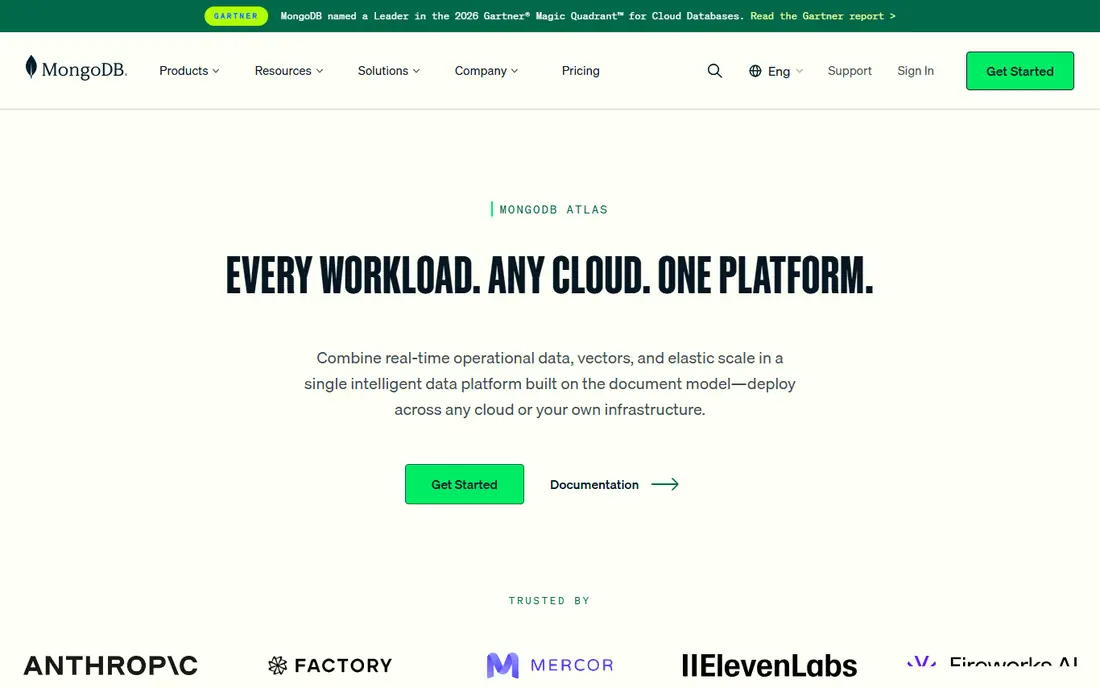
For MongoDB teams adding vector search to document data, MongoDB Atlas is a natural candidate. Vector-specific depth trails the purpose-built engines, and the value concentrates inside the MongoDB ecosystem.
Limits to weigh: Best inside MongoDB ecosystem.
But for Atlas shops building AI features, native vector search is the path of least resistance. The free level handles getting started. MongoDB Atlas shows no starting price here, so confirm the cost on the vendor site. Free access exists with MongoDB Atlas.
Where MongoDB Atlas stands out: Vector search inside Atlas.
- No new database to learn
- Document plus vector queries
- Vector features less deep than specialists
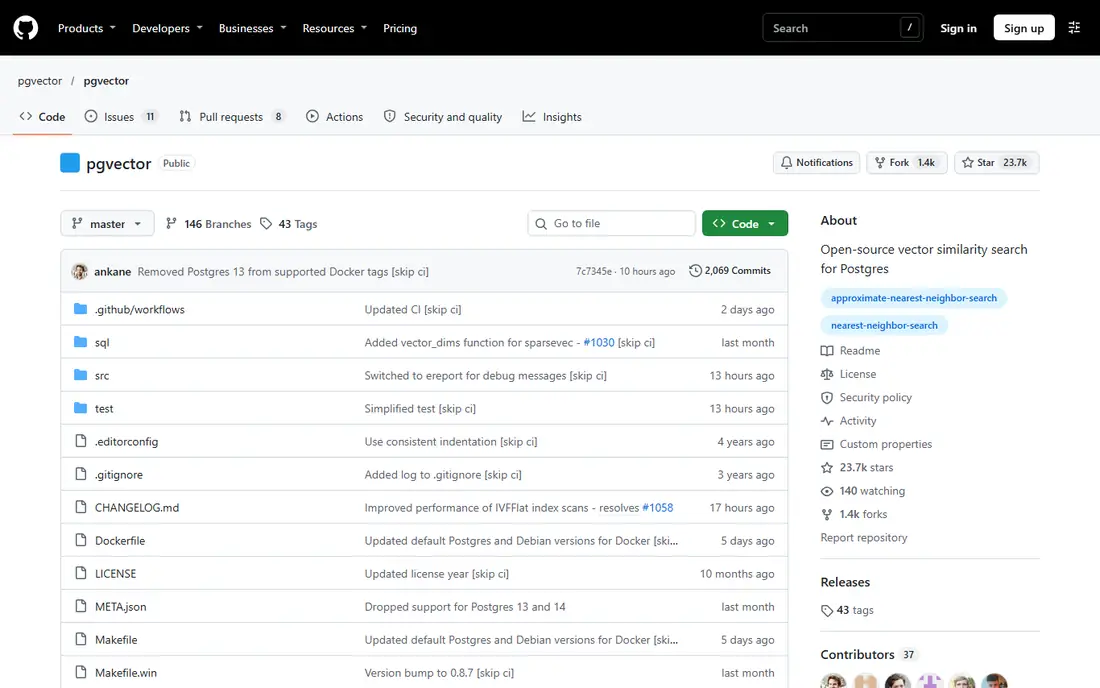
For Postgres teams adding vectors without new infrastructure, pgvector is a natural candidate. pgvector is the pragmatic default: a Postgres extension that layers on vector similarity search to the database teams already run.
Where it falls short: Postgres operational burden.
Beyond roughly fifty million vectors per node, purpose-built engines win on performance and operations. Entry price for pgvector: Free. Free access exists with pgvector.
- Production-grade HNSW
- Join vectors with relational data
- Fewer vector-specific features
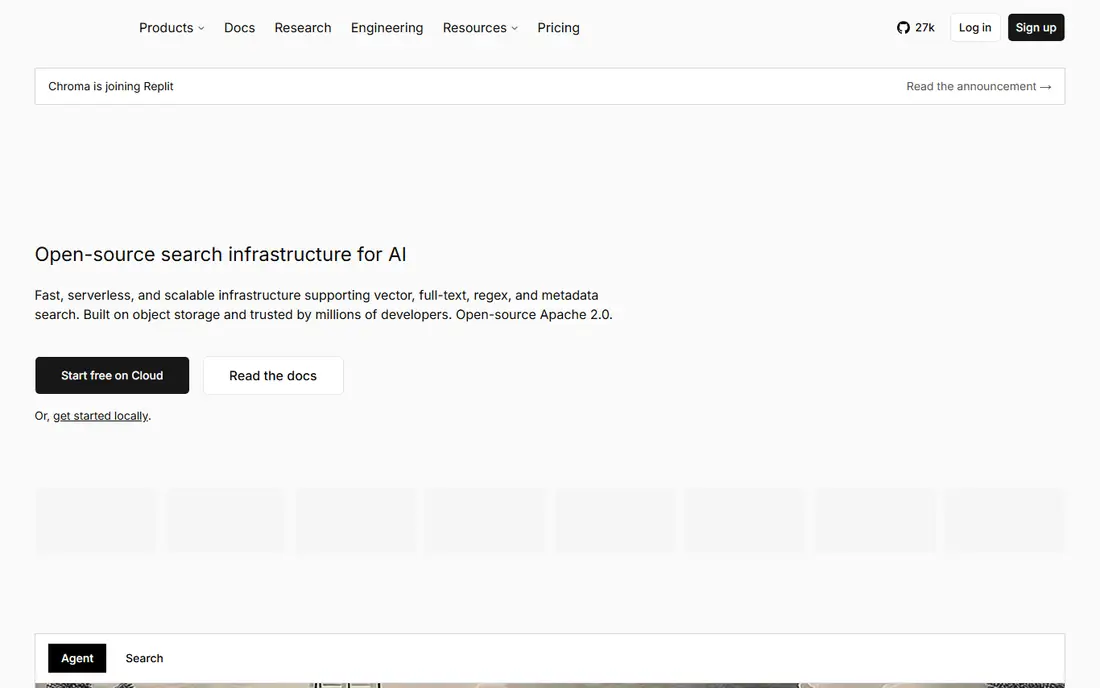
Chroma works best for developers prototyping AI retrieval quickly. Small production workloads run fine on modest infrastructure.
But as the on-ramp to AI retrieval, it is unmatched for speed. Chroma starts at: Free. Chroma has a free plan.
What to check first: Fewer enterprise features.
Best features of Chroma: Free and open source.
- Developer-friendly API
- Runs locally or in tiny containers
- Restricted managed offering
In short, Elasticsearch is for teams combining traditional search with vector retrieval. Purpose-built vector engines outperform it on pure vector workloads, and operating Elasticsearch remains real engineering.
Reasons to shortlist it: Hybrid retrieval native.
Where it is weaker: Licensing nuances. In daily use, the ecosystem, tooling and operational knowledge around Elasticsearch are unmatched. kNN search links up with the full query DSL, aggregations and security model. No starting price is listed for Elasticsearch here; confirm pricing on the vendor site. You can start on Elasticsearch without paying.
- Mature search plus dense vectors
- Huge ecosystem
- Operational complexity
Pinecone
Great for: Teams wanting completely managed vector search with zero infrastructure
Think of Pinecone for teams wanting completely managed vector search with zero infrastructure. Teams building RAG applications get production retrieval without thinking about indexes, sharding or operations. As for the details, Pinecone is the managed vector database that made the category accessible: serverless infrastructure, millisecond queries at millions of vectors.
What Pinecone does well: Quick at scale.
An API that takes minutes to integrate. The premium is real: managed convenience costs more than self-hosted alternatives at scale, and the closed system means less control than open-source engines. Pinecone shows no starting price here, so confirm the cost on the vendor site. A free plan is available with Pinecone. Watch-outs: Less adaptable than open source.
- Refined managed experience
- Serverless simplicity
- Vendor lock-in
Pick Zilliz Cloud if this describes you: Billion-scale vector workloads on managed infrastructure. Index adaptability is the technical edge: a dozen index types from HNSW to DiskANN to sparse indexes, auto-selected or hand-tuned per collection.
This comparison lists no price for Zilliz Cloud; ask the vendor. Free access exists with Zilliz Cloud.
Where it is weaker: Overkill below millions of vectors.
- Free level available
- Solid for massive corpora
- Complexity for small workloads
More on AI powered database software
AI applications that require real knowledge use retrieval-augmented generation: encode documents as vector embeddings, store them in a vector database, and retrieve the relevant chunks at query time. Beyond that, the choice hinges on scale, operational appetite, filtering needs and where your data already lives.
How the list was put together
The comparison looks at four things: starting price, free access, how well the feature set matches AI powered database software, and the main limit of each tool. Figures are shown as the vendors publish them. Billing terms, seat minimums and add-ons can change the real cost. We ordered the tools by general fit, then by how clearly pricing is shown, then by free access. A buyer with unusual needs may reorder them.
Things to verify first
- Ask MongoDB Atlas, Elasticsearch, Pinecone and Zilliz Cloud for a written quote, since no starting price is shown.
- Read the fine print on the free plans from MongoDB Atlas, pgvector, Chroma and others; seat, project and feature caps differ.
- Read the limits listed for MongoDB Atlas first: vector features less deep than specialists.
- Confirm you can export your data from Elasticsearch, so leaving later does not mean losing records.
- A short pilot of Chroma with your real workflow tells you more than a feature table.
Frequently asked questions
How are the tools for AI powered database software ordered?
The order follows typical fit for AI powered database software, with MongoDB Atlas first and Zilliz Cloud last, then price clarity and free access. It is editorial judgement, not a score, so another team could rank the tools differently.
Is MongoDB Atlas the right pick for everyone comparing AI powered database software?
No single tool suits every team. MongoDB Atlas comes first because it fits MongoDB teams adding vector search to document data, while pgvector suits Postgres teams adding vectors without new infrastructure and Chroma suits developers prototyping AI retrieval quickly. Match the tool to your own size, budget and workflow before deciding.
What is a vector database?
A database optimized for storing and searching vector embeddings, the numerical representations of text, images and other data used by AI models. It finds semantically similar items by approximate nearest-neighbor search, powering RAG, recommendations and semantic search.
Do these tools publish their prices?
Not all of them. MongoDB Atlas, Elasticsearch, Pinecone and Zilliz Cloud publish no starting price, so expect a quote request for those. The rest, pgvector included, show a starting price, though seats and billing terms still change the final cost.
Can I try these options before paying?
Often, yes. MongoDB Atlas, pgvector, Chroma and others have a free plan. Use your own data and a real task during the test, and check what the free tier or trial limits before you rely on it.
Sources
See where you really rank - block by block
ProMapRanker scans Google Maps across a grid of your service area. Simple monthly plans from $19, white-label on every plan.
Start freeKeep reading
 zscaler alternatives
Best Zscaler Alternatives in 2026
Looking for zscaler alternatives? We compare 9 SASE and zero trust platforms on architecture, data protection, pricing, and fit for your network and team.
Read → zapier alternatives free
Best Zapier Alternatives Free in 2026
Nine automation tools for zapier alternatives free in 2026, all with genuinely free tiers, plus free plan limits, starting prices and upgrade paths explained.
Read → which platform is best for online reputation
Which Platform Is Best for Online Reputation in 2026
Wondering which platform is best for online reputation? We compare 8 review, listing, and response tools for small and multi-location businesses and agencies.
Read →