 ProMapRanker
Best AI Overview Tools in 2026

Key takeaways
- OtterlyAI is our pick for most small teams, because it tracks Google AI Overviews at a low entry price with daily prompt checks.
- Semrush and Ahrefs suit teams that already pay for those suites, since their AI visibility features sit next to traditional rank data.
- Profound suits larger brands that need broad engine coverage and enterprise controls, but its pricing is custom after a trial.
- Prompt limits matter more than headline price, so compare how many prompts each plan tracks before you buy.
- No tool can force Google or another engine to cite you, so treat these tools as measurement and content guidance, not as a guarantee.
Quick comparison
| Pick | Great for | Pricing starts at | Free tier | |
|---|---|---|---|---|
 OtterlyAI | Low-cost AI Overview tracking | $29 per month | Free trial | Visit |
 Peec AI | Daily prompt tracking for content teams | $95 per month | Free trial | Visit |
 Profound | Enterprise AI search visibility | See website | Free trial | Visit |
 Semrush AI Visibility Toolkit | Teams already on Semrush | $99 per month | Free trial | Visit |
 Ahrefs Brand Radar | Brand research from a large prompt index | $199 per month | No | Visit |
 SE Ranking | Many prompts under one plan | See website | Free trial | Visit |
 Scrunch | Monitoring plus site readiness checks | See website | Free trial | Visit |
 AlsoAsked | Question research for AI Overviews | $15 per month | Yes | Visit |
 Google Search Console | Free first-party search data | Free | Yes | Visit |
The best AI overview tools
We interpret this topic in the way most searchers use it in 2026: tools that show whether your brand or pages appear in Google AI Overviews and other AI answers, and tools that help you create content those answers can cite. A good tool tracks real prompts, names the sources cited, and compares you with competitors.
OtterlyAI is our pick for most people who want to start tracking AI Overviews without an enterprise budget. You define prompts that match real customer questions, and the tool checks daily whether your brand is mentioned or cited, and which competitors appear instead. That daily view is useful because AI answers change more often than classic rankings.
The limit is scope. Fifteen prompts on the entry plan fits one brand and one core topic, but not a full product range. Add engines and prompts only after you know which questions actually drive visibility for your site.
- Tracks Google AI Overviews, ChatGPT, Perplexity, and Copilot on entry plans
- Daily prompt tracking with competitor comparison
- Content audit and briefs for pages that are skipped
- Entry plan covers only a small prompt set
- Some engines, including Gemini and Claude, cost extra as add-ons
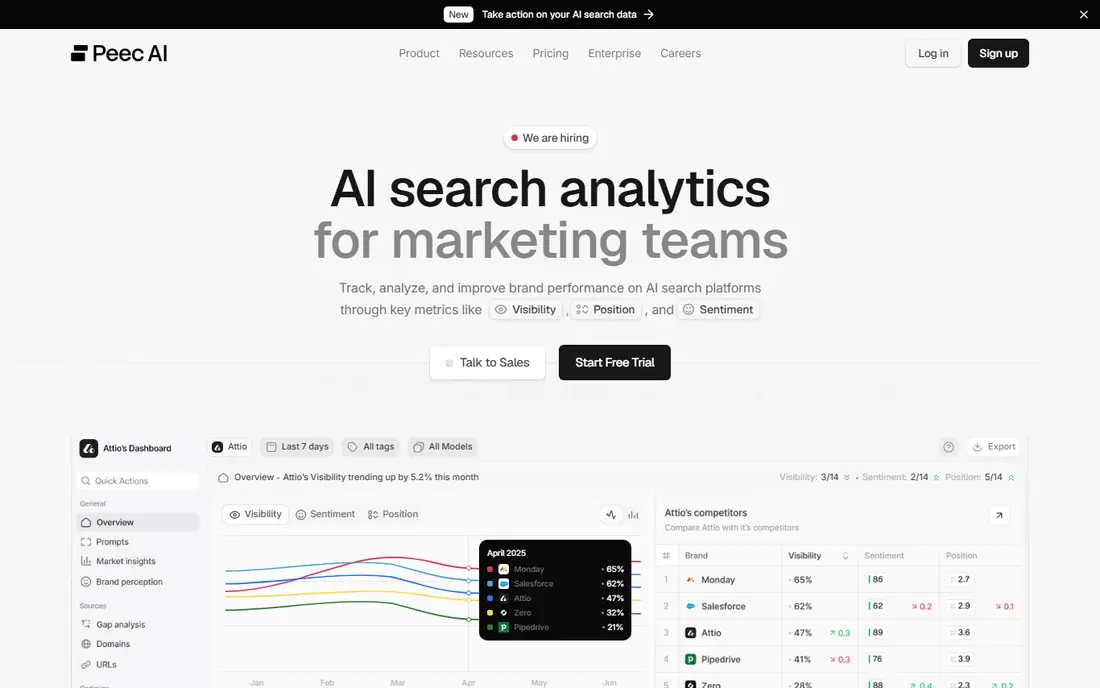
Peec AI suits a content team that wants a clear daily answer to a simple question: are we being cited, and how does that compare with rivals? Its prompt-level reports separate mentions from citations, which helps you tell the difference between being named and being used as a source. Sentiment tracking adds context when an answer frames your brand in a negative or mixed way.
The cost is higher than OtterlyAI, and model choice is capped per plan. That trade makes sense if you need more prompts and a shared workspace, but not if you only track a handful of questions.
- Tracks visibility, position, and sentiment per prompt
- Lets you choose models across plans
- Unlimited users on the Starter plan in recent pricing roundups
- Only a limited set of models is included per plan
- Pricing page is not always easy to read without signing in
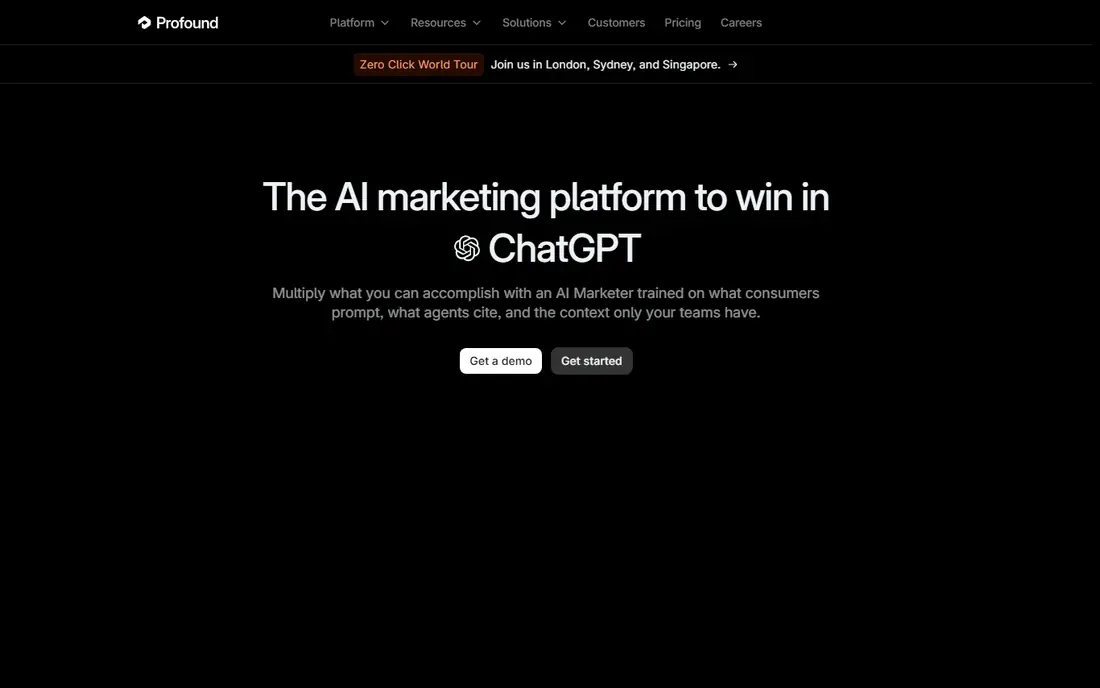
Profound is built for larger brands that treat AI search as a core channel. It tracks mentions and citations across several answer engines, analyses the questions people actually ask, and now adds tools that draft or optimise pages for AI citation. For a brand team with many products and competitors, that breadth matters.
For a small business, the buying process is the problem. You cannot simply start on a low monthly plan as you could in earlier versions of the product. Use the trial to test whether its prompt data covers your niche, and get a written quote before assuming it fits your budget.
- Broad engine coverage on enterprise plans
- Prompt research from real user conversations
- Agent and content features beyond simple tracking
- Self-serve starter plans were withdrawn in recent months, so entry now runs through a trial and custom pricing
- Likely too expensive for a solo site
Semrush makes sense if your team already lives in Semrush. AI visibility appears in the same workspace as your rankings, so you can move from a falling AI citation to the page that needs work without exporting data. The toolkit also checks whether AI bots can access and read your pages, which is a practical first step many teams skip.
As a standalone tracker, it is less compelling. Twenty-five prompts per domain on the entry plan is a narrow sample, and agencies with many clients will feel the per-domain price quickly. Buy it for the combined workflow, not for AI tracking alone.
- Sits next to keyword, rank, and audit data in Semrush
- Tracks prompts across ChatGPT, Google AI, Gemini, and Perplexity
- AI readiness checks flag pages AI crawlers cannot read well
- Priced per domain, so multi-client costs add up fast
- Entry plan tracks a modest number of prompts
Ahrefs Brand Radar works differently from a simple tracker. Instead of only checking prompts you write, it lets you search a large index of real prompts to find questions your buyers already ask. That discovery step often surfaces topics a team would never have thought to track, which is valuable for content planning.
The price reflects that data. The standalone index starts at $199 per month for one platform, and custom prompt packages are sold separately. If you already pay for Ahrefs, check what prompt checks your plan includes before buying the standalone product.
- Large pre-collected prompt index for brand discovery
- Covers AI Overviews, AI Mode, ChatGPT, Perplexity, and more
- Custom prompt tracking available for your own questions
- Standalone index pricing starts high
- Usage is counted in checks, so heavy tracking can cost more than expected
SE Ranking appeals to agencies and freelancers who want more prompts for their money. Recent pricing roundups list its AI tracker with around 200 prompts on an entry-level AI plan, which is far more than many rivals offer at a similar price. That volume helps when you track several clients or product lines.
The catch is that you need to price the base plan and the AI add-on together. Read the current pricing page carefully, and test the tracker on your own prompts during the trial. Prompt count only helps if the engines and locations you need are included.
- AI results tracker with a generous prompt allowance in recent pricing
- Combines AI tracking with rank tracking and audits
- Trial period for testing
- AI features are an add-on to a wider suite, so total cost depends on your base plan
- Interface rewards users who already know SEO tools
Scrunch sits between a pure tracker and a content optimisation tool. It monitors where your brand appears in AI answers, then audits your site to show which pages are ready to be cited and which are not. That second step is useful, because many teams track visibility for months without fixing the pages that AI systems skip.
The price puts it in the mid-market, not the budget tier. Small teams should compare its prompt allowance and engine list with OtterlyAI and Peec AI before committing, and use the trial to check whether its recommendations match your content workflow.
- Tracks brand presence across AI engines
- Site audits point to pages that need work for AI citation
- Share-of-voice views for competitor comparison
- Entry pricing is higher than budget trackers
- Best value appears on annual billing
AlsoAsked does not track AI Overviews directly, but it belongs here because it answers the question behind many AI Overviews: what do people ask next? Its tree maps show how one seed question branches into follow-ups, which helps you structure an article so it answers the full chain, not just the first query.
Use it as a research companion to a tracker. AlsoAsked will help you choose prompts and shape content, while OtterlyAI, Peec AI, or Semrush will tell you whether that content is actually being cited.
- Visual maps of People Also Ask questions
- Helps you cover follow-up questions in one article
- Low price for a focused research tool
- Focused on Google question data, not live AI answer tracking
- No citation or sentiment reporting
Google Search Console is the free baseline every site should check before paying for an AI tool. It shows which queries bring impressions and clicks, which pages perform, and whether Google can crawl and index your content. Those signals still matter, because AI Overviews draw heavily on pages that already rank and earn trust in classic search.
It will not tell you whether you were cited in a specific AI answer. Pair it with a dedicated tracker for that job, and use Search Console to confirm that your pages are technically sound and visible in search at all.
- Free and run by Google
- Shows clicks, impressions, and queries for your verified site
- Helps you spot pages that earn search visibility
- Does not report AI Overview citations directly
- Only covers sites you verify
How we picked these
We compared official feature pages, pricing pages, and October 2026 pricing roundups that checked vendor pages directly. We kept tools that track Google AI Overviews or other AI answers with real prompts, plus two research aids that help you earn citations. We left out generic AI writers and content scores that never query a live AI engine. Prices are starting monthly prices where vendors publish them, and we wrote See website where pricing is custom, gated, or bundled with a wider suite.
How to use an AI Overview tool well
Start with prompts your customers actually ask, not with keywords you wish they asked. Pull real questions from Search Console, support tickets, sales calls, and AlsoAsked, then track a small set well. A tracker with 15 well-chosen prompts will teach you more than a tracker with 200 generic ones that no buyer types.
Next, look at citations, not just mentions. A mention without a link or source credit is weaker than a citation that sends a reader to your page. When a competitor is cited and you are not, open the cited page and compare its structure, facts, and direct answers with yours. Often the fix is a clearer first paragraph, a short definition, or a table that answers the question directly.
Finally, keep expectations honest. AI answers vary by location, phrasing, and time of day, and no vendor controls the final answer. Use these tools to spot trends over weeks, not to react to a single day. If a tool promises a top citation, treat that as marketing, not measurement.
Frequently asked questions
What is the best AI overview tool for a small business?
OtterlyAI is our pick for a small business, because its entry plan is $29 per month and it tracks Google AI Overviews alongside other major engines. Start with a small prompt set, check results daily for a few weeks, and only add prompts or engines once you know which questions matter.
What is the best AI overviews software for agencies?
SE Ranking and Peec AI both suit agencies, because they offer larger prompt allowances and shared workspaces. Semrush also suits agencies that already use it for rank tracking, though its per-domain pricing needs careful budgeting across clients.
What is the best free AI overview tool?
Google Search Console is the best free starting point, because it gives first-party search data at no cost. AlsoAsked offers a limited free plan for question research. No free tool we found gives full daily AI Overview citation tracking, so expect to pay for that specific job.
Can a tool guarantee that I appear in AI Overviews?
No. These tools measure and guide, but Google and other engines choose which sources to cite. Good content, clear answers, trustworthy sources, and sound technical SEO raise your chances, but no tool can promise a citation for a given query.
How many prompts should I track?
Start with 15 to 50 prompts that cover your main products, comparisons, and common questions. Add prompts only when you have acted on the first set. Tracking hundreds of prompts you never review wastes money and hides the trends that matter.
What is the difference between AI Overviews and AI Mode?
AI Overviews are AI-generated summaries shown within Google Search results, often with cited sources. AI Mode is a separate conversational search experience in Google where users can ask follow-up questions. Tools in this list may track one or both, so check the engine list on the pricing page before you buy.
Sources
See where you really rank - block by block
ProMapRanker scans Google Maps across a grid of your service area. Simple monthly plans from $19, white-label on every plan.
Start freeKeep reading
 youtube alternatives
Best YouTube Alternatives in 2026
Looking for youtube alternatives in 2026? We compare Vimeo, Dailymotion, Twitch, Rumble, and more on price, audience, monetization, control and privacy.
Read → what's the best ai tool for photo editing
What Is the Best AI Tool for Photo Editing in 2026
What is the best AI tool for photo editing? We compare ten tools for 2026, from Photoshop and Lightroom to Luminar, Topaz, Canva and mobile editors today.
Read → twitter alternatives
Best Twitter Alternatives in 2026
Compare the best twitter alternatives for 2026, from Bluesky, Threads, and Mastodon to Reddit, Tumblr, and Micro.blog, with free plans and audience notes.
Read →