 ProMapRanker
8 Best AI Optimization Platforms Data Transparency Options for 2026


Teams that want LLM observability with cost control · Pricing starts at: See website
Direct answer
Helicone leads the list, best for teams that want LLM observability with cost control. If your case is different, Credo AI suits teams that require monitoring evidence inside a governance program and Deepchecks suits ML teams that want rigorous testing before and during deployment. All 8 tools are compared below on price, free plan and limits.
Key takeaways
- Helicone takes the first slot, best suited to teams that want LLM observability with cost control.
- Only 5 of the 8 tools have a free plan (Helicone, Langfuse, Arize AI, WhyLabs, Evidently AI), so check the caps.
- Fiddler AI fits regulated teams that require explainability alongside monitoring.
- Pricing across the list, from Helicone to Fiddler AI, is by quote only.
- Deepchecks comes with a trade-off: more testing-focused than monitoring-focused.
Quick comparison
| Pick | Great for | Pricing starts at | Free tier | |
|---|---|---|---|---|
| Helicone | Teams that want LLM observability with cost control | See website | Yes | Visit |
 Credo AI | Teams that require monitoring evidence inside a governance program | See website | No | Visit |
 Deepchecks | ML teams that want rigorous testing before and during deployment | See website | No | Visit |
 Langfuse | Engineering teams building LLM applications who require tracing | See website | Yes | Visit |
 Arize AI | Data science teams running numerous ML models in production | See website | Yes | Visit |
 WhyLabs | Teams that want light, privacy-conscious data monitoring | See website | Yes | Visit |
 Evidently AI | Teams that prefer open-source ML evaluation they control | See website | Yes | Visit |
 Fiddler AI | Regulated teams that require explainability alongside monitoring | See website | No | Visit |
AI Optimization Platforms Data Transparency profiles
This ProMapRanker guide covers 8 options for AI optimization platforms data transparency. Each profile lists a starting price, free plan details, strengths and drawbacks, so you can drop poor fits quickly.
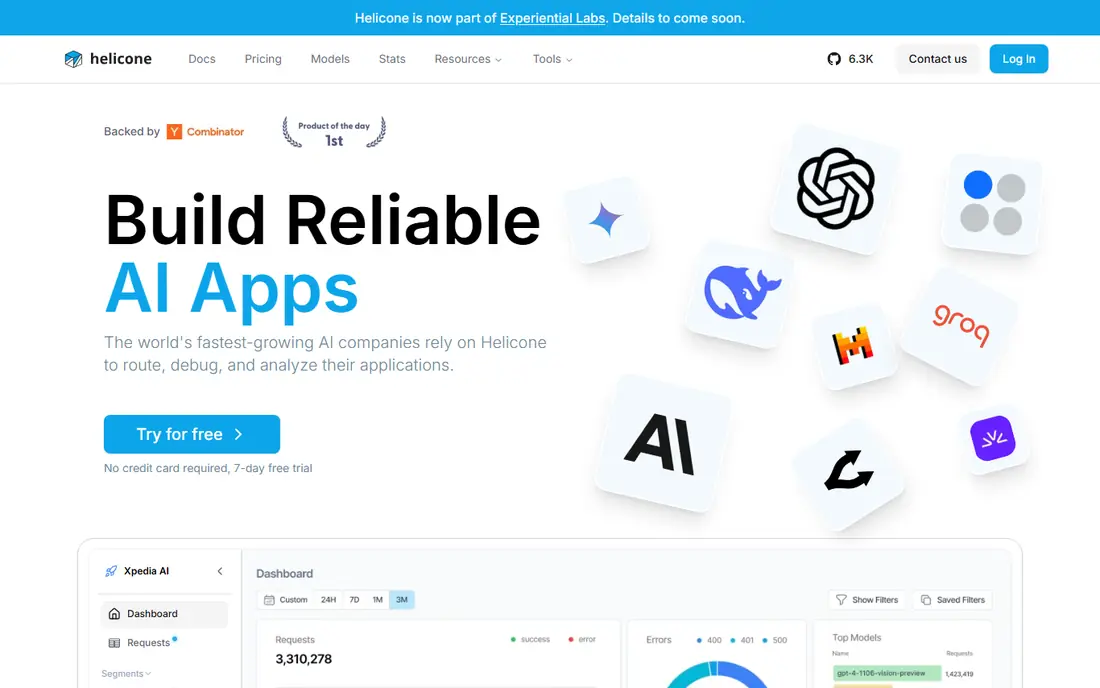
Helicone is aimed squarely at teams that want LLM observability with cost control. Helicone works as a proxy in front of your LLM providers, logging every request with latency, cost, and quality signals. In practice, the cost angle is a real differentiator.
Choose Helicone when observability and cost control are the job, and add a dedicated eval tool if you need rigorous quality measurement. For teams surprised by their first big LLM bill, that transparency has immediate value. Pricing for Helicone is not stated here, so ask the vendor for current figures. Helicone includes a free tier.
Downsides: Proxy model brings a network hop.
- Cost tracking across providers
- Drop-in proxy setup
- Narrower evaluation features than Langfuse
Credo AI
Great for: Teams that require monitoring evidence inside a governance program
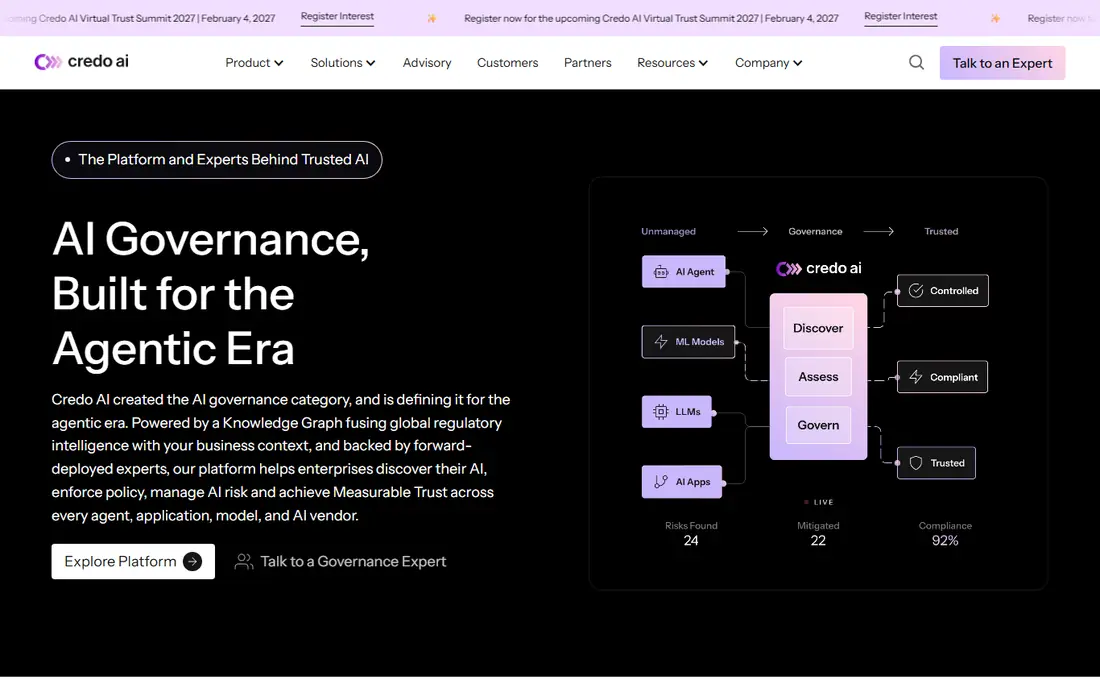
Credo AI is a good fit for teams that require monitoring evidence inside a governance program. Credo AI earns its place here as the governance layer that turns monitoring into evidence. It links up with MLOps tools and monitoring products, then maps the technical signals to risk assessments, compliance requirements, and audit-ready documentation.
The main drawbacks: Enterprise pricing.
As for the details, monitoring tells you the model drifted. Credo AI helps you present what you did about it, who approved it, and which regulation it satisfies. Its integrations hub links to the tools where models are built and watched. More specifically, for transparency programs, that translation matters. Worth adding: do not buy Credo AI as a monitoring tool. Check the vendor site for Credo AI pricing; none is listed in this comparison. No free plan comes with Credo AI.
- Governance product that consumes monitoring signals
- Wide MLOps integrations
- Governance-first
Deepchecks
Great for: ML teams that want rigorous testing before and during deployment
Where Deepchecks fits: ML teams that want rigorous testing before and during deployment. Deepchecks gives you testing and validation for machine learning models, with a large suite of checks including data integrity, distribution drift, and model performance. The idea is to catch problems before deployment and keep checking afterward.
Where monitoring tools watch production and alert, Deepchecks helps you define what should be true about your data and model, then verifies it continuously. That is a solid foundation for both optimization and transparency. It is less of a real-time observability dashboard than Arize. Pricing for Deepchecks is not stated here, so ask the vendor for current figures. Deepchecks does not include a free plan.
Honest limits: Commercial pricing not public.
- Clear pass and fail reporting
- Deep library of ML checks and tests
- More testing-focused than monitoring-focused
Langfuse
Great for: Engineering teams building LLM applications who require tracing
Langfuse works best for engineering teams building LLM applications who require tracing. Langfuse is the go-to open-source observability platform for LLM applications. In daily use, for teams shipping chatbots, agents, or RAG pipelines, that trace-level visibility is what makes debugging possible.
It can be self-hosted or used as a cloud service, with a free level for getting started. It does not include traditional ML monitoring, so mixed stacks need a second tool. Langfuse shows no starting price here, so confirm the cost on the vendor site. Langfuse offers a free plan.
Where it is weaker: Self-hosting layers on operational work.
- Evaluation and prompt management included
- In-depth prompt and trace views
- No classic ML monitoring
Arize AI makes the most sense for data science teams running plenty of ML models in production. Arize AI is one of the most established ML observability systems, built to answer the question every ML team eventually asks: why did the model start behaving differently? It tracks predictions, actuals, features, and embeddings over time, then helps you trace a performance drop to the specific data slice or feature causing it.
Beyond that, the troubleshooting workflow is the heart of the product. Rather than staring at aggregate metrics, you drill into segments, compare time windows, and see which cohorts degraded. That turns monitoring from a dashboard into a diagnostic tool, which is exactly what optimization needs. Arize has expanded into LLM tracing and evaluation, but its deepest strengths remain in classic ML. Check the vendor site for Arize AI pricing; none is listed in this comparison. Arize AI has a free plan.
Where it is weaker: LLM features are newer than the ML core.
- Ample free level for small teams
- Capable troubleshooting workflows
- Enterprise pricing is quote-based
WhyLabs is a good fit for teams that want light, privacy-conscious data monitoring. Use WhyLabs when data monitoring and privacy are the priorities, and pair it with other tools if you need deep per-prediction explanations.
Worth adding: setup is lighter than the heavyweight observability systems, which makes it attractive for teams that want monitoring without a large integration project. Worth adding: the system watches data quality, drift, and model performance with minimal instrumentation overhead. Check the vendor site for WhyLabs pricing; none is listed in this comparison. WhyLabs offers a free plan.
Trade-offs to know: Smaller vendor.
- Light statistical profiles instead of raw data
- Simple to begin
- Less deep on model-level explainability
Evidently AI
Great for: Teams that prefer open-source ML evaluation they control
Choose Evidently AI for teams that prefer open-source ML evaluation they control. The cost is effort. Evidently rewards teams willing to engineer their monitoring; teams wanting a managed dashboard with minimal setup should look at Arize or WhyLabs.
Beyond that, teams that want full control, no data leaving their VPC, and no vendor lock-in can adopt the libraries freely and build monitoring into their existing workflows. More specifically, you can produce in-depth reports on drift, data quality, and model performance, run them in CI pipelines, and keep everything inside your own infrastructure. Evidently AI is built around open-source libraries for evaluating ML models and data. This comparison lists no price for Evidently AI; ask the vendor. Evidently AI has a free plan.
Drawbacks to consider: Commercial system is newer.
- Open-source core
- Runs in your own infrastructure
- Needs engineering effort to productionize
Fiddler AI
Great for: Regulated teams that require explainability alongside monitoring
Pick Fiddler AI if this describes you: regulated teams that require explainability alongside monitoring. Fiddler AI merges model monitoring with explainability, so you see not only that performance changed but which features drove the change. Its fairness tooling measures disparate impact across groups, and its explanations work at both the global model level and the individual prediction level.
Trade-offs to know: No free level.
In daily use, the trade-off is accessibility. Fiddler is an enterprise product without a free level, so smaller teams should look at WhyLabs or Evidently for lighter-weight choices. From a buyer's view, the system includes both traditional ML and generative AI use cases. Pricing for Fiddler AI is not stated here, so ask the vendor for current figures. Fiddler AI does not include a free plan.
- Trusted in finance and regulated sectors
- Fairness and bias analysis
- Can be more than small teams need
AI Optimization Platforms Data Transparency: more detail
You cannot boost what you cannot see. From a buyer's view, the market has split along the ML compared with LLM line. Beyond that, LLM systems were aimed at prompts, traces, and token costs.
How we chose
Pricing pages, product documentation and feature lists were the main sources, and every entry carries at least one honest drawback. Seat minimums, billing terms and add-ons can move the real cost, so the starting prices here are a guide and not a quote. We ordered the tools by general fit, then by how clearly pricing is shown, then by free access. A buyer with unusual needs may reorder them.
What to check before you buy
- Confirm the entry price with every vendor: no tool from Helicone to Fiddler AI shows a fixed starting price.
- Look at free plan limits closely: Helicone, Langfuse, Arize AI and others have one, and the caps decide whether it is usable for real work.
- Read the limits listed for Helicone first: proxy model layers on a network hop.
- Confirm you can export your data from Fiddler AI, so leaving later does not mean losing records.
- Check the integration list for Helicone against the tools you run today, and note which ones need a higher plan.
Frequently asked questions
Can I try these tools before paying?
Often, yes. Helicone, Langfuse, Arize AI and others have a free plan. Use your own data and a real task during the test, and check what the free tier or trial limits before you rely on it.
How are the tools for AI optimization platforms data transparency ordered?
Helicone sits first and Fiddler AI last because the order follows typical fit for AI optimization platforms data transparency, then price clarity and free access. It is a judgement call, so read each profile for fit and limits.
Is Helicone the right pick for everyone comparing AI optimization platforms data transparency?
No single tool suits every team. Helicone comes first because it fits teams that want LLM observability with cost control, while Credo AI suits teams that need monitoring evidence inside a governance program and Deepchecks suits ML teams that want rigorous testing before and during deployment. Match the tool to your own size, budget and workflow before deciding.
Do these tools publish their prices?
No. None of the tools, from Helicone to Fiddler AI, shows a fixed starting price here, so budget time for quotes.
Sources
See where you really rank - block by block
ProMapRanker scans Google Maps across a grid of your service area. Simple monthly plans from $19, white-label on every plan.
Start freeKeep reading
 zscaler alternatives
Best Zscaler Alternatives in 2026
Looking for zscaler alternatives? We compare 9 SASE and zero trust platforms on architecture, data protection, pricing, and fit for your network and team.
Read → zapier alternatives free
Best Zapier Alternatives Free in 2026
Nine automation tools for zapier alternatives free in 2026, all with genuinely free tiers, plus free plan limits, starting prices and upgrade paths explained.
Read → which platform is best for online reputation
Which Platform Is Best for Online Reputation in 2026
Wondering which platform is best for online reputation? We compare 8 review, listing, and response tools for small and multi-location businesses and agencies.
Read →