 ProMapRanker
Best AI Mode SEO Analysis Software in 2026


SEO teams already using Semrush · Pricing starts at: $99 per month
Key takeaways
- Semrush and Ahrefs suit teams that already use those suites and want AI analysis in one place.
- Profound and Peec give deeper dedicated AI analysis for brands that live or die by AI answers.
- SE Ranking and Surfer suit content teams that want AI analysis tied to pages and drafts.
- Analysis must lead to fixes, so favour tools that show which pages AI systems cite and why.
Quick comparison
| Pick | Great for | Pricing starts at | Free tier | |
|---|---|---|---|---|
| Semrush AI Visibility Toolkit | SEO teams already using Semrush | $99 per month | Free trial | Visit |
 Ahrefs Brand Radar | Ahrefs users who want AI analysis at scale | $199 per month | Free trial | Visit |
 SE Ranking AI Search | Budget suite buyers who want AI analysis | See website | Free trial | Visit |
 Surfer AI Tracker | Content teams optimising drafts | See website | Free trial | Visit |
 Writesonic GEO | Content teams using Writesonic | $79 per month | Free trial | Visit |
 Profound | Deep AI analysis for large brands | See website | Free trial | Visit |
 Peec AI | Clear AI analysis for marketing teams | $95 per month | Free trial | Visit |
 Nightwatch | Rank tracking plus AI monitoring | $32 per month | Free trial | Visit |
The best AI Mode SEO analysis software
AI Mode SEO analysis goes beyond counting mentions. It asks why an AI answer cites one page and not another, how sentiment frames a brand, and whether a site is ready for AI crawlers to read it. The tools below combine AI visibility data with classic SEO data, audits, and content tools in different mixes. Our pick for most SEO teams is Semrush AI Visibility Toolkit if they already use Semrush, with Ahrefs Brand Radar close behind for Ahrefs users. A brand that needs dedicated AI depth should look at Profound or Peec instead. As with tracking, treat results as trends, since AI answers vary from run to run.
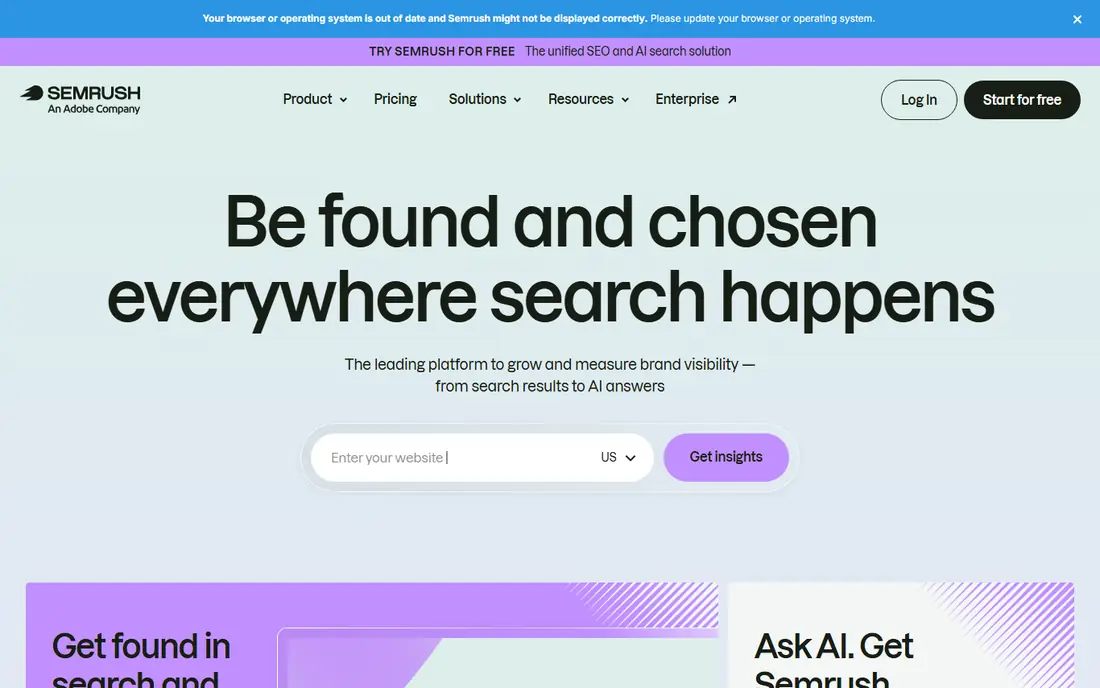
For readers who want AI analysis inside a full SEO suite, Semrush AI Visibility Toolkit is a strong place to start. It lets a team see AI visibility beside rankings, backlinks, and content data without switching tools. It is lighter in AI depth than a dedicated tracker, and the per domain add-on cost adds up for many brands.
What stands out is aI brand performance and sentiment. In daily use, that means less time wrestling with setup and more time on the work itself. The layout and core tools are clear enough for a newcomer to follow, while still giving experienced users room to adjust things to suit a real project.
The honest catch is add-on price per domain. Check that limit against your own plans before you pay, since it is the kind of detail that only bites after you have moved real work onto the platform.
- AI brand performance and sentiment
- Ties AI data to classic SEO
- Site audit for AI crawlers
- Add-on price per domain
- Prompt limits on the entry tier
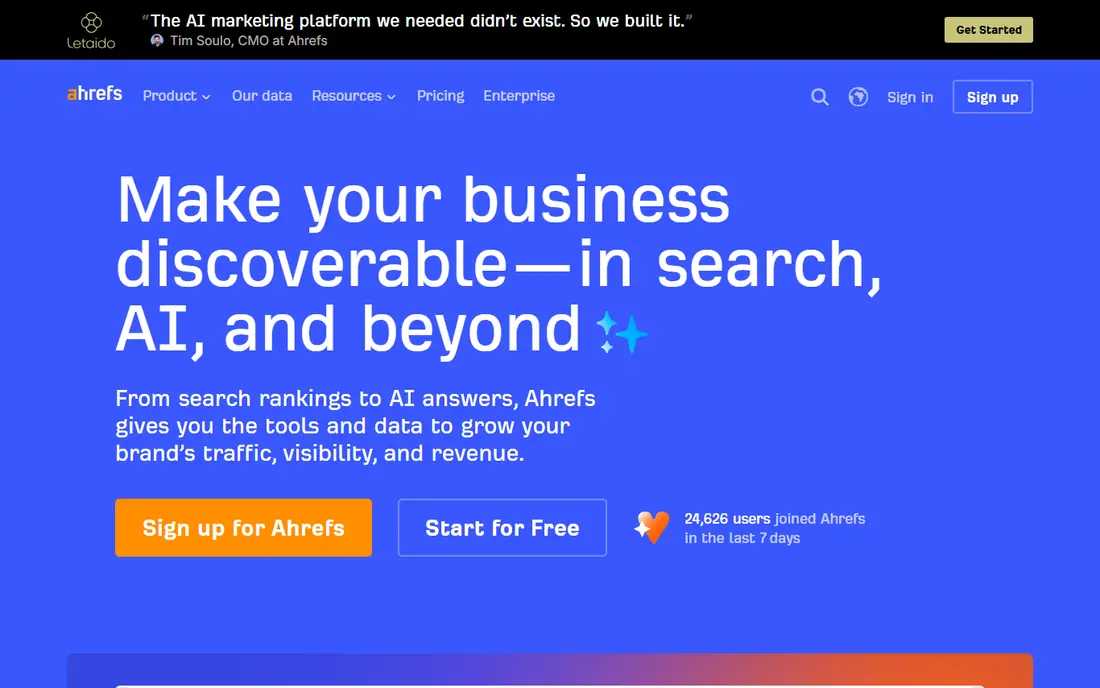
If AI analysis at large prompt scale matters most to you, Ahrefs Brand Radar deserves a close look. It samples many prompts, which steadies the noisy nature of AI answers. The total cost is high once you add Brand Radar to a paid Ahrefs plan, so it suits a team already committed to Ahrefs.
The main strength is large prompt sampling. That shows up in the details, such as clearer options, fewer dead ends, and a workflow that holds together across a week of regular use. It is not the flashiest option here, but it is steady where it counts.
The drawback to weigh is separate add-on cost. It will not bother every reader, but if it touches your main use case, it can become a daily annoyance. A short trial or a careful read of the plan limits will tell you quickly.
- Large prompt sampling
- Brand mentions across AI platforms
- Ties to backlink and keyword data
- Separate add-on cost
- Needs an Ahrefs plan for full use
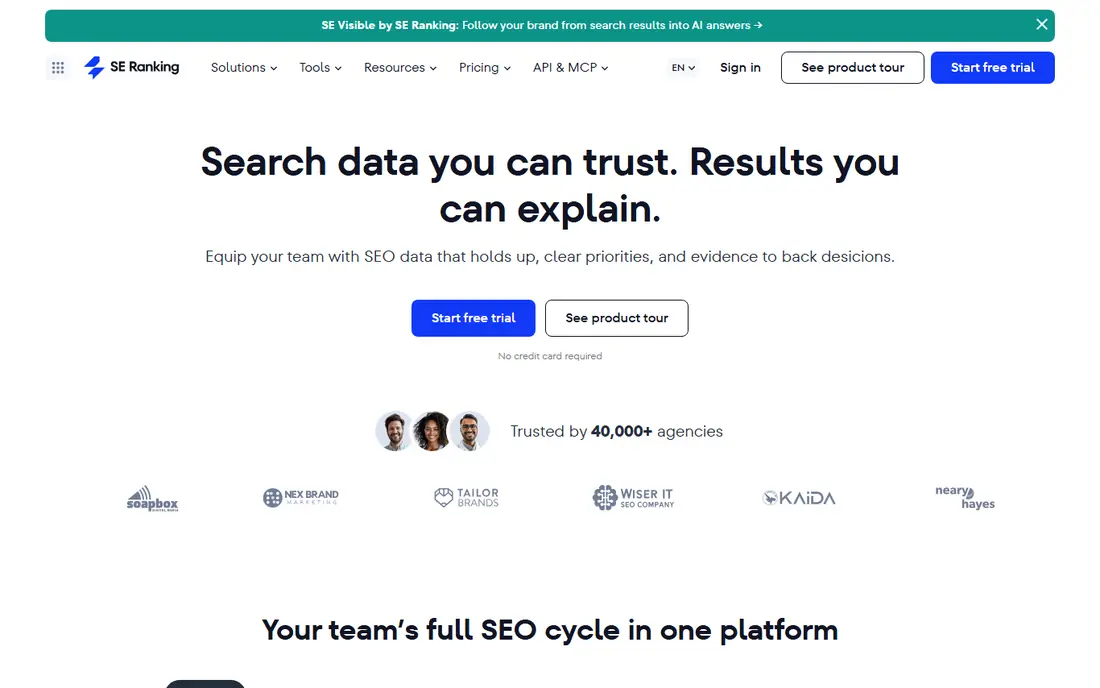
SE Ranking AI Search suits people who care about AI analysis on a budget suite above all else. It brings AI visibility into a lower cost SEO suite, which suits a smaller agency. The AI depth is thinner than dedicated tools, and the add-on terms change by plan, so read them before you buy.
Its calling card is aI search add-on covering Google AI features and chat platforms. For the right reader, that single quality can outweigh a longer feature list elsewhere. The rest of the package supports it well, and the overall experience feels coherent rather than patched together.
On the downside, aI allowance and plan terms need checking. That is a fair price for what it does well, yet it is worth naming plainly so you are not surprised later. Buyers who need that missing piece should look at another entry in this list.
- AI search add-on covering Google AI features and chat platforms
- Classic rank tracking in one suite
- AI allowance and plan terms need checking
- Add-on pricing varies by plan
A good fit when AI analysis tied to content is the priority, Surfer AI Tracker keeps the focus narrow. It suits a content team that wants to see AI visibility while it optimises drafts and pages. A team that needs deep brand sentiment or enterprise reporting should pair it with a dedicated AI tool.
We rate aI search analytics tied to content work as its clearest advantage. It helps explain why people stick with it after the first month, when novelty fades and routine takes over. The design choices behind it are visible in everyday tasks, not only on a marketing page.
The tradeoff is aI tracking limits vary by plan. We still list it because its strengths are real, but no honest roundup can hide a limit that affects a whole group of buyers. Match it to your situation, not to the average reader.
- AI search analytics tied to content work
- Prompt tracking by plan
- Content editor integration
- AI tracking limits vary by plan
- Not a full SEO suite on its own
Start with Writesonic GEO if AI visibility with content creation is what you are shopping for. It helps a content team track AI answers and then create or update pages in the same workflow. An analyst who only wants measurement may find the content tools unnecessary, and should compare a pure tracker.
A key draw is aI visibility tracking plus content tools. That matters because most buyers compare long lists and then live with one tool for months. A product that does its core job well, without constant friction, tends to age better than one packed with extras nobody opens.
Watch out for price and engine coverage vary by plan. It is manageable for many people, and it does not cancel the strengths above, but it sets a ceiling on who should choose this option. If you hit that ceiling often, pick a more flexible rival.
- AI visibility tracking plus content tools
- Brand and competitor views
- GEO workflow
- Price and engine coverage vary by plan
- Content focus may not suit pure analysts
Profound earns its place here for readers focused on dedicated AI analysis at depth. It analyses citations, competitors, and crawler behaviour in more detail than suite add-ons. The cost and setup suit a larger brand, and a small team may get more value from a suite add-on.
The standout point is deep citation and competitor analysis. It gives the product a clear identity in a crowded field, and it makes the buying decision simpler. If that quality matches your main need, the rest of the tradeoffs are easier to accept.
The weak spot is enterprise pricing. For casual use it may never matter. For heavy or specialised use it can shape the whole experience, so treat it as a deciding factor rather than a footnote.
- Deep citation and competitor analysis
- Prompt volume data
- Crawler analytics
- Enterprise pricing
- More platform than a small team needs
When readable AI analysis for a marketing team tops your list, Peec AI is worth shortlisting. It presents AI visibility in reports a non technical stakeholder can follow. A team that needs every engine on day one should check the model list for its plan, since entry coverage is partial.
Its strongest suit is clear sentiment and geographic analysis. In practice, that translates into fewer workarounds and a shorter path from idea to finished result. The supporting tools are solid enough that the main strength is not carrying the whole product alone.
Its main limit is model coverage on entry plans is limited. That keeps it from being our pick for everyone, even though it serves its target reader well. Knowing that limit in advance is the difference between a good purchase and a frustrating one.
- Clear sentiment and geographic analysis
- Competitor benchmarking
- Alerts for visibility drops
- Model coverage on entry plans is limited
- Full coverage needs higher tiers
For a classic SEO plus AI in one low cost tool first approach, Nightwatch makes a practical choice. It suits a small agency that wants both classic ranks and a first view of AI answers in one bill. It will not match Profound or Peec for AI analysis depth, so treat it as a starting point, not an enterprise solution.
Look first at classic rank tracking plus LLM tracking. That is where this product separates itself from close rivals, and it is the reason it belongs on a shortlist. The surrounding features are competent, and the price and limits are the parts to check before you commit.
Finally, aI depth is thinner than dedicated tools. That is the one reservation we would raise with a friend before recommending it. If that reservation does not apply to you, the rest of the package is easy to recommend.
- Classic rank tracking plus LLM tracking
- Good value entry point
- Agency reporting
- AI depth is thinner than dedicated tools
- Prompt limits on lower plans
How we picked these
We compared official feature pages, pricing pages, and app store listings for each product, and we checked public reviews for recurring complaints. We kept only products that exist and work now, in October 2026, and that fit the topic directly rather than stretching it. Where a price could not be confirmed from the vendor, we wrote See website instead of guessing.
We also weighed the total cost, not just the headline price. That includes per seat charges, limits on the cheapest plan, and what the free tier actually allows. A product earned a place when its strengths were concrete and its limits were clear, so you can match it to your own needs without surprises.
How to analyse AI Mode SEO results
Start with citations, not mentions alone
A mention without a citation may not drive traffic, while a cited page can. Check which of your pages AI answers cite, and which rival pages win instead. That list is your fix list: improve those pages first, with clear facts, structure, and sourcing.
Check sentiment and framing, not just presence
Two brands can both appear in an answer, with very different framing. Read the actual answer text for tone, claims, and comparisons. A tool that only counts mentions will miss a framing problem that a sentiment view catches early.
Audit your site for AI crawlers
Make sure AI crawlers can reach key pages, read structured content, and find clear answers. A site audit should flag blocked bots, thin pages, and missing summaries. Fixing crawl access and page clarity often helps AI visibility more than adding new pages.
Frequently asked questions
What is AI Mode SEO analysis software?
It analyses how a brand appears in AI generated answers, including Google AI Mode, AI Overviews, and chat engines. It covers mentions, citations, sentiment, and site readiness, and ties those findings to classic SEO data such as rankings and content.
What is the best AI Mode SEO analysis tool for a small team?
Semrush AI Visibility Toolkit or SE Ranking AI Search suit a small team already using those suites. Nightwatch is a lower cost route to classic plus AI tracking. A dedicated tool such as Peec suits a team that needs deeper AI analysis alone.
How is AI SEO analysis different from AI rank tracking?
Rank tracking counts mentions and positions in AI answers. Analysis goes further, asking why pages are cited, how sentiment frames a brand, and what site fixes could help. The best tools combine both, with reports that lead to content and technical actions.
Do I need a dedicated AI tool if I already use Semrush or Ahrefs?
Often not at first. Their AI add-ons cover the main engines and tie AI data to SEO work. A dedicated tool such as Profound or Peec makes sense when AI answers drive a large share of discovery, or when you need deeper citation and crawler analysis.
How often should I check AI SEO analysis?
Weekly trends are more useful than daily checks, since AI answers vary. Review share of voice, citations, and sentiment each week, and audit site readiness monthly. Act on sustained changes, not on a single answer that looks good or bad.
Sources
See where you really rank - block by block
ProMapRanker scans Google Maps across a grid of your service area. Simple monthly plans from $19, white-label on every plan.
Start freeKeep reading
 zendesk alternatives
Best Zendesk Alternatives in 2026
Compare the best Zendesk alternatives in 2026, from budget help desks to AI-first support tools, with current pricing, free plans, and honest trade-offs.
Read → wordpress alternatives
Best WordPress Alternatives in 2026
Looking for the best WordPress alternatives? We compare 8 free and paid options for blogs, business sites, stores, and developer-led projects in 2026.
Read → which real estate company has the best training
Best Real Estate Company Training in 2026
Compare which real estate company has the best training, from Keller Williams and eXp to Compass and Coldwell Banker, by program, mentor, and fit in 2026.
Read →