 ProMapRanker
Best AI Mode Rank Tracker Software in 2026

Key takeaways
- Google AI Mode answers do not behave like classic search results, so these tools track prompts, mentions and citations rather than only blue-link positions.
- Otterly.AI is the lowest priced starting point we found, while dedicated enterprise tools cost far more and usually need a sales conversation.
- If you already pay for an SEO suite, check its AI add-on first before buying a second standalone tracker.
- Prompt choice matters more than tool choice at the start: track the questions buyers actually ask, not generic brand queries.
- Visibility scores differ between vendors, so use trends over time rather than comparing one score from one tool with a score from another.
Quick comparison
| Pick | Great for | Pricing starts at | Free tier | |
|---|---|---|---|---|
 Otterly.AI | Small teams starting AI tracking | $29 per month | Free trial | Visit |
 Peec AI | Readable multi-country reporting | See website | Free trial | Visit |
 Profound | Large brands and enterprise teams | See website | No | Visit |
 SE Ranking | SEO teams wanting one suite | See website | Free trial | Visit |
 Semrush AI Visibility Toolkit | Existing Semrush users | $99 per month per domain | No | Visit |
 Ahrefs Brand Radar | SEO teams using Ahrefs data | See website | No | Visit |
 Scrunch | Content teams linking monitoring to fixes | See website | Free trial | Visit |
 Rankscale | Flexible pay-as-you-go style tracking | $20 per month | Free trial | Visit |
 ZipTie.dev | Occasional checks without a large subscription | See website | No | Visit |
The best AI mode rank tracker software
Google AI Mode gives a conversational answer with sources, which means a brand can be present, cited, recommended or absent without ever holding a classic top ranking. The tools below track that presence across AI Mode and related surfaces such as AI Overviews, ChatGPT, Perplexity and Gemini. We compared official feature pages, pricing pages and public documentation, and we did not list our own product in this roundup.
Otterly.AI is the easiest entry point in this list for a small team that wants to see whether AI answers mention its brand at all. Its coverage has included Google AI Mode, Google AI Overviews, ChatGPT, Perplexity, Gemini, Microsoft Copilot and Claude, which covers the surfaces most US buyers will meet first. The dashboard centers on mentions, citations, prompts and competitors, so a weekly check can show which questions surface your site and which surface a rival instead.
The catch is scale. The lowest plan suits a focused prompt set, and a team tracking many products, locations or languages will need to move up or prune its prompt list. That is a normal trade-off at this price, and it makes Otterly.AI a good first tracker rather than a final enterprise system. Start with a tight set of buyer questions, review citation sources, and expand only when the data is actually changing decisions.
- Low starting price
- Covers AI Mode and AI Overviews plus major chat tools
- Prompt and competitor tracking in one dashboard
- Prompt allowances vary by plan
- Deeper enterprise reporting needs higher tiers
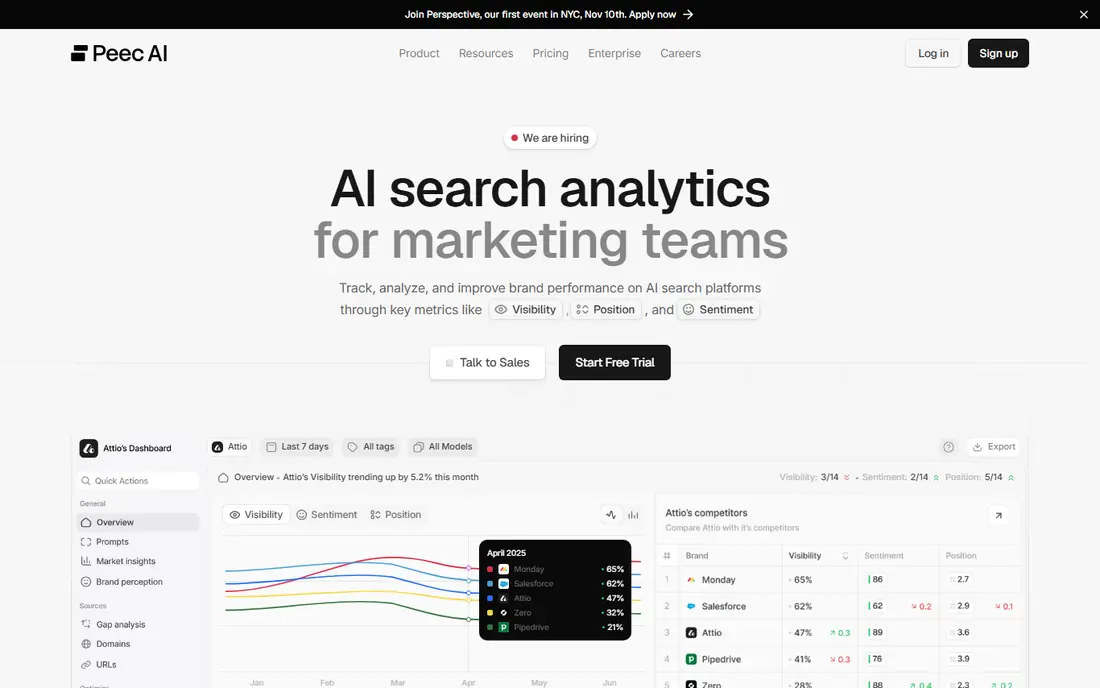
Peec AI suits a marketing team that needs a clean daily read on brand visibility rather than a wall of raw prompt output. Its reports focus on visibility, position, sentiment and share of voice, which helps a team explain movement to a manager without exporting data into a separate report. Multi-country and multi-language tracking also helps brands that sell in more than one market and want the same prompt set checked in each place.
The trade-off is that Peec AI is built for ongoing brand tracking, not for a one-off audit. If you only need to check ten prompts once, a trial or a cheaper entry tool may be enough. For a team that reviews AI visibility every week and compares itself with named competitors, the structured reporting is the main reason to pay more than the cheapest option here.
- Clear visibility, position and sentiment views
- Multi-country and multi-language tracking
- Competitor benchmarking
- Pricing is not a single simple figure across plans
- Smaller teams may not need its full benchmarking depth
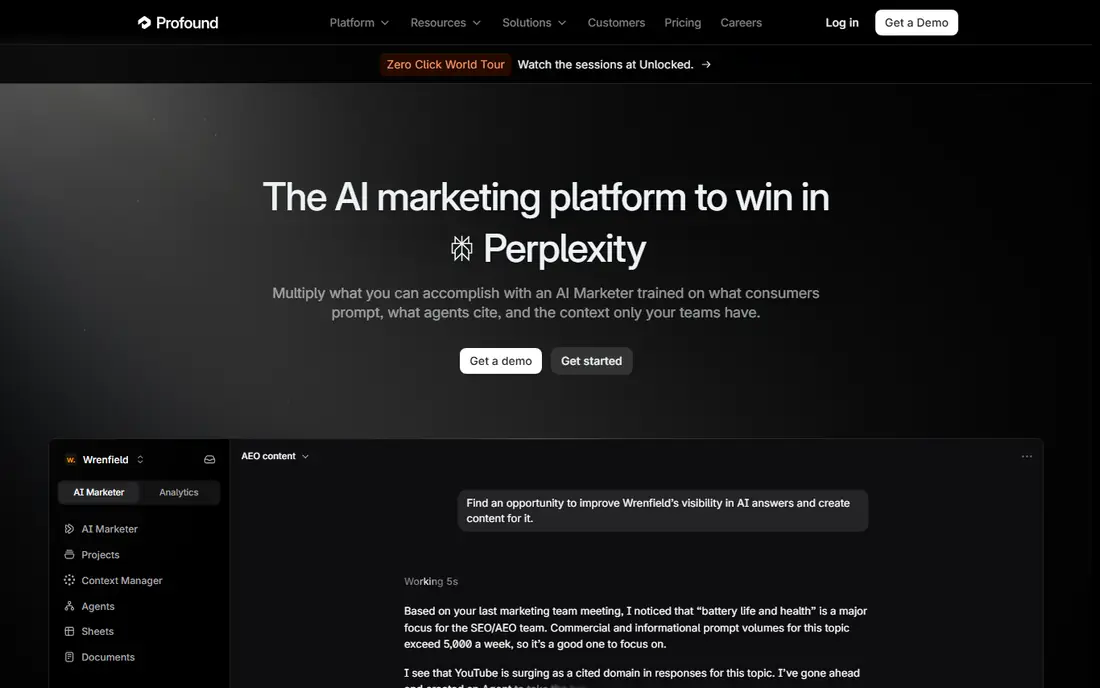
Profound is aimed at large organizations that need AI search treated as a serious reporting channel, with controls, scale and depth that a small dashboard cannot offer. Its platform covers major AI engines and gives larger teams structured monitoring and competitive analysis rather than a single visibility number. For a brand with many products, markets and stakeholders, that structure can matter more than a low monthly fee.
For a small business, Profound is usually the wrong first buy. Pricing is custom, onboarding will take longer, and the reporting depth only pays off when someone is assigned to act on it each week. If you are choosing between Profound and a cheaper tracker, ask whether you need enterprise workflows, security review and large-scale reporting. If the answer is no, start smaller and revisit Profound when AI traffic becomes a major channel.
- Deep enterprise reporting
- Broad engine coverage
- Structured analytics for large teams
- Custom pricing means no quick public starting price
- More than most small businesses need
SE Ranking appeals to teams that already do classic SEO and do not want a separate login only for AI answers. Its AI Results Tracker has covered Google AI Overviews, Google AI Mode, Gemini, ChatGPT and Perplexity, so AI visibility can sit next to keyword rankings, site audits and backlink data. That single-workflow benefit is real for agencies that report on both classic and AI search in the same client meeting.
The honest catch is cost structure. The AI tracker is not always part of the cheapest base plan, so check the current plan and add-on terms before you budget. A team that only needs AI tracking and nothing else in the suite may find a standalone tool cheaper. A team that already uses SE Ranking for daily SEO work will usually get more value by adding AI tracking there.
- AI tracking inside a full SEO suite
- Traditional rank tracking included
- Competitor comparison
- AI features may sit in higher plans or add-ons
- Pricing varies with the base plan chosen
Semrush AI Visibility Toolkit makes most sense as an add-on for a team that already pays for Semrush. It tracks AI visibility for a domain and lets that team compare AI mentions with the keyword, traffic and content data it already reviews. For an in-house marketer who lives in Semrush reports, that context can be more useful than a separate AI-only dashboard.
The per-domain price is the limit to watch. One domain at $99 per month is clear enough, but an agency with many client domains will see the bill grow quickly. A standalone tracker with a prompt-based price may be cheaper for that use case. Choose Semrush here only if the rest of the suite is already part of your workflow.
- Sits inside a widely used SEO platform
- Tracks AI visibility per domain
- Useful alongside keyword and content data
- Priced per domain, so multi-domain tracking adds up
- Not a standalone budget tracker
Ahrefs Brand Radar is useful for a team that wants AI brand visibility connected to the link and content research Ahrefs already does well. It can surface prompts and brand mentions that a team would not have written from scratch, which is valuable because AI visibility often hinges on questions you never thought buyers would ask. That discovery angle is its main edge over a tracker that only checks prompts you type in.
The downside is that Brand Radar is part of a larger, paid Ahrefs setup, and the AI components can carry their own add-on costs. A small team that does not use Ahrefs for anything else should not buy the whole suite only for this feature. A team already inside Ahrefs should trial it with its real brand prompts before adding it to a client report.
- Strong backlink and content data behind it
- Helps find prompts you had not thought to track
- Brand monitoring inside a known SEO tool
- AI features depend on the Ahrefs plan and add-on chosen
- Pricing can be complex
Scrunch organizes its work around monitoring, analysis and optimization, which suits a content team that wants more than a chart. Persona and funnel views help a team see which kinds of buyers meet the brand in AI answers, and the guidance points toward page and content changes rather than leaving the team to guess. That makes it a stronger fit for publishers and content-led brands than for a team that only needs a weekly mention count.
The price and depth are the trade-off. Scrunch costs more than the cheapest trackers in this list, and its value drops if no one owns the follow-up work. If your team already publishes and updates content on a schedule, Scrunch can connect AI visibility to that routine. If you only check rankings once a month, a simpler tracker will do.
- Monitoring, analysis and optimization in one flow
- Persona and funnel views
- Crawler analytics in some plans
- Higher starting cost than entry trackers
- Best value only when a content team acts on the findings
Rankscale is a good option for a startup or small brand that wants broad AI engine coverage without committing to an enterprise contract. It tracks visibility across AI engines including Google AI Mode, ChatGPT, Perplexity, Gemini, Claude and AI Overviews, and it covers mentions, citations and historical trends. The low starting price makes it easy to trial with a real prompt set before deciding whether AI tracking deserves a larger budget.
The catch is that flexible pricing needs a careful read. Credit or tier limits, prompt counts and engine choices all affect what you actually get each month, so compare the plan you will use, not only the headline starting price. For a team with a clear, limited prompt list, Rankscale is strong value. For a team that needs polished client reporting, a more expensive tool may present the same data better.
- Low starting price
- Broad engine coverage
- Citation and trend tracking
- Plan structure can be confusing at first
- Support and reporting depth vary by tier
ZipTie.dev fits a team that needs AI visibility checks in bursts rather than a daily dashboard it pays for all year. A pay-per-check model makes the cost easy to predict for occasional audits, seasonal campaigns or a one-off competitor review. It is a sensible choice when AI tracking is still a question to answer, not yet a weekly reporting duty.
The limit is the reverse of that strength. If you move to daily tracking across many prompts, a subscription tracker will usually be cheaper and will give you trend charts and alerts that a per-check tool does not emphasize. Use ZipTie.dev to test the value of AI tracking, then switch to a subscription when the checks become routine.
- Pay-per-check style model suits occasional use
- Focused AI visibility checks
- Simple budgeting for infrequent tracking
- No free plan
- Less suited to daily, high-volume monitoring with rich reporting
How we picked these
We compared official feature pages, pricing pages and public documentation for tools that explicitly track Google AI Mode or closely related AI search surfaces, and we kept only tools that were still offered in October 2026. We favored tools with clear prompt tracking, citation or mention data and competitor views, and we mixed low-cost entry tools with suite add-ons and enterprise platforms so different budgets can find a fit. We did not claim hands-on testing, and we did not list our own product. Prices change often in this category, so check the vendor pricing page before you buy.
What to check before you pay
Start with your prompt list, not the tool demo. Write down the exact questions a buyer would ask, including comparison questions, local questions and problem questions, and run the same list in any trial. A tool that looks strong on brand-name prompts can look weak on the comparison prompts that actually drive sales, and that gap only shows up with real prompts.
Next, check citation quality, not only mention counts. An AI answer can mention your brand in a weak context, cite a competitor, or cite an old page. Look at which pages get cited, whether those pages are current, and whether the answer recommends you or merely names you. That review tells you whether you need better pages, better structured content, or simply more prompt coverage.
Finally, settle the billing model before you scale. Per-domain pricing, per-prompt pricing, credit packs and enterprise contracts all punish a different kind of growth. Count your domains, prompts, engines and seats, then model a full month at your real volume. A cheap headline price can become an expensive bill once every product line and market is added.
Frequently asked questions
What is Google AI Mode rank tracking?
Google AI Mode rank tracking records whether and how a brand, page or product appears in Google AI Mode answers for a set of prompts. It usually covers mentions, citations, recommended position and competing sources, rather than a single classic ranking position. That makes it closer to visibility tracking than to old-style rank checking.
Is AI Mode tracking the same as AI Overviews tracking?
No, although many tools cover both. AI Overviews appear inside classic Google results, while AI Mode is a separate conversational search experience. A brand can appear in one and not the other, so check which surface each plan actually tracks before you buy.
How many prompts should a small business track?
Start with 15 to 30 prompts that cover brand queries, product comparisons, local intent and common problems. That range is large enough to show real patterns and small enough to review each week. Add prompts only when a new product, location or competitor changes the questions buyers ask.
Can one tool track ChatGPT, Perplexity and Google AI Mode together?
Several tools in this list do, but engine lists vary by plan, so confirm the exact engines on the tier you will buy. Some plans cover only a few engines, and others charge more for extra engines or prompt volume. A trial with your own prompts is the fastest way to confirm coverage.
Should a small business pay for AI tracking yet?
Pay if AI answers already influence your buyers, or if competitors appear in AI answers for your core queries and you do not. If AI search brings little traffic and your classic rankings are still weak, fix your core pages and local presence first, then add AI tracking when you have content worth citing.
Why do visibility scores differ between tools?
Each vendor defines visibility differently, uses different prompt sets, check frequencies and engine versions, and weights mentions, citations and position in its own way. Treat each score as a trend inside that tool, not as a universal grade you can compare directly with another vendor.
Sources
See where you really rank - block by block
ProMapRanker scans Google Maps across a grid of your service area. Simple monthly plans from $19, white-label on every plan.
Start freeKeep reading
 outreach alternatives
Outreach Alternatives in 2026
Compare outreach alternatives for 2026, from Salesloft and Apollo to HubSpot and Lemlist, with pricing, channels, features, limits, and honest trade-offs.
Read → best web conference tools
Best Web Conference Tools in 2026
Compare the best web conference tools for meetings, webinars and team calls, with current pricing, free plans and honest limits for each option here today.
Read → best voice cloning tools
Best Voice Cloning Tools in 2026
Compare the best voice cloning tools in 2026, from ElevenLabs and Descript to Resemble and Cartesia, with consent rules, pricing, licenses, and limits.
Read →