 ProMapRanker
Best AI Learning App in 2026: 8 Apps Compared


Guided tutoring for school subjects · Pricing starts at: $4 per month
Key takeaways
- Khanmigo suits guided school tutoring, while Duolingo suits languages and Quizlet suits memorization, so the best app depends on the subject.
- AI tutors help most when learners attempt problems first and use the app to check reasoning, not to copy final answers.
- Free tiers are useful for testing, but AI features such as Q-Chat, Roleplay, and worked steps often sit behind paid plans.
- Parents should check age rules, supervision tools, and data handling before giving a child full access to any AI tutor.
- No app replaces a teacher, and AI answers can be wrong, so verify important facts with course materials or a trusted source.
Quick comparison
| Pick | Great for | Pricing starts at | Free tier | |
|---|---|---|---|---|
| Khanmigo | Guided tutoring for school subjects | $4 per month | No | Visit |
 Duolingo | Language learning with AI practice | See website | Yes | Visit |
 Quizlet | Flashcards and practice tests with AI help | $7.99 per month | Yes | Visit |
 Photomath | Step-by-step math help | $9.99 per month | Yes | Visit |
 Brilliant | Interactive math, science, and coding | See website | Free trial | Visit |
 Memrise | Vocabulary and language recall | See website | Yes | Visit |
 Speak | AI conversation practice for languages | See website | Free trial (7 days) | Visit |
 NotebookLM | Studying from your own notes and sources | Free | Yes | Visit |
The best AI learning apps
These eight apps use AI to tutor, quiz, explain, or organize learning. We compared subject fit, AI features, pricing, and limits for learners of different ages.
Khanmigo, from Khan Academy, is built to tutor rather than hand over answers. It asks questions back, checks reasoning, and nudges learners toward the next step, which suits school math, science, and reading practice. Because it sits inside Khan Academy, learners can move between lessons, practice, and tutoring without switching apps.
The catch is access. Teacher tools are free in the US, but individual learner and family access starts at $4 per month or $44 per year in recent listings, and the payer must be an adult US resident. School access depends on district setup. For families that already use Khan Academy, Khanmigo is the most education-focused tutor in this group.
- Socratic tutoring that guides rather than giving answers
- Tied to Khan Academy lessons
- Teacher tools free in the US
- Learner access costs extra
- Availability and age rules vary
- School access depends on district setup
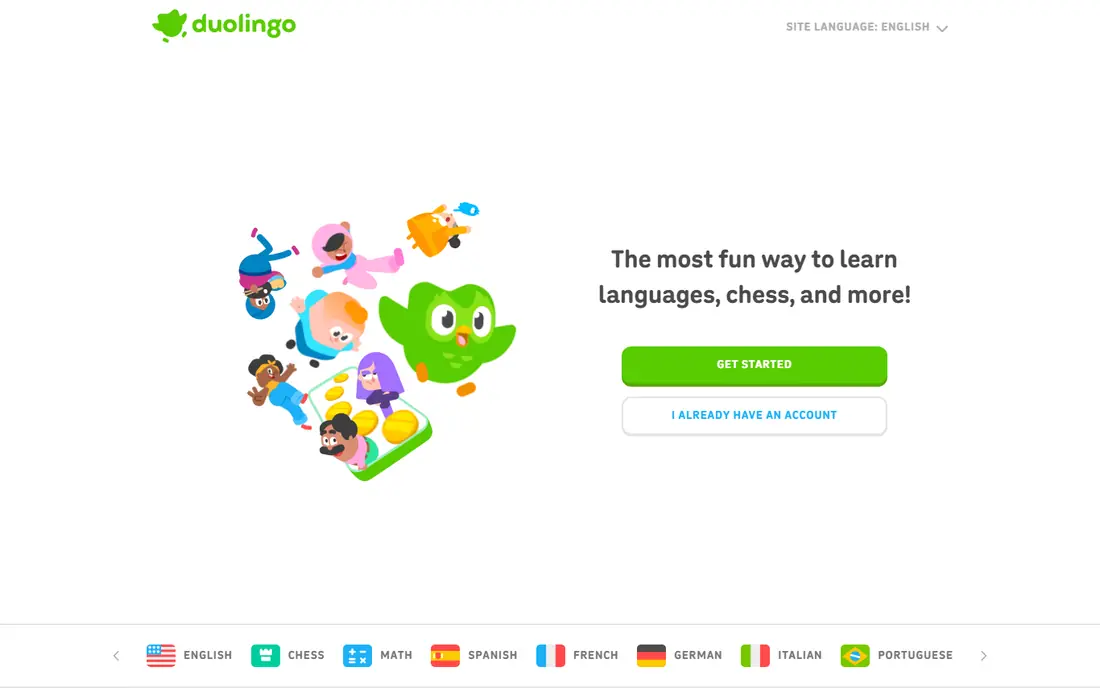
Duolingo remains the easiest language app to start, with free courses, short lessons, and streaks that keep daily practice going. Its Max tier adds AI features such as Roleplay conversation practice and explanations for answers, which help learners move from tapping answers to actually speaking. That step matters for learners who can read a language but freeze in conversation.
Pricing is the weak spot for comparison. Duolingo sells Max only in the app, and published prices have varied, with older reports near $30 per month. Recent coverage also noted possible changes to Max availability. Check the price inside the app before budgeting, and start with the free tier to confirm your language course has the AI features you want.
- Free core courses with game-like lessons
- AI Roleplay and conversation practice on Max
- Wide language choice
- Max pricing is shown in the app and has changed
- AI features are not on every course
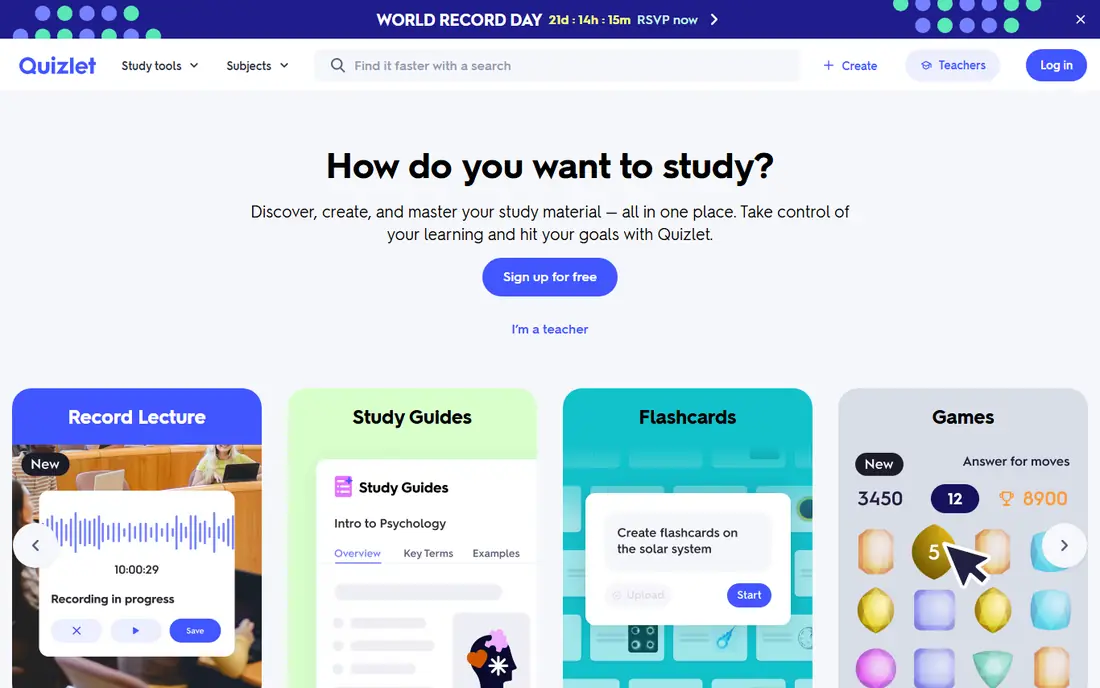
Quizlet is the best-known flashcard tool, and its AI features build on that base. Plus adds Magic Notes, which turns notes into flashcards and practice material, and Q-Chat, a conversational tutor that quizzes learners from their own sets. Practice tests and Learn modes add spaced repetition, which helps facts stick better than rereading notes.
The free plan is genuinely useful but limited, with daily caps on Learn and Test rounds and ads. Plus costs $7.99 per month or $35.99 per year in recent listings. Students who study daily across subjects will use Plus enough to justify it. Occasional users may find the free tier enough for one exam period.
- Huge flashcard library
- AI Magic Notes and Q-Chat tutoring on Plus
- Practice tests and Learn modes
- Free plan limits daily Learn and Test rounds
- AI features need the paid Plus plan
Photomath helps learners who get stuck on a math step. Point a phone camera at a problem, and the app shows worked steps rather than just a final answer. That makes it useful for checking homework and understanding where a solution went wrong. The free Basic tier covers core solving, while Plus adds fuller explanations.
The risk is misuse. Used to copy answers, Photomath teaches nothing, and teachers can often tell. Used to study steps after attempting a problem, it is a strong learning aid. Plus costs $9.99 per month or $69.99 per year in recent listings. Parents should set clear rules about attempting work first.
- Camera-based problem solving
- Clear worked steps
- Covers school through college math
- Easy to misuse for copying answers
- Plus needed for full explanations
Brilliant teaches through interactive problems, not long lectures. Learners solve short challenges in math, science, data, and coding, with explanations that build on each step. That hands-on style suits adults and older students who want to understand concepts deeply rather than memorize formulas.
Brilliant is less of a homework helper than Khanmigo or Photomath, and its AI and personalization features sit inside paid plans whose prices vary. A free trial lets learners test whether the problem style fits them. For self-paced learners who enjoy puzzles and reasoning, Brilliant is a strong pick.
- Interactive problem solving rather than video lectures
- Strong math and science paths
- Good for self-paced adults
- Pricing is shown on the site and varies by plan
- Less suited to school homework help
Memrise focuses on the part of language learning that many apps neglect: remembering words and hearing them used by real speakers. Short sessions, video clips, and spaced repetition help vocabulary stick, which supports reading and listening even when grammar study happens elsewhere. The free tier lets learners test the style before paying.
The limit is depth. Memrise does not replace a full language course for grammar and writing, so pair it with Duolingo or a class for balanced progress. Pricing is shown on the site and in the app, so confirm the current plan before subscribing. For vocabulary building, it remains one of the most enjoyable tools here.
- Video clips from native speakers
- Spaced repetition for vocabulary
- Fun, short sessions
- Less grammar depth than a full course
- AI features vary by plan
Speak is built for learners whose main gap is speaking. Its AI tutor holds conversations, corrects pronunciation and phrasing, and gives feedback in real time, which is hard to get from a flashcard app. That speaking-first design helps learners who understand a language but struggle to produce it under pressure.
The drawback is transparency. Speak publishes no single web price, with pricing shown in the app and a 7-day trial to test it. Language coverage is also narrower than Duolingo. Learners who need conversation practice for a supported language should trial it with real speaking goals, such as travel or job interviews, and judge progress after a week.
- AI conversation practice with instant feedback
- Speaking-first design
- Good for confidence
- Price is shown only in the app
- Fewer languages than Duolingo
NotebookLM, from Google, works differently from the tutors above. Learners upload their own notes, readings, and documents, then ask questions, build study guides, and generate audio overviews grounded in those sources. That grounding reduces the risk of invented facts, since answers should trace back to material the learner provided.
The limit is scope. NotebookLM teaches from your sources, so it cannot replace a course for a subject you have not studied yet. Upload quality matters, and learners should still check citations against the original text. For exam revision from class notes, it is a free and genuinely useful study tool.
- Answers grounded in your uploaded sources
- Study guides and audio overviews
- Free with a Google account
- Quality depends on your source material
- Not a tutor for new subjects
How we picked these
We compared official product and pricing pages and recent published comparisons for AI learning tools active in October 2026. We favored apps with real AI tutoring, quizzing, or source-based study features, not just a chatbot added to old content. We kept a mix of subjects, since language, math, and general study needs differ, and we favored tools with free tiers or trials so learners can test fit. Where pricing was shown only in an app, we wrote See website rather than repeating an old or third-party price as current.
How to get real value from an AI learning app
Attempt the problem before asking the app, then use its explanation to find where your reasoning broke down. Ask the tutor to quiz you, not just to explain, since recall practice builds memory better than rereading. Keep sessions short and regular, and mix app practice with classwork, textbooks, and teacher feedback.
Age, privacy, and academic honesty
Check age rules and parent controls before a child uses an AI tutor, and review what data the app collects from uploads and chats. Do not upload sensitive school records or personal details. Schools may also have rules about AI help on homework and exams, so learners should follow those rules and use AI tools to learn, not to submit work they did not do.
Frequently asked questions
What is the best AI learning app?
Khanmigo suits guided school tutoring, Duolingo suits languages, Quizlet suits memorization, and Photomath suits math steps. The best app depends on the subject and the learner's age. Most learners benefit from one tutor plus one practice tool, rather than many subscriptions at once.
What are the best AI learning platforms for students?
Khan Academy with Khanmigo, Quizlet, and Photomath form a strong student stack for school subjects, flashcards, and math. Duolingo and Memrise cover languages, while NotebookLM helps with revision from class notes. Start with free tiers, then pay only for features used weekly.
What are the best AI learning tools for adults?
Brilliant suits adults who want interactive math, science, and coding, while Speak suits adults who need conversation practice. NotebookLM suits professionals studying from their own documents. Adults should trial each app with a real learning goal, such as a work skill, rather than browsing features.
What is the best AI tool for learning a language?
Duolingo suits structured daily lessons with AI conversation practice on Max, while Speak suits speaking confidence and Memrise suits vocabulary. Combine a course app with a speaking or vocabulary app for balanced progress. Check language coverage, since AI features vary by course.
Is Khanmigo free?
Khanmigo teacher tools are free in the US, but learner and family access starts at $4 per month or $44 per year in recent listings. Availability, age rules, and school access vary, so confirm current pricing and eligibility on Khan Academy before subscribing.
Sources
See where you really rank - block by block
ProMapRanker scans Google Maps across a grid of your service area. Simple monthly plans from $19, white-label on every plan.
Start freeKeep reading
 zoho inventory alternatives
6 Alternatives to Zoho Inventory, Compared on Price and Fit
Zoho Inventory alternatives: 6 tools compared on price, free plans and fit. Katana leads the list for manufacturers. Fit and flaws are laid out for each entry.
Read → zoho crm alternatives
Best Zoho CRM Alternatives (2026)
Need Zoho CRM alternatives? We compare 7 tools on cost, free access and who each suits. Every pick gets a straight assessment. Built for quick decisions.
Read → zelle alternatives
Best Zelle Alternatives in 2026
Compare the best Zelle alternatives for sending money to friends, paying sellers and moving funds abroad, with honest notes on fees, speed and safety in 2026.
Read →