 ProMapRanker
Best AI Investment App for Beginners in 2026

Key takeaways
- Betterment and Wealthfront lead for hands-off beginners, with automated portfolios, rebalancing and goal tracking.
- SoFi Automated Investing and Fidelity Go suit beginners on a budget, with low or no advisory fees for small balances.
- Acorns suits habit builders who want round-ups and small automatic deposits, rather than a full portfolio service.
- No app guarantees returns, and investing carries risk, so start small, diversify, and keep an emergency fund separate.
Quick comparison
| Pick | Great for | Pricing starts at | Free tier | |
|---|---|---|---|---|
 Betterment | Hands-off automated portfolios | Free | Free trial | Visit |
 Wealthfront | Automated investing and planning | Free | No | Visit |
 SoFi Automated Investing | Budget beginners | Free | Yes | Visit |
 Fidelity Go | Low-cost starter portfolios | Free | Yes | Visit |
 Schwab Intelligent Portfolios | No advisory fee portfolios | Free | Yes | Visit |
 Acorns | Round-ups and habits | Free | Free trial | Visit |
 Vanguard Digital Advisor | Low-cost long-term investing | Free | No | Visit |
 Magnifi | AI research and ideas | Free | Free trial | Visit |
The best AI investment apps for beginners
These apps use automation and AI-assisted tools to help beginners invest without picking individual stocks. Robo-advisors build and rebalance a diversified portfolio from low-cost funds, while research apps use AI to explain stocks and screen ideas. This is general information only, not financial advice. Investing carries risk, and no app guarantees returns. Keep money you need soon in cash savings, and invest only money you can afford to leave invested for years.
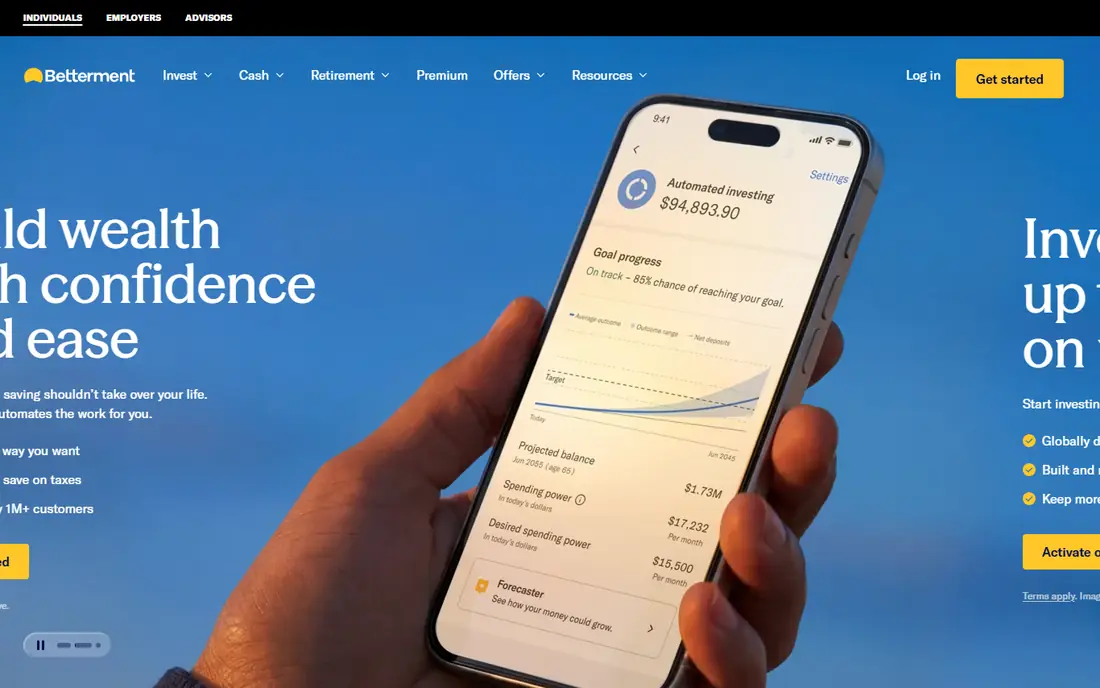
Betterment is our pick for most hands-off beginners. You answer questions about goals, time horizon and risk tolerance, and Betterment builds a diversified portfolio from low-cost funds, then rebalances it as markets move. Goal tracking shows progress toward retirement, a house deposit or a general wealth goal, and tax-loss harvesting on eligible taxable accounts can offset gains with losses where rules allow.
The cost is the honest trade. Betterment charges an annual advisory fee, with plan details that vary by balance and features, so check the current fee page before you open an account. That fee buys automation and planning tools, but it still reduces returns over time. For beginners who want to set up once and invest regularly, Betterment automation is worth the fee for many people.
- Automated portfolios and rebalancing
- Goal-based planning
- Tax-loss harvesting on eligible accounts
- Advisory fee applies
- Small balances may face a monthly fee under some plans
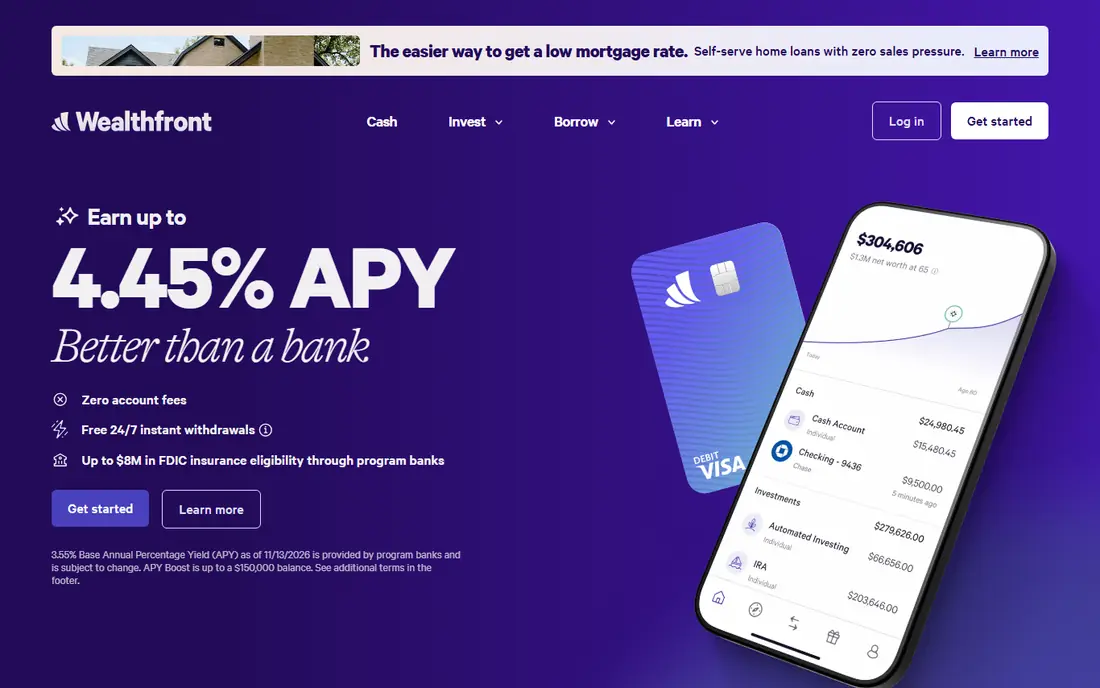
Wealthfront suits beginners who want automation plus a fuller financial plan. Its automated portfolios use diversified funds, rebalance over time, and adjust risk as goals change. Planning tools let you model retirement, a home purchase or time off work, and tax-loss harvesting on eligible accounts aims to improve after-tax results. Cash and investing sit in one app, which helps if you keep a cash buffer next to a portfolio.
Wealthfront charges an advisory fee, and its minimum to start is higher than SoFi or Acorns, so budget beginners should compare that threshold first. The planning tools are the reason to pick Wealthfront over a simpler robo-advisor, but they matter only if you use them. If you want the simplest possible start, a lower-minimum option below may fit better.
- Automated portfolios and rebalancing
- Financial planning tools
- Tax-loss harvesting on eligible accounts
- Advisory fee applies
- Higher minimum than some budget rivals

SoFi Automated Investing is the budget pick for beginners who already use SoFi or want one app for banking and investing. It builds a goal-based portfolio, rebalances it, and charges no advisory fee according to its site, with a low minimum to start. That low barrier makes it easy to begin with a small amount and add regular deposits over time.
The limit is depth. SoFi automated portfolios cover the basics well, but advanced tax-loss harvesting and direct indexing tools found at some rivals are thinner here. Investing through SoFi Securities carries risk, and investment balances are not bank deposits. For a first automated portfolio on a budget, SoFi is a clear, low-friction choice.
- No advisory fee stated
- Low minimum to start
- Goal-based portfolios in the SoFi app
- Fewer advanced tax tools than some rivals
- Investing carries risk and is separate from SoFi banking
Fidelity Go is a strong low-cost starter for beginners who want a trusted brand and no advisory fee at small balances. Fidelity states no advisory fee for balances under a set threshold, with a fee above that level, and it uses low-cost Fidelity funds in its portfolios. The app keeps setup simple, with goal questions that shape a diversified mix of stocks and bonds.
The trade is control. Fidelity Go portfolios are guided, so you cannot pick individual stocks inside the robo-advisor account. That limit is actually a benefit for most beginners, since it prevents impulsive stock picks. If you later want to pick stocks, a separate Fidelity brokerage account can sit alongside Fidelity Go, but keep the two goals separate.
- No advisory fee for smaller balances stated
- Low-cost funds
- Strong Fidelity support and research
- Advisory fee applies above a balance threshold
- Portfolio choices are guided, not fully custom
Schwab Intelligent Portfolios suits beginners who want a no-advisory-fee robo-advisor from a large broker. Portfolios use diversified exchange-traded funds, rebalance automatically, and link to Schwab banking and brokerage accounts. Support is broad, with phone, branch and online help, which helps first-time investors who want a person to ask.
The honest catch is cash. Every Schwab Intelligent Portfolio holds a cash allocation, which can drag returns when markets rise, since cash earns less than stocks over long periods. That cash also serves as a buffer in falls, so the trade is stability versus growth. Check the cash share for your risk level before you open, and compare it with fee-charging rivals that hold less cash.
- No advisory fee stated
- Diversified ETF portfolios
- Schwab support and banking links
- Cash allocation is part of every portfolio
- Minimum to start is higher than budget rivals
Acorns is the habit builder in this list. Link a card, and Acorns rounds up purchases to the next dollar and invests the spare change, with recurring deposits you can set by day, week or month. Portfolios are simple and diversified, which keeps decisions easy for people who have never invested. That automation helps beginners who struggle to save a lump sum.
The cost needs a plain look. Acorns charges a monthly subscription, which can be a large share of returns on a very small balance. If you invest only round-ups, the fee may outweigh early gains, so add a recurring deposit to make the fee proportion smaller. Acorns is best for building a habit, not for replacing a full robo-advisor once your balance grows.
- Round-ups invest spare change automatically
- Recurring deposits
- Simple portfolios for beginners
- Monthly subscription fee
- Portfolio options are simpler than full robo-advisors
Vanguard Digital Advisor suits beginners who want low costs and a long-term, conservative approach. It uses low-cost Vanguard funds, charges a low advisory fee, and builds portfolios based on goals and risk tolerance. The Vanguard name and fund costs appeal to investors who care more about keeping fees low than about flashy AI features.
The minimum to start is higher than SoFi, Acorns or Fidelity Go, so it fits beginners with a lump sum or a steady deposit plan better than someone starting with a few dollars. Digital Advisor also offers fewer AI research and stock idea tools than Magnifi or newer apps. For a low-cost, set-and-forget portfolio, Vanguard remains a solid choice.
- Low advisory fee stated
- Low-cost Vanguard funds
- Conservative, long-term portfolios
- Higher minimum than budget rivals
- Fewer AI research features than newer apps
Magnifi is different from the robo-advisors above, and that difference matters. It is an AI-assisted research and screening tool that helps beginners explore stocks, funds and ETFs, compare ideas, and check a portfolio, rather than building and managing a portfolio automatically. That makes it useful for learning, since you can ask about a company or screen for funds that match a theme or risk level.
The limit is clear: Magnifi does not invest for you, so you still need a brokerage account to buy anything it surfaces. AI research can also be wrong or out of date, so verify key facts in company filings or fund documents before you act. Use Magnifi to learn and shortlist ideas, and use a robo-advisor above if you want automation to handle the portfolio itself.
- AI-assisted stock and fund screening
- Plain-language research help
- Watchlists and portfolio checks
- Research tool, not a robo-advisor
- Does not build or rebalance a portfolio for you
How we picked these
We compared official app and site pages, fee disclosures, minimums and portfolio methods. We kept only apps that are live in the US in 2026, serve beginners, and use automation or AI-assisted tools in a clear way. We favored low fees, diversified portfolios, goal planning and plain-language help, and we left out trading bots that promise returns, borrowed-money products, and platforms with unclear fees. We did not claim hands-on testing, and we did not treat any return claim as a fact.
How to start without taking on too much risk
Start with a goal, a time horizon and an amount you can leave invested. A long horizon suits a higher stock share, while money needed within a few years belongs in cash savings, not in stocks. Set up a small recurring deposit, such as a fixed amount each payday, and let automation handle rebalancing. That habit matters more than picking the perfect portfolio on day one.
Fees, diversification and behavior
Fees compound just like returns, so a low advisory fee and low fund costs help over decades. Diversification across stocks, bonds and regions reduces the impact of any single company failing. The hardest part is behavior: avoid checking your portfolio daily, avoid selling in a fall, and avoid chasing a hot stock tip. A robo-advisor helps here, since it rebalances by rule rather than by emotion.
AI tools and their limits
AI tools can explain a company, screen for funds, and summarize news in plain language, which helps beginners learn faster. They cannot predict markets, guarantee returns, or replace your own judgment. Check AI outputs against primary sources, such as fund prospectuses and company reports, before you invest. If an app promises guaranteed profits or risk-free trading, walk away.
Frequently asked questions
What is the best AI investment app for beginners?
Betterment is our pick for most hands-off beginners, thanks to automated portfolios, goal planning and rebalancing. SoFi Automated Investing suits budget beginners with no advisory fee, while Fidelity Go suits low-cost starters. Pick based on fee, minimum and whether you want full automation or research help.
How much money do I need to start?
It depends on the app. SoFi and Acorns let you start with a few dollars, while Vanguard Digital Advisor and Schwab Intelligent Portfolios need larger minimums. Start with an amount you can afford to leave invested, then add a small recurring deposit. A low minimum matters less than a habit you keep.
Is AI investing safe?
AI-assisted investing uses algorithms to build and rebalance portfolios, but investing always carries risk, and no app guarantees returns. Your portfolio can fall in value, especially in the short term. Diversified funds, a long horizon and an emergency fund separate from investments reduce risk, but they do not remove it.
Do robo-advisors pick individual stocks?
Most robo-advisors in this list build portfolios from diversified funds, not individual stocks. That approach spreads risk across many companies and regions. Research apps such as Magnifi help you explore individual stocks, but buying single stocks carries higher risk than a diversified fund portfolio.
What fees should I expect?
Expect an advisory fee on some robo-advisors, plus fund expense ratios inside the portfolio. SoFi and Schwab charge no advisory fee for their automated portfolios, while Betterment, Wealthfront and Vanguard charge a low annual fee. Acorns charges a monthly subscription. Check the current fee page before you open an account.
Can I lose money with an AI investment app?
Yes. All investing carries risk, and portfolio values fall as well as rise. A diversified, long-term portfolio reduces the chance of a permanent loss from a single company, but market falls still happen. Invest only money you can leave invested for years, and keep short-term money in insured cash savings.
Sources
- https://www.betterment.com
- https://www.wealthfront.com
- https://www.sofi.com
- https://www.fidelity.com
- https://www.schwab.com
- https://www.acorns.com
- https://www.vanguard.com
- https://www.magnifi.com
- https://kinggram.org/ai-investment-platforms-compared/06/15/
- https://gov.capital/wealth-hacking-2026-the-ultimate-guide-to-low-fee-robo-advisors-that-maximize-returns/
See where you really rank - block by block
ProMapRanker scans Google Maps across a grid of your service area. Simple monthly plans from $19, white-label on every plan.
Start freeKeep reading
 zyte alternatives
Best Zyte Alternatives in 2026
These zyte alternatives cover managed scraping APIs, proxy networks and no code tools for lawful collection from your own or consented sources only in 2026.
Read → zerto alternatives
Best Zerto Alternatives in 2026
Compare the best zerto alternatives for disaster recovery and replication, with recovery targets, cloud options and honest trade-offs for teams in 2026.
Read → zerofox alternatives
Best ZeroFox Alternatives in 2026
We compared 9 zerofox alternatives for brand protection, phishing takedowns, dark web monitoring, and social impersonation, with clear coverage notes.
Read →