 ProMapRanker
Best AI Event Intelligence Company in 2026


Demand forecasting from event data · Pricing starts at: See website
Key takeaways
- Event intelligence covers two different jobs: forecasting demand from outside events, and running better events with AI tools.
- PredictHQ leads on external event data for forecasting, while Cvent and Bizzabo lead on planning and managing events themselves.
- Check how a platform scores event impact, since raw event lists without impact estimates are hard to act on.
- Data coverage by city and category matters more than the total event count a vendor quotes.
- Trial the data on your own past demand or attendance before committing to an annual contract.
Quick comparison
| Pick | Great for | Pricing starts at | Free tier | |
|---|---|---|---|---|
| PredictHQ | Demand forecasting from event data | See website | No | Visit |
 Cvent | Enterprise event management | See website | No | Visit |
 Bizzabo | Event marketing and attendee experience | See website | No | Visit |
 Splash | Branded event pages and registration | See website | No | Visit |
 Hopin | Virtual and hybrid events | See website | No | Visit |
 EventMobi | Conference apps and engagement | See website | No | Visit |
 Whova | Conference networking and logistics | See website | No | Visit |
 Grip | AI matchmaking for business events | See website | No | Visit |
 Dataminr | Real time event alerts for risk teams | See website | No | Visit |
The best AI event intelligence companies
We compared platforms on the kind of intelligence they provide, data coverage, AI features, and fit for different buyers. Some firms supply event data for forecasting, while others use AI to plan, market, and run events. The list below covers both, and each profile states which job it does best.
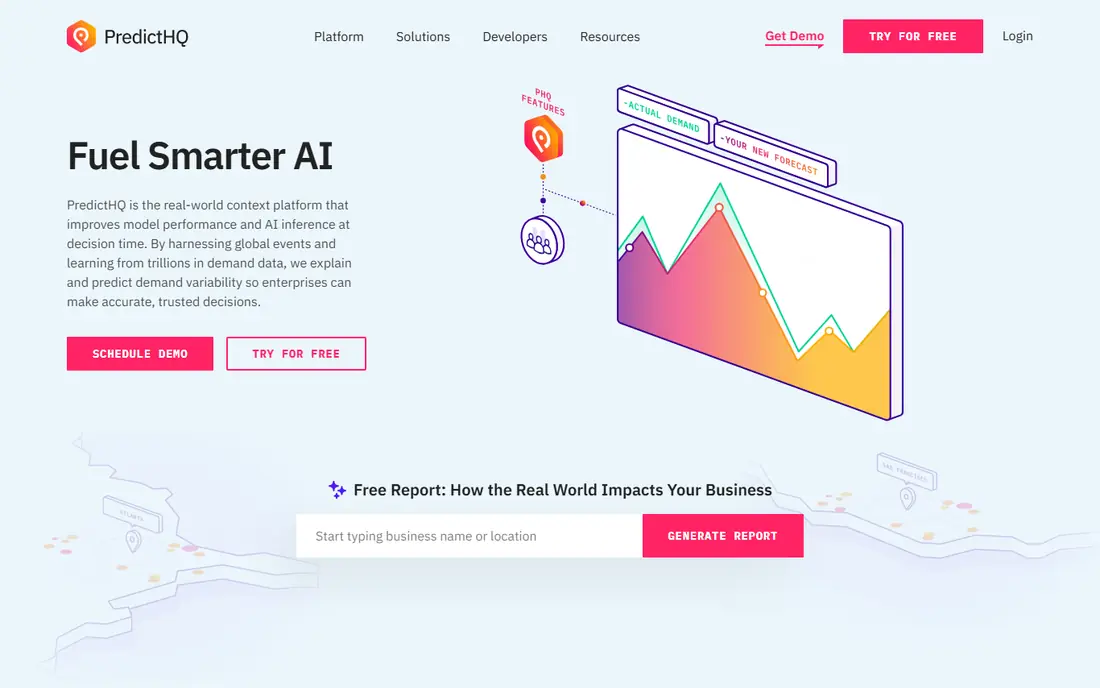
PredictHQ aggregates, verifies, and enriches event data from many sources, covering scheduled events such as concerts, sports, and conferences, plus unscheduled events such as severe weather and airport delays. Its platform helps retail, hospitality, transport, and service businesses anticipate demand shifts, adjust pricing, manage inventory, and plan staffing. The key difference from a simple event calendar is impact scoring, which estimates how much an event is likely to move demand in a given location.
This is a data product, not an event planning tool. Buyers need a forecasting process, or a partner system such as a supply chain or revenue tool, to turn the data into decisions. Companies that already track demand anomalies should test PredictHQ data against their own history first, since that test shows value faster than any vendor demo.
- Large verified event database across many categories
- Impact scoring for demand planning
- API and SDKs for integration
- Enterprise pricing is quote based
- Needs data or forecasting skills to use well
- Hotel specific features are limited
Cvent is the enterprise standard for managing events at scale. It covers venue sourcing, registration, event marketing, onsite check in, and post event reporting, with AI features that help with tasks such as session recommendations and reporting. Large companies and associations use it when many teams run many events under one set of controls.
The breadth is also the drawback. A small team running a few events a year may find the platform and the price more than needed. Cvent suits organizations that run events as a regular business function and need consistent data, approvals, and reporting across all of them.
- Full event lifecycle from sourcing to registration to reporting
- Large enterprise customer base
- Venue sourcing tools
- Enterprise pricing and implementation
- Smaller events may not need the full suite
- Setup takes time
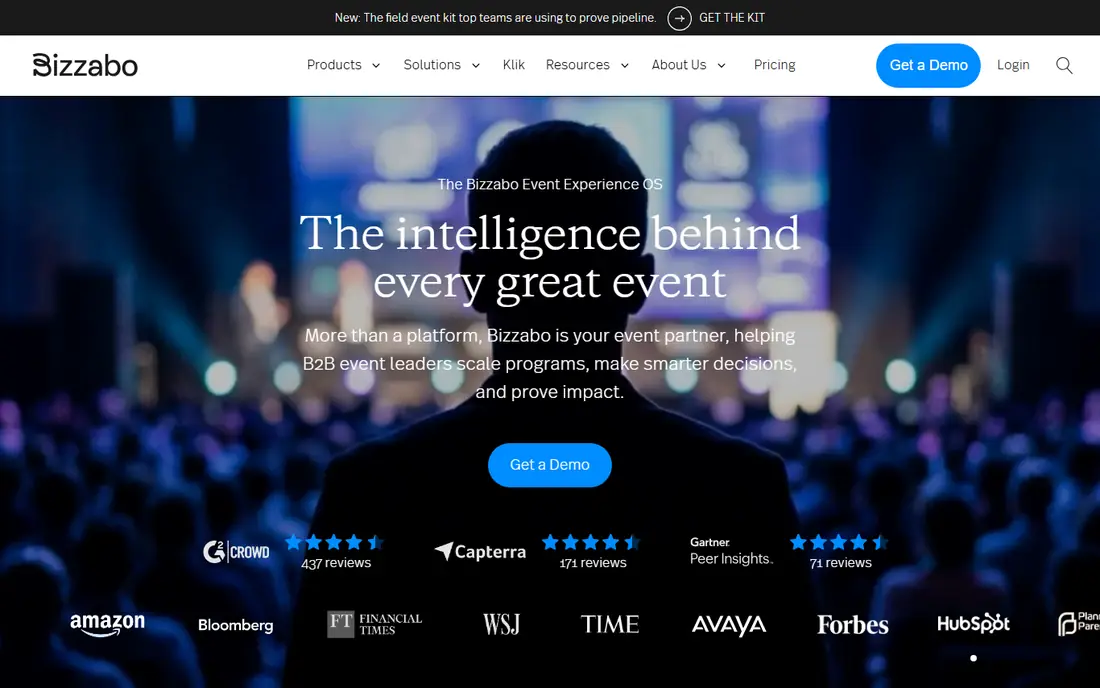
Bizzabo positions itself around the attendee experience, from event websites and registration to onsite engagement and follow up. Its analytics help organizers see which sessions, sponsors, and campaigns perform, and its AI tools support tasks such as content and attendee recommendations. That focus suits marketing led teams that measure events by pipeline and engagement, not only by logistics.
Buyers should map their event types to the platform before signing. A single annual conference and a series of small field events need different features, and pricing follows that scope. Ask for a demo using your own event format, not a generic template, to judge fit.
- Strong event websites, registration, and marketing tools
- Attendee engagement features
- Analytics across the event lifecycle
- Pricing is quote based
- Advanced features sit on higher tiers
- Smaller teams may use only part of the platform
Splash focuses on the front door of an event: branded pages, invitations, registration, and guest lists. Marketing teams use it to run polished event programs without building pages from scratch for each event. Integrations with CRM and marketing automation tools help connect attendance to follow up campaigns.
It is less of a full conference platform than Cvent or Bizzabo, and that is fine for its target buyer. If your main need is beautiful, on brand event pages with solid registration and reporting, Splash is a strong fit. If you need complex session scheduling and onsite logistics for thousands of attendees, look at the larger platforms first.
- Strong branded event pages
- Registration and guest management
- Integrations with CRM and marketing tools
- Less suited to very large conferences
- Pricing is quote based
- Advanced analytics need higher tiers
Hopin built its name on virtual events, with stages, sessions, networking rooms, and expo areas inside one platform. It now supports hybrid events as well, where in person and remote audiences join the same program. Organizers use it for summits, product launches, and community events that need to reach a wide audience without travel.
Virtual events still depend on content and production. A strong platform cannot rescue weak sessions or poor moderation, so budget for hosts, producers, and rehearsals. Test networking and expo features with real attendees before a flagship event, since those features make or break the virtual experience.
- Virtual stages, networking, and expo areas
- Hybrid event support
- Recording and replay options
- Virtual first design suits some formats better than others
- Pricing varies by event size
- Attendee experience depends on production quality
EventMobi serves conferences, associations, and corporate events that need a strong attendee app. Attendees use it for schedules, speaker details, maps, networking, and live interaction during sessions. Organizers gain registration, email, and engagement tools in the same system, which reduces the number of vendors per event.
The platform shines when the agenda is complex and attendees need to build their own schedules. For a simple webinar or a single evening reception, it may be more than needed. Associations running annual conferences with exhibitors and sponsors are its natural audience.
- Conference apps with schedules and networking
- Live polling and Q and A
- Registration and event management in one place
- Best for conferences and associations
- Pricing is quote based
- Very small events may not need the full suite
Whova is popular with conferences that care about networking. Attendees can connect before the event, build agendas, join discussions, and find relevant contacts onsite. Organizers use it for registration, agenda management, exhibitor listings, and post event engagement. Its community features help events feel active beyond the main sessions.
Smaller conferences often pick Whova for its balance of features and ease of use. Larger enterprises with strict procurement and integration needs may prefer Cvent, but many mid sized conferences find Whova covers their needs without enterprise overhead. Check attendee app adoption from past events, since networking value depends on how many attendees actually use it.
- Attendee networking and community features
- Agenda and logistics tools
- Virtual and hybrid support
- Pricing varies by event size
- Branding options differ by tier
- Large enterprise needs may require a bigger platform
Grip uses AI to recommend meetings between attendees, exhibitors, and buyers at business events. Its matchmaking engine considers profiles, interests, and goals, then schedules meetings that both sides are likely to value. Organizers of trade shows, hosted buyer programs, and B2B conferences use it to prove networking value with meeting data.
Matchmaking needs scale to work well. A small event with few attendees will generate fewer useful matches than a large trade show. Grip suits organizers who can promise a strong attendee list and who measure success by meetings held, not only by registrations. Ask how recommendations are explained to users, since transparent matches get accepted more often.
- AI powered matchmaking for meetings
- Hosted buyer and exhibitor tools
- Data on meeting outcomes
- Focused on business networking events
- Needs enough attendees for matchmaking to work
- Pricing is quote based
Dataminr sits on the risk side of event intelligence. It scans public data sources and uses AI to surface breaking events, such as severe weather, transport disruption, and public safety incidents, in real time. Corporate security, operations, and crisis teams use it to react faster than they could by monitoring news and social feeds manually.
This is not a tool for planning a conference or forecasting retail demand. It is for teams that must respond when events disrupt people, sites, or supply chains. Buyers should have a clear response workflow before purchase, since an alert only helps if someone is ready to act on it within minutes.
- Real time alerts from public data sources
- AI filtering for relevant events
- Used by risk, security, and operations teams
- Built for risk and operations, not event marketing
- Enterprise pricing
- Needs a response process to act on alerts
How we picked these
We compared vendor pages, platform descriptions, and 2026 comparisons of event technology, and we favored platforms with a clear, current offering in either demand intelligence or event management. We included both sides of the field because the search term covers both, and we stated which job each platform does best. We did not test event data accuracy ourselves, and we did not accept total event counts as proof of quality without impact or coverage details.
How to choose an event intelligence platform
First, name the decision you want to improve. If you forecast demand, staffing, or pricing, you need external event data with impact scoring, and PredictHQ or a similar data provider is the starting point. If you run events, you need planning, registration, and engagement tools, and the choice is among Cvent, Bizzabo, and the other event platforms. Mixing up these two jobs leads to buying the wrong product.
Next, test on your own data. For demand tools, run past events against past sales or bookings and check whether the platform would have flagged the real spikes. For event platforms, run a small real event end to end, from registration to follow up, and measure attendee satisfaction and organizer time saved. A polished demo is not a substitute for either test.
Finally, check coverage and integration. Confirm that the data or platform covers your cities, categories, and event types, and that it connects to the systems you already use, such as your CRM, forecasting tool, or helpdesk. Agree on data update frequency, support hours during live events, and contract terms for event volume that varies by season.
Frequently asked questions
What is AI event intelligence?
It means using AI to turn event information into decisions. That can mean forecasting demand from concerts, sports, and weather, or using AI inside an event platform for recommendations, matchmaking, and reporting. The right product depends on which decision you need to improve.
How is PredictHQ different from Cvent?
PredictHQ supplies data about outside events that affect demand, while Cvent helps you plan and run your own events. A hotel might use PredictHQ to forecast occupancy around a festival, and Cvent to manage its own conference. Many organizations use both kinds of tools for different jobs.
Can AI predict event attendance?
AI can estimate likely attendance from past events, ticket sales, marketing response, and outside factors, but it cannot guarantee a number. Treat forecasts as planning ranges, check them against early registration data, and keep contingency plans for staffing and space.
What should event organizers check in an AI platform?
Check how recommendations are made, what data they use, and whether organizers can override them. Check data privacy for attendee information, integration with your CRM, and support during live events. Ask for references from events of a similar size and format to yours.
Do small events need event intelligence tools?
Small events rarely need enterprise platforms or demand data contracts. A simple registration tool and a good attendee app may be enough. Larger or repeated events benefit more, since the time saved and the data gained repeat across every event.
Sources
See where you really rank - block by block
ProMapRanker scans Google Maps across a grid of your service area. Simple monthly plans from $19, white-label on every plan.
Start freeKeep reading
 zoro.to alternatives
Best Zoro.to Alternatives in 2026
We compare the best zoro.to alternatives in 2026, listing only legal licensed anime streaming services, from Crunchyroll to free options for fans today.
Read → zip alternatives
Best Zip Alternatives in 2026
We compare the best zip alternatives for buy now, pay later in 2026, covering pay-in-4 plans, fees, spending limits, and credit reporting options today.
Read → yesware alternatives
Best Yesware Alternatives in 2026
Compare the best yesware alternatives for sales email tracking, templates, and sequences, with current pricing and honest tradeoffs for small sales teams.
Read →