 ProMapRanker
Best AI Content Optimization Tools in 2026

Key takeaways
- Surfer and Clearscope remain the reference tools for scoring and editorial quality, at different price points.
- Frase suits teams that want research, briefs and drafting in one workflow.
- MarketMuse suits site wide topic planning rather than single page scoring.
- NeuronWriter and Scalenut offer lower cost routes to optimization for small teams.
- A higher content score does not prove accuracy, so fact checking and editing still matter on every draft.
Quick comparison
| Pick | Great for | Pricing starts at | Free tier | |
|---|---|---|---|---|
 Surfer | SERP based scoring | $49 per month | No | Visit |
 Clearscope | Editorial briefs | $129 per month | No | Visit |
 Frase | Research to draft workflow | $39 per month | Free trial | Visit |
 MarketMuse | Topic planning | Free | Yes | Visit |
 Scalenut | All in one drafting | $59 per month | Free trial | Visit |
 NeuronWriter | Budget optimization | $19 per month | Free trial | Visit |
 Dashword | Simple briefs and scoring | $39 per month | No | Visit |
 WriterZen | Keyword clusters and planning | $19 per month | No | Visit |
The best ai content optimization tools
These tools analyze ranking pages, suggest terms and structure, and score drafts against competitors. We compared official pricing pages and public pricing checks from October 2026. Prices are monthly equivalents on annual billing unless noted, and limits on documents or drafts matter as much as the headline price.
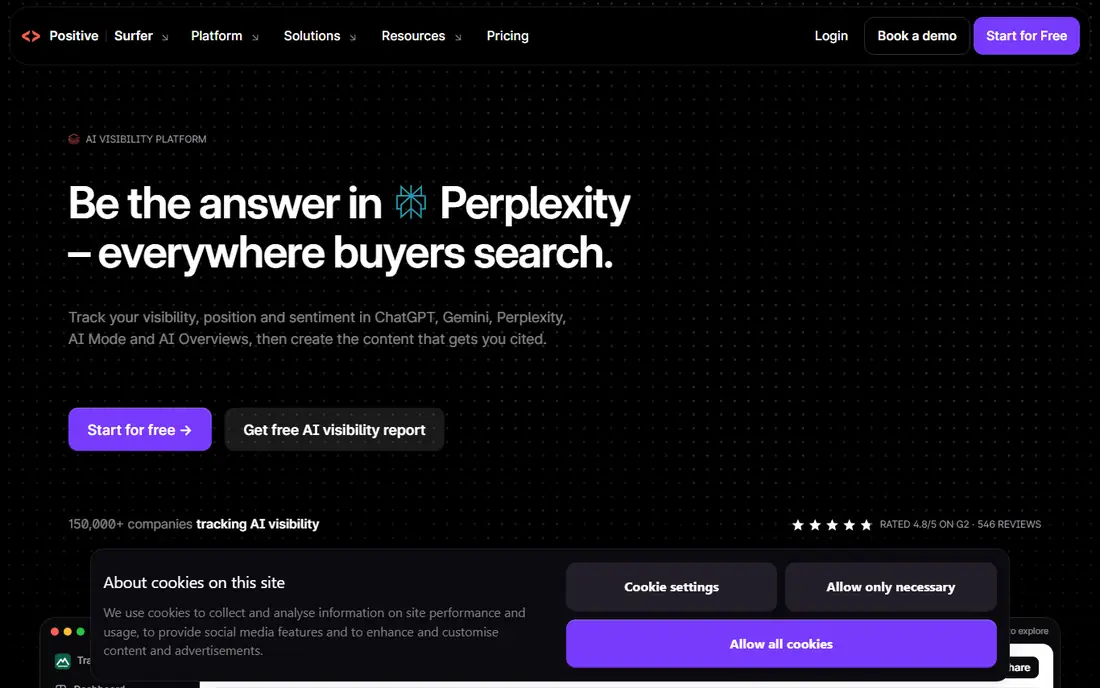
Surfer is the best known content optimization editor, and its Content Score remains the reason many teams buy it. As you write, the editor compares your draft with pages already ranking for the target term, and it suggests terms, headings and length ranges. Briefs built from search results help writers start with a clear outline, and newer AI visibility features track how content appears in AI search results.
The pricing structure needs care. The Discovery plan starts at 49 dollars per month billed annually, with a yearly document allowance rather than a monthly reset. Teams that publish in bursts may use credits unevenly across the year. Surfer suits teams that want a proven scoring workflow and can plan document use across the year.
- Live Content Score in the editor
- SERP based briefs and outlines
- AI visibility tracking on higher plans
- Annual credits reset yearly, not monthly
- Lower plans cap document counts
- Price rises quickly for larger teams
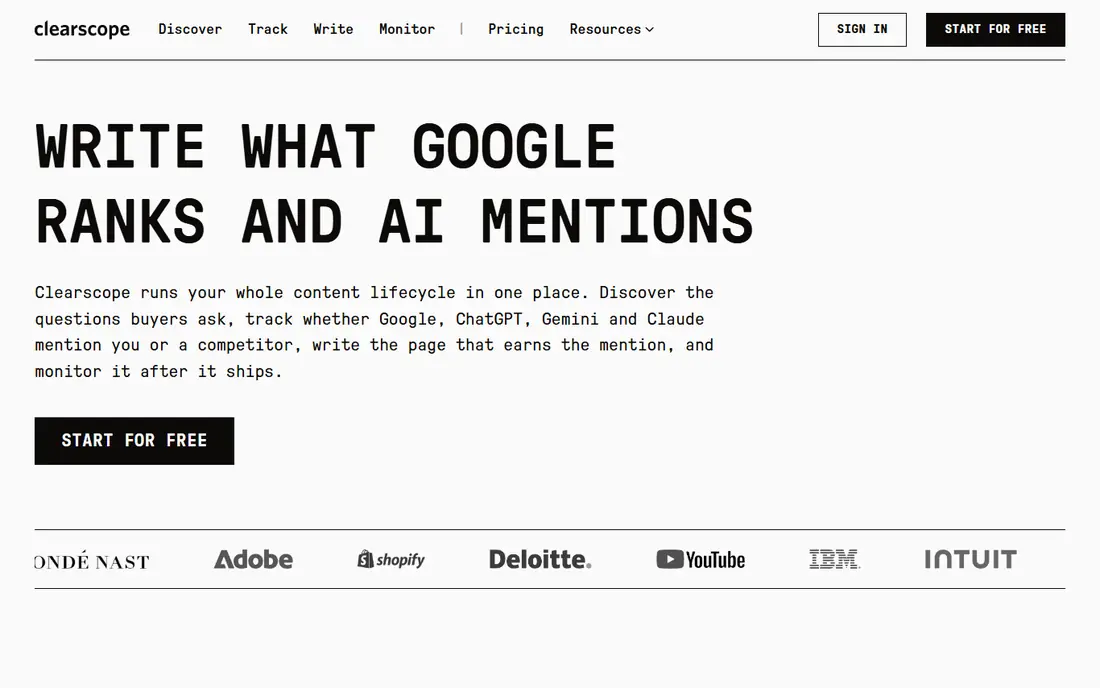
Clearscope is built for editorial teams that want clear, shared standards. Reports grade a draft for topical relevance, and the editor shows which terms and topics are missing without cluttering the writing view. Unlimited users and projects on plans help agencies and in house teams share work without per seat costs dominating the bill.
Price is the main barrier. Essentials starts at 129 dollars per month, with limits on tracked queries, pages and monthly drafts. Teams should check whether their monthly draft volume fits the plan, since unlimited users does not mean unlimited drafts. Clearscope suits teams that value clean editorial guidance and shared workflows over the lowest price.
- Clean grading reports for editors
- Unlimited users and projects on plans
- Strong topical relevance guidance
- Higher entry price than rivals
- Draft and page limits apply
- No permanent free plan
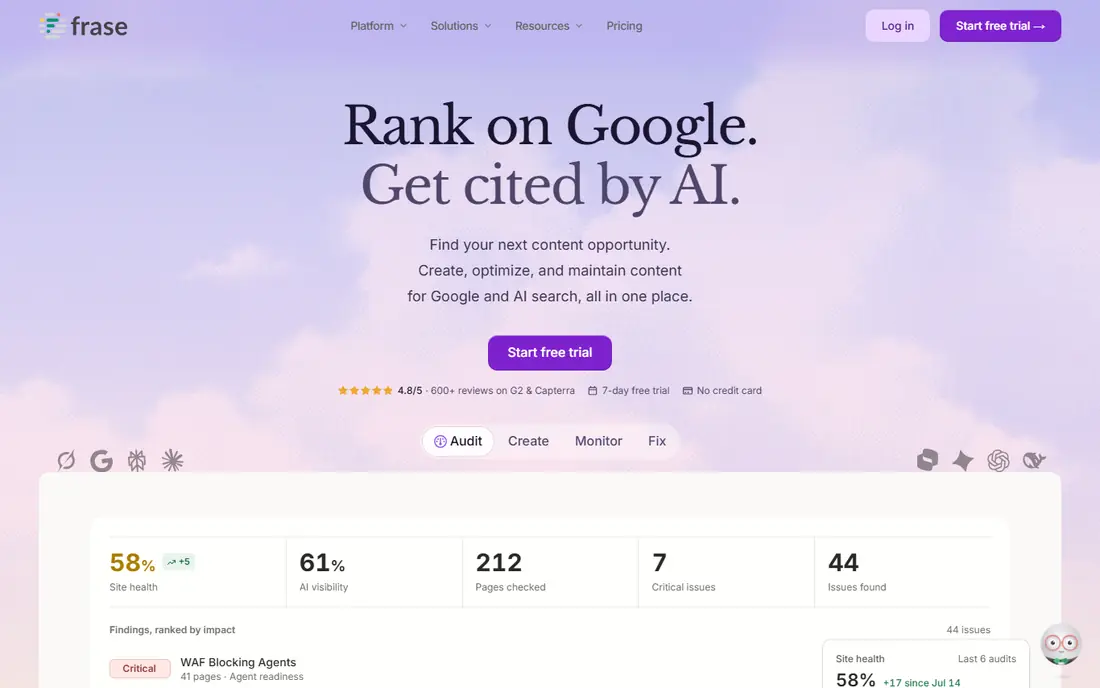
Frase covers the full loop from research to publishing, which is its main advantage over single purpose scorers. It pulls search results, questions and competitor headings into a brief, then lets writers draft and score in the same workspace. The Starter plan starts at 39 dollars per month billed annually, or 49 dollars monthly, with one seat, one site and ten articles per month.
Limits define the fit. Starter caps articles and audit pages, and the seven day trial is capped at a small number of articles and prompts. Teams that publish more than ten optimized articles a month will need a higher tier. Frase suits small teams and solo writers who want one tool for research, drafting and scoring.
- Fast SERP research and brief creation
- Drafting, scoring and publishing in one tool
- Clear Starter limits
- Starter caps articles and audit pages
- Seven day trial is capped
- White label reporting needs Enterprise
MarketMuse takes a different angle, starting with topic authority across a whole site rather than a single page score. It models which topics a site covers well, where gaps sit, and which pages to prioritize, which helps content strategists plan months of work. The free plan offers limited queries per month, making it possible to test the approach before paying.
The weakness is transparency and focus. Paid pricing is not fully published, so larger teams need a quote, and writers who only want a page score may find the strategy view heavier than needed. MarketMuse suits strategists and larger content teams planning by topic, not writers who only need a quick draft check.
- Free plan with limited queries
- Site wide topic modeling and prioritization
- Strong for content strategy work
- Paid pricing is not fully published
- Single page scoring is less central
- Free plan limits queries per month
Scalenut combines keyword clustering, briefs, AI drafting and optimization in one platform, which suits small teams that want fewer tools. Cruise Mode builds a draft from a brief, and the editor scores the result against competing pages. Topic clusters help teams plan related articles around a core theme rather than writing isolated posts.
The catch is that AI drafting does not remove editorial work. Drafts still need fact checking, source checks and human editing, and a higher score does not prove a claim is true. Starter pricing starts at 59 dollars per month, with lower annual promo rates sometimes shown. Scalenut suits teams that want planning and drafting together and can edit AI output carefully.
- Topic clusters, briefs and drafting in one platform
- Cruise Mode for faster drafts
- SERP analysis built in
- Starter price is higher than budget rivals
- Annual promo pricing may differ
- AI drafts still need editing and fact checks
NeuronWriter is the budget pick in this guide, with a Bronze plan from 19 dollars per month billed annually, or 23 dollars monthly. It analyzes competing pages, suggests semantic terms to cover, and scores drafts as you write. Integrations with Google Search Console and WordPress help small teams move from analysis to publishing without extra steps.
Simplicity is both the strength and the limit. The tool covers core optimization well, but it lacks some of the editorial polish, team workflows and AI visibility features of premium rivals. The trial is short, so teams should test a real draft during it. NeuronWriter suits solo writers and small teams with tight budgets who want solid scoring without a large subscription.
- Low entry price
- Semantic term recommendations
- Google Search Console and WordPress integrations
- Interface is simpler than premium tools
- Trial is short
- Advanced features need higher tiers
Dashword focuses on simple content briefs and real time scoring, without the data overload of larger platforms. Writers get an outline, key terms and a live score, and editors can review progress without learning a complex system. That simplicity makes it a good fit for small teams and freelancers who want briefs and scoring in one place.
Depth is the trade off. Dashword does not match Surfer for SERP analysis or Clearscope for editorial reporting, and published pricing has varied across sources, so the current plan page is the final check. Dashword suits teams that want a clean, low friction tool and do not need enterprise reporting or AI visibility tracking.
- Clean brief builder
- Real time scoring without data overload
- Easy learning curve
- Less depth than Surfer or Clearscope
- Pricing has varied across sources
- Smaller feature set for large teams
WriterZen starts with keyword research and clustering, then moves into content planning and optimization. That flow suits SEOs and content marketers who plan many related articles and want to group keywords before writing. The entry price from around 19 dollars per month makes it accessible for freelancers and small teams.
The limit is optimization depth. WriterZen covers planning and basic scoring well, but it does not match Surfer or Clearscope for detailed SERP based guidance. Teams that need deep editorial scoring should pair it with a premium scorer or choose a different primary tool. WriterZen suits planners who want keyword clusters and a research to draft workflow at a low price.
- Keyword clustering and topic planning
- Research to content workflow
- Low entry price
- Optimization depth is lighter than premium tools
- Interface can feel busy
- Support and updates vary by plan
How we picked these
We compared official pricing pages and public pricing checks from October 2026, and we favored tools with a clear content optimization job, current availability and a range of price points. We included premium, mid range and budget tools, plus a strategy focused option, so different team sizes can find a fit. Scores and limits change often, so the vendor pricing page is the final check.
How to choose a content optimization tool
Start with your monthly volume, not the feature list. Count how many optimized articles and audits you will run each month, then check whether the entry plan covers that volume. A cheap plan that caps at ten articles is costly if you publish twenty, while a premium plan with unlimited users is wasted if one writer uses it.
Next, test one real article end to end. Build a brief, write or paste a draft, check the score, and publish through your normal workflow. Note how much editing the draft still needs, since AI output and score chasing can both introduce errors. Choose the tool that fits your volume and editing process, not the tool with the highest score promise.
Mistakes to avoid
Do not chase a perfect score at the cost of clarity, since stuffing terms into a draft harms readability. Do not publish AI drafts without fact checking, since optimization tools check coverage, not truth. Do not buy a yearly plan before testing document limits on a real publishing month.
Frequently asked questions
What is the best AI content optimization platform?
Surfer is a strong all round platform for scoring, while Clearscope suits editorial teams and Frase suits research to draft workflows. MarketMuse suits site wide planning. The best platform depends on volume, team size and whether you need strategy, scoring or drafting most.
What are the best AI tools for content optimization on a budget?
NeuronWriter from 19 dollars per month and WriterZen from around 19 dollars per month are the lowest cost options in this guide. MarketMuse offers a limited free plan for topic planning. Budget tools cover core scoring well, but they lack some premium team and AI visibility features.
What is the best AI content optimization tool for agencies?
Clearscope suits agencies with shared editorial work, since plans include unlimited users and projects. Surfer suits agencies that need SERP based scoring at volume, though document limits need planning. Frase suits smaller agencies that want research, briefs and drafting in one tool.
Do content optimization scores guarantee rankings?
No. Scores measure coverage against competing pages, not accuracy, authority or user satisfaction. A high score can still accompany a weak or incorrect article. Use scores as a checklist, then edit for clarity, evidence and reader value before publishing.
How do AI content optimization tools differ from AI writers?
Optimization tools analyze competing pages and score drafts for coverage and structure. AI writers generate draft text. Many tools now do both, but the jobs differ, and generated text still needs human fact checking and editing. Choose based on whether you need guidance, drafting or both.
Sources
See where you really rank - block by block
ProMapRanker scans Google Maps across a grid of your service area. Simple monthly plans from $19, white-label on every plan.
Start freeKeep reading
 zoho inventory alternatives
6 Alternatives to Zoho Inventory, Compared on Price and Fit
Zoho Inventory alternatives: 6 tools compared on price, free plans and fit. Katana leads the list for manufacturers. Fit and flaws are laid out for each entry.
Read → zoho crm alternatives
Best Zoho CRM Alternatives (2026)
Need Zoho CRM alternatives? We compare 7 tools on cost, free access and who each suits. Every pick gets a straight assessment. Built for quick decisions.
Read → zelle alternatives
Best Zelle Alternatives in 2026
Compare the best Zelle alternatives for sending money to friends, paying sellers and moving funds abroad, with honest notes on fees, speed and safety in 2026.
Read →