 ProMapRanker
Best AI App for Marketing Teams in 2026

Key takeaways
- Jasper is best for on brand long form content, while Copy.ai is best for repeatable short copy and go to market workflows.
- HubSpot suits teams that want AI inside CRM, email, and automation, rather than a standalone writing tool.
- Surfer and Semrush cover SEO and AI search visibility, which writing tools alone do not measure.
- Price per seat, credit limits, and approval controls matter more than headline rates, so trial with a real campaign brief.
Quick comparison
| Pick | Great for | Pricing starts at | Free tier | |
|---|---|---|---|---|
 Jasper | On brand long form content | $59 per month | Free trial | Visit |
 Copy.ai | Short copy and workflows | $24 per month | Yes | Visit |
 HubSpot Marketing Hub | CRM plus AI marketing | Free | Yes | Visit |
 Writesonic | SEO content and AI search | $79 per month | Free trial | Visit |
 Surfer | SEO content scoring | See website | No | Visit |
 Canva | Visual and video design with AI | Free | Yes | Visit |
 Mailchimp | Email marketing with AI help | Free | Yes | Visit |
 Hootsuite | Social publishing with AI | See website | Free trial | Visit |
 Semrush | SEO and AI visibility data | $117.33 per month | Yes | Visit |
The best AI app for marketing teams
We compared official pricing pages, product pages, and feature lists for AI marketing tools live in October 2026. We kept tools that teams actually use for content, SEO, email, social, or CRM work, and we mixed writing, design, and measurement tools so the list covers a full campaign workflow.
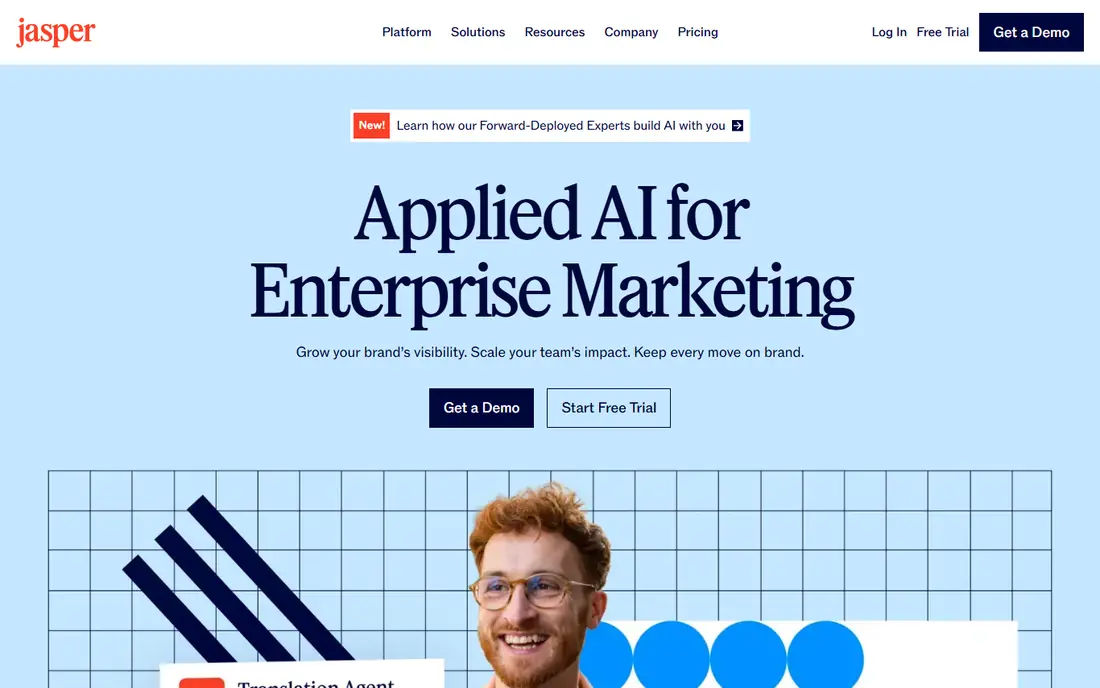
Jasper suits teams that publish a lot of long form material and need it to sound like one brand. Brand voice tools learn from existing pages, campaign templates keep formats consistent, and shared workspaces let writers, editors, and approvers work in one place. Recent listings put Pro at $59 per month billed yearly, or $69 monthly, with a 7 day trial.
The cost is the main barrier, and the output still needs editing, fact checking, and brand review before publishing. If your team produces blog posts, landing pages, and email sequences at volume, Jasper is our pick for content quality and consistency.
- Brand voice controls
- Campaign templates and shared workspaces
- Long form editor
- Priciest entry point here
- Output still needs a human editor
- No permanent free plan
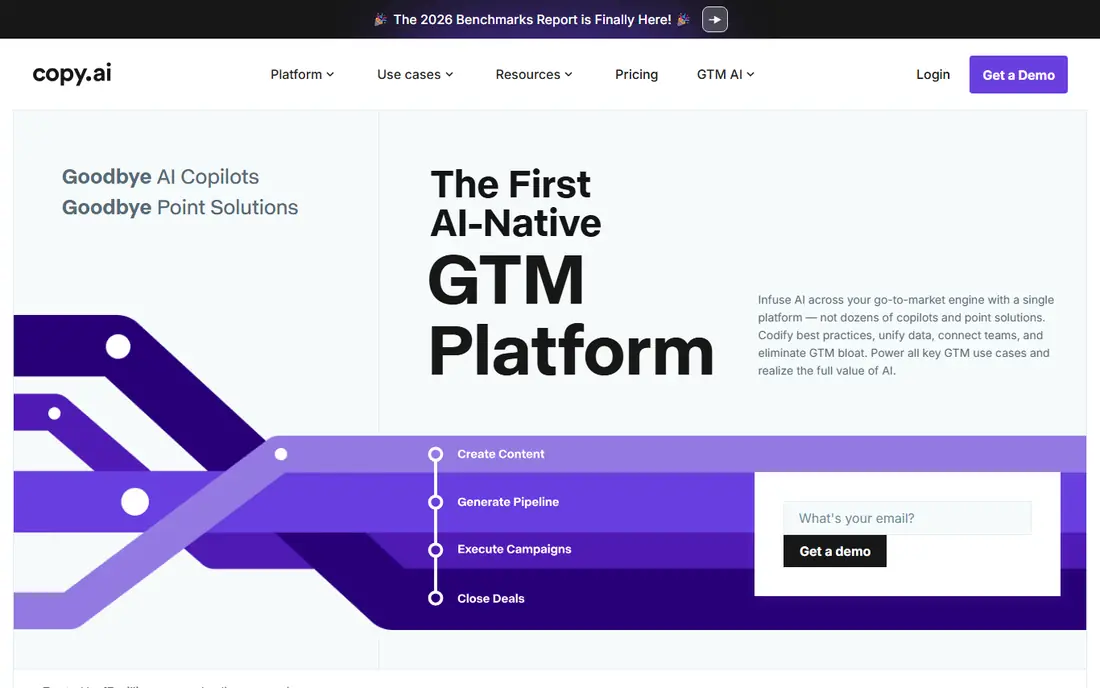
Copy.ai is the value pick for teams that need short copy at scale. The Chat plan is listed at $24 per month billed yearly, with multiple seats and a free plan for small use, while workflow tiers for larger go to market automation cost far more. Templates cover ads, emails, social posts, and sales outreach, and CRM links help revenue teams reuse approved copy.
Long form articles and deep brand work are not its strongest area, and the jump to workflow pricing can surprise buyers. For social, ad, and email copy plus repeatable workflows, Copy.ai gives teams a lot for the price.
- Low cost team seats
- Repeatable workflows
- CRM links for go to market teams
- Workflow tiers jump sharply in price
- Long form depth is thinner than Jasper

HubSpot is different from a standalone writing app, because AI sits inside the system that already holds your contacts, emails, and campaigns. The free tier covers CRM basics, while Starter is listed from $10 per seat per month for new customers in recent comparisons, with higher tiers adding automation and reporting.
That structure helps teams avoid copy pasting between tools, since AI drafts can draw on CRM context and feed straight into email and automation. The trade off is cost growth as seats and contacts grow, and AI depth varies by tier. For teams that already use HubSpot, or want one system for marketing, this is the natural pick.
- Free CRM tier
- AI help inside email, content, and automation
- Contact and campaign data in one place
- Paid tiers scale with seats and contacts
- AI features vary by tier
Writesonic has moved beyond a simple writer into SEO and AI search visibility. The Starter plan is listed at $79 per month billed yearly, or $99 monthly, with a set number of articles per month plus tracking for how content appears in AI answers and search overviews. That tracking is useful if your team must prove content still gets cited.
If you only need drafting, the price will feel high, and the article limit matters more than the headline rate. For content teams that must rank and be cited, not just publish, Writesonic is a strong, if pricey, stack.
- Article workflows plus AI search visibility tracking
- Content scoring
- Brand voice tools
- Entry price is high for writing alone
- Article limits shape the real cost
Surfer helps teams write content that can actually rank. It builds briefs from search results, scores drafts against top pages, and flags missing terms, structure, and length issues before publishing. Recent listings show Discovery plans around 49 euros per month on annual billing, so check the current US price at checkout.
Surfer is not a CRM, email tool, or social publisher, so it works best paired with a writer or CMS. If your bottleneck is ranking, not drafting speed, Surfer gives editors a clear, measurable target for each article.
- Clear content scores and briefs
- SERP based guidance
- AI writing linked to SEO data
- No free plan
- Pricing is in euros for some plans
- Not a full marketing suite
Canva covers the visual half of marketing that writing tools ignore. Magic Studio offers AI text, image, and video help, templates cover social, ads, decks, and print, and Pro, listed at $144 per year for one person in recent comparisons, adds brand kits and premium assets. Most teams can start free and upgrade only the designers who need brand controls.
Canva will not plan SEO, run email automation, or replace a CRM, so pair it with a writing or marketing hub. For social creatives, ad variants, and fast design without a designer on every task, Canva is the easiest team tool here.
- Free plan for design
- Magic Studio AI tools for text, images, and video
- Brand kits on Pro
- Not a copywriting or SEO platform
- Pro cost adds up for large teams
Mailchimp suits teams whose main channel is email. The free tier covers small lists and basic campaigns, while paid plans scale with contacts and add automation, segmentation, and AI help for subject lines and content. That makes it easy to test a newsletter or nurture sequence before committing.
Large lists can get expensive, and the most useful automation sits in higher tiers. For lifecycle email, newsletters, and small business campaigns, Mailchimp remains a practical, well understood choice with AI help where it saves time.
- Free tier for small lists
- AI subject line and content help
- Automation and segmentation
- Cost scales with contacts
- Advanced automation needs higher tiers
Hootsuite helps social teams publish, reply, and report across channels from one dashboard. AI caption tools speed up drafting, team approvals keep brand control, and reports show which posts drive clicks and engagement. That workflow matters when several people post for one brand.
Pricing varies by plan and seats, so get a quote for your channel count before budgeting. For a solo creator, a cheaper scheduler may do. For a team that needs approvals, a shared inbox, and reporting, Hootsuite is worth trialling.
- Multi channel scheduling and inbox
- AI caption help
- Team approvals and reporting
- Pricing is not fully transparent for all plans
- Smaller teams may find it pricey
Semrush is the measurement pick. It covers keyword research, site audits, competitor tracking, content tools, and newer AI visibility measurement, which shows whether your brand appears in AI answers. The SEO plan is listed at $117.33 per month billed yearly, or $139.95 monthly, with a limited free account.
Small teams may find the price and depth more than they need, and the platform takes time to learn. For agencies and larger marketing teams that must report rankings, traffic, and AI citations, Semrush gives the data that writing tools cannot.
- Broad SEO, content, and AI visibility data
- Keyword and competitor research
- Reporting for clients
- Expensive for small teams
- Learning curve is steep
- Free account has hard limits
How we picked these
We compared official pricing pages, product pages, and feature lists for tools live in October 2026. We kept tools that marketing teams use for real campaign work, and we mixed content, SEO, design, email, social, and CRM tools rather than listing nine similar writers. We did not claim hands on testing, and prices can vary by seats, contacts, credits, and region, so confirm the plan that matches your team size.
How to choose an AI tool for your team
Start with the bottleneck, not the buzz. If writers spend hours on first drafts, a writing platform helps. If content ranks poorly, an SEO tool helps more. If social posts go out late or off brand, a scheduler with approvals helps. If email lists grow messy, a CRM linked email tool helps. One tool rarely fixes all four, so pick the bottleneck first and add a second tool only when the first is working.
Next, trial with a real brief, not a demo prompt. Give each tool the same campaign goal, brand guide, and deadline, then check output quality, editing time, and approval steps. Watch credit limits, seat costs, and contact pricing, since those decide the true monthly bill. Also check data handling, since marketing tools may process customer data, and confirm who owns the output.
Finally, keep a human in charge of facts, claims, and brand voice. AI drafts can invent features, prices, or statistics, and publishing those errors damages trust. Set a rule: AI drafts, people check, and no claim goes live without a source. With that rule, AI saves time without lowering quality.
Frequently asked questions
What is the best AI tool for marketing teams overall?
There is no single winner, since teams need different tools. Jasper is best for on brand writing, HubSpot is best for CRM linked marketing, and Semrush is best for SEO measurement. Pick by your bottleneck first.
Can AI replace a marketing team?
No. AI speeds up drafting, variation, and reporting, but strategy, brand judgment, fact checking, and customer insight still need people. Teams that treat AI as a draft assistant get better results than teams that publish raw output.
How much do AI marketing tools cost?
Costs range from free tiers at Canva, Mailchimp, and HubSpot to $24 per month at Copy.ai, $59 at Jasper, and over $117 at Semrush, with seats, contacts, and credits adding cost. Trial the plan that matches your team size.
Which AI tool is best for SEO content?
Surfer is best for scoring and briefs tied to search results, while Semrush is best for keyword and AI visibility data. Writesonic combines drafting with AI search tracking, which suits content teams that must be cited.
Is AI generated marketing content safe to publish?
It is safe only after human review. Check every claim, price, and statistic against a source, and keep brand voice and legal claims under human control. Unchecked AI output can invent facts and harm trust.
Should small teams buy one tool or several?
Start with one tool for your biggest bottleneck, such as writing or social scheduling, and add a second only when the first is in daily use. Buying several tools at once often leaves most features unused.
Sources
See where you really rank - block by block
ProMapRanker scans Google Maps across a grid of your service area. Simple monthly plans from $19, white-label on every plan.
Start freeKeep reading
 zscaler alternatives
Best Zscaler Alternatives in 2026
Looking for zscaler alternatives? We compare 9 SASE and zero trust platforms on architecture, data protection, pricing, and fit for your network and team.
Read → zapier alternatives free
Best Zapier Alternatives Free in 2026
Nine automation tools for zapier alternatives free in 2026, all with genuinely free tiers, plus free plan limits, starting prices and upgrade paths explained.
Read → which platform is best for online reputation
Which Platform Is Best for Online Reputation in 2026
Wondering which platform is best for online reputation? We compare 8 review, listing, and response tools for small and multi-location businesses and agencies.
Read →