 ProMapRanker
Best AI Agent for Customer Service in 2026


Teams wanting a proven agent on any helpdesk · Pricing starts at: $29 per seat per month
Key takeaways
- An AI agent differs from a chatbot because it takes actions, such as checking an order or issuing a refund, rather than only answering questions.
- Intercom Fin leads for teams that want a proven agent on their existing helpdesk, with per outcome pricing that scales with resolutions.
- Helpdesk native agents suit teams that already run Zendesk, Freshdesk, or HubSpot, while standalone agents suit teams that want to keep their helpdesk.
- Per resolution pricing can look cheap and grow fast, so forecast it against your real monthly ticket volume before you sign.
- Every agent on this list needs a clear handoff to a human, since no agent should trap a customer in a loop when a case needs judgment.
Quick comparison
| Pick | Great for | Pricing starts at | Free tier | |
|---|---|---|---|---|
| Intercom Fin | Teams wanting a proven agent on any helpdesk | $29 per seat per month | Free trial | Visit |
 Zendesk AI | Teams already committed to Zendesk | See website | Free trial | Visit |
 Freshdesk Freddy AI | Small and mid sized teams on Freshdesk | $19 per agent per month | Free trial | Visit |
 Salesforce Agentforce | Enterprises running Salesforce Service Cloud | See website | No | Visit |
 HubSpot Customer Agent | Teams whose sales and marketing run on HubSpot | See website | Free trial | Visit |
 Ada | High volume brands needing multilingual agents | See website | No | Visit |
 Gorgias AI Agent | Shopify and ecommerce brands | See website | No | Visit |
 Tidio Lyro | Small businesses wanting a low cost agent | See website | Free trial | Visit |
 Help Scout AI | Small human first teams on Help Scout | $25 per user per month | Free trial | Visit |
The best AI agents for customer service
Customer service AI has moved from scripted chatbots to agents that read a ticket, check an order, apply a policy, and complete an action. That shift matters: a chatbot points a customer to a tracking page, while an agent can check the order and fix the problem. We compared nine agents that businesses use in 2026. Our pick for most teams is Intercom Fin, with Zendesk AI for Zendesk shops and Freshdesk Freddy for smaller teams on a budget.
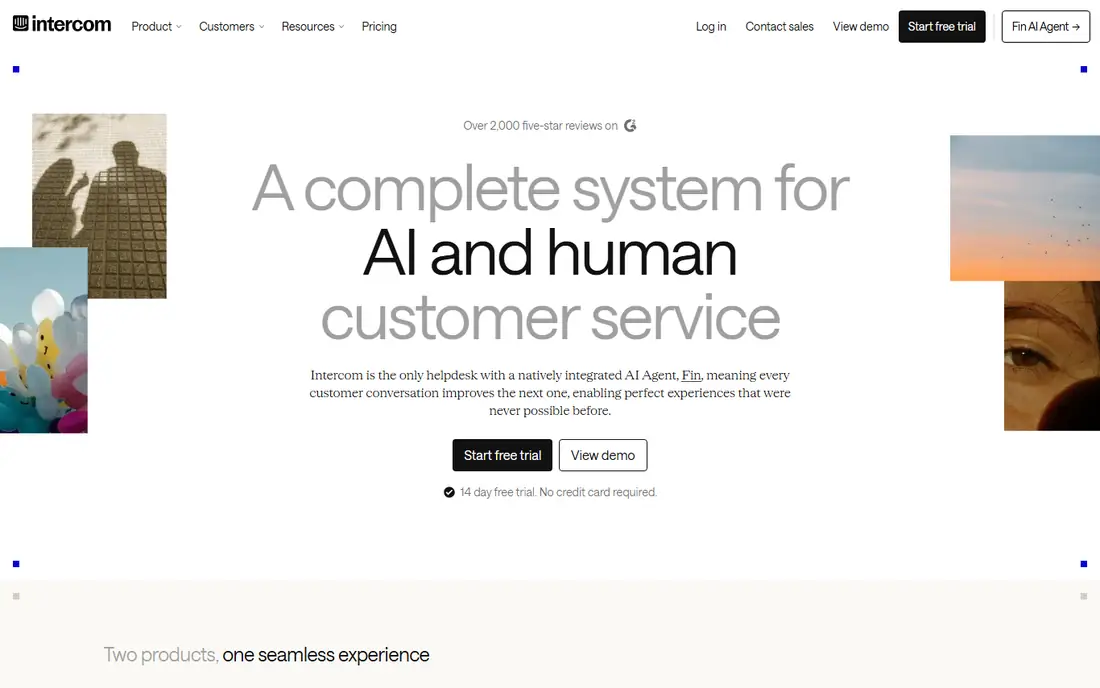
Intercom Fin is the most widely used AI customer service agent, and its per outcome model is the reason many teams try it first. Fin answers from your help centre and connected sources, resolves common questions end to end, and hands off cleanly when a case needs a person. It can also run on helpdesks other than Intercom, so you do not have to move your whole support system to use it.
The cost model needs forecasting. Seats start near $29 per month, plus a fee per resolved outcome, so a busy month costs more than a quiet one. Fin is also only as good as the help content it reads, so weak documentation leads to weak answers. For teams with solid help content and a clear ticket volume, Fin is the safest proven agent.
- Per outcome pricing
- Works on Intercom or other helpdesks
- Voice option
- Strong knowledge use
- Per resolution fees add up at volume
- Seats cost extra
- Setup needs good help content
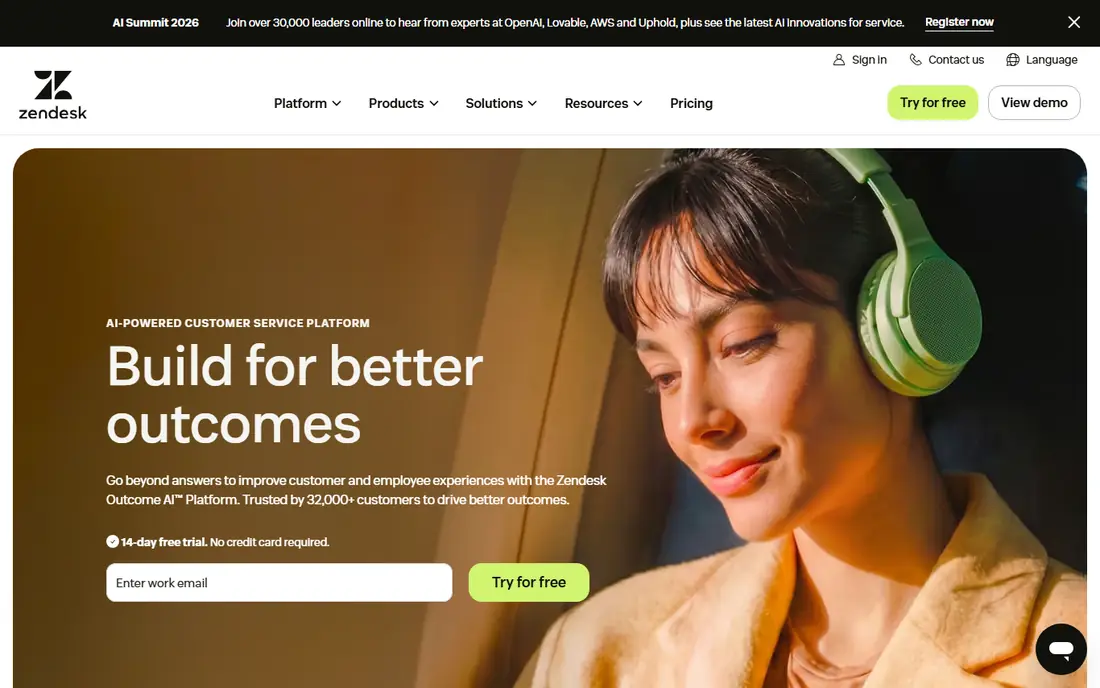
Zendesk AI brings agents, triage, and a copilot for human agents into the Zendesk Suite, so teams that already run Zendesk get AI without a new platform. Its agents can resolve common tickets, route complex ones to the right team, and draft replies that agents can approve. Voice support extends the same agent to phone conversations.
The pricing combines agent seats with resolution usage, so the total depends on both headcount and volume. It also makes most sense inside Zendesk: teams on another helpdesk would need to migrate to get the full benefit. For a Zendesk shop that wants AI woven through its existing queues, Zendesk AI is the natural choice.
- Native Zendesk agents
- Intelligent triage
- Copilot for human agents
- Voice support
- Pricing combines seats and resolution usage
- Best value inside Zendesk only
- Setup takes planning
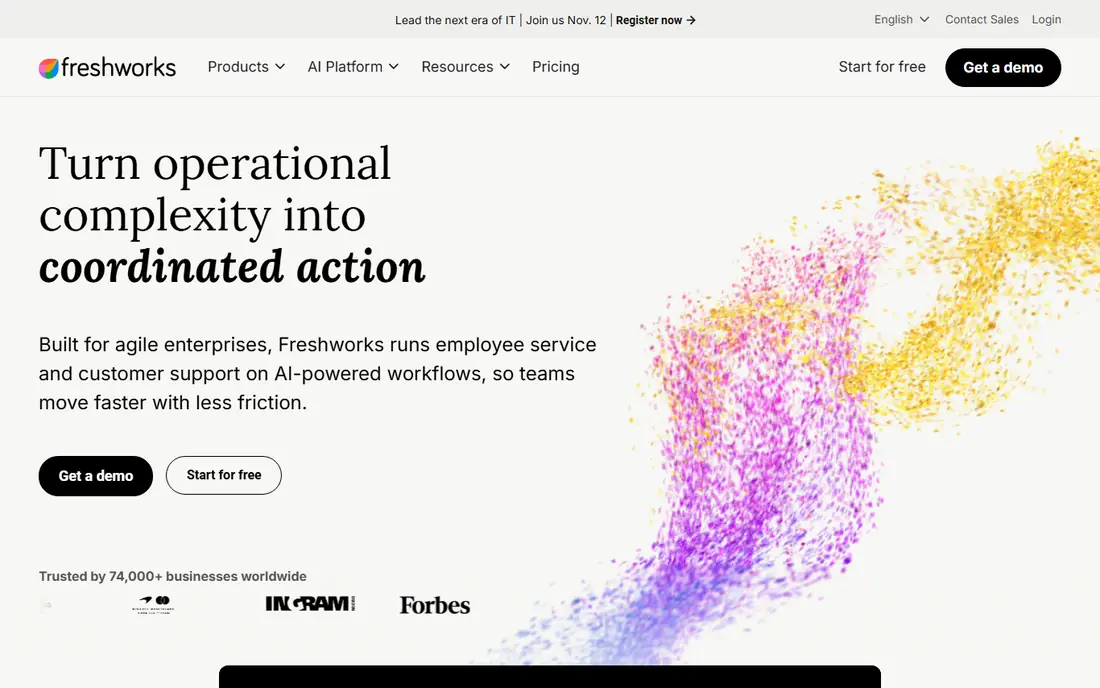
Freshdesk Freddy AI, often called Freddy, is the budget friendly native agent for Freshdesk users. It resolves email and chat tickets, drafts replies, and summarises conversations for human agents, with a bundle of AI sessions included before extra sessions are charged. The entry seat price is lower than several rivals, which suits smaller teams.
Extra AI sessions cost more once the bundle runs out, so high volume teams should forecast that charge. Phone support sits in the separate Freshdesk Omni product rather than the core agent. For a small or mid sized Freshdesk team that wants AI without enterprise pricing, Freddy is a practical first agent.
- AI agent for email and chat
- Copilot summaries
- Bundled AI sessions
- Low entry price
- AI sessions cost extra after the bundle
- Phone needs the Omni product
- Some features need higher tiers
Salesforce Agentforce builds AI agents on top of Salesforce data, so an agent can check a customer record, an order, and a case history before acting. That CRM grounding matters for enterprises where a correct answer depends on account data, not just a help article. Voice support and enterprise controls extend the agent across channels.
The price and complexity put Agentforce out of reach for small teams, and it shines only when Salesforce already holds clean customer data. Implementation needs time and skilled admins. For a large Salesforce shop, it is the most deeply integrated agent available. For anyone else, it is the wrong starting point.
- CRM grounded agents
- Action taking in Salesforce
- Voice support
- Deep enterprise controls
- Enterprise pricing and complexity
- Needs Salesforce data to shine
- Implementation takes time
HubSpot Customer Agent lets HubSpot teams deploy an AI agent that draws on CRM records and help content, across chat, email, and forms. Its controlled rollout is a thoughtful touch: you can send only a share of conversations to the agent at first, then raise that share as confidence grows. That reduces the risk of a bad launch.
The agent needs a Professional level Service Hub plan, plus credits per resolved conversation, so the total cost is higher than the seat price alone suggests. Channel coverage also varies, so check voice and SMS before you promise them. For a HubSpot centred team, Customer Agent keeps service data in the same system as sales and marketing.
- Customer agent across chat, email, and forms
- CRM context
- Controlled rollout by share of conversations
- Needs a Professional plan
- Credit costs per resolved conversation
- Voice and SMS coverage varies
Ada is an enterprise AI agent platform built for high volume brands that need consistent answers across chat, email, SMS, and voice. Its playbooks let service teams define how the agent should handle common journeys, and its coaching tools help teams improve resolution rates over time. Support for many languages suits global brands.
Pricing is sales led with no published rates, which makes budgeting harder for smaller teams. Ada is also built for scale, so a small team may find its setup heavier than a helpdesk native agent. For a large brand with high volume and many languages, Ada is a strong, proven platform.
- Agent across chat, email, SMS, and voice
- Playbooks
- Coaching tools
- Many languages
- Sales led pricing with no published rates
- Enterprise focus
- Setup needs dedicated owners
Gorgias AI Agent is built for ecommerce support, where most tickets ask about an order, a return, or a refund. It can read a live Shopify order, check its status, and take actions such as editing an order, rather than only explaining a policy. That action taking is what separates it from a general chatbot for online stores.
It works best inside Gorgias, so teams on another helpdesk would need to move. Phone support remains a human job in this setup, and automated interaction fees add up at volume. For a Shopify store drowning in where is my order tickets, Gorgias AI Agent directly attacks the largest ticket category.
- AI agent that reads and edits live orders
- Shopify actions
- Ticket based pricing
- Best inside Gorgias
- Phone is handled by human teams
- Per interaction costs add up
Tidio Lyro is the low cost entry point for small businesses that want an AI agent without enterprise pricing. Lyro answers chat questions from your help content, handles common queries, and hands off to live chat when a case needs a person. Setup is quick, and the combined live chat plus AI package suits a small team with a website as its main channel.
Lyro is an add on cost on top of Tidio plans, so check the combined price, and its strength is chat rather than voice or complex back office actions. Larger teams with deep CRM actions will outgrow it. For a small business that wants an affordable AI agent on its website this week, Tidio Lyro is an easy start.
- Lyro AI agent for chat
- Low entry cost
- Easy setup
- Live chat included
- Smaller enterprise feature set
- Lyro add on costs extra
- Best for chat rather than voice
Help Scout AI, sometimes called its AI agent offering, gives small teams an agent that answers from their existing help docs and hands off to the shared inbox when needed. It suits human first teams that want AI to clear repetitive questions while keeping the inbox familiar for agents. The per resolution fee is lower than some rivals, which helps smaller volumes.
The agent features are newer than those of Intercom or Zendesk, and voice coverage is limited. Per resolution fees still sit on top of seat prices, so forecast both. For a small Help Scout team that values a calm inbox and a gentle AI rollout, Help Scout AI is a good fit.
- AI answers from your help content
- Per resolution pricing
- Clean shared inbox
- Per resolution fees on top of seats
- Voice is limited
- Newer agent features than rivals
How we picked these
We compared vendor pricing pages, feature documentation, and public reviews for AI agents live in October 2026. We favoured agents that take actions in connected systems, not only answer questions, and we checked handoff to humans, channel coverage, and pricing models. Where pricing is quote based or combines seats with usage, we used See website or stated the model rather than inventing a single price.
Rolling out an AI agent without annoying your customers
Start with your ten most common tickets and measure how many the agent resolves without a human touch. Fix your help content first, since an agent that reads weak articles will give weak answers with confidence. Set clear handoff rules: any refund above a threshold, any angry customer, and any case the agent cannot resolve in two tries should reach a person fast. Publish the agent's limits honestly in its greeting, and review a sample of resolved conversations each week for errors. Finally, track resolution rate beside customer satisfaction, not alone, because an agent that closes tickets quickly but frustrates customers is not saving you anything.
Frequently asked questions
What is the best AI agent for customer service?
Intercom Fin is our pick for most teams because it is proven, works on several helpdesks, and charges per resolved outcome. Zendesk AI suits Zendesk shops, while Freshdesk Freddy suits smaller Freshdesk teams.
What are the best AI agents for customer service right now?
Intercom Fin, Zendesk AI, Freshdesk Freddy, Salesforce Agentforce, HubSpot Customer Agent, Ada, Gorgias AI Agent, Tidio Lyro, and Help Scout AI all lead in 2026. The right one depends on your helpdesk, volume, and whether you need voice.
What is the best AI customer service agent for a small business?
Tidio Lyro and Freshdesk Freddy suit small businesses best, thanks to lower entry costs and quick setup. Help Scout AI also suits small human first teams that already use Help Scout.
How much does an AI customer service agent cost?
Costs mix seats with per resolution or per conversation fees. Entry seats here start near $19 to $29 per month, plus usage fees that depend on volume. Forecast both parts against your real monthly tickets.
Do AI agents replace human support agents?
No. The best setups use agents for repetitive, well defined tickets and hand complex, sensitive, or high value cases to people. A clean handoff matters more than a high automation rate alone.
Sources
See where you really rank - block by block
ProMapRanker scans Google Maps across a grid of your service area. Simple monthly plans from $19, white-label on every plan.
Start freeKeep reading
 outreach alternatives
Outreach Alternatives in 2026
Compare outreach alternatives for 2026, from Salesloft and Apollo to HubSpot and Lemlist, with pricing, channels, features, limits, and honest trade-offs.
Read → best web conference tools
Best Web Conference Tools in 2026
Compare the best web conference tools for meetings, webinars and team calls, with current pricing, free plans and honest limits for each option here today.
Read → best voice cloning tools
Best Voice Cloning Tools in 2026
Compare the best voice cloning tools in 2026, from ElevenLabs and Descript to Resemble and Cartesia, with consent rules, pricing, licenses, and limits.
Read →