 ProMapRanker
Best Agriculture Software in 2026

Key takeaways
- There is no single best farm tool, because crop, livestock, and mixed farms need different core workflows.
- Agworld and Granular Insights lead for crop planning and field records, while AgriWebb leads for livestock alongside cropping.
- Climate FieldView and PTx Trimble suit precision work, with equipment data and satellite imagery at the center.
- Offline access matters in rural areas, so test mobile use with poor signal before you commit to a platform.
- Most farm platforms price by quote or by acre and user, so get a written quote that covers training, support, and data migration.
Quick comparison
| Pick | Great for | Pricing starts at | Free tier | |
|---|---|---|---|---|
 Agworld | Collaborative crop planning | See website | Free trial | Visit |
 Granular Insights | Satellite yield and profitability | See website | Yes | Visit |
 Climate FieldView | Equipment and field data | See website | Free trial | Visit |
 AGRIVI | Mixed crop and livestock farms | See website | Free trial | Visit |
 AgriWebb | Livestock and mixed farming | See website | Free trial | Visit |
 Traction Ag | Farm accounting and operations | See website | Free trial | Visit |
 xFarm | Block based grower operations | See website | Free trial | Visit |
 FarmERP | Multi site farm to market operations | See website | Free trial | Visit |
The best agriculture software
We compared official product pages, feature pages, and farm software guides, and we focused on planning, field records, compliance, and equipment integration.
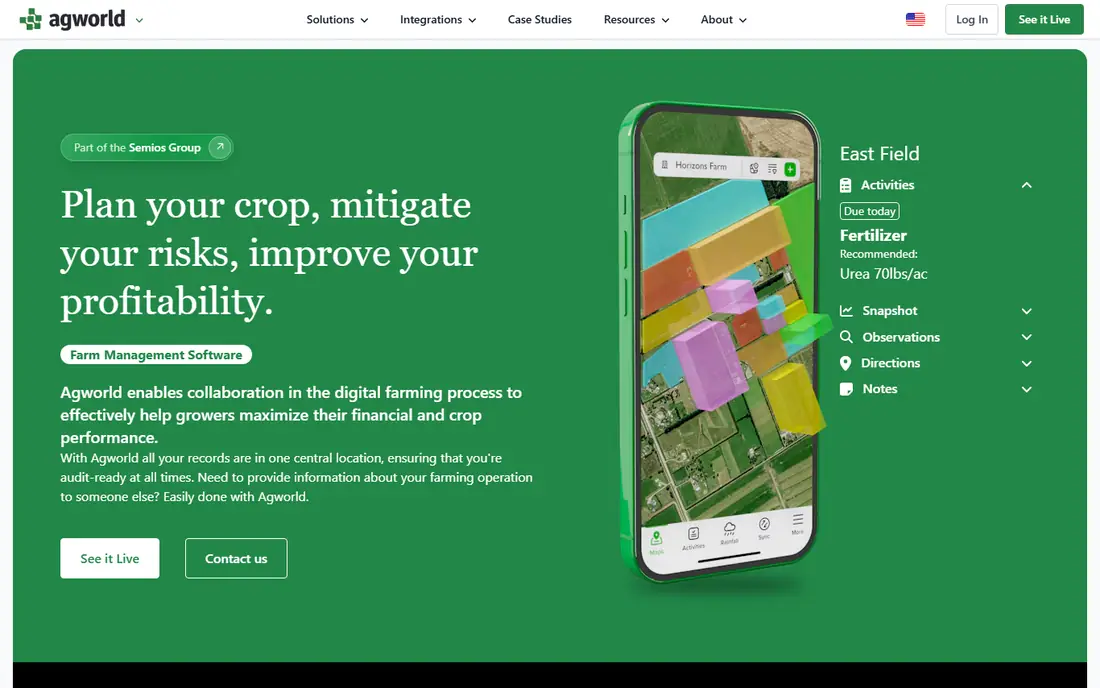
Agworld connects growers and agronomists in one workspace, where you can map fields, build application plans, and track costs field by field. Scouting notes can become follow up tasks, and spray records feed compliance documentation, including label and safety data sheet libraries and re entry interval tracking in regulated regions. Planned applications can also sync with John Deere Work Planner, with as applied data returning to Agworld.
The platform is crop focused, so a ranch heavy operation may need a second tool for herd records. Pricing is by quote, so ask for a price tied to your acreage, user count, and modules before you judge value.
- Field by field plans and budgets
- Shared workspace for growers and agronomists
- Spray and compliance records
- Quote based pricing
- Crop focus means livestock tools are thinner
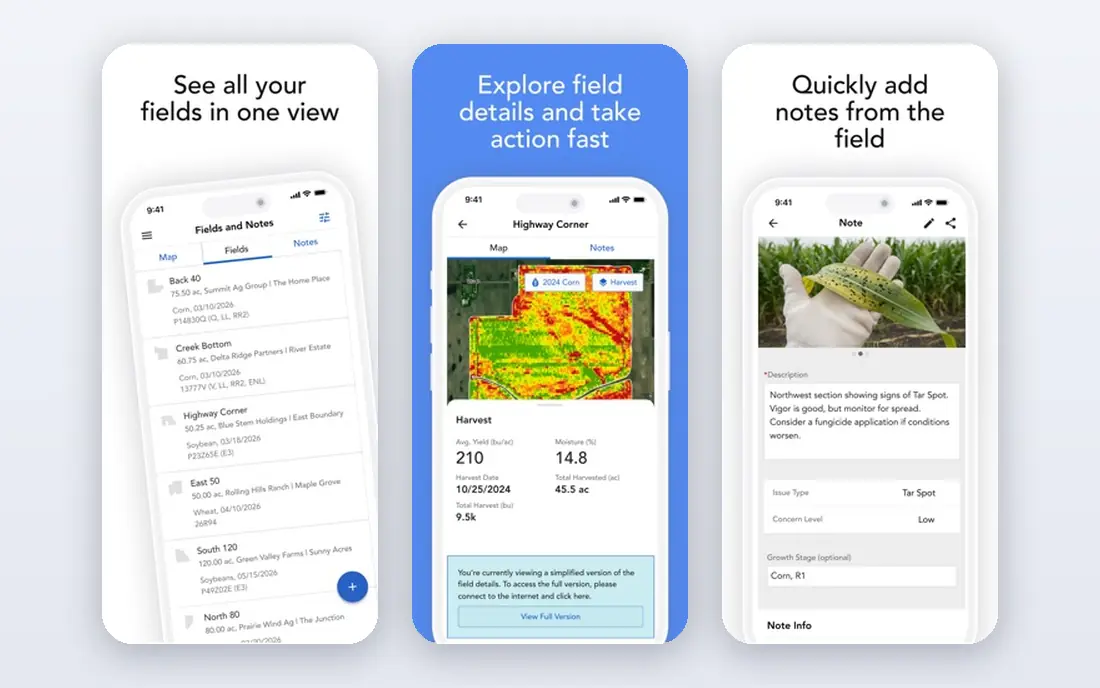
Granular Insights, part of Corteva, combines satellite imagery with yield data to show field level profitability and to generate variable rate prescriptions. That view helps growers see which fields earn their keep and where input rates should change, rather than treating a whole farm as one average. A free tier makes it accessible for growers who want to test satellite based analysis.
Note the split in the Granular brand: business accounting features moved to Traction Ag when Corteva sold Granular Business in 2022, so Insights is now the agronomy and profitability tool, not the full accounting suite. If you need accounting, pair Insights with Traction Ag or another finance tool.
- Satellite imagery plus yield data
- Field level profitability views
- Variable rate prescriptions
- Business accounting moved to Traction Ag
- Needs good yield and imagery data to shine
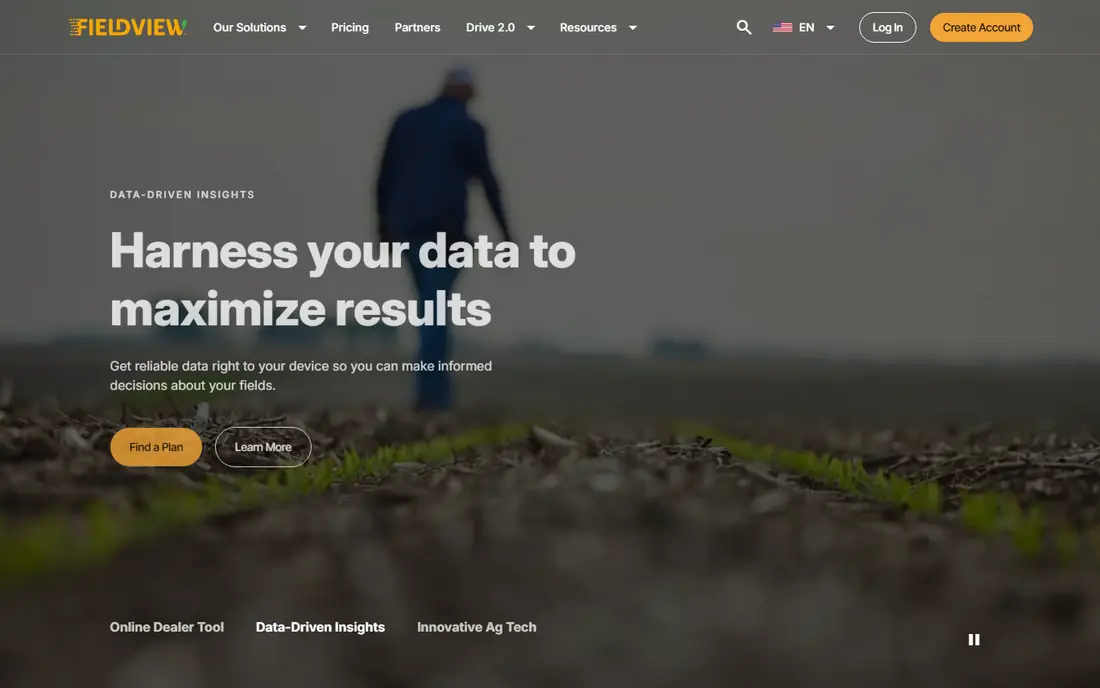
Climate FieldView, from Bayer, collects planting and harvest data from equipment through the FieldView Drive device, then turns that data into field maps, yield analysis, and prescription tools. Growers use it to compare hybrids, check emergence, and plan variable rate work from real machine data rather than notes alone. Bayer reports more than 250 million subscribed acres across 23 countries, which gives a sense of its scale.
The tool suits operations that already run compatible equipment and want machine data at the center. Smaller farms without that equipment may get less value, and pricing should be checked by plan and region.
- Equipment data via FieldView Drive
- Planting and harvest analysis
- Large subscribed acreage base
- Pricing varies by plan and region
- Best value for equipment heavy operations
AGRIVI suits mixed farms that need crop and livestock records in one place. Mobile field logging lets crews record activities with photo evidence, while planning, inventory, and compliance records sit in the same system. That mix helps managers who otherwise juggle a crop app, a livestock spreadsheet, and a compliance folder.
Setup is not instant. Multi site farms should plan time for field mapping, user training, and data migration, and should get a quote tied to farm size and modules. For a mixed operation that wants one operating record, AGRIVI is a strong shortlist option.
- Mobile field logging with photos
- Crop and livestock workflows in one system
- Compliance records
- Quote based pricing
- Setup takes time for multi site operations
AgriWebb is the pick when livestock must sit alongside cropping in the same daily workflow. You can track individual animals or mobs, record treatments and movements, and keep cropping tasks and farm maps in the same view. That unified approach suits farms running cattle or sheep alongside grain, where separate tools create duplicate work.
Pricing is by quote, and compliance features should be checked for your country, because livestock rules differ by region. If your farm is crop only, Agworld or Granular Insights may fit better, but for mixed farms, AgriWebb earns its place.
- Livestock records alongside cropping
- Farm maps and task tracking
- Audit ready records
- Pricing by quote
- Livestock depth varies by region and compliance needs
Traction Ag is the successor to Granular Business, after Corteva sold that business in 2022, and it focuses on farm accounting and operations for larger, multi entity farms. It handles the financial side that Granular Insights no longer covers, including cost tracking, payroll related operations, and multi entity reporting. Conservis, another farm operations tool, has been part of Traction Ag since December 2023.
Traction Ag is not primarily an agronomy tool, so pair it with Agworld, Granular Insights, or Climate FieldView for field planning and prescriptions. For a large farm that needs clean books alongside operations, it is a serious option.
- Farm accounting built for agriculture
- Operations and finance in one system
- Successor to Granular Business
- Quote based pricing
- Agronomy depth is thinner than Agworld or Granular Insights
xFarm suits growers who think in blocks and lots, with recurring tasks for spraying, sampling, and harvest readiness tracked block by block. That structure keeps field work, compliance, and lot records linked, which helps when a buyer or auditor asks what happened on a specific block on a specific date. The platform also supports sensor and machinery links for larger operations.
Its presence in the US is smaller than Agworld or Climate FieldView, so check local support, integrations, and compliance coverage before you commit. For block based growers, especially in Europe and other xFarm strong regions, it is a focused, practical tool.
- Block workflows for spraying and harvest
- Recurring task tracking
- Lot linked records
- Smaller presence in the US than some rivals
- Pricing by quote
FarmERP suits multi site growers who need one operating model from crop plan to harvest, packing, sales, and finance. It links field tasks, input records, inventory, processing, and sales, which helps operations that sell to retailers or exporters and need traceability across sites. That breadth is its main advantage over single purpose field apps.
Implementation is heavier than a simple field logging app, and small single site farms may find it more system than they need. For a growing operation with several sites and a need for traceability, FarmERP is worth a demo with your own crop and sales data.
- Crop plans through sales and finance in one model
- Multi site support
- Traceability from field to market
- Quote based pricing
- Heavier implementation for small farms
How we picked these
We compared official product pages, feature pages, and farm software guides in October 2026, and we favored tools that are still sold and supported, with a clear farm type fit. We noted ownership changes, such as Granular Business moving to Traction Ag and Trimble Ag Software becoming PTx FarmENGAGE, so readers are not misled by old names. We did not claim hands on farm testing.
Choosing software by farm type
Start with your main enterprise. A row crop farm needs field planning, spray records, and yield analysis. A livestock farm needs animal records, movements, and treatment history. A mixed farm needs both in one place, or a clear integration between two tools. Write down the records an auditor, buyer, or lender will ask for, then check that the tool produces those reports without spreadsheet workarounds.
Test offline and in the field
Rural signal is uneven, so test the mobile app where you actually work, with poor signal, gloves, and bright sun. Check whether field logs save offline and sync later, whether photos attach to tasks, and whether a crew member can use the app without a long training session. A tool that only works well at a desk will fail in the field.
Check equipment and data ownership
Ask which equipment brands and file types a tool supports, how field boundaries and yield data move in and out, and who owns your data if you leave. Agworld, for example, stresses grower data ownership, while other tools vary. Get data export terms in writing before you migrate years of field history.
Frequently asked questions
What is the best agriculture software for small farms?
Bushel Farm, formerly FarmLogs, and Granular Insights are good starting points for small farms that want simple field and profitability views. Agworld and AGRIVI suit small farms that need more detailed planning and compliance records.
What is the best farm management software for livestock?
AgriWebb leads for livestock alongside cropping, with animal records, movements, and treatment history in one system. Cattle focused tools also exist, but AgriWebb suits mixed farms best in this list.
Can farm software work offline?
Many farm apps offer offline mobile logging that syncs later, but coverage varies by tool and feature. Test offline use in your fields before you buy, because rural connectivity is often poor.
How much does agriculture software cost?
Most platforms price by quote, by acre, or by user, and costs vary widely by farm size and modules. Get a written quote that covers training, support, and data migration, not only the license.
What is the difference between Granular Insights and Traction Ag?
Granular Insights, from Corteva, covers satellite yield analysis and field profitability, while Traction Ag covers farm accounting and operations, after Corteva sold Granular Business in 2022. Many farms use Insights for agronomy and Traction Ag for finance.
Do I need precision agriculture software?
If you run variable rate equipment, collect yield data, or manage many fields, precision tools such as Climate FieldView and Granular Insights help. If you run a small, uniform farm, a simpler field logging tool may be enough.
Sources
See where you really rank - block by block
ProMapRanker scans Google Maps across a grid of your service area. Simple monthly plans from $19, white-label on every plan.
Start freeKeep reading
 zoro.to alternatives
Best Zoro.to Alternatives in 2026
We compare the best zoro.to alternatives in 2026, listing only legal licensed anime streaming services, from Crunchyroll to free options for fans today.
Read → zip alternatives
Best Zip Alternatives in 2026
We compare the best zip alternatives for buy now, pay later in 2026, covering pay-in-4 plans, fees, spending limits, and credit reporting options today.
Read → yesware alternatives
Best Yesware Alternatives in 2026
Compare the best yesware alternatives for sales email tracking, templates, and sequences, with current pricing and honest tradeoffs for small sales teams.
Read →