 ProMapRanker
Best Aerospace Companies to Work in 2026

Key takeaways
- This is a guide based on publicly reported factors, not a verified ranking, because work experience varies widely by team, site, and role.
- Boeing and Airbus suit commercial aviation careers, while Lockheed Martin, Northrop Grumman, and RTX suit defense and space systems work.
- SpaceX and Blue Origin suit engineers who want fast-paced launch and space programs, with a different pace from large primes.
- Safran and GE Aerospace suit engineers focused on engines, systems, and components across many aircraft programs.
- Our shortlist advice is to compare the specific program, site, and team first, since those factors shape daily work more than the parent brand.
Quick comparison
| Pick | Great for | Pricing starts at | Free tier | |
|---|---|---|---|---|
 Boeing | Commercial and defense aviation careers | See website | No | Visit |
 Airbus | Commercial aviation and European programs | See website | No | Visit |
 Lockheed Martin | Defense and space systems careers | See website | No | Visit |
 Northrop Grumman | Defense, space, and advanced systems | See website | No | Visit |
 RTX | Defense, engines, and avionics careers | See website | No | Visit |
 SpaceX | Launch and satellite engineering | See website | No | Visit |
 General Dynamics | Defense and business aviation careers | See website | No | Visit |
 Safran | Engines and aerospace systems | See website | No | Visit |
 GE Aerospace | Commercial and military engines | See website | No | Visit |
The best aerospace companies to work
We looked at public career pages, program scope, and widely reported workplace factors such as mission, training, mobility, and benefits in general terms. No scores, salary figures, or pay claims are used here, because those vary by role, location, and experience, and public reports differ.
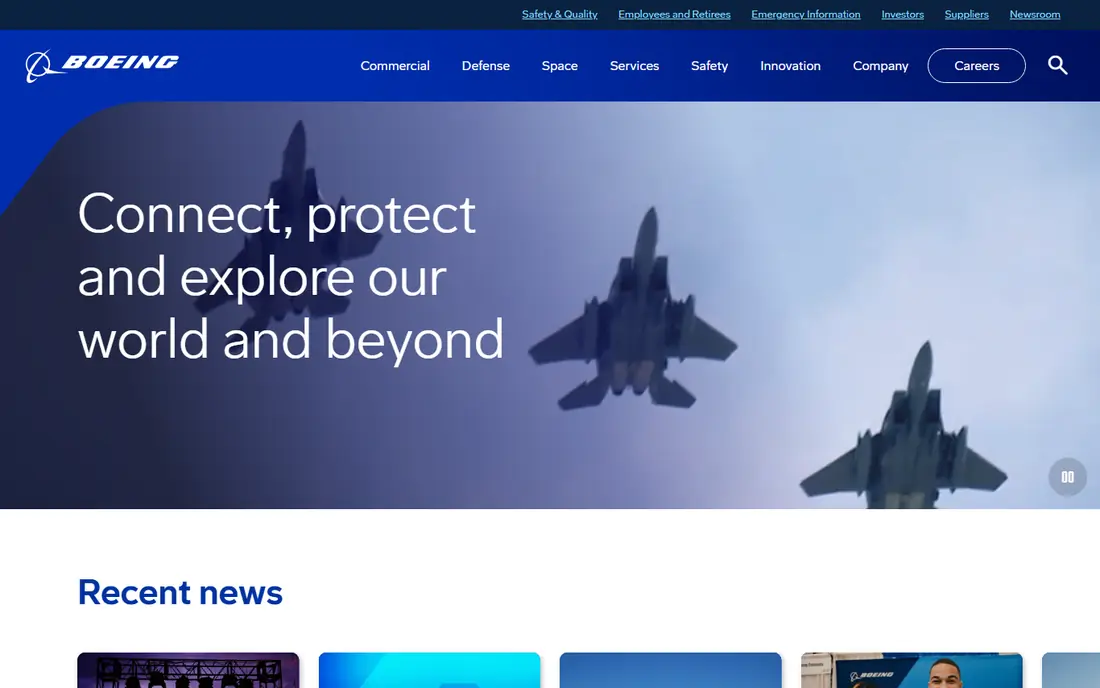
Boeing covers commercial airplanes, defense systems, and space work, which gives engineers and business staff many paths inside one company. A career can move from a commercial program to a defense or space team, and from design to manufacturing, test, or support roles. That breadth is a real benefit for people who want to stay in aerospace for years without changing employers.
Size is also the drawback. Daily work, pace, and culture differ sharply between programs and sites, so candidates should research the specific team, manager, and program health before accepting. Boeing suits people who value program scale and long-term aerospace depth over startup pace.
- Huge commercial and defense program range
- Many US sites and engineering disciplines
- Long-term program depth
- Large-company process and reorganization effects vary by team
- Program pace depends heavily on the aircraft line

Airbus is the other half of the commercial aircraft duopoly, with a large family of single-aisle and widebody programs plus defense, helicopter, and space divisions. Engineers can work on airframes, systems, manufacturing, and customer support across a global site network, with hubs in France, Germany, Spain, the UK, and the US.
For US-based job seekers, location matters. Some functions have strong US sites, while others are centered in Europe, so mobility and language needs vary by role. Airbus suits candidates who want commercial aviation depth and are open to international teams and programs.
- Leading commercial aircraft programs
- Strong European site network
- Defense and space work beside commercial aviation
- Many roles are centered in Europe
- US-based candidates may have fewer local options in some functions
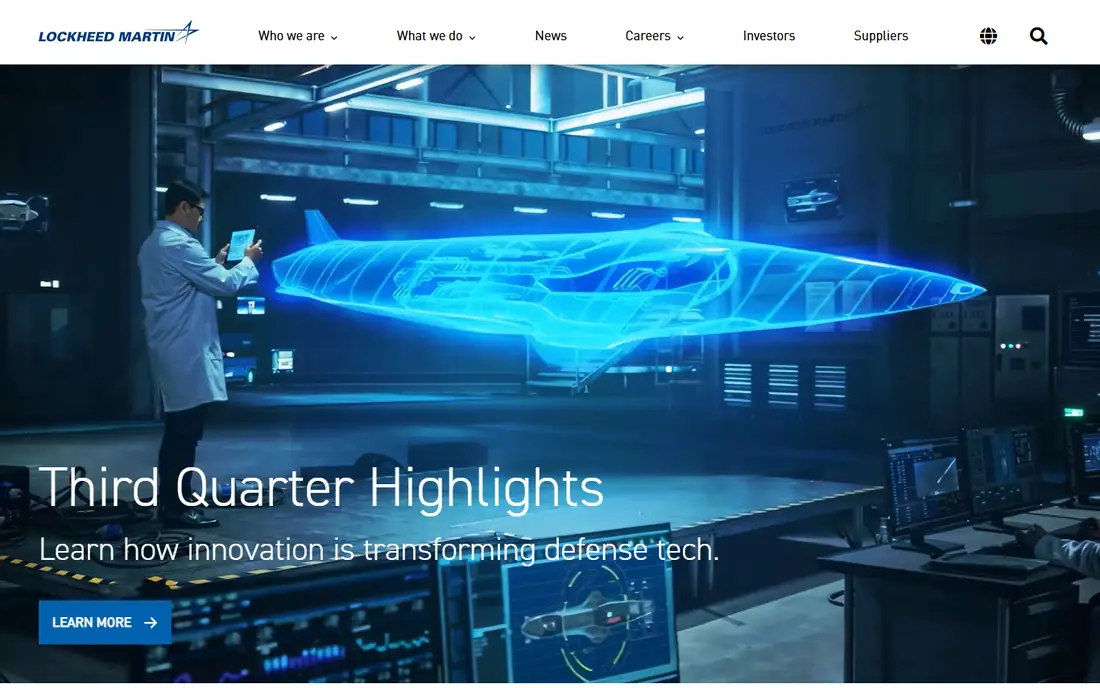
Lockheed Martin is the largest defense contractor in many public program lists, with work on fighter aircraft, helicopters through Sikorsky, missiles, and space systems. Employees often cite mission focus and the chance to work on long-running national programs as reasons to stay. Training and internal mobility programs are widely described on its career pages.
Clearance and program compartmentation can slow the start. Some roles need a security clearance before full duties begin, and some program details cannot be shared outside the team. Candidates should confirm clearance timing and program assignment early in the process.
- Broad defense, aeronautics, space, and mission systems portfolio
- Mission-driven programs
- Formal development paths
- Security clearance needs can lengthen hiring
- Program work can be compartmented and less visible outside the team
Northrop Grumman works on advanced aircraft, space systems, missiles, and defense electronics, including high-profile bomber and space programs. Public employee reports often highlight mission focus, technical depth, and job stability tied to long-term contracts. The company has sites across the US, which gives candidates more location choice than a single-site employer.
As with other defense primes, hiring can follow program funding cycles, and many roles need clearance. Candidates should ask about program length, site growth, and how teams handle moves between programs when a contract phase ends.
- Advanced aircraft, space, and mission systems programs
- Strong engineering culture in public employee reports
- Many US sites
- Defense program cycles can shift hiring by site
- Clearance needs apply to many roles
RTX brings together Collins Aerospace, Pratt and Whitney, and Raytheon, which covers avionics, interiors, engines, missiles, and defense systems. That mix gives candidates a wide set of technical paths, from commercial avionics to military engines, inside one parent company. The global footprint also supports international moves.
The size and structure can feel fragmented, since the three businesses operate with distinct cultures and hiring practices. Treat RTX as three related employers rather than one uniform workplace, and research the specific business and site before applying.
- Combines Collins Aerospace, Pratt and Whitney, and Raytheon businesses
- Broad commercial and defense mix
- Global site network
- Very large structure can feel fragmented
- Experience varies between the three main businesses
SpaceX suits engineers who want to see hardware fly often and who thrive in a fast, test-driven environment. Launch vehicles, engines, and the Starlink satellite program give staff direct contact with flight hardware and rapid iteration. For early-career engineers, that exposure can build skills quickly.
Pace is the main trade-off. Public reports consistently describe long hours and high intensity, especially around launches and program milestones. Candidates should weigh that pace against their own needs and talk to current team members about schedules before accepting an offer.
- Fast launch cadence and hands-on hardware work
- Satellite and launch programs in one company
- Rapid learning for early-career engineers
- Pace and hours are widely reported as intense
- Work-life balance varies sharply by team and program phase
General Dynamics covers defense systems, marine work, information technology, and business aviation through Gulfstream. That mix gives aerospace candidates two distinct paths: defense programs and premium business jets. Gulfstream in particular appeals to engineers who want to work on business aircraft design, manufacturing, and support.
Because the group is broad, the experience in one unit may say little about another. Candidates should research the specific business unit, whether defense, Gulfstream, or another division, rather than judging the parent company as a whole.
- Mix of defense, marine, IT, and business aviation through Gulfstream
- Stable long-term programs
- Many US locations
- Business units differ widely in culture
- Aerospace roles are only part of a larger defense group
Safran is a major engine and equipment supplier, with work on commercial engines, landing gear, avionics, and defense systems. Supplier roles can suit engineers who prefer systems and components over full aircraft programs, and who want exposure to many airframers at once. The company has a strong French base with sites in other countries, including the US.
Location and language matter for some roles, since many engineering centers are in France. Candidates should check site language, mobility options, and how the role connects to airframer programs before applying.
- Leading engine and equipment supplier across many aircraft
- Strong European and growing US presence
- Systems depth
- Many roles are centered in France and Europe
- Supplier pace follows airframer program cycles
GE Aerospace focuses on jet engines for commercial and military aircraft, with a long engineering and manufacturing history. Engine work gives staff deep exposure to materials, thermodynamics, testing, and certification, which are specialized skills that transfer across the industry. US sites include major engineering and manufacturing centers.
Engine programs follow airframer demand, so hiring can rise and fall with commercial aviation cycles. Candidates should ask about program backlog, site investment, and training paths for early-career engineers when comparing GE Aerospace with airframe primes.
- Leading commercial and military engine programs
- Deep engineering and manufacturing heritage
- Large US site network
- Engine program cycles can affect hiring
- Large-company process varies by site and function
How we picked these
We compared public company career pages, program scope, and widely reported workplace factors, and we kept only employers that are active in aerospace in October 2026. We mixed commercial airframers, defense primes, engine makers, and space companies, so readers can match the employer type to their career goals. We did not claim hands-on testing or verified rankings, and we avoided salary figures, scores, and other numbers that vary by role and location.
How to compare aerospace employers before you apply
Start with the program, not the logo. A commercial narrowbody program, a fighter program, and a satellite program offer different daily work, travel, clearance needs, and career paths, even inside the same company. Read the job description for program, site, and team details, and ask the recruiter which program you would join and how long its current phase runs.
Next, check location, clearance, and mobility. Some roles need a security clearance, which can add months to hiring, while others start sooner. Some sites offer moves between programs, while others are tied to one contract. Ask about training, mentorship, and internal transfer rules, since those factors often matter more over five years than the first assignment.
Finally, talk to people on the team if you can. Ask about pace, manager support, on-call duties, and how the team handles program changes. Public reviews and rankings can help, but they average across thousands of staff and many sites, so a short conversation with a future teammate is a better guide to your actual job.
Frequently asked questions
What is the best aerospace company to work for?
There is no single best company, because the right choice depends on whether you want commercial aviation, defense, engines, or space work, and on location and pace. Boeing and Airbus suit commercial careers, Lockheed Martin and Northrop Grumman suit defense and space systems, and SpaceX suits fast-paced launch work. Shortlist by program and team, not by brand alone.
What is the best defense company to work for?
Lockheed Martin, Northrop Grumman, RTX, and General Dynamics are the largest defense employers in public program lists, each with a different mix of aircraft, missiles, space, and systems work. The best fit depends on the program area, clearance needs, and site. Compare the specific business unit and program before choosing, since defense primes vary widely inside.
What is the best aviation company to work for?
For commercial aviation, Boeing and Airbus lead on program scale, while GE Aerospace and Safran lead on engines and systems. For business aviation, Gulfstream inside General Dynamics is a strong option. Think about whether you want airframes, engines, avionics, or support work, since each path favors a different employer type.
Do aerospace jobs require a security clearance?
Many defense roles do, while most commercial aviation roles do not. Clearance can lengthen hiring and limit what you can discuss outside work, but it also opens long-term defense programs. Ask the recruiter early if a role needs clearance, what level, and whether you can start on unclassified work while it processes.
Is aerospace a good career for new graduates?
Aerospace can be a strong career for graduates in engineering, manufacturing, software, and business roles, because programs run for years and skills transfer across the industry. New graduates should look for structured training, mentorship, and rotation options, and should be realistic about location, since many roles cluster around specific sites. Internships and co-op programs are a useful route in.
Sources
See where you really rank - block by block
ProMapRanker scans Google Maps across a grid of your service area. Simple monthly plans from $19, white-label on every plan.
Start freeKeep reading
 zscaler alternatives
Best Zscaler Alternatives in 2026
Looking for zscaler alternatives? We compare 9 SASE and zero trust platforms on architecture, data protection, pricing, and fit for your network and team.
Read → zapier alternatives free
Best Zapier Alternatives Free in 2026
Nine automation tools for zapier alternatives free in 2026, all with genuinely free tiers, plus free plan limits, starting prices and upgrade paths explained.
Read → which platform is best for online reputation
Which Platform Is Best for Online Reputation in 2026
Wondering which platform is best for online reputation? We compare 8 review, listing, and response tools for small and multi-location businesses and agencies.
Read →