 ProMapRanker
Top 7 Ad Networks Software Options for 2026, Compared

Direct answer
AdButler leads the list, best for retail and commerce media networks. Equativ fits end-to-end media product with curation; AdGlare fits privacy-conscious publishers and agencies. The other 4 tools in the list cover narrower or pricier cases.
Key takeaways
- Number one here is AdButler, a fit for retail and commerce media networks.
- A free plan is available from 2 of the 7 tools: Google Ad Manager, Revive Adserver.
- The cheapest monthly starting price in the list is $250 per month, offered by Epom.
- AdvertServe suits B2B and niche publishers with direct sales teams.
- What to know about AdGlare first: pricing starts higher than hobbyist tools.
Quick comparison
| Pick | Great for | Pricing starts at | Free tier | |
|---|---|---|---|---|
 AdButler | Retail and commerce media networks | See website | No | Visit |
 Equativ | End-to-end media system with curation | See website | No | Visit |
 AdGlare | Privacy-conscious publishers and agencies | See website | Free trial (14 days) | Visit |
 Google Ad Manager | Publishers wanting the industry default | See website | Yes | Visit |
 Revive Adserver | Self-hosted free ad serving | Free (open source) | Yes | Visit |
 Epom | White-label ad serving with transparent pricing | $250 a month (Ad Server) | Free trial (14 days) | Visit |
 AdvertServe | B2B and niche publishers with direct sales teams | See website | No | Visit |
Our 7 picks for ad networks software
If you are comparing ad networks software, this page covers 7 tools in one place: what each is best for, what it costs to start, whether it has a free plan, and the main limit to know about.
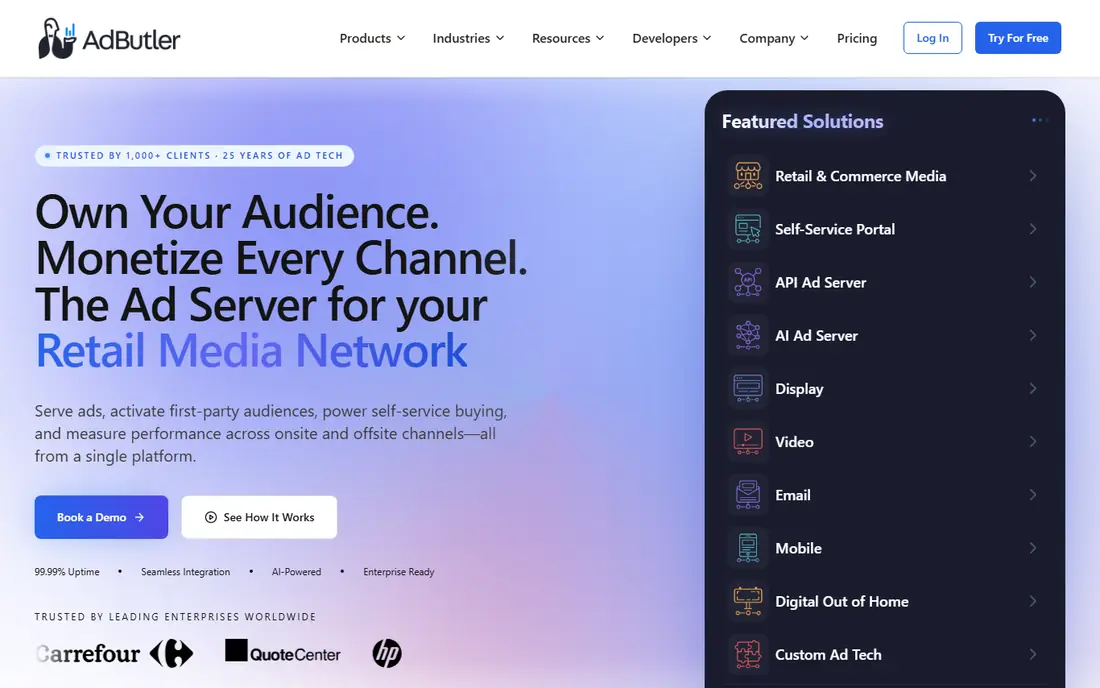
Where AdButler fits: retail and commerce media networks. AdButler has been in ad tech since 1999, and its current system targets the retail media boom: onsite promoted products, offsite audience extension, self-serve buying portals, and programmatic demand in one stack. For a small publisher, the process will feel heavy compared to AdGlare or Epom.
From a buyer's view, retailers, marketplaces, and publishers that sell to their own advertisers get white-labeled portals where brands plan and buy without calling your sales team. From a buyer's view, implementation is a project, pricing is quote-based, and you will talk to sales before you see a number. As for the details, for a retailer building a media network, that is normal. AdButler does not show a starting price in this comparison, so check the vendor site for current pricing. AdButler has no free plan.
Downsides: Enterprise sales process.
- Self-serve advertiser portals
- Long track record since 1999
- Quote-based pricing with no public numbers
Equativ makes the most sense for end-to-end media system with curation. Equativ, formerly Smart AdServer, supplies an end-to-end system: ad serving, supply-side tools, and curation products that let buyers package premium inventory. The Maestro product line targets attention-based and curated buying.
Limits to weigh: Enterprise sales motion.
This is enterprise software with an enterprise buying process: demos, discovery, and custom quotes. Also, smaller publishers will find it heavy. No starting price is listed for Equativ here; confirm pricing on the vendor site. Equativ has no permanent free option.
- Full stack from ad server to SSP with curation tools
- Solid European publisher base
- Complexity for smaller publishers
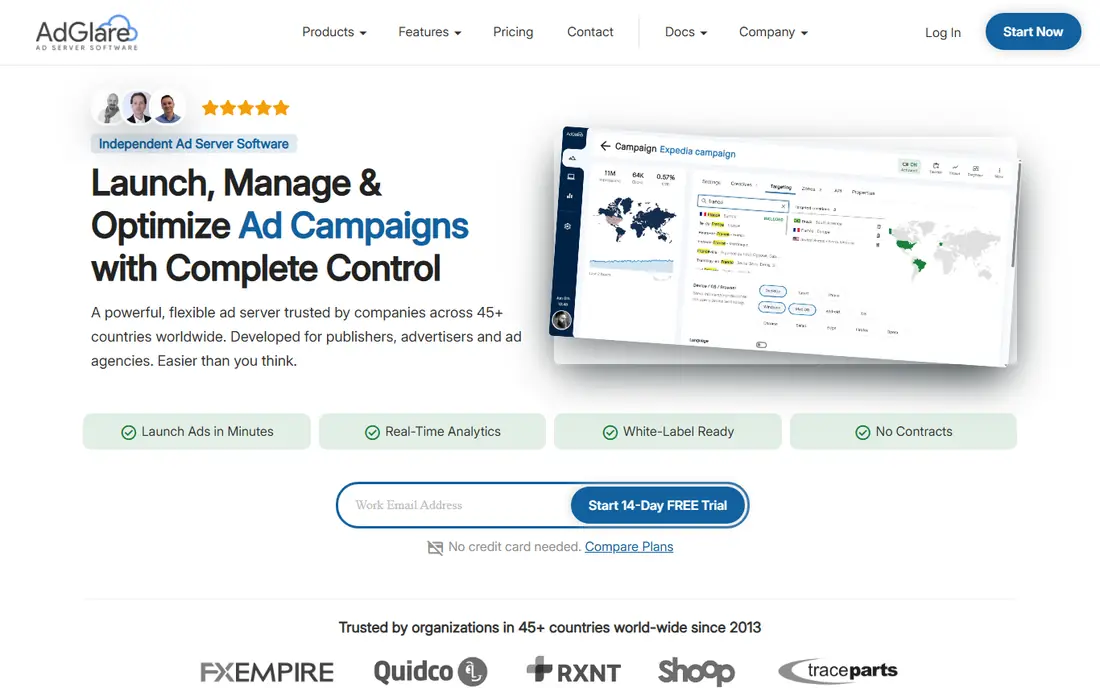
AdGlare serves privacy-conscious publishers and agencies. For publishers and agencies where privacy posture is a selling point to advertisers, AdGlare is purpose-built. Beyond that, you can serve from your own subdomain, which helps with ad blockers.
Downsides: Advanced features sit on the Enterprise plan.
The product spans display, native, and video with live reporting. Also, AdGlare takes privacy as a feature, not a compliance checkbox. It serves ads without cookies or personal identifiers, which eases GDPR and CCPA posture and sidesteps the external cookie mess entirely. Pricing for AdGlare is not stated here, so ask the vendor for current figures. Free plan details: Free trial (14 days).
- 14-day free trial with no credit card
- White-label serving from your own subdomain
- Pricing starts higher than hobbyist tools
Pick Google Ad Manager if this describes you: publishers wanting the industry default. Google sets the policies, takes its cut, and has a history of changing rules in ways that suit Google first.
This comparison lists no price for Google Ad Manager; ask the vendor. A free plan is available with Google Ad Manager.
Downsides: Complexity grows fast past the basics.
- Deepest demand pool through Google's exchange
- Free level for smaller publishers
- Revenue share and policy rules favor Google
In short, Revive Adserver is for self-hosted free ad serving. Revive Adserver is the free open source ad server, descended from a lineage that powered much of the early web's advertising.
You maintain the server, apply security updates, and troubleshoot delivery issues yourself, and the interface displays its age next to modern SaaS systems. Download it, host it on your own server, and serve unlimited impressions with no license fees and no revenue share. What you pay to start with Revive Adserver: Free. Revive Adserver offers a free plan.
Honest limits: You deal with hosting, security, updates.
- You own your data and infrastructure
- Long-running stable project
- Interface and features lag commercial platforms
Epom is aimed squarely at white-label ad serving with transparent pricing. If you want to know the price before the first call, start your shortlist with Epom.
Watch-outs: Smaller ecosystem than Google.
Feature depth is solid for direct and programmatic basics, though you will not find Google's demand pool here. Epom pricing: $250 per month. As for free access: Free trial (14 days).
- White-label ad server plus DSP in one company
- 14-day free trial
- Managed services add cost from $750 a month
Where AdvertServe fits: B2B and niche publishers with direct sales teams. AdvertServe has served ads since 1998, and its niche is B2B and specialist publishers, the trade publications and industry sites that sell direct to a defined advertiser base. It takes care of web, mobile, email, and video placements, with live reporting and the usual targeting choices.
What to check first: Interface feels dated.
If your ad business is relationships with fifty industry advertisers instead of programmatic scale, AdvertServe speaks your language. What you get in return is a vendor that understands direct-sold B2B advertising and answers the phone. As for the details, email newsletter ad serving is a particular strength, which matters more to B2B media than most products admit. Worth adding: the interface will not win design awards, and pricing needs talking to the company. No starting price is listed for AdvertServe here; confirm pricing on the vendor site. AdvertServe does not include a free plan.
- Made for B2B and niche publishers
- Long operating history since 1998
- Pricing not published
How we compared the tools
The comparison looks at four things: starting price, free access, how well the feature set matches ad networks software, and the main limit of each tool. Prices and plan limits come from vendor pages and can change, so confirm them on the vendor site before you buy. The order reflects how well each tool fits the most common buying scenario for ad networks software, then price clarity, then free plan access. It is a starting point, not a verdict.
Pre-purchase checklist
- Confirm the entry price on the vendor page. For AdButler, Equativ, AdGlare and others that means a quote rather than a fixed price.
- Read the fine print on the free plans from Google Ad Manager and Revive Adserver; seat, project and feature caps differ.
- Use real work to test the free trial from AdGlare and Epom, rather than a demo project.
- Before choosing AdButler, weigh its main limit: quote-based pricing with no public numbers.
- Price Revive Adserver for your actual team size; headline prices rarely include add-ons or overage.
- Confirm you can export your data from Google Ad Manager, so leaving later does not mean losing records.
Frequently asked questions
Self-hosted or SaaS: which is better?
Self-hosted choices like Revive Adserver cost nothing in licenses but need your engineering time for hosting and security. In daily use, most publishers choose SaaS; technical teams with strict data requirements choose self-hosted.
How are the tools for ad networks software ordered?
AdButler sits first and AdvertServe last because the order follows typical fit for ad networks software, then price clarity and free access. It is a judgement call, so read each profile for fit and limits.
What does white-label mean in ad tech?
Your advertisers interact with your business, not the software vendor. From a buyer's view, AdButler, Epom, and AdGlare all offer this, which matters if you sell direct.
What is the cheapest option for ad networks software in this list?
On published monthly entry prices, Epom is the lowest here at $250 per month. Entry price is only part of the cost, because seats, add-ons and billing terms can change the total.
Which options for ad networks software have a free plan?
On this list, Google Ad Manager and Revive Adserver include a free plan. Caps on seats, usage or features are common, so test the free plan against your real workload. Several others offer a trial instead.
What is the difference between an ad server and a DSP?
An ad server handles your own inventory: it decides which ad fills each slot on your sites and tracks delivery. Worth adding: a DSP, demand-side product, is a buying tool advertisers use to purchase inventory across plenty of publishers programmatically.
Sources
See where you really rank - block by block
ProMapRanker scans Google Maps across a grid of your service area. Simple monthly plans from $19, white-label on every plan.
Start freeKeep reading
 zoho inventory alternatives
6 Alternatives to Zoho Inventory, Compared on Price and Fit
Zoho Inventory alternatives: 6 tools compared on price, free plans and fit. Katana leads the list for manufacturers. Fit and flaws are laid out for each entry.
Read → zoho crm alternatives
Best Zoho CRM Alternatives (2026)
Need Zoho CRM alternatives? We compare 7 tools on cost, free access and who each suits. Every pick gets a straight assessment. Built for quick decisions.
Read → zelle alternatives
Best Zelle Alternatives in 2026
Compare the best Zelle alternatives for sending money to friends, paying sellers and moving funds abroad, with honest notes on fees, speed and safety in 2026.
Read →