 ProMapRanker
Best ACH Transfer App in 2026

Key takeaways
- Melio and BILL suit small businesses paying vendors by ACH, while Wise, PayPal, Venmo, and Cash App suit personal and cross-border transfers.
- Standard ACH transfers usually take one to three business days, while same-day and instant options cost extra where offered.
- Fees differ by model, with flat per-transfer fees, percentage fees, and free allowances all in use, so check the fee page for your transfer size.
- This is not financial advice, and transfer times and fees change by provider, bank, and cutoff time, so confirm details before sending money.
Quick comparison
| Pick | Great for | Pricing starts at | Free tier | |
|---|---|---|---|---|
 Melio | Small business vendor payments by ACH | Free | Yes | Visit |
 BILL | AP and AR automation with ACH | $49 per month | No | Visit |
 Wise | Low cost global transfers with local bank details | Free | Yes | Visit |
 Dwolla | ACH payment infrastructure for businesses | See website | No | Visit |
 PayPal | Everyday person and business transfers | Free | Yes | Visit |
 Venmo | Peer payments between friends | Free | Yes | Visit |
 Cash App | Fast peer payments and spending | Free | Yes | Visit |
 Routable | Business payouts by ACH at scale | See website | No | Visit |
 Stripe | ACH debit for online businesses | See website | No | Visit |
The best ach transfer app
We compared official pricing pages, fee documentation, app store listings, and public reviews for apps and services that send money by ACH or by bank transfer in the US. This is not financial advice. ACH is a US bank network for electronic transfers, and times, fees, and limits vary by provider and by bank cutoff, so check the vendor page before you send a payment.
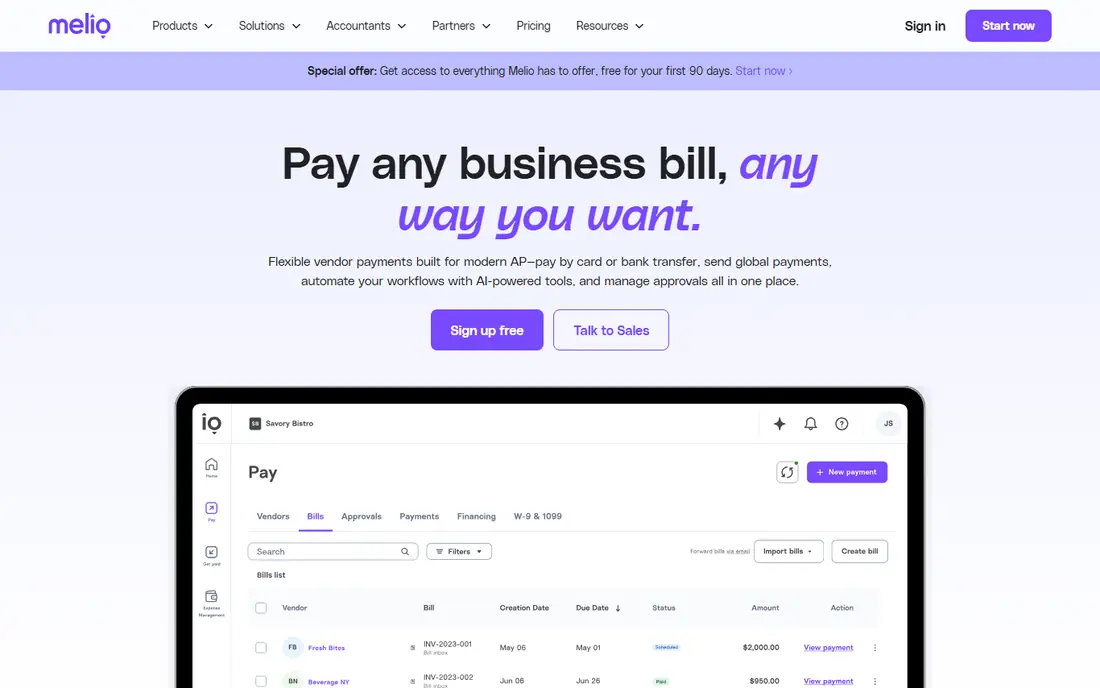
Melio suits small businesses that pay a handful of vendors by bank transfer each month. The free Go plan includes a small number of free ACH transfers, with paid plans adding more free transfers, batch payments, approval workflows, and two-way sync with accounting tools. Bills can be scanned or imported, approvals can be assigned by role, and vendors receive payment by their chosen method without joining Melio.
The catch is volume. Once the free allowance is used, each extra ACH transfer costs a flat fee, and card-funded vendor payments carry a percentage fee that can dwarf the ACH cost. Melio fits occasional and mid-volume vendor payments well, but a business with hundreds of monthly transfers should compare the total against BILL, Routable, or a bank-direct option before committing.
- Free Go plan with free ACH transfers each month
- Bill capture, approvals, and accounting sync
- Vendors need no Melio account to be paid
- Extra ACH transfers beyond the free allowance cost per transfer
- Card-funded payments carry a percentage fee
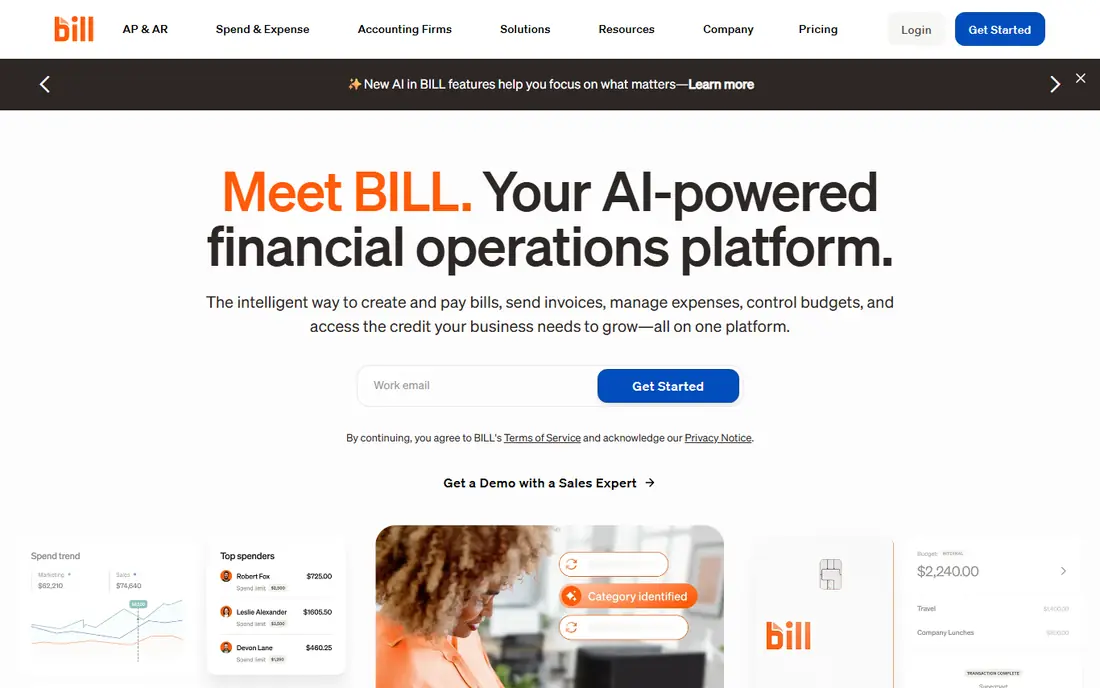
BILL, formerly Bill.com, suits businesses that want accounts payable and receivable in one automated system. ACH payments carry a flat fee per transfer whether sending or receiving, approval workflows control who can pay, and sync with accounting tools keeps books aligned without manual entry. That structure helps finance teams that process many invoices and need an audit trail.
The trade-off is the subscription. Plans start at a monthly per-user price, so a business with only a few transfers a month may pay more for BILL than for a free Melio plan. Instant payment options also cost extra. BILL earns its fee when volume, approvals, and accounting sync matter together, not when a business only sends one or two transfers.
- Flat per-transfer ACH fee for sending and receiving
- Approval workflows and accounting sync
- AP and AR in one system
- Monthly subscription adds cost for low-volume users
- Instant payments cost extra on top of the subscription
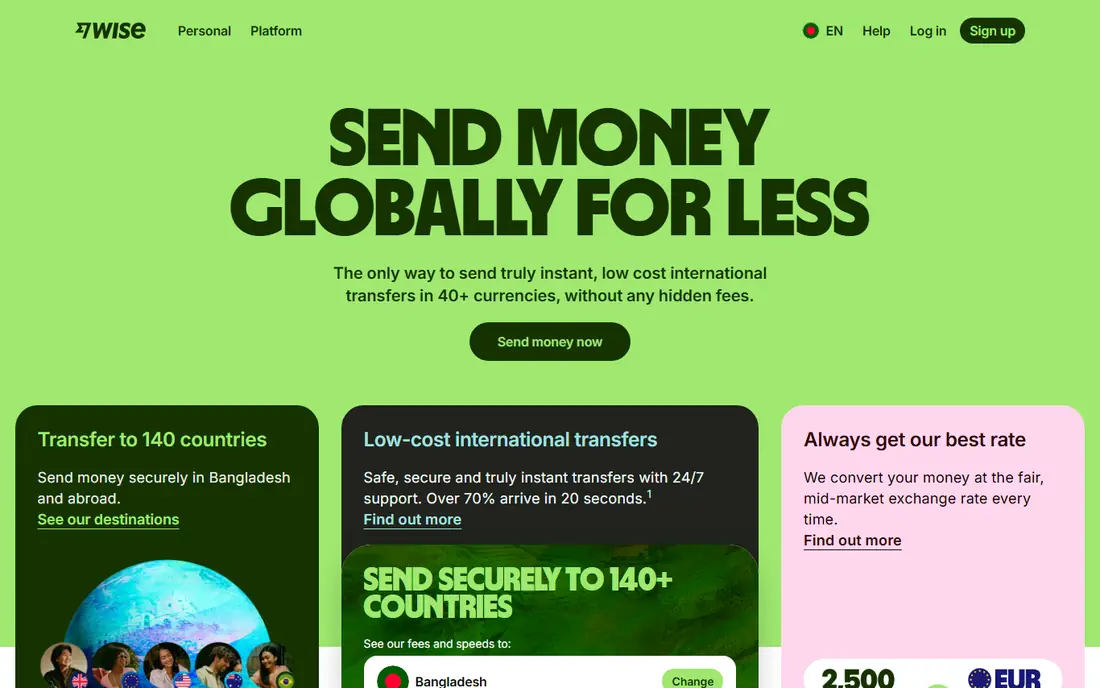
Wise suits people and small firms moving money across borders with bank details in several currencies. The app shows the fee and the exact recipient amount before a transfer is sent, and local US bank details let clients pay by domestic transfer rather than an expensive international wire. That clarity is why Wise is often the first comparison point for global transfers.
The limit is that Wise is a money transfer service, not a full bank everywhere, and ACH timing still depends on banks and cutoff times. Domestic US transfers and international routes follow different rails, so a transfer that looks instant in the app may still settle on bank timelines. For global bank transfers with clear pricing, Wise remains a strong pick.
- Transparent fee and recipient amount shown before sending
- Local bank details in several currencies
- Free to open an account
- Not a full bank in every market
- ACH timing depends on the receiving bank and transfer route
Dwolla suits businesses that need to embed ACH payments into their own product, such as marketplaces, lenders, or platforms paying many recipients. The API covers bank account verification, collections, and payouts, so a business can offer bank payments without building direct bank connections itself. That infrastructure focus differs from a consumer app, since the buyer is a business building a payment flow.
The trade-off is access. Pricing is quote-based, onboarding suits businesses with a defined payment programme, and consumers looking for a simple peer payment app should pick Venmo, Cash App, or PayPal instead. For a company that moves money as part of its product, Dwolla offers a focused ACH building block.
- ACH-focused platform for businesses embedding bank payments
- API for payouts, collections, and account verification
- Built for programme scale
- Platform pricing is quote-based
- Not a consumer peer payment app
PayPal suits people and businesses that need a widely accepted way to send money from a bank account, balance, or card. Bank-funded personal transfers and business payments are familiar to most US users, and eligible purchases carry buyer and seller protections that a raw bank transfer does not. That reach matters when the other party already has PayPal.
The catch is fee variety. Costs depend on funding source, transfer type, currency, and speed, and instant transfers to a bank or card add a fee on top. A user who assumes every PayPal transfer is free will be surprised, so check the fee page for the exact flow. For broad acceptance and bank-funded transfers, PayPal remains a safe default.
- Huge acceptance for personal and business payments
- Bank-funded transfers available
- Buyer and seller protections on eligible payments
- Fees vary by funding source and transfer type
- Instant transfer to a bank or card costs extra
Venmo suits friends splitting bills, rent shares, and group costs. Sending money from a bank account or balance is simple, the feed and notes make group payments easy to track, and most US users already know the app. That social familiarity is the reason Venmo stays popular for everyday peer payments despite newer rivals.
The limits are speed cost and scope. Instant transfers to a bank account or card carry a fee, while standard bank transfers take longer, and Venmo business profiles follow different rules and fees from personal payments. Venmo is not a full vendor payment system, so businesses should use Melio, BILL, or Routable for supplier payments instead.
- Simple peer payments with a social feed option
- Bank-funded transfers available
- Widely used among US friends and small groups
- Instant transfers cost extra
- Business and personal rules differ and need care
Cash App suits users who want peer payments, spending, and direct deposit in one fast app. Sending money to a friend takes a few taps, a linked debit card covers everyday spending, and direct deposit can land in the same account. That combination makes Cash App practical as a secondary spending account as well as a payment app.
The trade-off is speed cost and support experience. Standard bank transfers take longer, instant transfers add a fee, and public reviews of support and dispute handling are mixed, so users should keep records and avoid sending money to strangers. For payments between people you trust, with a bank account linked, Cash App is quick and easy.
- Fast peer payments with a simple interface
- Bank-funded transfers and a linked debit card
- Direct deposit and spending in one app
- Instant transfers cost extra
- Support and dispute handling draw mixed public reviews
Routable suits businesses that pay many vendors, contractors, or partners and need onboarding, approvals, and payouts in one system. ACH payouts sit next to other payment methods, vendor details are collected once, and accounting workflows keep payouts aligned with books. That scale focus helps finance teams that outgrow manual bank transfers and spreadsheets.
The limit is audience. Routable prices by project for businesses, with no consumer app for friends sending money to each other. A small business with five vendors a month will find Melio simpler and cheaper, while a business with hundreds of payees will use Routable structure well. Match the tool to payout volume, not just to the ACH label.
- Built for business payouts and vendor onboarding at scale
- ACH plus other payout methods in one system
- Approval and accounting workflows
- Quote-based pricing for businesses
- Not a consumer transfer app
Stripe suits online businesses that want customers to pay by bank account as well as by card. ACH debit can be added to checkout, invoices, and subscriptions through the Stripe API and dashboard, with bank account verification and payment tracking included. That fit matters for SaaS, membership, and invoice businesses where bank payments reduce card fees on larger amounts.
The trade-off is fee structure and setup. ACH debit fees are percentage-based with a cap, so very small payments can cost more than a flat-fee option, and integration needs developer time or a supported platform. Stripe is not a consumer peer payment app, and it is not the cheapest route for a single personal transfer. For an online business adding bank payments, it is a proven choice.
- ACH debit built into online checkout and billing
- Strong API and dashboard for businesses
- Works alongside cards and other payment methods
- ACH fees are percentage-based with a cap, which can cost more on small payments
- Integration needs developer time
How we picked these
We compared official pricing pages, fee documentation, app store listings, and public reviews for ACH and bank transfer apps and services live in October 2026. We kept products that truly move money by bank transfer in the US, that cover personal, small business, and platform needs, and that publish enough fee or timing detail to compare. We left out wire-only services, crypto-only transfer tools, and apps with no verifiable ACH or bank transfer flow.
How to choose an ACH transfer app
Start with who you pay and how often. Personal transfers between friends suit Venmo, Cash App, or PayPal, small business vendor payments suit Melio or BILL, global transfers suit Wise, and platform payouts suit Dwolla or Routable. Picking by use case first avoids paying for business workflows you will never use, or using a peer app for supplier payments it was not built for.
Next, model the full cost for your transfer size. Compare flat fees, percentage fees, free allowances, and instant-transfer charges at your typical amount, not just at the headline rate. Check cutoff times, since a transfer started after the bank cutoff settles a day later, and confirm whether the recipient bank supports same-day ACH. A fee that looks small on a large transfer can be costly on a small one, and vice versa.
Finally, test with a small amount before a large payment. Confirm the recipient name, account details, and transfer timing, keep the confirmation, and check that the money arrives before you rely on the route for payroll or rent. Never send ACH or bank payments to strangers based on a message alone, and use the provider support channel at once if a transfer goes missing. This is not financial advice, and providers change fees and limits over time.
Frequently asked questions
What is the best ach transfer app?
Melio suits small business vendor payments, BILL suits larger AP and AR automation, Wise suits global bank transfers, and Venmo or Cash App suit peer payments. The best pick depends on whether you pay friends, vendors, or platform users, and on how many transfers you send each month.
How long does an ACH transfer take?
Standard ACH transfers usually take one to three business days, depending on the provider, the banks involved, and cutoff times. Same-day ACH and instant options exist with some providers but cost extra and depend on bank support. Weekend and holiday timing can add days, so plan payroll and rent payments early.
Are ACH transfers free?
Some are free within limits, such as Melio free allowance transfers and bank-funded peer transfers on some apps, while others charge a flat fee or a percentage. Instant transfers almost always cost extra. Check the provider fee page for your exact transfer type, funding source, and amount before sending.
Is ACH safe for sending money?
ACH runs through the US bank network with account verification and provider controls, but safety also depends on the user. Only send to people and businesses you trust, double-check account details, and keep confirmations. If a payment goes to the wrong account or a stranger, contact the provider and your bank at once, since recovery is not guaranteed.
Can I send ACH transfers internationally?
ACH itself is a US domestic network, so international transfers use other rails even when an app shows local bank details abroad. Wise and PayPal handle international routes through their own networks and partner banks, with fees and times that differ from domestic ACH. Check the route, fee, and delivery estimate for the destination country before sending.
Sources
See where you really rank - block by block
ProMapRanker scans Google Maps across a grid of your service area. Simple monthly plans from $19, white-label on every plan.
Start freeKeep reading
 worlds best local seo company
8 Worlds Best Local SEO Companies for Map Pack Growth in 2026
Compare the worlds best local seo company options for Google Business Profile work, citations, reviews, and multi-location rankings and reporting in 2026.
Read → world's best web hosting company
World's Best Web Hosting Company in 2026
Searching for the world's best web hosting company? We compared 10 hosts on price, renewal rates, speed, and support to help you choose well today in 2026.
Read → who's got the best nanny tax services
Who's Got the Best Nanny Tax Services in 2026
We answer who's got the best nanny tax services, comparing full filing, back taxes, software, and pricing so families can handle nanny taxes correctly.
Read →