 ProMapRanker
Best Accounting Software for Sole Trader in 2026

Key takeaways
- FreeAgent is built around sole traders and freelancers, and it can be free with eligible NatWest, Royal Bank of Scotland, Ulster Bank or Mettle business accounts.
- QuickBooks Sole Trader starts at 10 pounds per month plus VAT in the UK, and it gives a clear path from side income to a growing business.
- Xero suits sole traders who work with an accountant, because most UK accountants already know the platform and its app marketplace is wide.
- QuickFile and Zoho Books offer genuinely useful free options, but check tax filing limits before relying on a free tier for Making Tax Digital.
- From April 2026, sole traders with qualifying income over 50,000 pounds must use Making Tax Digital for Income Tax software, so tax compatibility is not optional for higher earners.
Quick comparison
| Pick | Great for | Pricing starts at | Free tier | |
|---|---|---|---|---|
 FreeAgent | Sole traders and freelancers | £19 per month | Yes, with eligible bank accounts | Visit |
 QuickBooks | All-round sole trader accounting | £10 per month | Free trial | Visit |
 Xero | Working with an accountant | £7 per month | Free trial | Visit |
 Sage Accounting | Payroll and established businesses | See website | Free trial | Visit |
 FreshBooks | Simple invoicing and expenses | See website | Free trial | Visit |
 Wave | Free invoicing and accounting | Free | Yes | Visit |
 Zoho Books | Very small businesses on a budget | Free | Yes | Visit |
 KashFlow | Straightforward UK bookkeeping | See website | Free trial | Visit |
 QuickFile | Free UK bookkeeping | Free | Yes | Visit |
The best accounting software for sole trader businesses
We compared official pricing pages, tax compatibility information and feature pages for tools used by UK sole traders in October 2026. Prices below exclude VAT where vendors state that, and introductory discounts change often, so check the checkout price before paying. This is general information, not financial or tax advice.

FreeAgent feels made for sole traders rather than adapted from a larger business tool. It handles invoices, expenses, bank reconciliation, VAT and Self Assessment in one place, and its tax timeline helps a sole trader see what is due and when. For many freelancers, that single view is the main benefit, because it replaces a mix of spreadsheets and separate filing tools.
The price point needs a careful read. The standard sole trader price is 19 pounds per month excluding VAT, but it can be free with eligible NatWest, Royal Bank of Scotland, Ulster Bank or Mettle business accounts. If you bank elsewhere, compare the full price against QuickBooks and Xero before deciding, since the free bank route is a large part of its value case.
- Built for self-employed users
- Self Assessment and Making Tax Digital support
- Bank feeds and receipt capture
- Standard price is higher than some rivals
- Best value depends on your bank

QuickBooks is a safe default for a sole trader who wants a well-supported tool with room to grow. Its Sole Trader plan starts at 10 pounds per month plus VAT in the UK, and it covers invoicing, expenses, mileage and tax estimates in a clean mobile app. If the business later becomes a limited company or hires staff, the same platform can scale without moving all the records.
The catch is tier creep. VAT-registered traders usually need Simple Start, which costs more than the Sole Trader plan, and payroll and advanced reporting sit higher still. Start on the cheapest plan that covers your tax needs, and review the plan each year rather than paying for features you never open.
- Dedicated Sole Trader plan
- Receipt capture
- Making Tax Digital ready
- Higher tiers rise in price quickly
- Some features need a more expensive plan
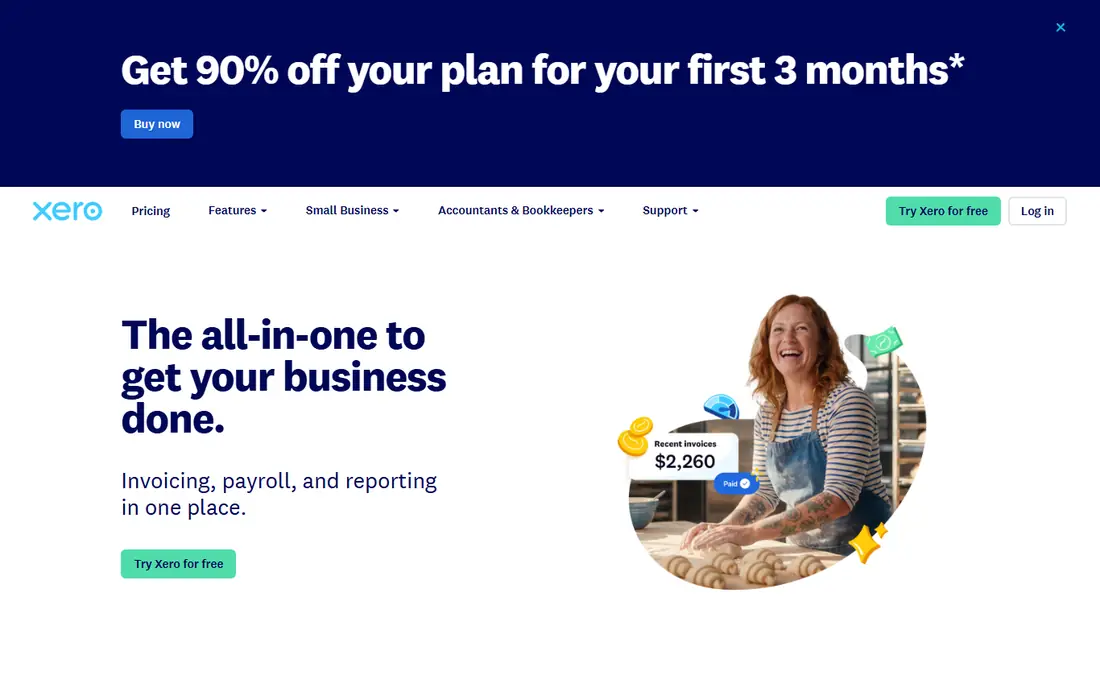
Xero is the platform many UK accountants prefer, and that matters for a sole trader who plans to use professional help. Sharing records is simple, bank feeds are reliable, and the app marketplace connects to payment, receipt and job tools. Invoices, quotes, expenses and VAT returns are all handled in a calm, clear interface.
Pricing needs care. The Simple plan, often listed from 7 pounds per month excluding VAT, is aimed at non-VAT businesses, while VAT-registered businesses generally need Ignite, listed from 18 pounds per month excluding VAT in recent October 2026 checks. Check which plan matches your VAT status before comparing headline prices with rivals.
- Wide accountant network
- Large app marketplace
- Reliable bank feeds
- Cheapest plan suits non-VAT businesses only
- VAT businesses need a higher plan
Sage is a familiar name in UK accounting, and it suits sole traders who expect to hire help or who already use Sage through an accountant. It covers invoicing, expenses, bank reconciliation and VAT, and payroll is a natural strength, which matters once a sole trader takes on an employee. Sage also offers an Individual plan for basic digital record keeping through accountancy partners in some cases.
The downside is that Sage pricing and plan names change with offers, so we list it as See website rather than risk an out-of-date figure. A sole trader who only needs simple invoicing and tax filing may also find Sage more formal than FreeAgent or QuickBooks, so a trial is worth the time.
- Strong payroll options
- Long UK track record
- Accountant network
- Pricing varies by plan and offer
- Interface can feel business-like for a solo user
FreshBooks is best for service-based sole traders who live by invoices: designers, writers, consultants and coaches. Invoices look professional, clients can pay online, expenses are easy to log, and time tracking helps when work is billed by the hour. For a solo service business, that focus can beat a broader accounting suite.
The limit is UK tax depth. FreshBooks works for many UK users, but UK-first tools like FreeAgent, QuickBooks and Xero have deeper Making Tax Digital and VAT workflows. A UK sole trader with VAT or complex tax needs should test the tax filing steps in a trial before committing.
- Easy invoicing
- Time tracking
- Client-friendly payment options
- UK tax features are less deep than UK-first tools
- Pricing is in US dollars on some pages
Wave offers free accounting and invoicing, which makes it a genuine option for a sole trader with very low income or a new side business. The core tools cover income, expenses, invoices and reports without a monthly fee, and the interface is easy for a non-accountant to follow. That simplicity is a real benefit when bookkeeping time is limited.
The honest catch is tax. Wave is a US-focused product, so UK sole traders cannot rely on it in the same way for Making Tax Digital filing, and should keep a UK tax route in place. Use Wave for day-to-day records if it fits, but confirm how Self Assessment and any VAT returns will actually be filed.
- Free core accounting and invoicing
- Simple to learn
- Receipt scanning in the app
- UK tax filing is limited
- Paid payment processing fees apply
Zoho Books gives very small businesses a free plan when annual revenue is under 35,000 pounds, which covers many new sole traders. Paid plans add automation, more users and deeper reporting, and the wider Zoho suite can add CRM, inventory and payroll tools if the business grows. Invoicing and expense handling are solid for the price.
The free plan has limits on invoices and users, and UK tax workflows are not as deep as those in FreeAgent or Xero. A sole trader under the free threshold should still check Making Tax Digital for VAT status, since that is separate from general bookkeeping, and plan for a paid tier as turnover grows.
- Free plan for businesses under 35,000 pounds turnover
- Invoicing and expenses
- Wide Zoho ecosystem
- Free plan has limits
- UK tax support is narrower than UK-first rivals
KashFlow is a UK accounting tool that keeps things simple: quotes, invoices, expenses, bank feeds and VAT in a clear layout. It suits sole traders who want UK support and a straightforward workflow without a large marketplace of extras. A payroll add-on is available for those who later hire staff.
Its ecosystem is smaller than Xero, so a trader who relies on many third-party apps may hit limits. Pricing also varies with offers, so we list it as See website. For a sole trader who values simplicity over integrations, KashFlow remains a credible, lower-fuss choice.
- UK-focused
- Simple quotes, invoices and VAT
- Payroll add-on available
- Smaller app ecosystem than Xero
- Pricing varies by offer
QuickFile is one of the best free options for UK sole traders, because its core bookkeeping is free and it is built around UK tax needs, including VAT and Making Tax Digital for Income Tax. It covers invoicing, expenses, bank feeds and estimates, and it suits traders who want control without a monthly bill.
The interface is plain compared with FreeAgent or Xero, and very large accounts can move to a paid tier based on ledger size. For a sole trader who is comfortable with a functional layout and wants free UK-focused bookkeeping, that trade-off is easy to accept.
- Core bookkeeping is free
- UK tax and VAT tools
- No card needed for the free tier
- Interface is functional rather than polished
- Larger accounts may need a paid tier
How we picked these
We compared official pricing pages, HMRC compatibility information and feature pages for tools in active use by UK sole traders in October 2026. We favoured tools with bank feeds, invoicing, expense handling and a clear tax filing route, and we kept both paid leaders and free options so low-income traders are covered. We did not rely on headline prices alone, since VAT status, bank offers and introductory discounts change the real cost.
What to check before you choose
First, confirm your tax position. If your qualifying income is over 50,000 pounds, Making Tax Digital for Income Tax applies from April 2026, with lower thresholds following in April 2027 and April 2028. Your software must be recognised for the exact filing type you need, since VAT compatibility alone is not enough for Income Tax updates.
Second, match the plan to your VAT status and invoice volume. The cheapest plan on a pricing page often suits non-VAT businesses or low invoice counts, while VAT-registered traders need a higher tier. Check bank feed coverage for your bank, receipt capture limits, and whether payroll is included or an add-on.
Third, think about who else will use the records. If you have an accountant, ask which platform they prefer, since their familiarity can save fees and errors. If you work alone, favour a tool you will actually open each week, because the best bookkeeping app is the one that keeps records current.
A simple decision route
Choose FreeAgent if you bank with an eligible bank or want a sole trader-first design. Choose QuickBooks for a balanced, widely supported option with a low starting plan. Choose Xero if an accountant will share the books. Choose QuickFile or Zoho Books if budget is the main constraint, and check their tax filing limits first.
Frequently asked questions
What is the best accounting software for sole traders?
FreeAgent is the strongest sole trader-first choice in the UK, especially when it is free through an eligible bank account. QuickBooks is the best all-rounder, and Xero is the best pick for traders who work closely with an accountant. The right answer depends on bank, VAT status and whether you use professional help.
What is the best book keeping app for a sole trader?
A good book keeping app should handle invoices, expenses, bank feeds and receipt photos in one place, with a clear tax view. FreeAgent, QuickBooks and Xero all do this well, while QuickFile and Zoho Books offer lower-cost routes for smaller traders. Test the mobile app, since most sole traders log expenses on a phone.
What is the best accounting app for a sole trader who is just starting?
QuickFile is a strong free starting point for UK traders, and Zoho Books is free under its turnover threshold. Both let a new trader build clean records before paying a monthly fee. Move to a paid UK-first tool once income, VAT status or tax filing needs grow.
Is there free accounting software for sole traders?
Yes. QuickFile offers free core UK bookkeeping, Zoho Books is free under 35,000 pounds of annual revenue, and Wave offers free core accounting and invoicing. FreeAgent can also be free with eligible bank accounts. Always check what tax filing is included, since free bookkeeping and free tax filing are not always the same thing.
Do I need accounting software for Making Tax Digital?
If you meet the income threshold, yes, you need HMRC-recognised software for quarterly updates and record keeping. From April 2026 the threshold is qualifying income over 50,000 pounds, falling to over 30,000 pounds in April 2027. Check the official HMRC list for your exact filing type before choosing.
Can I switch accounting software later?
Yes, but plan the move at a tax year end or a quiet month if possible. Export invoices, expenses, bank records and opening balances, and check that the new tool can import them cleanly. Keep access to the old tool until the first tax filing in the new system is complete.
Sources
See where you really rank - block by block
ProMapRanker scans Google Maps across a grid of your service area. Simple monthly plans from $19, white-label on every plan.
Start freeKeep reading
 zscaler alternatives
Best Zscaler Alternatives in 2026
Looking for zscaler alternatives? We compare 9 SASE and zero trust platforms on architecture, data protection, pricing, and fit for your network and team.
Read → zapier alternatives free
Best Zapier Alternatives Free in 2026
Nine automation tools for zapier alternatives free in 2026, all with genuinely free tiers, plus free plan limits, starting prices and upgrade paths explained.
Read → which platform is best for online reputation
Which Platform Is Best for Online Reputation in 2026
Wondering which platform is best for online reputation? We compare 8 review, listing, and response tools for small and multi-location businesses and agencies.
Read →