 ProMapRanker
Best Accounting Software for Rental Property in 2026

Key takeaways
- Stessa, Baselane, REI Hub and Landlord Studio suit self-managing landlords who want property-level books without a full general ledger.
- RentRedi suits landlords who want one flat price for unlimited units, rent collection and solid reporting.
- Buildium and DoorLoop suit managers and growing portfolios that also need leasing, maintenance and owner reporting.
- QuickBooks Online suits landlords whose accountant already works in QuickBooks, but property tracking needs careful setup.
- Check Schedule E support, bank feeds, unit pricing and tax export options before choosing, since those details drive tax season work.
Quick comparison
| Pick | Great for | Pricing starts at | Free tier | |
|---|---|---|---|---|
 Stessa | Free rental books and reports | Free | Yes | Visit |
 Baselane | Banking plus bookkeeping | Free | Yes | Visit |
 REI Hub | Purpose-built rental bookkeeping | Free | Yes | Visit |
 Landlord Studio | Mobile-first rental accounting | Free | Yes | Visit |
 RentRedi | Flat-price landlord platform | $12 per month | No | Visit |
 Buildium | Growing property managers | See website | Free trial | Visit |
 DoorLoop | Modern managers scaling up | See website | Free trial | Visit |
 QuickBooks Online | Accountant-friendly general ledger | See website | Free trial | Visit |
The best accounting software for rental property in 2026
We compared tools that keep rental income and expenses organised by property and unit, support rent collection, and produce reports an accountant can use. The best bookkeeping software for rental properties is the one that matches portfolio size, tax reporting needs and how much management work sits alongside the books.
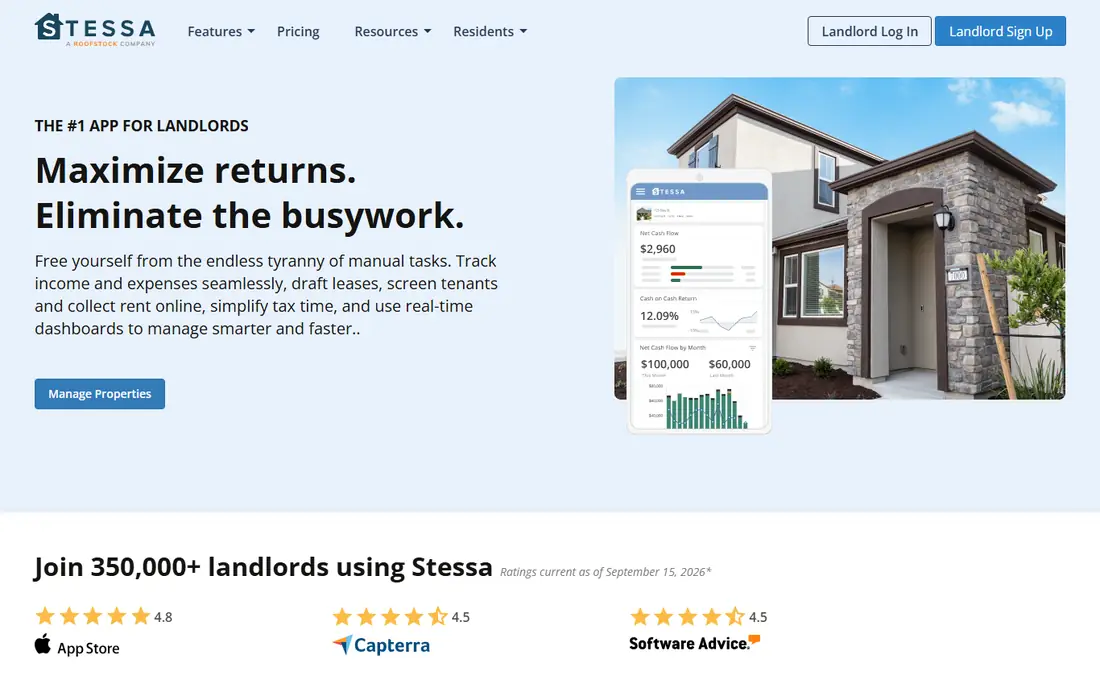
Stessa fits landlords who want clean rental books without paying from day one. The free essentials tier covers income and expense tracking, bank connections and property-level reports, which is enough for many owners with a handful of doors. Paid plans add tax centre features, rent collection tools and deeper reporting for larger portfolios. The catch is tiering. Features that matter at tax time, such as detailed tax reports and document handling, may sit on paid plans, so check the plan that matches your tax workflow. Stessa is still a strong starting point, because the free tier lets a landlord test real books before committing to a paid plan.
- Free essentials tier
- Property-level income and expense tracking
- Tax-ready reports for landlords
- Advanced tax and management features sit on paid plans
- Bank sync quality varies by bank

Baselane fits investors who want banking and books in one place. Property-specific accounts help keep funds separate by property or unit, automated tagging sorts transactions to property and Schedule E categories, and rent collection feeds directly into the ledger. That combination cuts manual sorting for owners with several properties. The trade-off is the banking model. Owners who do not want to move banking to Baselane will get less value, and advanced automation sits on the paid Smart plan. For owners who do adopt the banking side, Baselane is one of the cleanest property management accounting software options for day to day cash clarity.
- Property-specific bank accounts
- Automated bookkeeping tags
- Rent collection and tax package exports
- Banking-led model may not suit owners happy with their current bank
- Some features sit on the paid plan
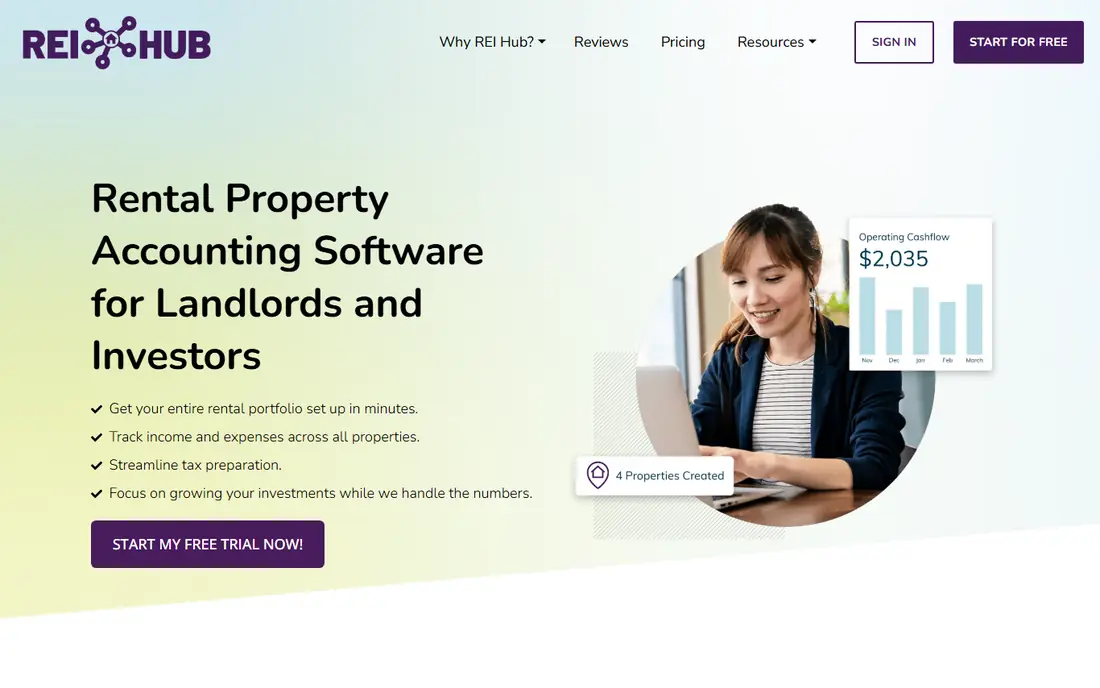
REI Hub fits investors who want books organised the way landlords think: by property, unit and tenant, not by generic chart of accounts. Income and expenses attach to the right unit, reports show profit by property, and paid plans add Schedule E reporting and automated bookkeeping. Short-term rental payout imports also help owners with mixed portfolios. The catch is unit pricing. The free tier covers a small unit count, and paid plans scale by units, so a large portfolio should model cost at its full door count. For small to mid-size investors who do their own books, REI Hub offers depth without accounting training.
- Real estate first ledger design
- Schedule E reporting on paid plans
- Bank and payout imports
- Unit-based pricing rises with portfolio size
- No full leasing suite
Landlord Studio fits self-managing landlords who work mainly from a phone. Expense tracking, rent collection, tenant records and reports are built for mobile use, and receipt scanning helps capture costs at the property rather than at a desk later. The free tier for up to three units makes it easy to test with a small portfolio. The catch is feature tiering. Bank feeds and some advanced reporting sit on paid plans, so owners with several properties should compare the paid plan cost with the time saved. Landlord Studio is strongest for landlords who want accounting depth on mobile, rather than a desktop general ledger.
- Free tier for up to three units
- Receipt scanning
- Schedule E export and rent collection
- Paid plans needed for bank feeds and advanced features
- Pricing rises by unit count on higher tiers
RentRedi fits landlords who want one price and one platform for rent, tenants and books. The flat monthly price billed annually covers unlimited units, which makes budgeting simple as a portfolio grows. Income and expense tracking, bank reconciliation, maintenance tracking and tenant screening sit alongside rent collection, so a landlord does less juggling. The catch is depth. RentRedi accounting is solid for landlord books and reports, but lighter than a purpose-built double-entry ledger or a full manager platform. Landlords with complex trust accounting or commercial needs should check fit, while typical residential landlords will find the flat price and simple scope appealing.
- One flat price with unlimited units
- Rent collection and tenant tools
- Owner statements and reports
- Accounting depth is lighter than purpose-built ledgers
- No free trial on the standard plan
Buildium fits managers and growing portfolios that need accounting alongside leasing, maintenance, owner reporting and tenant communication. Property-level books connect to rent, work orders and owner statements, which reduces double entry for a busy management team. That breadth is why Buildium suits professional managers more than a single-property owner. The trade-off is cost and setup. Pricing depends on units and plan, and a small landlord may pay for management features it never uses. Managers should compare Buildium with DoorLoop and AppFolio on unit pricing, onboarding support and owner reporting, since those details matter more than a feature list.
- Full management plus accounting
- Owner and tenant portals
- Leasing and maintenance workflows
- Pricing is quote-based and unit-linked
- More system than a small landlord needs
DoorLoop fits modern managers who want a clean system for rent collection, leasing, maintenance and accounting in one place. Its interface is easier for new staff to learn than older manager platforms, and property-level reporting helps owners see income, expenses and cash flow without separate spreadsheets. Growth features suit teams adding units over time. The catch is price at the low end. DoorLoop pricing is quote-based and unit-linked, so a one-unit landlord may find a free landlord tool cheaper. For a manager with a growing book, the value comes from fewer tools, clearer owner statements and faster leasing and maintenance workflows.
- Modern interface
- Management plus accounting
- Rent, leasing and maintenance in one system
- Pricing is quote-based
- Entry cost can be high for very small portfolios
QuickBooks Online fits landlords whose accountant already works in QuickBooks and wants standard books. Bank feeds, invoicing, expense tracking and payroll add-ons cover general accounting well, and most accountants can review a QuickBooks file without learning a new landlord system. Integrations also help owners connect banks, payment tools and reporting apps. The catch is property structure. QuickBooks is not built for rentals by default, so owners must set up classes, locations or projects to track profit by property, and deeper property reporting sits on higher tiers. Landlords who want property-first books with little setup should compare Stessa, Baselane or REI Hub first, and choose QuickBooks when accountant fit matters most.
- Wide accountant adoption
- Strong general ledger and reporting
- Many integrations
- Property tracking needs class or location setup
- Higher tiers needed for deeper property reporting
How we picked these
We compared official feature pages, pricing pages, tax reporting options and public documentation for rental accounting and property management tools in October 2026. We favoured tools with property and unit-level tracking, bank feeds or imports, rent collection options and tax-ready reports, rather than generic invoicing tools. We also kept a mix of free landlord tools, flat-price platforms, manager systems and a general ledger, so readers can compare cost and depth at their portfolio size. We did not claim hands-on testing, and prices marked as quote-based reflect vendor pages that ask buyers to request a proposal.
What to check before you buy
Start with portfolio size and tax needs. Count units, not just properties, since many tools price by unit. Check whether Schedule E categories, per-property profit and loss, cash flow and tax package exports are included in the plan you will actually buy, not just the top plan. Also check bank feed coverage for your banks, since a broken feed turns automated bookkeeping into manual entry.
Rent, tenants and management scope
Decide how much management work belongs in the accounting tool. A landlord who only needs books can choose a focused tool, while a manager who needs listings, screening, leases, maintenance and owner statements needs a broader platform. Check tenant portals, late fee rules, owner statement formats and maintenance tracking before signing, since moving tenants and leases later is harder than moving a ledger.
Accountant handoff and year-end work
Ask how reports export, whether an accountant can access the books directly, and what the year-end package includes. A good handoff should include a transaction ledger, per-property reports, receipts and a tax summary that maps to Schedule E categories. Test that export with a sample month before tax season, and confirm who owns depreciation, categorisation decisions and filing, since accounting software does not replace professional tax advice.
Frequently asked questions
What is the best bookkeeping software for rental properties for a beginner?
Stessa, Baselane and REI Hub are good beginner picks, because they organise income and expenses by property and offer free tiers to test real books. The best bookkeeping software for rental properties for a beginner is the one with bank feeds for your banks, clear property reports and a tax export you understand, so test a full month before committing.
What is the best property management accounting software for a growing manager?
Buildium and DoorLoop suit growing managers, because they combine accounting with leasing, maintenance, tenant portals and owner reporting. Compare unit pricing, onboarding support and owner statement formats, since those items affect daily work more than a long feature list. RentRedi is a simpler middle option for landlords who want management tools without full manager pricing.
Does rental accounting software prepare my tax return?
Most tools on this list produce tax-ready reports and Schedule E summaries, but they do not file a return by themselves. An accountant or tax preparer still needs to review categorisation, depreciation and filing rules for your situation. Use the software to keep clean, property-level records all year, and share the full export package at year end.
Is free rental accounting software good enough?
Free tiers from Stessa, Baselane, REI Hub and Landlord Studio can be enough for a small portfolio with simple books. Paid plans become worth it when bank automation, tax centre reports, rent collection or a larger unit count save real time or reduce errors. Compare the free tier limits with your unit count and tax needs before deciding.
How does unit pricing affect rental software cost?
Many landlord tools price by unit or by plan tier tied to units, so cost rises as doors are added. RentRedi uses a flat price for unlimited units, which can be cheaper at scale, while REI Hub and Landlord Studio scale with units. Model cost at your current unit count and at your next growth step, not just at signup.
Should I use QuickBooks Online for rental property?
QuickBooks Online is a good pick when your accountant works in QuickBooks and wants a standard general ledger. It needs careful setup for property tracking, and higher tiers help with deeper reporting. Landlords who want property-first books with less setup usually prefer Stessa, Baselane or REI Hub instead.
Sources
See where you really rank - block by block
ProMapRanker scans Google Maps across a grid of your service area. Simple monthly plans from $19, white-label on every plan.
Start freeKeep reading
 zscaler alternatives
Best Zscaler Alternatives in 2026
Looking for zscaler alternatives? We compare 9 SASE and zero trust platforms on architecture, data protection, pricing, and fit for your network and team.
Read → zapier alternatives free
Best Zapier Alternatives Free in 2026
Nine automation tools for zapier alternatives free in 2026, all with genuinely free tiers, plus free plan limits, starting prices and upgrade paths explained.
Read → which platform is best for online reputation
Which Platform Is Best for Online Reputation in 2026
Wondering which platform is best for online reputation? We compare 8 review, listing, and response tools for small and multi-location businesses and agencies.
Read →