 ProMapRanker
Best Accounting Software for Property Management in 2026

Key takeaways
- Buildium, DoorLoop, AppFolio, and Yardi Breeze combine property operations with real accounting, including owner statements and trust accounting.
- Buildium and DoorLoop publish clear flat starting prices, while AppFolio and Propertyware use quote-based pricing.
- Yardi Breeze and Rentec Direct suit smaller portfolios that still need proper ledgers and owner reporting.
- QuickBooks Online works when you already use it and have a bookkeeper, but it needs setup for rental-specific workflows.
- TenantCloud and similar landlord tools suit owners who manage their own units and want lower-cost accounting.
Quick comparison
| Pick | Great for | Pricing starts at | Free tier | |
|---|---|---|---|---|
 AppFolio | Mid-size and large portfolios | See website | No | Visit |
 Buildium | Growing management companies | $62 per month | Free trial (14 days) | Visit |
 DoorLoop | Modern interface and ease of use | $69 per month | No | Visit |
 Yardi Breeze | Small portfolios wanting Yardi accounting | $1 per unit per month | No | Visit |
 Rentec Direct | Budget-conscious managers | $45 per month | Free trial (14 days) | Visit |
 Propertyware | Single-family portfolios at scale | See website | No | Visit |
 TenantCloud | DIY landlords on a budget | $15 per month | Yes | Visit |
 QuickBooks Online | Firms with a bookkeeper | $38 per month | No | Visit |
The best accounting software for property management
The best accounting software for property management does more than track income and expenses. It links rent, fees, deposits, owner payouts, and bank activity to properties, units, tenants, and owners, so month-end reports do not require manual spreadsheets. We compared official pricing and feature pages for platforms that combine property operations with accounting.
This article is general information, not accounting advice. Trust accounting rules, tax treatment, and owner reporting requirements vary by state and portfolio type, so confirm your setup with a qualified accountant for your area.
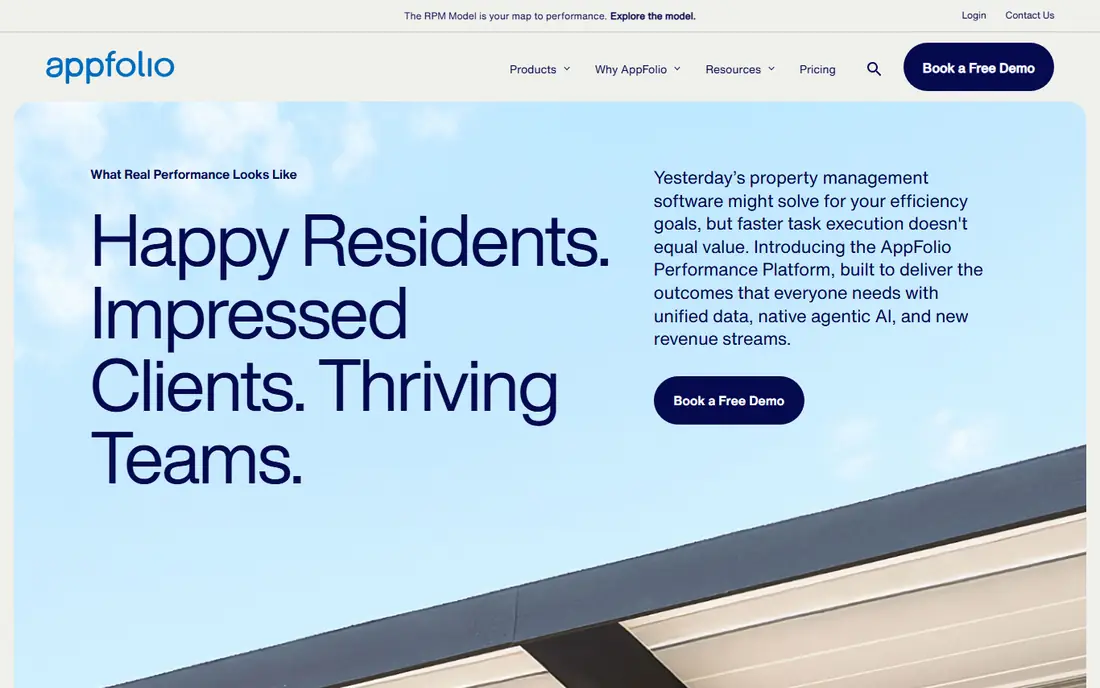
AppFolio is built for professional management companies that handle many units and need automation across leasing, rent collection, maintenance, and accounting. Its general ledger, owner statements, and bank reconciliation sit in the same system as tenant and property records, which reduces duplicate entry. Automation for late fees, reminders, and owner payouts also saves time at scale.
The main barrier is access. Pricing is quote-based, and published guides point to a minimum monthly spend aimed at larger portfolios. Small landlords will find the sales process heavy and the minimums hard to justify. For a company managing hundreds of units, AppFolio offers depth that lighter landlord tools cannot match, but it should be bought on a demo with your real portfolio structure.
- Broad all-in-one platform
- Strong automation
- Detailed owner reporting
- Quote-based pricing
- Minimum unit requirements can exclude small portfolios
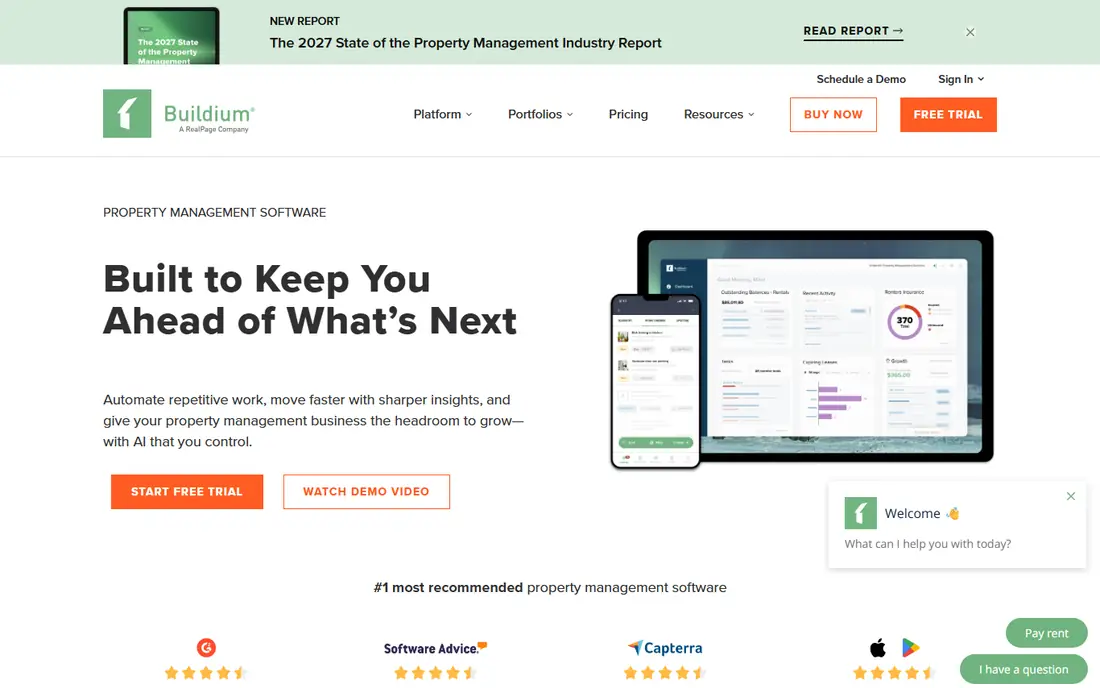
Buildium is a strong middle ground for management companies that need proper accounting without enterprise pricing. It covers trust accounting, owner statements, rent collection, maintenance tracking, and leasing in one system. The published starting price makes early budgeting easier than with quote-based rivals, and the 14-day trial gives time to test core accounting flows.
Growth brings upgrade pressure. Advanced reporting, workflows, and integrations often require higher tiers, so check which plan includes the reports and automation your owners expect. Buildium also works best for residential and mixed portfolios rather than very large commercial operations. For a growing firm that wants structure and clean books, it is a dependable choice.
- Published starting price
- Trust accounting and owner statements
- Broad residential features
- Advanced workflows sit on higher tiers
- Per-unit costs can grow with portfolio size
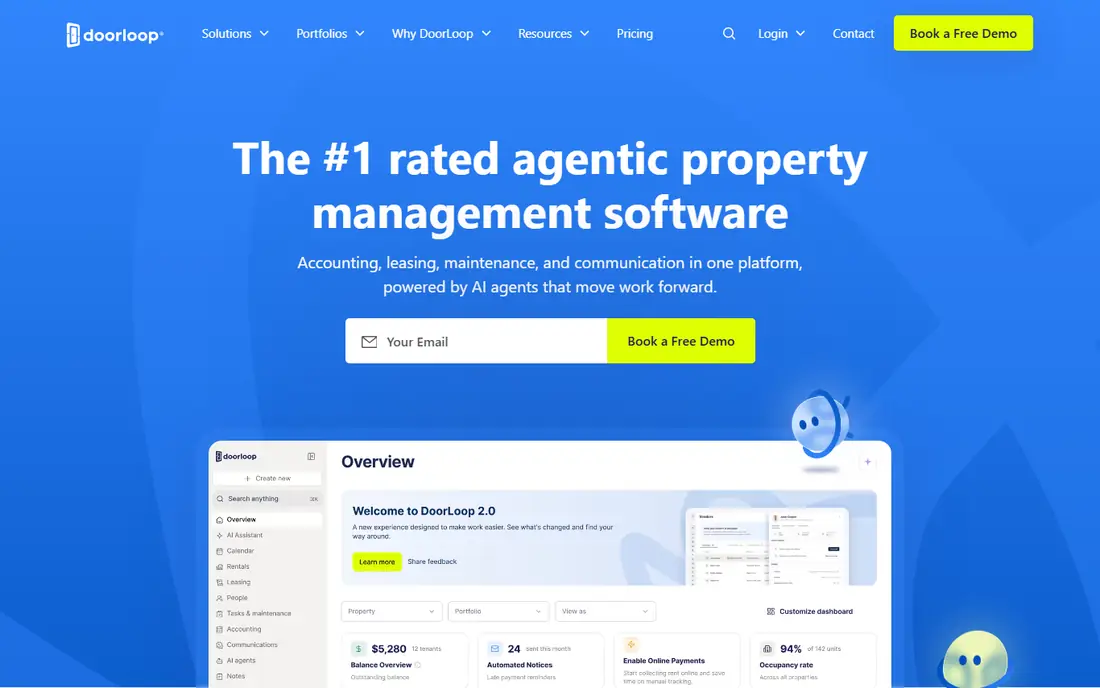
DoorLoop appeals to managers who want modern software that staff and owners can learn quickly. Its accounting tools cover property and owner ledgers, rent collection, expenses, and owner statements, while the interface feels lighter than older property systems. The flat starting price, billed annually, helps small and mid-size firms budget without per-unit math at the entry level.
Larger portfolios should look past the entry price. DoorLoop also offers per-unit plans with higher monthly minimums for larger operations, so model cost at your current and expected unit counts. Some firms also report that advanced accounting features need a careful demo. If ease of use and fast onboarding matter most, DoorLoop is a strong shortlist pick.
- Modern interface
- Clear flat starting price
- Strong rent and owner tools
- Higher-tier pricing for larger portfolios
- Some advanced accounting needs a demo check
Yardi Breeze brings Yardi accounting to smaller portfolios without the complexity of full Yardi Voyager. Residential pricing starts at $1 per unit per month with a $100 monthly minimum, and a Premier tier covers commercial and mixed portfolios. It handles ledgers, owner statements, rent collection, and bank reconciliation in a system accountants tend to trust.
The interface is more traditional than DoorLoop or Buildium, and setup can feel formal for a first-time user. The monthly minimum also means very small portfolios pay more per unit than the headline rate suggests. If your priority is accounting depth and a name your accountant recognizes, Yardi Breeze is a safe, professional choice.
- Yardi accounting pedigree
- Per-unit pricing
- Residential and commercial options
- Monthly minimum applies
- Interface feels more traditional than newer rivals
Rentec Direct is a value pick for managers who need real property accounting without paying for a large platform. It covers tenant and owner ledgers, trust accounting, rent collection, and financial reporting, with a starting price that undercuts several rivals. For firms managing tens to low hundreds of units, that balance is attractive.
The trade-off is polish. Rentec Direct looks and feels more utilitarian than DoorLoop or Buildium, and some workflow features sit on higher tiers. If your team values clean books and low cost over a modern interface, it is a practical choice. Test owner statements and bank reconciliation during the trial, since those are the reports owners judge you by.
- Low starting price
- Solid trust accounting
- Good for small to mid-size firms
- Interface is less modern
- Some features need higher plans
Propertyware, part of the RealPage family, suits companies managing large single-family portfolios. Its accounting covers property-level ledgers, owner statements, trust accounting, and portfolio reporting, with tools for maintenance, leasing, and payments in the same system. That depth helps firms that manage scattered-site homes across cities or states.
Pricing is quote-based, and the platform is aimed at professional firms rather than individual landlords. Smaller portfolios may find the sales process and minimum spend hard to justify. For a large single-family operator, Propertyware offers accounting and reporting depth that lighter tools cannot match, but buy it only after a demo with your portfolio structure.
- Strong single-family accounting
- Detailed owner and portfolio reporting
- Scalable for large firms
- Quote-based pricing
- Sales process and minimums suit larger firms
TenantCloud suits owners who manage their own rentals and want accounting without a management-company platform. It combines rent collection, expense tracking, tenant communication, and basic accounting reports at a low price, with a free tier for basic use. That makes it a good first step for landlords moving from spreadsheets.
It is not a replacement for Buildium or AppFolio at scale. Owner reporting, trust accounting depth, and workflow tools are lighter, and limits appear as unit counts grow. If you own a handful of units and manage them yourself, TenantCloud covers the essentials well. If you manage for other owners, choose a platform built for owner accounting from the start.
- Low cost
- Free tier available
- Accounting plus rent collection for owners
- Lighter than professional management platforms
- Limits suit smaller portfolios
QuickBooks Online is the best general accounting option for firms that already use it or work with a bookkeeper who prefers it. It handles invoicing, expenses, bank feeds, payroll add-ons, and tax reports well, and most accountants know how to work with it. For a firm with a bookkeeper, that familiarity can save time and reduce errors.
The catch is setup. QuickBooks Online is not built for property management, so you must configure classes, locations, or custom fields to track properties, units, and owners, and you may still need a separate tool for leasing and maintenance. That setup works for small portfolios and firms with accounting help, but it becomes fragile at scale. If you want property accounting without custom setup, a dedicated platform is a better fit.
- Widely used by accountants
- Strong general accounting
- Many integrations
- Not rental-specific out of the box
- Needs classes and setup for property tracking
How we picked these
We compared official pricing pages, feature pages, and accounting documentation for tools that handle property ledgers, owner statements, and trust accounting, plus general accounting tools commonly used by property managers. We focused on rent collection, bank reconciliation, owner reporting, and pricing transparency. We did not claim hands-on testing. Where pricing is quote-based or varies by unit count, we wrote See website or the published starting figure shown by the vendor.
Choosing property management accounting software
Start with who you manage for. An owner managing their own units needs different accounting than a firm managing for dozens of owners, with trust accounts, owner payouts, and monthly statements. That distinction alone will narrow the list to two or three realistic options.
Check trust accounting and owner statements first
Trust accounting rules matter more than dashboard design. Confirm how the system separates owner funds, handles security deposits, tracks owner draws, and produces monthly owner statements. Ask for a sample owner statement and a sample trust report during a demo, and show them to your accountant before you sign. A system that cannot produce clean owner reports will create work every month.
Model cost at double your unit count
Per-unit pricing looks cheap at ten units and expensive at one hundred, while flat pricing can hide tier limits. Model cost at your current count, at double that count, and with payment processing and screening fees included. That forecast prevents a painful migration when growth makes your cheap plan the most expensive line item.
Test bank reconciliation and month-end close
Rent collection, expense entry, and bank feeds must reconcile cleanly, or month-end close will drag. During a trial, import a month of real transactions, reconcile a bank account, and close the month. Check how corrections, voided payments, and owner adjustments are handled, since those edge cases reveal whether the accounting is truly built for property work.
Frequently asked questions
What is the best accounting software for property management?
Buildium and DoorLoop are strong all-round picks for growing firms, while AppFolio suits larger portfolios and Yardi Breeze suits smaller portfolios that want Yardi accounting. The best accounting software for property management depends on unit count, owner reporting needs, and budget.
What is the best property management software for accounting?
Dedicated platforms such as Buildium, AppFolio, Yardi Breeze, DoorLoop, and Propertyware combine operations with accounting, so rent, expenses, and owner payouts stay in one ledger. General tools such as QuickBooks Online can work, but they need setup for property-specific tracking.
What is the best property management accounting software for small landlords?
TenantCloud and Rentec Direct are good low-cost options for owners and small firms. TenantCloud suits DIY landlords, while Rentec Direct offers stronger trust accounting at a still-low starting price. Both are easier to justify than enterprise platforms for small portfolios.
Do I still need an accountant if I use property management software?
Yes, for tax filing, entity structure, and trust account compliance. Good software removes bookkeeping scramble by producing categorized income, expenses, rent rolls, and tax-ready summaries, but it does not replace professional advice for your state and portfolio.
Can QuickBooks Online handle property management accounting?
Yes, with setup. QuickBooks Online handles general accounting well, but you must configure classes or locations for properties and owners, and you may need a separate tool for leasing and maintenance. Firms with a bookkeeper often make it work, while firms without accounting help usually prefer a dedicated platform.
Sources
See where you really rank - block by block
ProMapRanker scans Google Maps across a grid of your service area. Simple monthly plans from $19, white-label on every plan.
Start freeKeep reading
 zoom alternatives for webinars
Best Zoom Alternatives for Webinars in 2026
Discover zoom alternatives for webinars in 2026, from browser-based rooms to sales-focused platforms, with pricing, audience limits and honest trade-offs.
Read → tipalti alternatives
Best Tipalti Alternatives in 2026
Compare the best tipalti alternatives for accounts payable, global payouts and bill pay, with pricing and free plans for small teams in 2026 for US teams.
Read → mixpanel alternatives
Best Mixpanel Alternatives in 2026
Compare the best mixpanel alternatives for product analytics, funnels and retention, with free tiers and current pricing for growing teams in 2026 for US teams.
Read →