 ProMapRanker
Best Accounting Software for Hotel Industry in 2026


Cloud hotels wanting operations and finance together · Pricing starts at: See website
Key takeaways
- Hotel-only tools such as M3 and Hotel Investor Apps are built around folios, daily revenue, and multi-property reporting, while general tools need a property system beside them.
- The strongest fit usually depends on property count: one inn can run on Xero or QuickBooks with a booking tool, while a group needs consolidated reporting.
- Pricing is often quoted rather than published in this category, so ask for the full cost of setup, integrations, and support before signing.
- Night audit, tax handling, and bank reconciliation matter more for hotels than a long feature list, so test those three workflows in a demo.
Quick comparison
| Pick | Great for | Pricing starts at | Free tier | |
|---|---|---|---|---|
| Mews | Cloud hotels wanting operations and finance together | See website | No | Visit |
 Oracle OPERA Cloud | Large hotels and groups on Oracle | See website | No | Visit |
 Cloudbeds | Small and mid-size properties needing one hub | See website | No | Visit |
 Xero | Small hotels wanting a clean general ledger | See website | Free trial | Visit |
 QuickBooks Online | US hotels already using Intuit tools | See website | Free trial | Visit |
 Sage Intacct | Growing groups needing deeper financial control | See website | No | Visit |
 M3 Accounting | Hotel groups wanting hospitality-only accounting | See website | No | Visit |
 Hotel Investor Apps | Large groups wanting dashboards and consolidation | See website | No | Visit |
 RDPWin | Independent properties wanting an all-in-one system | See website | No | Visit |
The best accounting software for hotel industry teams
We compared hotel-only accounting tools with general accounting tools that hotels commonly pair with a property management system. The list below mixes both kinds, and each entry notes which kind it is.
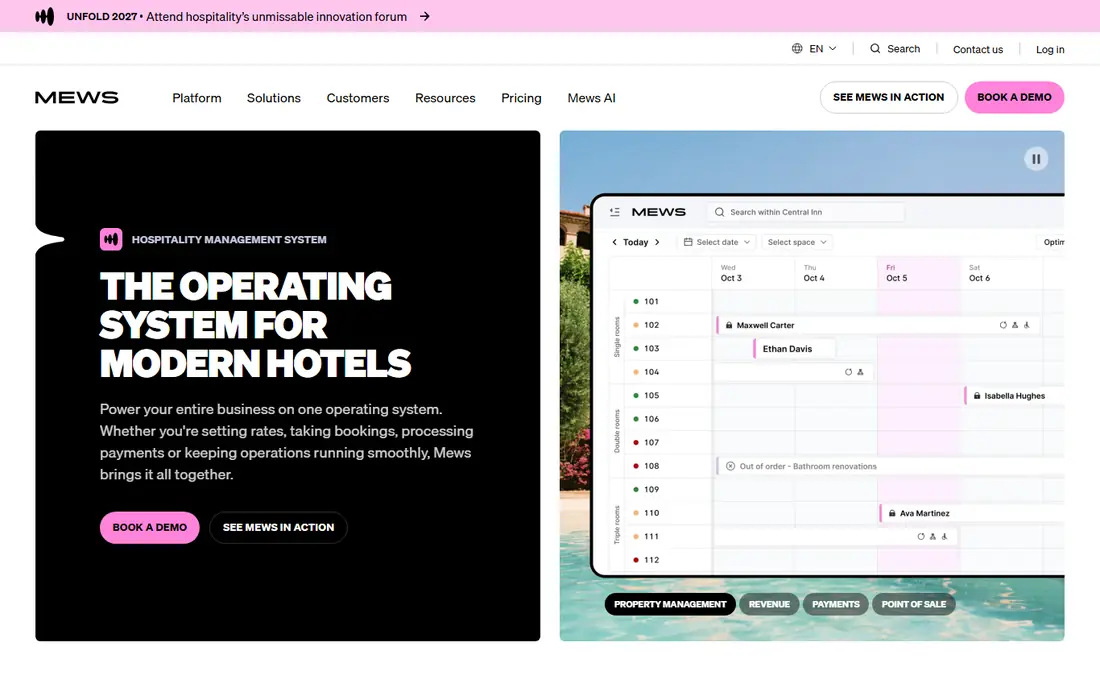
Mews is a cloud property platform with accounting features that sit close to reservations, billing, and payments. That closeness helps when a charge, refund, or rate change should reach the books without retyping. Hotels that want one system for guests and money often start here, and the integration marketplace adds payment, revenue, and reporting partners.
The catch is scope. Mews is first a property system, so a hotel with complex group reporting or detailed cost accounting may still need a separate ledger beside it. Ask how folio postings map to your chart of accounts, and check what happens to taxes and adjustments during night audit before you commit.
- Modern cloud design
- Wide integration marketplace
- Automation for routine front-office and billing tasks
- Pricing is quote-based
- Some advanced features cost extra
- Multi-property setup can need careful planning
Oracle OPERA Cloud covers reservations, billing, guest services, rate handling, and reporting in one hospitality suite. For large hotels, the value is central control: group billing, charge routing, multi-currency handling, and tax rules live in the same place as daily operations. Finance teams get folio and invoice detail tied to stays rather than to a separate spreadsheet.
That depth comes with weight. Implementation and permissions need real planning, and smaller hotels may find the cost and setup hard to justify. It fits best when a group already uses Oracle tools, or when several properties must share one set of controls and reports.
- Deep hospitality feature set
- Strong multi-property controls
- Broad partner and integration options
- Setup can be complex
- Pricing is quote-based
- The interface can feel dated in places
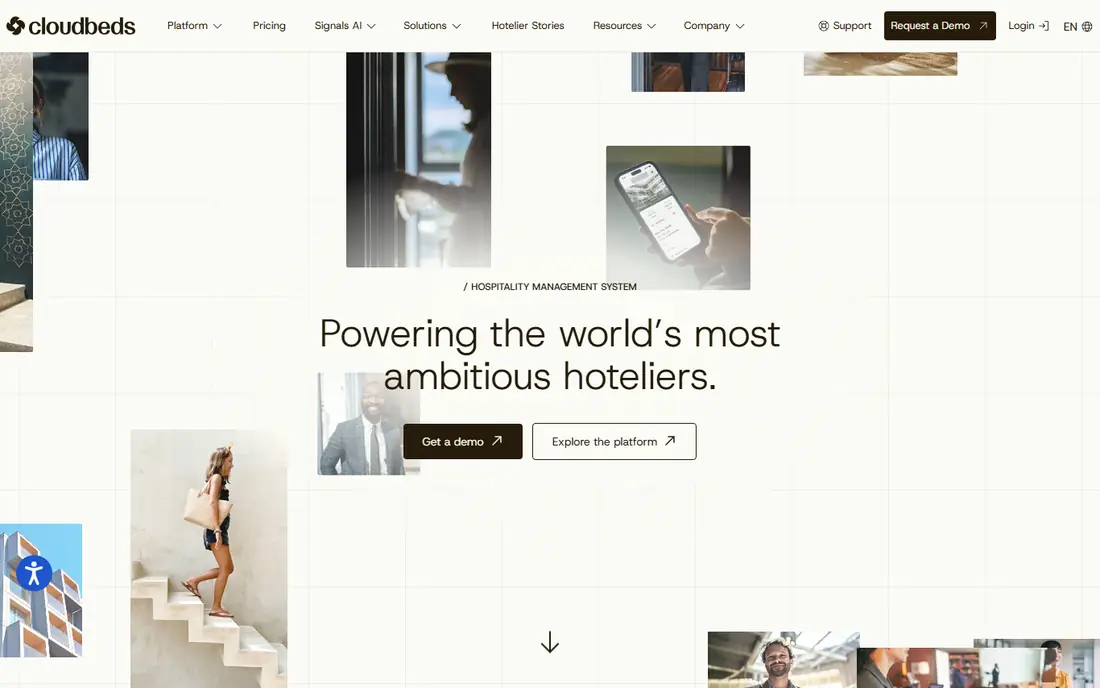
Cloudbeds suits independent hotels, inns, and small groups that want reservations, channel handling, payments, and financial summaries in one place. The system ties stay-level activity to revenue outcomes, which makes daily and monthly reviews easier than stitching reports from three tools. Support and onboarding are aimed at smaller teams without a large IT staff.
It is not a full replacement for a dedicated accounting ledger in every case. Hotels with several entities, detailed departmental accounting, or strict audit needs should check how Cloudbeds exports to their ledger, and how adjustments and refunds are recorded. For many small properties, though, the combined hub is the point.
- Combines property, booking, and payment tools
- Revenue and activity rollups
- Cloud access from anywhere
- Pricing is quote-based
- Accounting depth is lighter than a hotel-only ledger
- Add-ons can add cost
Xero is a general accounting tool, and that is both its strength and its limit for hotels. The ledger, invoicing, bank feeds, and reporting are clear and well tested, and accountants in many countries know it well. A small hotel can run daily income, supplier bills, and payroll records here while a booking or property tool handles rooms and guests.
The work is in the connection. You need a reliable link between your property system and Xero, or a disciplined manual routine, so room revenue does not drift from the ledger. Check the integration for your property system first, and confirm how taxes, deposits, and refunds are posted. If that link is solid, Xero is a low-friction choice.
- Clear invoicing and bank reconciliation
- Many app integrations
- Easy to share with an accountant
- No hotel-only folio tools built in
- Needs a property system beside it
- Payroll features vary by region
QuickBooks Online is the familiar choice for many US small businesses, and hotels are no exception. It handles invoicing, expenses, bank reconciliation, payroll add-ons, and tax reports in one place, and most US accountants can open its files without training. Property integrations can bring reservation and payment data into the ledger.
Like Xero, it needs a property system for room-level work. Folios, housekeeping status, and rate plans do not live here, so the integration matters more than the ledger alone. Compare plans carefully, since payroll, multi-user access, and reporting depth sit on different tiers, and confirm the total monthly cost before you choose.
- Widely used in the US
- Strong invoicing and reporting
- Many property and payment integrations
- No hotel-only folio tools built in
- Plan differences can confuse buyers
- Support quality varies
Sage Intacct is built for finance teams that need more than a simple ledger. Multi-entity consolidation, departmental and property dimensions, and approval workflows help a growing hotel group keep each property separate while still reporting as one business. It also connects with property, payroll, and payment tools through integrations.
The trade-off is effort. Configuration, chart design, and reporting setup take time, and the price reflects an enterprise-grade tool. A single inn will likely find it heavy. A group adding properties, or a hotel company that needs audit-ready consolidation, will get more value from the depth.
- Strong multi-entity and consolidation reporting
- Detailed dimensions for departments and properties
- Cloud access
- Pricing is quote-based
- Setup needs expertise
- May be too much for a single small hotel
M3 is one of the clearest hotel-only accounting choices on this list. It was built for hotels, so daily revenue, payroll, invoicing, and expense tracking follow hospitality routines rather than generic business routines. It connects with major property systems, which helps groups pull operational data into finance without manual re-entry.
M3 fits portfolios and larger properties best. A very small hotel that only needs basic books may not use its range, and the quote-based price makes comparison harder. Ask for a demo using your own property mix, and check how it handles inter-property charges and owner reporting if those matter to you.
- Built only for hospitality
- Automates payroll, invoicing, and expense work
- Many property system integrations
- Pricing is quote-based
- Best suited to larger portfolios
- Smaller hotels may find it too broad
Hotel Investor Apps
Great for: Large groups wanting dashboards and consolidation
Hotel Investor Apps offers a hospitality enterprise system with accounting at its core. The pitch is consolidated data across properties, with dashboards shaped for owners, managers, and finance staff. For a group that needs to compare properties, track budgets, and review performance in one place, that structure is useful.
It is less suited to a single property with simple books. The system assumes a group, with several properties and staff roles, and the price and setup reflect that. Groups should test the dashboards with their own reporting needs, and confirm how the system imports data from their property systems.
- Built for multi-property hotel groups
- Consolidated data and role-based dashboards
- Detailed financial oversight
- Pricing is quote-based
- Aimed at larger groups
- Smaller hotels may find it more than they need
RDPWin combines property management with accounting for resorts, inns, and independent hotels. Folio charges can post to the ledger through configured rules, which cuts manual entry for daily revenue. The system also covers reservations, guest history, and reporting, so a small team can run much of the business from one place.
The look and setup feel older than newer cloud tools, and mapping accounts takes care at the start. That effort pays off for properties that want one vendor for rooms and books. If you want a modern, mobile-first design above all else, compare it side by side with a cloud rival before deciding.
- Property and accounting tools in one system
- Folio-to-ledger posting rules
- Long history with independent resorts
- Pricing is quote-based
- Interface feels older than cloud rivals
- Configuration takes care
How we picked these
We compared official feature pages, pricing pages, and public product descriptions for hotel-only accounting tools and general ledgers that hotels commonly use. We kept tools that are live in October 2026 and that handle hotel revenue, billing, or multi-property reporting in a direct way, either on their own or through a property system link. We left out tools with no clear hotel use, and we did not invent prices where vendors publish none.
What to check before you buy
Start with your property count and your current property system, since those two facts narrow the list fast. A single property with a booking tool in place can often use Xero or QuickBooks, while a group needs consolidated reporting from M3, Sage Intacct, or Hotel Investor Apps. Write down who posts revenue, who approves supplier bills, and who closes the month, then test those exact steps in a demo.
Next, check the daily close. Ask how night audit runs, how refunds and no-shows post, and how taxes are calculated for each rate and channel. Then check bank reconciliation and owner reporting, if you have owners. Finally, get the full price in writing, including setup, training, integrations, and support, since quoted pricing can hide those costs. A short trial with real data from one property will reveal more than a sales deck.
Frequently asked questions
Do I need hotel-only accounting software, or will QuickBooks or Xero work?
A general ledger works for many small hotels when a property system handles rooms, rates, and folios, and a sound integration moves revenue into the books. Hotel-only tools fit better when you run several properties, need departmental reporting, or want folio-to-ledger posting built in. The deciding factor is how much manual work the link between rooms and books creates.
What does hotel accounting software cost?
Many vendors in this category quote prices based on property count, rooms, modules, and users, so published prices are rare. General tools publish plan prices more often, but property integrations and payroll add-ons can change the total. Ask for a written quote that includes setup, training, and support for your property count.
How does night audit fit into accounting?
Night audit closes the business day, checks that room charges, payments, taxes, and adjustments balance, and posts the day to the ledger. A good system makes that check visible and flags gaps before posting. Test this workflow in a demo, since a weak night audit creates month-end cleanup work.
Can one system handle several hotels?
Yes, if it offers multi-property or multi-entity reporting, with separate books per property and a consolidated view for the group. M3, Sage Intacct, Hotel Investor Apps, and Oracle OPERA Cloud are built for that pattern. Confirm how inter-property charges, shared staff costs, and owner statements are handled.
Should accounting and property management be the same tool?
One combined tool can cut retyping and speed up the daily close, which suits many independent properties. Separate best tools can give deeper finance or deeper guest features, at the cost of an integration to maintain. Choose based on which side, rooms or finance, causes more pain today.
Sources
See where you really rank - block by block
ProMapRanker scans Google Maps across a grid of your service area. Simple monthly plans from $19, white-label on every plan.
Start freeKeep reading
 zoro.to alternatives
Best Zoro.to Alternatives in 2026
We compare the best zoro.to alternatives in 2026, listing only legal licensed anime streaming services, from Crunchyroll to free options for fans today.
Read → zip alternatives
Best Zip Alternatives in 2026
We compare the best zip alternatives for buy now, pay later in 2026, covering pay-in-4 plans, fees, spending limits, and credit reporting options today.
Read → yesware alternatives
Best Yesware Alternatives in 2026
Compare the best yesware alternatives for sales email tracking, templates, and sequences, with current pricing and honest tradeoffs for small sales teams.
Read →