 ProMapRanker
Best Accounting Software for Ecommerce Business in 2026


Main ledger most accountants know · Pricing starts at: $38 per month
Key takeaways
- The best accounting software for ecommerce business owners solves payout reconciliation first, because marketplace payouts bundle sales, fees, refunds and taxes into one deposit.
- QuickBooks Online and Xero work as the main ledger for most stores, while A2X, Link My Books and Taxomate connect marketplaces to that ledger cleanly.
- Free plans from Wave and Zoho Books suit small stores, but payout connectors become worth paying for once order volume grows.
- Track cost of goods sold, sales tax and channel fees separately, because a store can look profitable on revenue while losing money on fees and returns.
Quick comparison
| Pick | Great for | Pricing starts at | Free tier | |
|---|---|---|---|---|
| QuickBooks Online | Main ledger most accountants know | $38 per month | Free trial | Visit |
 Xero | Clean cloud ledger for growing stores | $27 per month | Free trial | Visit |
 A2X | Accurate marketplace settlement reconciliation | $29 per month | Free trial | Visit |
 Link My Books | Payout matching with built-in analytics | See website | Free trial | Visit |
 Taxomate | Low-cost payout accounting | $14 per month | Free trial | Visit |
 Zoho Books | Free ledger with inventory on paid plans | Free | Yes | Visit |
 Wave | Free ledger for small stores | Free | Yes | Visit |
 FreshBooks | Sellers who also invoice clients | $23 per month | Free trial | Visit |
 Bookkeep | Daily sales summaries across channels | $49 per month | Free trial | Visit |
The best accounting software for ecommerce business owners
Ecommerce accounting differs from service accounting because money arrives as payouts, not as simple invoices. A marketplace payout can include many orders, fees, refunds, shipping charges and tax amounts, all in one deposit. Good ecommerce software splits that payout into sales, fees, refunds and taxes, tracks cost of goods sold, and gives a profit view by channel. The tools below include main ledgers and payout connectors, because most stores need both.

QuickBooks Online remains the safest main ledger for a United States ecommerce business, starting at $38 per month for Simple Start in recent listings. Income, expenses, bank reconciliation, sales tax and inventory tools sit in one place, and most accountants and bookkeepers already know how to work in it. That familiarity saves time at tax time and when hiring help.
QuickBooks alone does not solve marketplace payouts well. A Shopify, Amazon or Etsy payout still needs a connector such as A2X, Link My Books or Taxomate to post sales, fees and refunds correctly. Simple Start also covers 1 user, so growing teams need a higher plan. QuickBooks suits stores that want a standard ledger and will add a payout connector.
- Widely known by accountants
- Inventory and sales tax tools
- Large integration range
- Marketplace payouts need a connector
- Simple Start covers 1 user
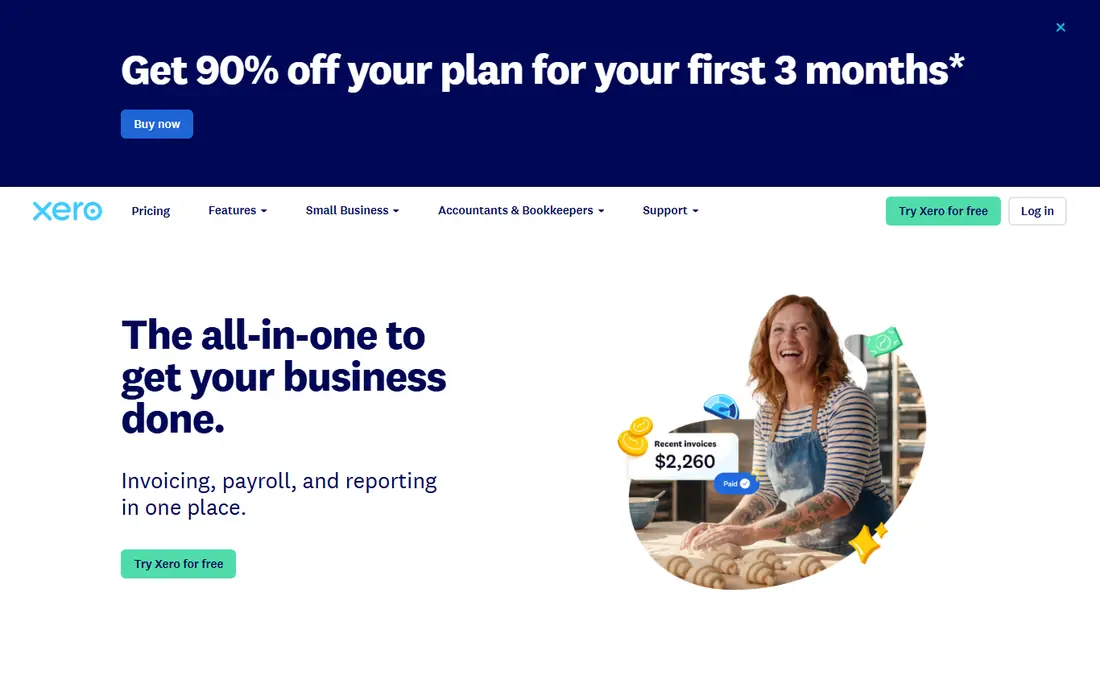
Xero is a strong alternative ledger for ecommerce stores, especially those selling abroad or working with a team. Plans allow unlimited users, multi-currency handling helps international sales, and bank reconciliation is clear. Many accountants outside the United States prefer Xero, which matters for global stores.
Early, at $27 per month in recent listings, caps invoices at 20 and bills at 5 per month, so busier stores need Growing at $55 per month or higher. Like QuickBooks, Xero needs a payout connector for marketplace settlements, because raw payouts do not split into sales and fees on their own. Xero suits growing stores that value team access and multi-currency support.
- Unlimited users on plans
- Multi-currency support
- Strong bank reconciliation
- Early plan caps invoices and bills
- Payout connectors still needed
A2X is the best-known payout connector for ecommerce accounting. It pulls settlement data from Amazon, Shopify, Etsy, eBay and Walmart, then posts summary journals into QuickBooks Online or Xero that match bank deposits. Sales, fees, refunds, shipping and tax amounts are split correctly, which gives a clean profit and loss view by settlement period.
Pricing starts at $29 per month per channel in recent listings, so a store selling on three channels pays for three connections. That cost is still lower than manual payout entry for high-volume stores, and accountants trust A2X documentation. A2X suits stores with real order volume that need accurate, audit-ready payout books.
- Posts settlements as summary journals
- Amazon, Shopify, Etsy, eBay and Walmart support
- Accountant-friendly documentation
- Priced per channel
- Total cost rises with many channels
Link My Books automates payout matching from Amazon, Shopify, eBay and other channels into QuickBooks Online or Xero, similar to A2X, with built-in analytics on sales, fees and profit. Its design suits United Kingdom and European sellers well, with VAT handling that helps cross-border stores. The interface is clean, and profit views help owners see channel performance without exporting data.
Pricing is based on order volume, and recent listings do not always show a simple USD starting price, so check the pricing page for your volume. Setup also needs care with account mapping, especially for tax. Link My Books suits sellers who want payout automation plus analytics in one tool, particularly in the UK and EU.
- Automated payout matching to QuickBooks and Xero
- Built-in analytics
- VAT-friendly design
- Pricing is by order volume with no simple USD headline in some listings
- Learning curve for setup
Taxomate posts marketplace payouts as journal entries that match bank deposits, at a lower entry price than A2X. Starting at $14 per month in recent listings, it supports QuickBooks Online and Xero, with multi-channel support and inventory sync options for sellers who care about cost of goods detail. Free historical imports help stores clean up past payouts when switching.
Taxomate is a smaller brand than A2X, so accountant familiarity may be lower, and feature depth varies by channel. For a Shopify-led store or a multi-channel seller on a budget, the value is strong. Taxomate suits sellers who want clean payouts without paying enterprise connector prices.
- Low entry price
- Payout-level journals
- Multi-channel plans
- Inventory sync options
- Smaller brand than A2X
- Feature depth varies by channel
Zoho Books gives small ecommerce stores a free ledger, provided revenue stays under $50,000, with invoicing, expenses, bank feeds and a client portal. Paid plans add inventory tracking, which matters for product sellers who need stock and cost of goods views. Links to Zoho Inventory, Zoho CRM and Zoho Commerce add value for stores already in the Zoho ecosystem.
Zoho Books alone does not solve marketplace payouts, so high-volume marketplace sellers still need a connector or manual settlement work. The free plan also ends above the revenue limit, so growing stores should model paid pricing early. Zoho Books suits small stores that want a free or low-cost ledger with inventory options.
- Free plan for revenue under $50,000
- Inventory on paid tiers
- Zoho ecosystem links
- Marketplace payout tools need connectors
- Free plan ends above revenue limit
Wave is the cheapest way to start ecommerce bookkeeping, with a free Starter plan covering invoicing and basic accounting. For a small store with modest order volume, manual payout entry in Wave can work, and profit and loss reports give a basic view of performance. Payment processing is available for direct sales outside marketplaces.
Pro, at $19 per month, adds automatic bank imports and receipt capture, which saves time as volume grows. Wave lacks the deep marketplace connector ecosystem of QuickBooks and Xero, so high-volume marketplace sellers will outgrow it. Wave suits new stores testing an idea, with a plan to move to QuickBooks or Xero plus a connector when volume rises.
- Free invoicing and accounting
- Simple layout
- Payment processing available
- Automatic bank imports need Pro at $19 per month
- Payout connectors are limited
FreshBooks suits ecommerce sellers who also run a service business or invoice wholesale clients. Invoicing, time tracking and a client portal are strong, and reports are easy to read. A seller who runs a shop plus a design or consulting service can keep both income types in one place without a second tool.
For pure marketplace selling, FreshBooks is thinner than QuickBooks plus A2X, because payout splitting and inventory depth are limited. Lite, at $23 per month, also caps billable clients at 5, so busy sellers need Plus. FreshBooks suits hybrid sellers who invoice clients often and sell products as a second income stream.
- Strong invoicing and time tracking
- Client portal
- Clean reports
- Lite caps billable clients at 5
- Ecommerce payout depth is thinner than connector-led setups
Bookkeep posts daily sales summaries from ecommerce and point-of-sale channels into QuickBooks Online or Xero, with cost of goods summaries that help owners see daily profit. That daily rhythm suits stores that want a close view of performance, rather than waiting for a monthly settlement summary. Channel support covers major platforms and payment processors in recent listings.
Entry pricing at $49 per month in recent listings is higher than Taxomate, so small stores should compare volume and channel count first. Setup also needs careful account mapping for fees, taxes and refunds. Bookkeep suits multi-channel stores that want daily, channel-level profit data in their main ledger.
- Daily summaries by channel
- Cost of goods summaries
- QuickBooks and Xero links
- Higher entry price than Taxomate
- Setup needs channel mapping care
How we picked these
We compared official pricing pages, connector documentation and recent ecommerce accounting guides, and we favored tools with live signups in 2026 and a clear path for payout reconciliation. We included both main ledgers and payout connectors, because a store usually needs both, and we left out enterprise ERP tools that exceed small store needs. Prices are from October 2026 checks and vary by billing period and channel count, so confirm the live price. We did not claim hands-on testing; we compared published features and pricing.
How to set up ecommerce books without double counting
Start with one main ledger, either QuickBooks Online or Xero, and one payout connector for your main channel. Map sales, fees, refunds, shipping and tax to separate accounts before importing history, because fixing mapping later is harder than setting it up well once. Reconcile payouts to bank deposits each week, not only at month end, so errors show up while details are fresh.
Next, track cost of goods sold by product or category, not only as a lump sum. A store can show strong revenue while losing money on a product with high fees, returns or shipping costs. Finally, separate sales tax by state or country, and keep marketplace tax collection rules in mind, because marketplaces collect tax in many places but not all. This is general information, not tax advice, and a tax professional can help with your specific sales tax duties.
Frequently asked questions
What is the best accounting software for ecommerce?
QuickBooks Online is the safest main ledger for United States stores, paired with A2X or Taxomate for marketplace payouts. Xero is a strong alternative, especially for international stores and teams. The best accounting software for ecommerce is a ledger plus connector pair, not a single tool alone, once order volume grows.
What is the best bookkeeping software for ecommerce sellers on a budget?
Wave and Zoho Books offer free ledgers for small stores, while Taxomate at $14 per month is a low-cost payout connector. A small store can start free, then add a connector when manual payout entry takes too much time or creates errors. Compare total cost, including ledger plus connector, before choosing.
What is the best online accounting software for ecommerce with inventory?
QuickBooks Online and Zoho Books both offer inventory tracking on paid plans, with cost of goods views that help product sellers. Xero offers inventory through add-ons and higher plans, so check inventory depth for your product range. Stores with many SKUs should test inventory, purchase orders and stock reports during a trial.
Do I need A2X if I already use QuickBooks?
For marketplace selling, yes in most cases, because QuickBooks alone does not split marketplace payouts into sales, fees, refunds and taxes cleanly. A2X, Link My Books or Taxomate posts those splits as journals that match bank deposits. Direct website sales through Shopify Payments or Stripe are simpler, but marketplace payouts still benefit from a connector.
How do I handle sales tax for an ecommerce store?
Track sales tax by state or country, note where marketplaces collect tax for you, and keep records of where you have tax duties. Marketplace collection rules vary, and direct sales create separate duties, so a tax tool or professional review helps as volume grows. This is general information, not tax advice.
Sources
See where you really rank - block by block
ProMapRanker scans Google Maps across a grid of your service area. Simple monthly plans from $19, white-label on every plan.
Start freeKeep reading
 zoho inventory alternatives
6 Alternatives to Zoho Inventory, Compared on Price and Fit
Zoho Inventory alternatives: 6 tools compared on price, free plans and fit. Katana leads the list for manufacturers. Fit and flaws are laid out for each entry.
Read → zoho crm alternatives
Best Zoho CRM Alternatives (2026)
Need Zoho CRM alternatives? We compare 7 tools on cost, free access and who each suits. Every pick gets a straight assessment. Built for quick decisions.
Read → zelle alternatives
Best Zelle Alternatives in 2026
Compare the best Zelle alternatives for sending money to friends, paying sellers and moving funds abroad, with honest notes on fees, speed and safety in 2026.
Read →