 ProMapRanker
Best Accounting Consolidation Software in 2026


Large groups with complex consolidation · Pricing starts at: See website
Key takeaways
- Consolidation is hardest with many entities, currencies, ownership changes and acquisitions, so match the tool to that complexity, not to general accounting features.
- OneStream and Oracle Fusion Cloud EPM lead for large, complex groups, while NetSuite and Sage Intacct suit mid-market groups that already run those ERPs.
- BlackLine and FloQast strengthen the close around consolidation, with reconciliation, task tracking and audit trails.
- This guide is general information only, not accounting advice. Confirm GAAP or IFRS treatment with your accountants before relying on any consolidation output.
Quick comparison
| Pick | Great for | Pricing starts at | Free tier | |
|---|---|---|---|---|
| OneStream | Large groups with complex consolidation | See website | No | Visit |
 Oracle Fusion Cloud EPM | Oracle ERP groups that want one suite | See website | No | Visit |
 NetSuite | Mid-market groups on NetSuite ERP | See website | No | Visit |
 BlackLine | Close control and reconciliation at scale | See website | No | Visit |
 FloQast | Mid-market close management | See website | No | Visit |
 Sage Intacct | Multi-entity accounting for growing firms | See website | No | Visit |
 Planful | Planning plus consolidation for mid-market teams | See website | No | Visit |
 Vena | Excel based consolidation and planning | See website | No | Visit |
 Prophix | Mid-market consolidation and reporting | See website | No | Visit |
The best accounting consolidation software
Accounting consolidation combines financial results from subsidiaries and entities into group statements, with eliminations, currency translation, intercompany matching and ownership adjustments. It is a different job from general bookkeeping, and the tools below range from enterprise platforms to mid-market close tools. We compared vendor pages and public reviews for tools still sold in October 2026.
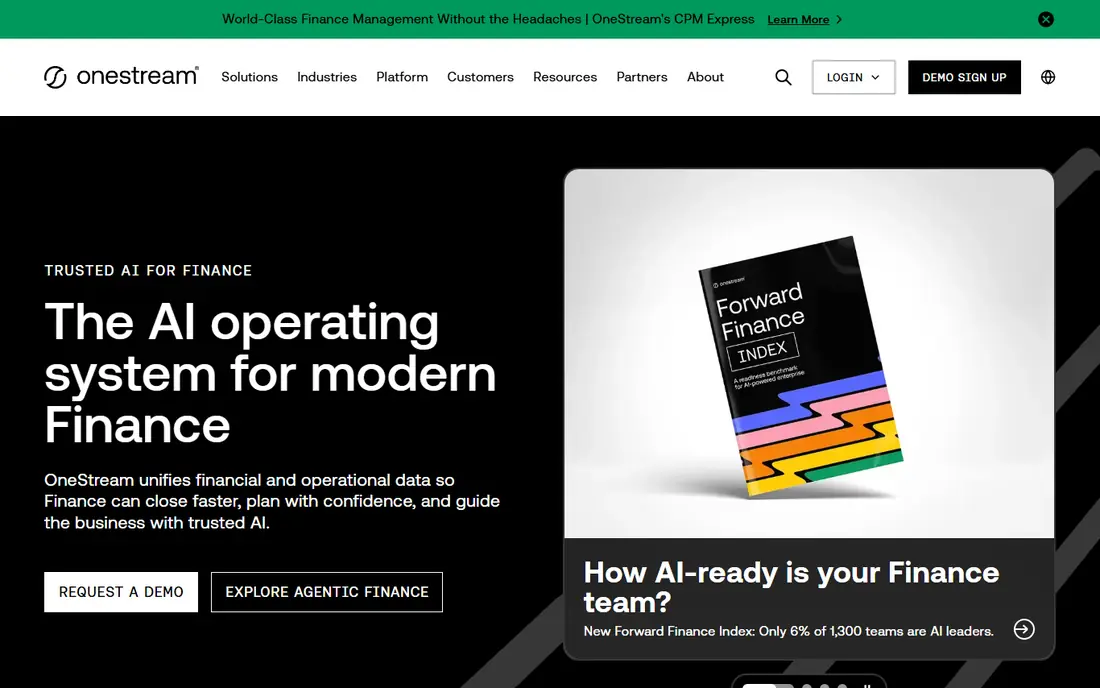
OneStream is the pick when consolidation itself is the hardest step. Many entities, currencies, ownership changes and acquisitions are handled in one platform, alongside reconciliations, journals and planning, so finance teams avoid stitching together separate tools. That unified model helps large groups produce consistent group statements with an audit trail.
The catch is scale and cost. OneStream is an enterprise platform with quoted pricing and a long implementation, and third party estimates place entry cost well into six figures per year for larger groups. Small groups with few entities will find it heavy. Large groups with complex structures will find its depth worth the effort, provided they budget for implementation and training.
- Unified platform for consolidation, planning and close
- Handles eliminations, currency translation and acquisitions
- Supports US GAAP and IFRS reporting
- Enterprise pricing and implementation effort
- More than a small group usually needs
Oracle Fusion Cloud EPM suits groups that already run Oracle Cloud ERP or Oracle EPM for planning. Financial Consolidation and Close, Account Reconciliation and planning share data, which cuts manual transfers and helps tax and management reporting draw on the same figures. Predictive matching and AI assistants add review help, though setup is needed for newer AI features in vendor materials we checked.
The limit is ecosystem fit. Groups on other ERPs may get less value and face a heavier integration effort, and pricing is quoted. For Oracle centric groups, the suite argument is strong. For other groups, a standalone consolidation or close tool may be simpler and cheaper to run.
- Financial Consolidation and Close shares data with planning
- Account reconciliation in the same suite
- Strong controls for large enterprises
- Quote based pricing
- Best value only for teams already on Oracle Cloud ERP or EPM
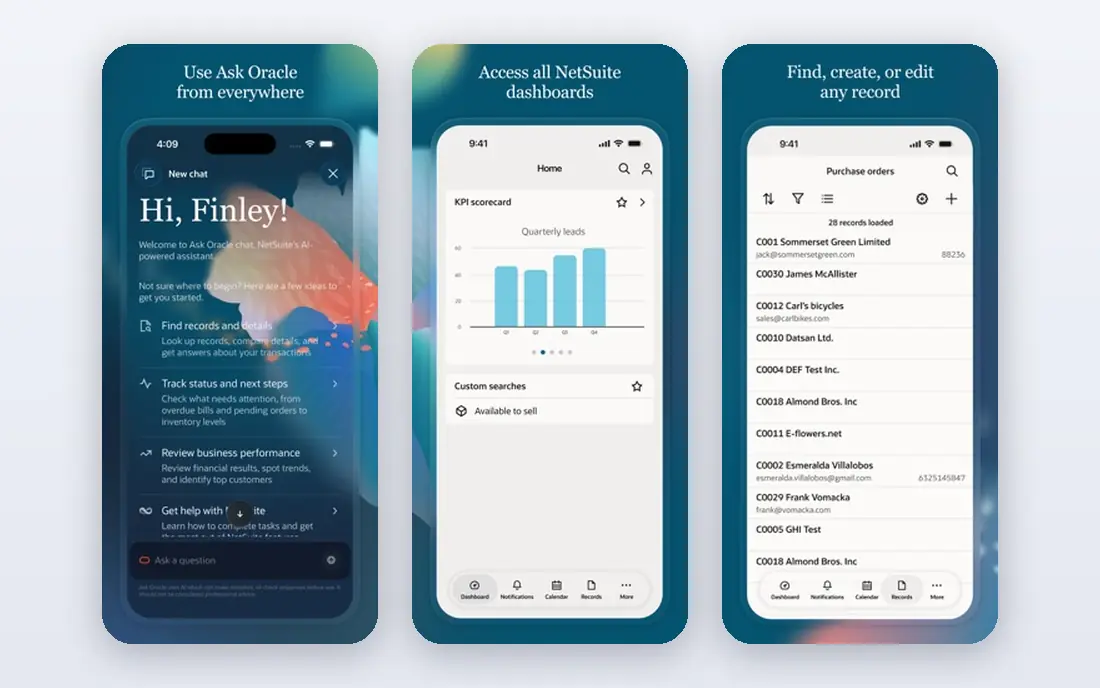
NetSuite, from Oracle, fits mid-market groups that want consolidation inside their ERP rather than in a separate platform. Multi-entity, multi-currency and multi-subsidiary accounting, tax handling and real-time consolidation sit alongside general ledger, payables and receivables. That breadth suits growing groups that already run operations on NetSuite.
The trade-off is that NetSuite is a full ERP, not a light consolidation add-on. Implementation takes planning, and pricing is quoted, so small groups should compare it with Sage Intacct or a close tool first. Groups already on NetSuite, or planning an ERP move, will get the most value from its built-in consolidation.
- Multi-entity and multi-currency accounting in one ERP
- General ledger, payables, receivables and tax together
- Real-time consolidation across entities
- Pricing is quoted, not published
- Implementation is heavier than a standalone close tool
BlackLine is a close platform that strengthens the work around consolidation: reconciliations, task tracking, journal controls, variance analysis and audit trails. For large groups, that control matters, because consolidation errors often come from unreconciled accounts or late journals, not from the consolidation calculation itself. SAP groups can use Smart Close options that run inside SAP in vendor materials we checked.
The weakness is cost and setup time. Pricing is quoted, and large deployments need professional help and months of work in public reviews we checked. Mid-market teams with a simple close may find BlackLine heavy. Large teams with compliance duties and many accounts will value its control and audit depth.
- Deep reconciliation and close task control
- Strong audit trails and compliance support
- SAP focused close options for SAP groups
- Quote based pricing
- Implementation can take months for large groups
FloQast suits mid-market accounting teams whose bottleneck is close coordination. Checklist driven close management, automated tie-outs, task sign-offs and variance analysis help teams finish the month faster, with less spreadsheet chasing. Connectivity to NetSuite, Sage Intacct, QuickBooks, SAP, Oracle and other ERPs means balances flow in without manual exports.
The honest limit is scope. FloQast is a close management leader, but it is not a full enterprise consolidation platform for the most complex groups. Teams whose main pain is close speed and coordination will get fast value. Teams whose main pain is complex ownership, currency and acquisition accounting should weigh OneStream or Oracle EPM first.
- Checklist driven close that accountants adopt fast
- Automated reconciliations and tie-outs
- Strong ERP connectivity for NetSuite and Sage Intacct
- Quote based pricing in vendor materials
- Close coordination is its core, not deep enterprise consolidation
Sage Intacct fits growing firms that need multi-entity accounting without moving to a full enterprise EPM suite. Entities can share a chart of accounts with dimensions for reporting, currencies and intercompany transactions are handled in the system, and consolidation reporting draws on live entity data. That model suits firms adding subsidiaries or locations steadily.
The trade-off is depth for the most complex groups. Sage Intacct covers many consolidation needs well, but groups with intricate ownership structures, complex acquisitions or heavy regulatory reporting may need OneStream or Oracle EPM. For mid-market growth, Sage Intacct offers a practical balance of accounting depth and usability.
- Multi-entity and multi-currency accounting
- Strong dimensions for reporting by entity and department
- Good fit for growing mid-market groups
- Quote based pricing
- Consolidation depth is less than dedicated enterprise platforms
Planful suits finance teams that want consolidation close to planning. Budgets, forecasts, actuals and consolidated reports can live in one platform, which helps teams explain variances between plan and consolidated results without rebuilding reports in spreadsheets. Structured workflows support a repeatable close and reporting cycle.
The limit is enterprise consolidation depth and ecosystem size. Very large groups with complex ownership may need a dedicated platform, and integration options are narrower than with Oracle or NetSuite. Mid-market teams that plan, forecast and consolidate in one cycle will find Planful a coherent choice.
- Consolidation alongside budgeting, forecasting and reporting
- Structured close and reporting workflows
- Good fit for finance teams that plan and consolidate together
- Quote based pricing
- Smaller ecosystem than Oracle or NetSuite
Vena appeals to finance teams that think in Excel but need control around it. Consolidation, budgeting and reporting run through Excel based workflows with templates, permissions and audit trails, so teams keep a familiar interface while gaining structure. That familiarity speeds adoption for teams that currently consolidate in spreadsheets.
The catch is governance. Excel based tools still need strong controls on versions, formulas and access, or errors can spread quietly. Vena adds workflow and audit features to address that risk, but finance leaders should still enforce review steps. For Excel comfortable teams that want a governed step up from spreadsheets, Vena is a strong fit.
- Familiar Excel interface for finance teams
- Consolidation, budgeting and reporting in one workflow
- Templates and workflows for repeatable closes
- Quote based pricing
- Excel familiarity can hide governance risks if controls are weak
Prophix fits mid-market groups that need consolidation plus budgeting and reporting without an enterprise platform project. Automated eliminations, currency translation and intercompany handling cover common consolidation steps, and reporting tools let finance staff build group reports without waiting on IT. That self service reporting is a real advantage for lean finance teams.
The weakness is scale. Very large groups with many entities, complex ownership or heavy regulatory reporting may outgrow Prophix and need OneStream or Oracle EPM. Mid-market groups that want a single platform for consolidation, planning and reporting will find Prophix a practical and focused option.
- Consolidation, budgeting and reporting for mid-market groups
- Automated eliminations and currency handling in vendor materials
- Reporting that finance teams can run without IT help
- Quote based pricing
- Less suited to very large, highly complex groups
How we picked these
We compared vendor pages and public reviews, and we kept only tools still sold in October 2026. We favored tools that handle eliminations, currency translation, intercompany transactions and group reporting, and we covered enterprise platforms, ERP based consolidation and mid-market close tools. We did not claim hands-on testing, and we did not invent implementation costs beyond third party estimates noted as such.
What to check before you buy
Start with your group structure, not with a feature list. Count entities, currencies, ownership levels and acquisition history, and list the eliminations and intercompany matches that cause the most errors today. Test the tool with a real prior close, including a currency translation, an elimination and an intercompany mismatch, and check how errors are flagged and corrected.
Check total cost and controls in the same way. Confirm quoted pricing, implementation fees, contract length, renewal terms and data export, and ask about audit trails, permissions, version control and approval workflows. Confirm how the tool handles GAAP or IFRS requirements that apply to your group, and have your accountants review consolidation outputs before relying on them for reporting. This guide is general information only, not accounting advice.
Frequently asked questions
What is accounting consolidation software?
Accounting consolidation software combines financial results from multiple entities into group statements. It handles eliminations of intercompany balances, currency translation, ownership adjustments and group reporting, so a parent company can report as one economic group rather than as separate entities.
How is consolidation different from general accounting software?
General accounting software records transactions for one entity, while consolidation software combines many entities, removes intercompany activity, translates currencies and adjusts for ownership. Some ERPs include consolidation, while other tools focus on consolidation, planning and close as a separate layer.
How much does accounting consolidation software cost?
Most tools in this guide are priced only on request, with enterprise platforms requiring a substantial annual commitment and implementation budget. Mid-market tools are quoted by entity count, users and modules, so get a written quote for your actual group structure before comparing vendors.
Do I need consolidation software for a small group?
A small group with few entities and one currency may manage consolidation in its ERP or with controlled spreadsheets. Consolidation software pays back when entity count, currencies, intercompany volume or reporting complexity make spreadsheet consolidation slow, error prone or hard to audit.
What should I test during a consolidation trial?
Test a real prior close with eliminations, currency translation, intercompany matching and an ownership change if relevant. Check how the tool flags mismatches, how corrections flow through, what audit trail is kept, and how group reports export for review by accountants and auditors.
Can consolidation software handle both GAAP and IFRS?
Many enterprise tools, including OneStream in vendor materials we checked, support both US GAAP and IFRS reporting. Confirm the specific standards, local rules and disclosure needs that apply to your group, and have your accountants verify outputs before filing or board reporting.
Sources
See where you really rank - block by block
ProMapRanker scans Google Maps across a grid of your service area. Simple monthly plans from $19, white-label on every plan.
Start freeKeep reading
 what’s the best risk software for enterprises
What Is the Best Risk Software for Enterprises in 2026
We compared what’s the best risk software for enterprises on risk registers, controls, third-party risk, and reporting, with pricing notes for large teams.
Read → what's the best pam software for enterprises
What is the Best PAM Software for Enterprises in 2026
Find what's the best pam software for enterprises, with vaulting, session recording, just in time access and pricing compared for large enterprise IT teams.
Read → what’s the best grc software
What Is the Best GRC Software in 2026
We compared what’s the best grc software on risk, compliance, audit and vendor risk, so teams can pick a platform that fits their frameworks and budget.
Read →