 ProMapRanker
Best ABM Tools in 2026: 8 Platforms Compared

Key takeaways
- 6sense is our pick for teams that want predictive intent and account identification, while Demandbase suits large enterprises that want a full-stack platform with its own ad system.
- Most leading ABM platforms hide pricing behind sales calls, so budget for implementation, ad spend, and data costs on top of the software fee.
- Small teams should start with HubSpot ABM or a data tool before buying a six-figure platform, since ABM only pays when deal sizes justify it.
- Intent data, ad execution, and measurement are different jobs, so check which of the three each tool actually covers before you sign.
Quick comparison
| Pick | Great for | Pricing starts at | Free tier | |
|---|---|---|---|---|
 6sense | Predictive intent and account ID | See website | Yes | Visit |
 Demandbase | Full-stack enterprise ABM | See website | No | Visit |
 Terminus | Multi-channel ABM activation | See website | No | Visit |
 RollWorks | Mid-market ABM advertising | See website | No | Visit |
 HubSpot | ABM inside an existing CRM | $890 per month | No | Visit |
 ZoomInfo Marketing | Data-led ABM | See website | No | Visit |
 Bombora | Standalone intent data | See website | No | Visit |
 Mutiny | Website personalisation for ABM | See website | No | Visit |
The best ABM tools
We compared the tools below on account identification, intent data, ad execution, orchestration, reporting, and fit by company size.
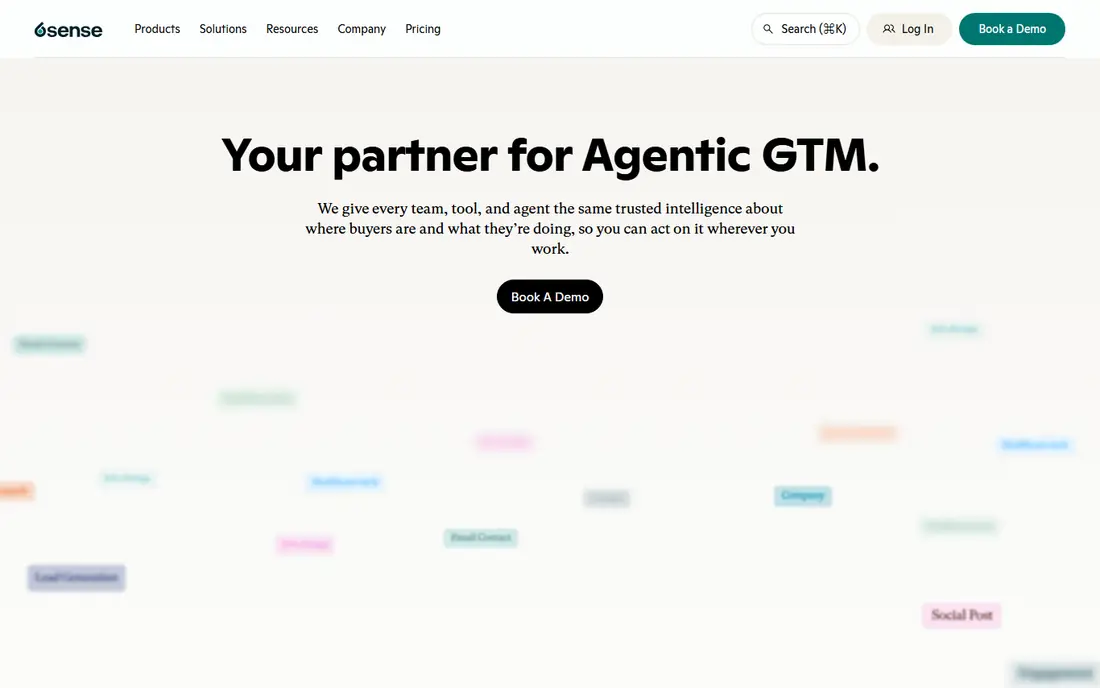
6sense is the most complete predictive ABM platform in this list. It identifies accounts showing buying intent, predicts which stage they are in, and helps teams orchestrate ads, sales outreach, and website experiences around those accounts. For a mid-market or enterprise team with a clear ideal customer profile, that prediction layer can focus effort on accounts most likely to buy soon, rather than on a static target list.
The cost and effort are the catch. Paid plans are quoted by the vendor and can run into six figures a year in third-party comparisons, and getting value needs RevOps time, clean CRM data, and sales follow-through. A free tier with limited credits lets small teams test basic features, but it is not a full ABM program. Buy 6sense when you have the team to act on its signals daily.
- Strong predictive intent signals
- Account identification and orchestration
- CRM integrations
- Pricing is sales-led and can reach six figures
- Needs dedicated ops time to get value
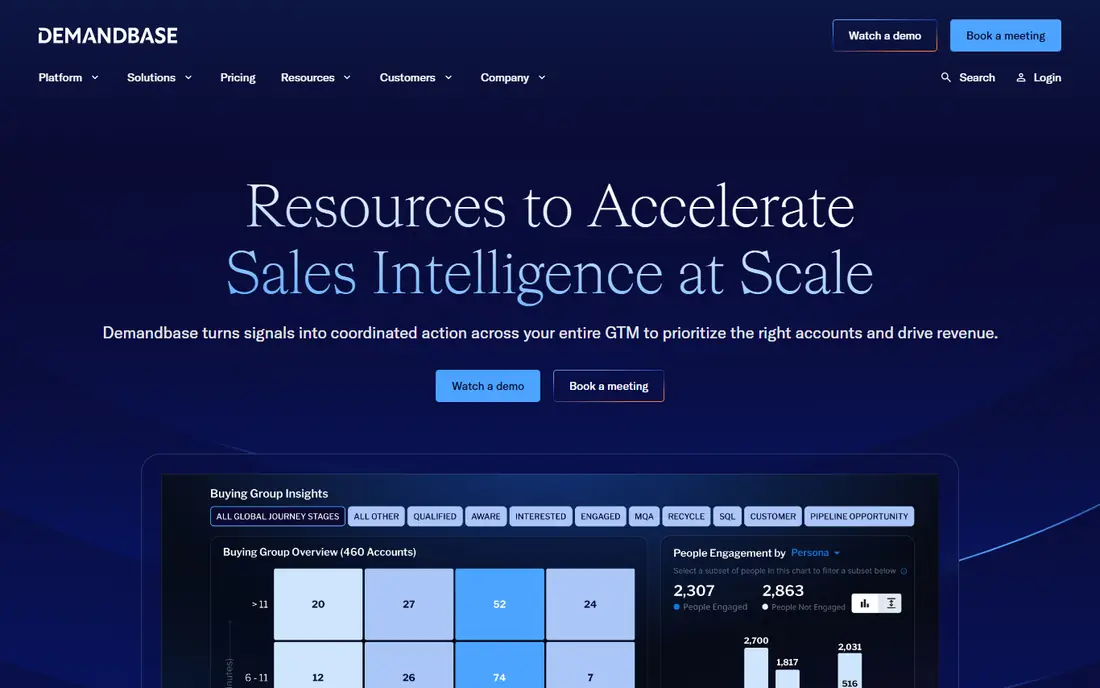
Demandbase suits large enterprises that want one platform for account identification, advertising, sales intelligence, and measurement. Its own B2B ad system is a key difference from tools that only orchestrate ads elsewhere, and its Salesforce fit helps teams that already run sales on Salesforce. For a large team with many target accounts and a dedicated ABM owner, that breadth reduces the need to stitch several tools together.
The price reflects that breadth. Third-party comparisons put Demandbase in the tens of thousands to hundreds of thousands of dollars a year, with onboarding costs on top, and ad spend sits separately. Small teams will find it heavy and slow to implement. If your deal sizes and account counts justify enterprise spend, Demandbase is a strong shortlist pick. If not, start smaller.
- Broad platform coverage
- Own B2B advertising system
- Strong Salesforce fit
- Enterprise pricing and onboarding costs
- Complexity for small teams
Terminus, now linked with DemandScience, focuses on activating ABM across ads, chat, web, and email from one platform. That multi-channel view suits upper mid-market teams that want to reach a buying committee in several places, not just with display ads. Account-level reporting helps marketing show which accounts engaged, even when a single contact did not convert alone.
Pricing is quoted by the vendor, and third-party estimates vary widely, so get a written quote that separates software, data, and media costs. Buyers should also confirm the current brand and product name during a demo, since the Terminus to DemandScience transition has created confusion in listings. For teams that want orchestration without enterprise complexity, Terminus remains a credible option.
- Multi-channel ads, chat, and email orchestration
- Account-level reporting
- Mid-market fit
- Pricing is quoted
- Brand transition to DemandScience can confuse buyers
RollWorks, now part of the AdRoll group, is the most accessible third-party ABM platform for mid-market teams. It focuses on account-based advertising with targeting, bidding, and reporting built for marketers rather than data teams. The HubSpot integration is a real strength, since many mid-market teams already run campaigns and lists there. Starter pricing in third-party comparisons sits well below enterprise platforms, though ad spend is extra.
The limit is depth. Reporting and orchestration do not match 6sense or Demandbase, and teams that need predictive intent or complex multi-channel plays may outgrow it. For a first dedicated ABM tool, RollWorks is a sensible step up from CRM-only ABM. For a large enterprise program, shortlist the bigger platforms first.
- Accessible entry point for mid-market teams
- Strong HubSpot integration
- Account-based ads
- Ad spend is extra
- Reporting is less deep than enterprise rivals
HubSpot is the best starting point for teams already on HubSpot. Marketing Hub Professional, listed at $890 per month in third-party comparisons, includes target account tools, buying roles, ABM workflows, and dashboards without a second platform. That native fit means sales and marketing see the same accounts, lists, and engagement in one system, which removes a common ABM friction point.
The trade is depth. HubSpot ABM does not match specialist intent data or ad execution, so teams with large ABM budgets often pair it with a data or ad tool. Still, for many mid-market teams, HubSpot ABM plus disciplined outreach covers most of the value at a fraction of specialist cost. Start here if you already pay for HubSpot, and add a specialist only when a clear gap appears.
- Native ABM in a familiar CRM
- Target accounts, buying roles, and workflows
- Strong dashboards
- Not a dedicated ABM platform
- Intent and ad depth trail specialists
ZoomInfo Marketing suits teams whose main ABM problem is data, not ads. The contact and company database helps build accurate target lists, enrich accounts, and find buying committee members. Intent signals and ABM features sit on top of that data layer, so a team can move from list building to campaigns without buying a separate database. For data-heavy teams, that foundation matters more than a fancy orchestration screen.
The catch is that ABM here is a layer on a data product, not a dedicated platform from the ground up. Pricing is quoted, entry estimates vary, and renewal increases are a known complaint in buyer comparisons. If your lists are already clean and your main need is ads or prediction, a specialist may fit better. If bad data is your bottleneck, ZoomInfo is the right first fix.
- Large contact and company database
- Intent signals
- ABM features on top of data
- ABM is an add-on to a data platform
- Pricing is quoted and can rise on renewal
Bombora is not a full ABM platform, but it belongs in this list because intent data drives most ABM programs. It tracks which topics companies are researching across a cooperative of business sites, then sells those signals to marketing and sales teams. That data can feed HubSpot, 6sense, Demandbase, or a CRM directly, so a team can run ABM without buying a full platform first.
The limit is scope. Bombora does not run ads, personalise websites, or orchestrate multi-channel plays on its own. Topic pricing can also add up if you track many subjects. Use Bombora when you already have a CRM and an activation tool and need better signals. Do not buy it expecting a complete ABM system in one contract.
- Widely used intent data
- Topic-based signals
- Integrates with many ABM and CRM tools
- Data only, not a full ABM platform
- Topic costs can add up
Mutiny covers the website half of ABM, which many platforms handle weakly. It lets marketers show a different homepage message, case study, or call to action to visitors from a target account or industry, without waiting for engineering. That personalisation can lift conversion from ABM traffic that already arrives, since a generic homepage rarely speaks to a specific buyer. Reporting ties page changes back to account engagement.
Mutiny does not replace an ABM platform. It needs traffic from ads, email, or sales outreach, and it does not provide intent data on its own. Pricing is quoted and typically suits mid-market and enterprise teams rather than small startups. Pair Mutiny with a data or ad tool when website conversion, not traffic, is your bottleneck.
- Personalised website experiences by account or segment
- No-code page changes
- ABM reporting
- Website only, not ads or intent
- Pricing is quoted and suits larger teams
How we picked these
We compared vendor product pages, third-party pricing comparisons, and ABM buyer guides for tools that serve account-based marketing in October 2026. We included full platforms, a CRM-native option, a data-led option, a standalone intent provider, and a website personalisation tool, since ABM programs usually need more than one of those jobs. Where vendors do not publish pricing, we wrote See website and noted third-party estimates only as context, not as a vendor quote.
How to buy ABM tools without wasting budget
Start with deal size and account count
ABM only pays when average deal size and account volume justify the cost. If deals are small, a CRM with good data and disciplined outreach will cover most of the value. If deals are large and buying committees are wide, a specialist platform starts to make sense. Write down the account count and deal size before any demo.
Separate software, data, and media in every quote
Ask each vendor to split the quote into software, intent or contact data, implementation, and ad spend. Many ABM budgets fail because media and onboarding sit outside the headline software price. Get renewal terms in writing too, since some platforms raise prices sharply in year two.
Run a pilot on a small account set
Pick fifty to one hundred target accounts, run one play for a quarter, and measure meetings and pipeline, not clicks alone. A pilot exposes data quality, sales follow-through, and reporting gaps before a multi-year contract locks them in. If a vendor will not pilot, treat that as a warning sign.
Frequently asked questions
What is the best ABM platform?
6sense is the best pick for predictive intent and account identification, while Demandbase is the best pick for large enterprises that want a full-stack platform. HubSpot is the best pick for teams already on HubSpot. The right platform depends on deal size, team size, and whether you need intent, ads, or both.
What are the best ABM platforms and software for small teams?
HubSpot ABM and RollWorks are the most practical small-team picks. HubSpot suits teams already on HubSpot, while RollWorks suits mid-market teams that want account ads without enterprise cost. Avoid six-figure platforms until deal sizes justify them.
What is the best rated ABM software?
Third-party comparisons rate 6sense, Demandbase, RollWorks, and Terminus closely, with differences by use case rather than a single winner. Check recent peer reviews for your company size and CRM, since enterprise and mid-market buyers rate the same tool differently.
How much do ABM tools cost?
Costs range from $890 per month for HubSpot Professional to six figures a year for enterprise platforms, plus ad spend and implementation. Most specialists do not publish pricing, so get a written quote that separates software, data, media, and services before you budget.
Do I need intent data for ABM?
Intent data helps, but it is not the whole program. It tells you which accounts are researching a topic, while ads, website personalisation, and sales outreach turn that signal into meetings. Start with clean target lists and outreach, then add intent data when you can act on it quickly.
Can HubSpot replace a dedicated ABM tool?
For many mid-market teams, yes, at least at first. HubSpot covers target accounts, buying roles, workflows, and dashboards natively. It trails specialists on predictive intent and ad execution, so larger teams often pair HubSpot with Bombora, 6sense, or RollWorks later.
Sources
See where you really rank - block by block
ProMapRanker scans Google Maps across a grid of your service area. Simple monthly plans from $19, white-label on every plan.
Start freeKeep reading
 outreach alternatives
Outreach Alternatives in 2026
Compare outreach alternatives for 2026, from Salesloft and Apollo to HubSpot and Lemlist, with pricing, channels, features, limits, and honest trade-offs.
Read → best web conference tools
Best Web Conference Tools in 2026
Compare the best web conference tools for meetings, webinars and team calls, with current pricing, free plans and honest limits for each option here today.
Read → best voice cloning tools
Best Voice Cloning Tools in 2026
Compare the best voice cloning tools in 2026, from ElevenLabs and Descript to Resemble and Cartesia, with consent rules, pricing, licenses, and limits.
Read →