 ProMapRanker
Best Abacus Learning Apps in 2026

Key takeaways
- Abacus Kids is our pick for a free start, with guided lessons, games and a virtual abacus for ages 4 to 14.
- Mastermind Abacus suits families who want a structured path with progress reports for parents and teachers.
- Most programs work best as a mix of app practice and a physical abacus, with short daily sessions rather than long ones.
- Prices for class-based programs vary by location and are often quoted after a free trial, so confirm the local price before enrolling.
- No abacus program guarantees school results, and the benefit comes from regular practice over months, not a single week.
Quick comparison
| Pick | Great for | Pricing starts at | Free tier | |
|---|---|---|---|---|
 Abacus Kids | a free structured start | Free | Yes | Visit |
 Mastermind Abacus | a guided path with reports | See website | Free trial | Visit |
 BrainOMagic | live-style abacus training | See website | Free trial | Visit |
 UCMAS | a long-running class program | See website | Free trial | Visit |
 SIP Abacus | classes for ages 5 to 12 | See website | Free trial | Visit |
 BrainiacGym | online classes worldwide | See website | See website | Visit |
 G-Champ Abacus | a leveled program to age 14 | See website | See website | Visit |
 Ascento Abacus | play-based abacus learning | See website | See website | Visit |
 Abacus Brain Gym | structured grades with exams | See website | See website | Visit |
The best abacus learning apps
Abacus learning starts with moving beads, then moves to picturing the abacus in the mind. The options below range from self-paced apps to online and in-person programs, so the right pick depends on how much structure your child needs.
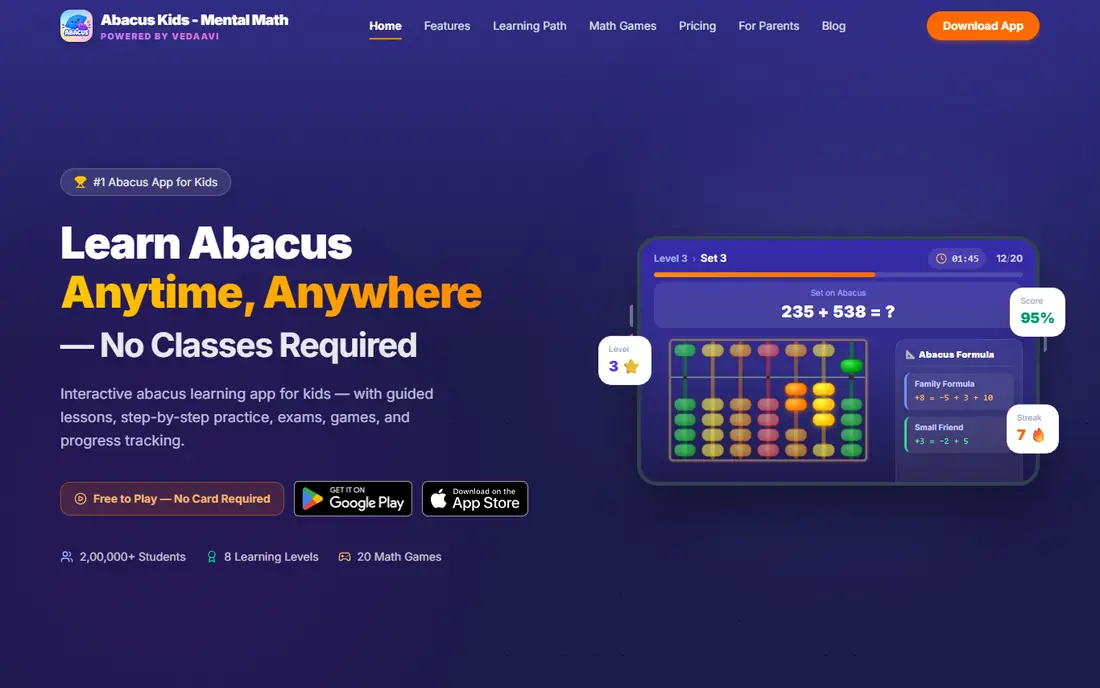
Abacus Kids is built for children aged 4 to 14 and covers bead basics, addition and subtraction, speed work and times tables across its levels. Short video lessons explain each step, then practice modes let a child follow bead movements, answer independently or take an exam-style set. That mix of watching and doing suits beginners who need to see why a bead moves before they try it alone.
Games and streaks keep practice light, and progress tracking shows scores and levels at a glance. Because the app is free to start, it is the lowest-risk way to test whether your child enjoys abacus work before you pay for classes. Pair it with a cheap physical abacus if you can, since handling real beads helps younger children grasp place value faster.
- Free to start with no card required
- Guided lessons, games and exams
- Virtual abacus with step-by-step practice
- Advanced levels may need a paid plan
- Parent controls depend on the device used
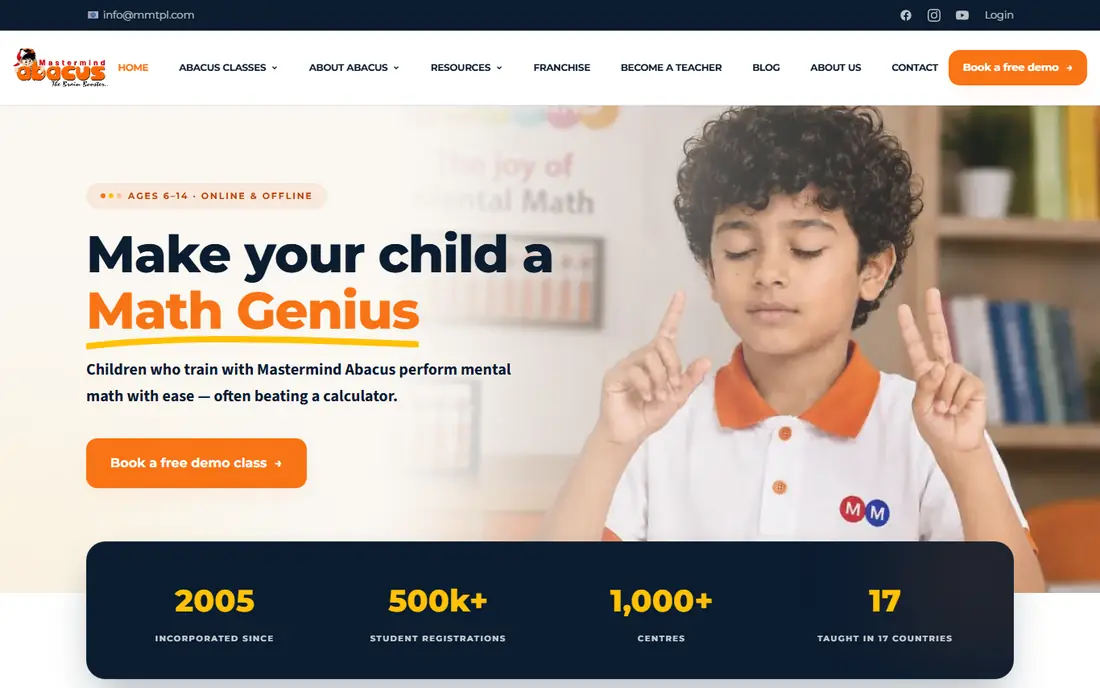
Mastermind Abacus pairs an app with a taught program. Children follow a core path from around age 6 to 14, with games, a virtual abacus and reports that show strengths and gaps over time. Teachers can manage batches and assign tasks, which makes it a good fit for schools and tutoring groups as well as families.
The program also offers a free demo class, so you can watch a lesson and ask questions before enrolling. The honest trade-off is time. Abacus skill builds slowly, with short daily practice plus a weekly class, and families should expect months of steady work before mental calculation feels fast.
- Structured curriculum from age 6
- Live online classes option
- Detailed progress reports for parents and teachers
- Class pricing varies by location
- Full program takes months to years
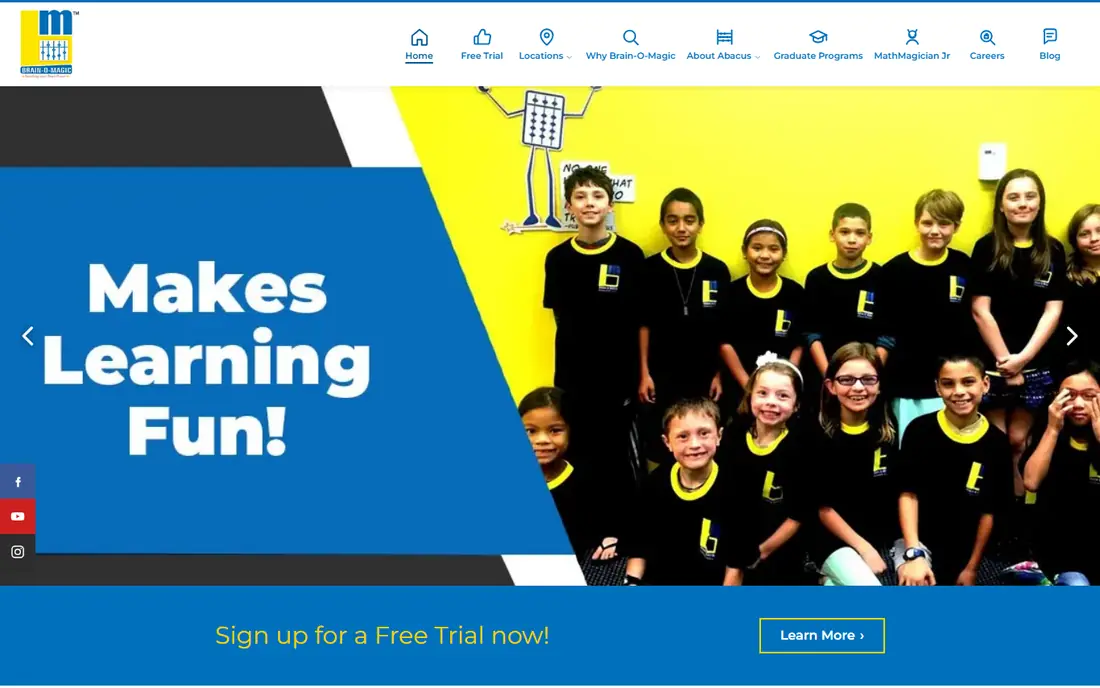
BrainOMagic presents abacus training as a brain-skill program, not just arithmetic drills. Children learn bead movements first, then practise picturing the beads to solve sums mentally. Lessons aim to build concentration and memory alongside speed, which is why parents often notice changes in homework focus before they notice faster sums.
Because BrainOMagic runs through centers and online classes, the exact price and schedule depend on where you enroll. Ask about session length, homework time and how progress is measured before you commit, and use a trial lesson to check that the teacher style suits your child.
- Abacus-first teaching with mental math progression
- Focus on concentration and confidence
- Online class options
- Pricing is quoted per center or program
- Program length varies
UCMAS is one of the longest-running abacus programs, with centers and online options in many countries. Children attend a weekly class, often around two hours, and practise listening sums, visual sums and flash cards between classes. Levels last several months, and the path moves from physical beads to mental calculation step by step.
The free session is the right way to judge fit, since the program asks for a longer commitment than an app alone. UCMAS suits families who want a teacher, a class group and a fixed curriculum, rather than a self-paced app that a child opens alone.
- Established program for ages 5 to 13
- Listening, visual and flash-card practice
- Free session before commitment
- Weekly classes plus practice need a real time commitment
- Fees vary by center
SIP Abacus focuses on abacus-based arithmetic and mental calculation for children aged 5 to 12. The Australian site highlights online and in-person classes plus a free trial, and other country sites offer similar entry points. Lessons build from bead basics to faster mental sums, with regular practice between classes.
For US families, the key check is local availability, since center coverage differs by country and state. Confirm the class times, the online option and the full fee schedule before enrolling, and compare the trial lesson with Abacus Kids to see whether your child prefers teacher-led or app-led learning.
- Classes for ages 5 to 12
- Online and in-person options
- Free trial experience for families
- US availability depends on the local center
- Pricing varies by location
BrainiacGym offers online abacus classes for children in many countries, with an app for practice, progress tracking and connection between students and trainers. The program covers listening practice, flash cards, visual abacus work and anzan, which is the rapid mental calculation style used in abacus competitions.
The main drawback is pricing transparency. Because classes run across regions and time zones, you will need to ask for a quote for your location and check the class schedule against your child's school day. For families without a local abacus center, the online format is the main reason to consider it.
- Online abacus classes across many countries
- App for practice and tracking
- Group classes with instructors
- Pricing is not published as a single US price
- Class times depend on time zone
G-Champ Abacus, also described as G-Champ Abacus and Brain Gym, takes children aged 5 to 14 through eight levels of abacus mastery. The curriculum moves from finger counting to fast mental sums, with an emphasis on accuracy and speed under time pressure. That leveled structure helps parents see where a child sits and what comes next.
The network is largest outside the US, so US families should check online availability first. If an online class is offered in your time zone, G-Champ is a structured alternative to a purely app-based start, with a teacher guiding each level.
- Eight progressive levels for ages 5 to 14
- Structured brain-gym style curriculum
- Large center network
- Most centers are outside the US
- US families may need the online route
Ascento Abacus frames learning as play, with abacus mastery as the most popular program for ages 5 to 14, plus pre-abacus work for ages 4 to 6 and Vedic maths for older children. That range lets a family start early and stay with the same provider as a child grows, rather than switching programs each year.
The breadth is also the weakness. With several programs on offer, parents need to ask which one fits their child's age and goal, and what the weekly practice load looks like. A trial or demo lesson is the best way to cut through the menu and judge the teaching style.
- Play-based programs for ages 4 to 17
- Abacus, memory and Vedic maths options
- Many centers and online reach
- Wide program menu can confuse new parents
- Pricing varies by center
Abacus Brain Gym runs graded programs with assessments, placement tests and a final exam, so progress is measured at set points rather than left vague. The junior program covers younger children over about 18 months, and the senior program runs longer with ten grades. That exam structure suits children who respond well to clear targets.
As with several programs here, US availability is the question to check first, since the provider is centered outside the US. If online classes are available, the graded format is a good fit for families who want formal checkpoints along the way.
- Junior and senior graded programs
- Regular assessments and placement tests
- Clear grade progression
- Program is centered outside the US
- Exam focus may not suit every child
How we picked these
We compared official program sites, app store listings and program descriptions for abacus apps and programs live in October 2026. We kept only options that teach abacus method itself, not general maths games with no bead work, and we favored a virtual abacus, leveled lessons and parent or teacher tracking. We did not claim hands-on testing. Where a program quotes prices per center, we wrote See website rather than invent a US price.
How to choose an abacus program for your child
Start with age and attention span. Ages 4 to 6 do best with bead basics, games and short sessions, while ages 6 and up can handle a leveled path with listening practice and timed drills. Try a free app such as Abacus Kids for two weeks first, and watch whether your child asks to practise again or needs prompting every time.
Next, decide how much teaching you want. An app alone suits a self-motivated child and a parent who can supervise practice. A class program such as UCMAS, SIP Abacus or Mastermind suits a child who needs a teacher, a group and a fixed schedule. In either case, keep sessions short, around 10 to 15 minutes of app practice a day plus class time, and check progress monthly rather than expecting fast results.
Frequently asked questions
What age should a child start abacus learning?
Most programs start core abacus work around age 5 or 6, with early number-sense activities from age 4. Readiness matters more than the exact birthday, so a trial lesson is a better guide than an age label alone.
Is an app enough, or does my child need classes?
An app can teach bead basics and mental math practice well, especially for motivated children. Classes add a teacher, a group and accountability, which helps children who need structure or who stall on their own.
How long does it take to see results from abacus training?
Parents often notice better focus and faster simple sums within a few months of regular practice. Full mental calculation across levels takes years of steady work, not a single term.
Does abacus learning confuse school maths?
Providers state that it supports school maths by building number sense, speed and confidence. If a child is struggling at school, tell the abacus teacher and the school teacher so both can align on methods.
How much daily practice does abacus need?
Short and regular beats long and rare. Around 10 to 15 minutes of app or worksheet practice a day, plus a weekly class where one is part of the program, is the pattern most providers recommend.
Should I buy a physical abacus as well?
Yes, if your child is young. A physical abacus makes place value concrete, and children can move beads with their hands before they picture them in their minds. Most programs use both physical and virtual abacuses.
Sources
See where you really rank - block by block
ProMapRanker scans Google Maps across a grid of your service area. Simple monthly plans from $19, white-label on every plan.
Start freeKeep reading
 worlds best local seo company
8 Worlds Best Local SEO Companies for Map Pack Growth in 2026
Compare the worlds best local seo company options for Google Business Profile work, citations, reviews, and multi-location rankings and reporting in 2026.
Read → world's best web hosting company
World's Best Web Hosting Company in 2026
Searching for the world's best web hosting company? We compared 10 hosts on price, renewal rates, speed, and support to help you choose well today in 2026.
Read → who's got the best nanny tax services
Who's Got the Best Nanny Tax Services in 2026
We answer who's got the best nanny tax services, comparing full filing, back taxes, software, and pricing so families can handle nanny taxes correctly.
Read →