 ProMapRanker
Best 3PL Software in 2026: 8 Tools Compared

Key takeaways
- A 3PL warehouse system must keep each client inventory, workflow, and billing separate, or the work ends up back in spreadsheets.
- ShipHero is the clearest published price in this group, while most rivals price by quote, so compare the full monthly cost, not the headline figure.
- Ecommerce-heavy 3PLs and freight-focused 3PLs need different tools, and the right pick depends on order volume, carriers, and client mix.
- Client billing, carrier rate shopping, and integrations with stores and marketplaces matter more than a long feature list.
Quick comparison
| Pick | Great for | Pricing starts at | Free tier | |
|---|---|---|---|---|
 Extensiv | Multi-client 3PL warehouses | See website | No | Visit |
 ShipHero | Ecommerce 3PLs that want published pricing | $1,995 per month | No | Visit |
 Logiwa | High-volume ecommerce fulfillment | See website | No | Visit |
 Deposco | Larger supply chain operations | See website | No | Visit |
 CartonCloud | Smaller warehouse and transport operators | See website | No | Visit |
 Infoplus | Growing warehouses that want a trial period | See website | Free trial | Visit |
 ShipBob | Brands that want a 3PL service, not software only | See website | No | Visit |
 Flowspace | Flexible outsourced fulfillment capacity | See website | No | Visit |
The best 3PL software
The tools below cover both sides of the market: software a 3PL runs in its own warehouse, and services that handle fulfillment for brands. We compared official product pages, pricing pages, and public feature descriptions to judge fit for multi-client work.
Extensiv is built around the 3PL model from the start, which is why it leads this list for operators with several clients in one building. Inventory, reporting, and billing stay separated by client, so one client activity does not blur into another. That separation is the core test for any 3PL warehouse system, and it is where a general warehouse tool often falls short.
The trade-off is pricing transparency. Extensiv prices by quote, so you will need a sales conversation to learn the full monthly cost for your sites, seats, and modules. Ask for the all-in figure, including integrations and extra users, before you compare it with a published price from a rival. For a multi-client operation, that extra diligence is worth it.
- Built for multi-client work
- Client billing from warehouse activity
- Broad integrations
- No public price list
- Quote process takes longer than a self-serve signup
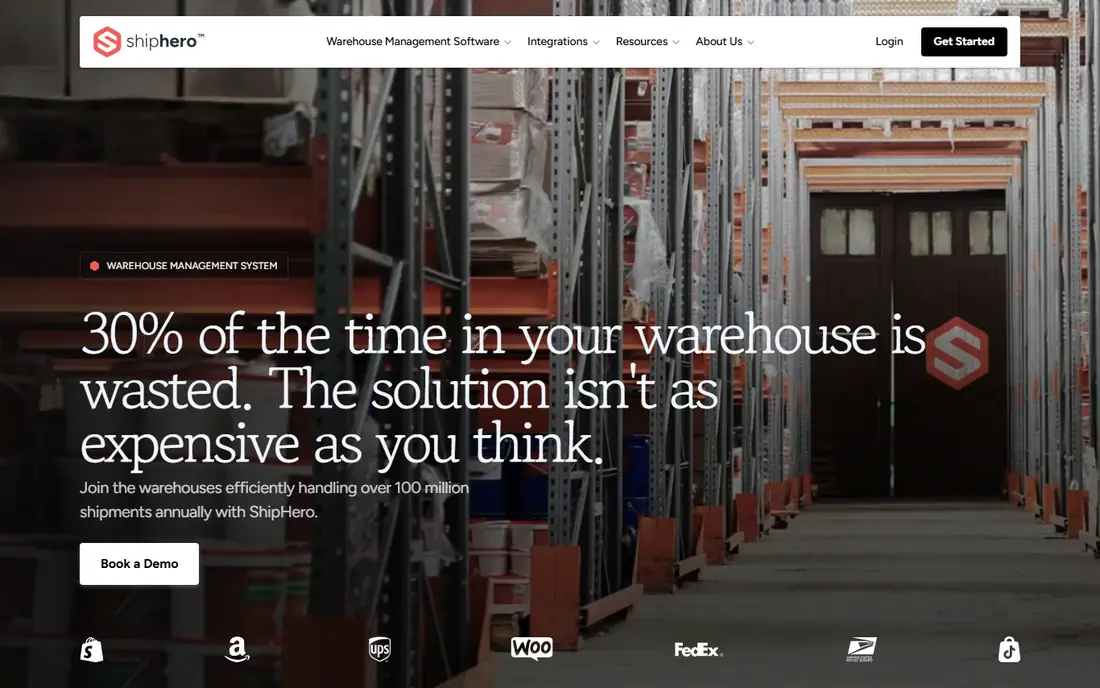
ShipHero publishes its plans, which makes budgeting far simpler than with quote-only rivals. The Standard plan is listed at around $1,995 per month, and the 3PL plan at around $2,145 per month, with the 3PL plan adding client billing, a sandbox account, and a marketplace listing. Extra user seats are listed at around $150 per month each, so count your warehouse staff before you sign.
For ecommerce-heavy fulfillment, ShipHero covers picking, packing, shipping, and automation in one place. Its strength is the combination of published pricing and a billing module made for charging clients. The catch is scale: a small team with few clients may pay more here than with a lighter tool, so check order volume against the monthly fee.
- Published pricing
- 3PL client billing module
- Automation rules and rate shopping
- Monthly cost rises with extra seats
- Smaller 3PLs may find the entry price high
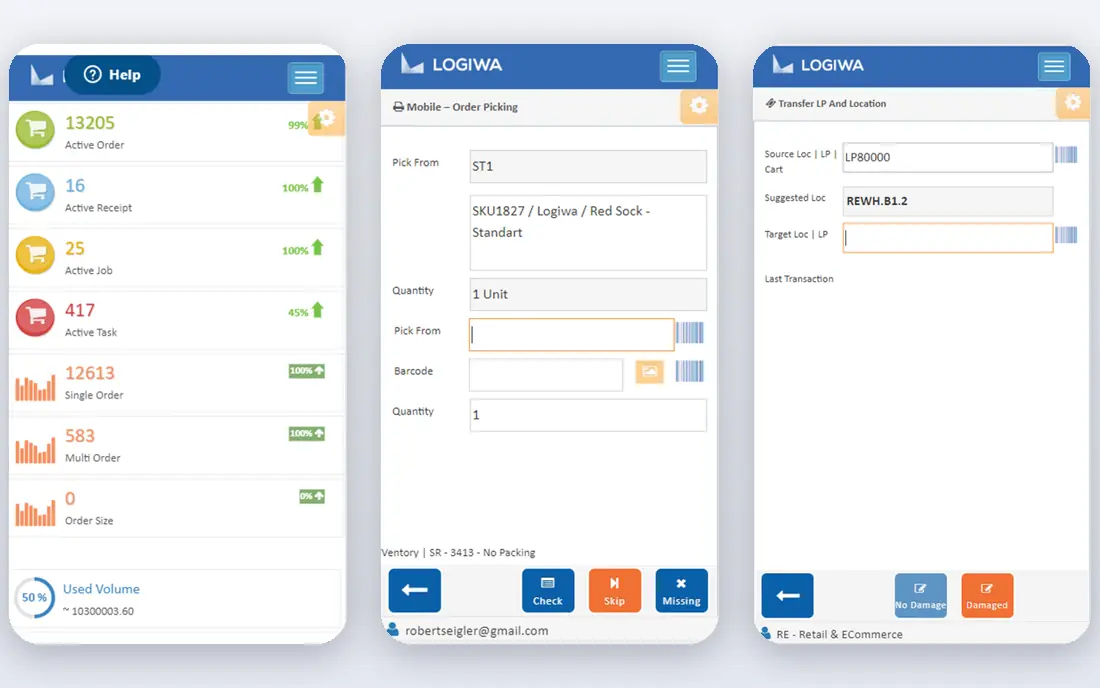
Logiwa suits fulfillment operations that move large order volumes across several sales channels. It connects stores and marketplaces, tracks inventory across warehouses, and manages picking and shipping workflows. The pricing model is based on volume rather than user count, which can suit a warehouse with many seasonal staff.
The main drawback is the lack of a public price. You will need to share order volumes and channel details to get a quote, and you should ask what happens to the price in a peak month. For a high-volume 3PL, that conversation is normal, but it makes a quick side-by-side comparison harder.
- Volume-based pricing approach
- Ecommerce and marketplace integrations
- Multi-warehouse support
- No public starting price
- Setup needs careful planning for complex workflows
Deposco covers more than warehouse walls. It brings order management, inventory, and fulfillment together, which helps larger operations that also manage planning and allocation across sites. If your clients need tighter control over orders from placement to delivery, a broader suite can reduce the number of separate systems you maintain.
That breadth is also the risk for a small 3PL. A wide platform can mean a longer setup and a higher quote than a focused warehouse tool. Ask which modules are included in the quote and which are add-ons, so you do not pay for supply chain planning you will not use in year one.
- Broad supply chain suite
- Order and inventory management in one platform
- Scales to complex operations
- Quote-only pricing
- May be more than a small 3PL needs
CartonCloud pairs warehouse management with transport features, which fits operators that store goods and also move them. A client portal gives customers a view of stock and orders without a phone call for every update. For a smaller 3PL, that mix can replace two separate tools.
The limit is scale and pricing clarity. Pricing is by quote, so a small operator should ask for a clear monthly figure and check what is included for transport bookings. If you run a single site with a modest client list, CartonCloud is a practical shortlist option rather than an enterprise platform.
- Warehouse plus transport coverage
- Client portal features
- Suits smaller operators
- No public pricing
- Less suited to very large enterprise estates
Infoplus is a warehouse and order management option for growing operations that want to test the system before committing. Its workflows cover receiving, inventory, picking, packing, and shipping, with connections to ecommerce platforms and carriers. A trial period lets a team check the day-to-day screens, not just a sales demo.
Because pricing is by quote, use the trial to measure real fit: how fast staff learn the picking flow, how clean the client reporting looks, and how billing handles your fee structure. Confirm the trial length and what happens to your data if you do not continue, so the test does not turn into an unwanted commitment.
- Trial offer reported for new accounts
- Inventory and order workflows
- Integrations with stores and carriers
- Pricing by quote
- Trial terms should be confirmed before signup
ShipBob is different from the pure software tools above, because it is a 3PL service with its own fulfillment centers and dashboard. Brands that do not want to run a warehouse can send stock to ShipBob, connect a store, and track orders and inventory through its platform. That model fits a growing brand better than a company that already owns warehouse space.
The trade-off is control. You rely on ShipBob sites, staff, and processes, and pricing depends on storage, order volume, and extra services. If you are a 3PL looking for software to run your own building, ShipBob is not the pick. If you are a brand shopping for a 3PL partner, it belongs on the shortlist.
- Fulfillment network plus software dashboard
- Store and marketplace integrations
- Handles storage, picking, and shipping
- You hand control of fulfillment to a provider
- Pricing depends on volume and services
Flowspace connects brands with fulfillment capacity through a network model, with software that gives visibility into inventory and orders. That flexibility helps brands that need extra space in a peak season or want sites closer to customers without signing a long warehouse lease. It is a service-first option, like ShipBob, rather than software for your own warehouse.
Pricing is by quote and depends on volume, storage, and services, so get a written breakdown before you commit. Ask about site locations, service levels, and how returns are handled. For a brand that needs capacity fast, Flowspace is a useful alternative to building a warehouse team from scratch.
- Network of fulfillment sites
- Software visibility for brands
- Flexible capacity for growth and peaks
- Pricing by quote
- Service quality can vary by site
How we picked these
We compared official product pages, pricing pages, and public feature descriptions for tools that serve multi-client warehouses or brands buying 3PL services. We kept only tools that are live in October 2026 and that clearly fit third-party logistics, either as warehouse software or as a fulfillment service with its own platform. We left out general inventory tools without multi-client billing or fulfillment depth, and we marked pricing as See website wherever a vendor does not publish a price.
What to check before you sign
Start with client separation. Ask each vendor to show, in a live demo, how two clients with the same product name stay apart in stock counts, pick lists, and invoices. If the demo uses one client only, ask for a second client to be added on the spot. This single test will rule out several tools fast.
Next, map your billing rules. List every fee you charge, from storage and pick-and-pack to kitting, returns, and account management, then ask how each fee is captured from warehouse activity. A tool that needs manual billing work each month will cost staff time long after the signup. Also check carrier integrations and rate shopping, because shipping cost is often the largest client complaint.
Finally, test the client portal and reporting. Clients judge a 3PL by how easily they see stock, orders, and charges. Ask for sample reports, check whether clients can download their own data, and confirm how support works during a peak. A short paid pilot with one real client is worth more than a long feature checklist.
Frequently asked questions
What is the best 3PL software for a small warehouse?
For a small multi-client warehouse, start with CartonCloud, Infoplus, or ShipHero, depending on whether you want transport features, a trial, or published pricing. The right pick depends on client count and order volume, so run a demo with your own products and fee rules before you decide.
What is the best 3PL WMS software?
Extensiv and ShipHero are the strongest WMS-first options in this list for multi-client work, with Logiwa close behind for high-volume ecommerce. The best 3PL WMS software for you is the one that separates clients cleanly, bills from real activity, and connects to your stores and carriers.
How much does 3PL software cost?
Costs vary widely. ShipHero publishes plans from around $1,995 per month, while most rivals price by quote based on sites, users, volume, and modules. Always ask for the all-in monthly figure, including extra seats and integrations, rather than comparing a base price alone.
What is the difference between 3PL software and a 3PL service?
3PL software is a tool a warehouse operator runs in its own building, while a 3PL service like ShipBob or Flowspace handles storage and fulfillment for you. Some brands use both ideas at different stages: software when they run a warehouse, and a service when they outsource fulfillment.
Do I need a 3PL WMS if I only have one client?
A general warehouse system may be enough for one client, but a 3PL WMS still helps if you plan to add clients soon. Client billing, separate reporting, and a client portal become far harder to add later, so choose a tool that can grow with your client list.
What integrations should top 3PL software tools include?
Look for store and marketplace connections, carrier rate shopping and label printing, accounting links, and EDI where retail clients require it. The best software for 3PL work also exports clean client reports, so you spend less time reconciling invoices by hand.
Sources
See where you really rank - block by block
ProMapRanker scans Google Maps across a grid of your service area. Simple monthly plans from $19, white-label on every plan.
Start freeKeep reading
 zoho inventory alternatives
6 Alternatives to Zoho Inventory, Compared on Price and Fit
Zoho Inventory alternatives: 6 tools compared on price, free plans and fit. Katana leads the list for manufacturers. Fit and flaws are laid out for each entry.
Read → zoho crm alternatives
Best Zoho CRM Alternatives (2026)
Need Zoho CRM alternatives? We compare 7 tools on cost, free access and who each suits. Every pick gets a straight assessment. Built for quick decisions.
Read → zelle alternatives
Best Zelle Alternatives in 2026
Compare the best Zelle alternatives for sending money to friends, paying sellers and moving funds abroad, with honest notes on fees, speed and safety in 2026.
Read →