 ProMapRanker
Best 3PL Companies in 2026

Key takeaways
- ShipBob is our pick for most growing direct-to-consumer brands, thanks to its broad warehouse network and software.
- ShipMonk suits subscription boxes and kitting, while Red Stag suits heavy, bulky, or high-value goods.
- Most 3PL pricing is quote-based, so compare total cost per order, not only the headline pick and pack rate.
- Check monthly minimums early, since they range from none at all to several hundred dollars.
- Test a provider with real orders before moving your full inventory.
Quick comparison
| Pick | Great for | Pricing starts at | Free tier | |
|---|---|---|---|---|
 ShipBob | Growing DTC brands | See website | No | Visit |
 ShipMonk | Subscription boxes and kitting | See website | No | Visit |
 Red Stag Fulfillment | Heavy and high-value goods | See website | No | Visit |
 Flexport | Freight plus fulfillment | See website | No | Visit |
 ShipFusion | High-volume DTC brands | See website | No | Visit |
 eFulfillment Service | Small sellers with no minimum | See website | No | Visit |
 ShipHero | Software-led fulfillment | See website | No | Visit |
 Fulfillment by Amazon | Amazon-first sellers | See website | No | Visit |
The best 3PL companies
A third-party logistics company stores your products, picks and packs orders, and ships them to customers, so you do not have to run a warehouse yourself. The right partner depends on your product size, order volume, and where your customers live. Prices are mostly quote-based, so we focus on fit, minimums, and coverage, and note where a public figure is available.
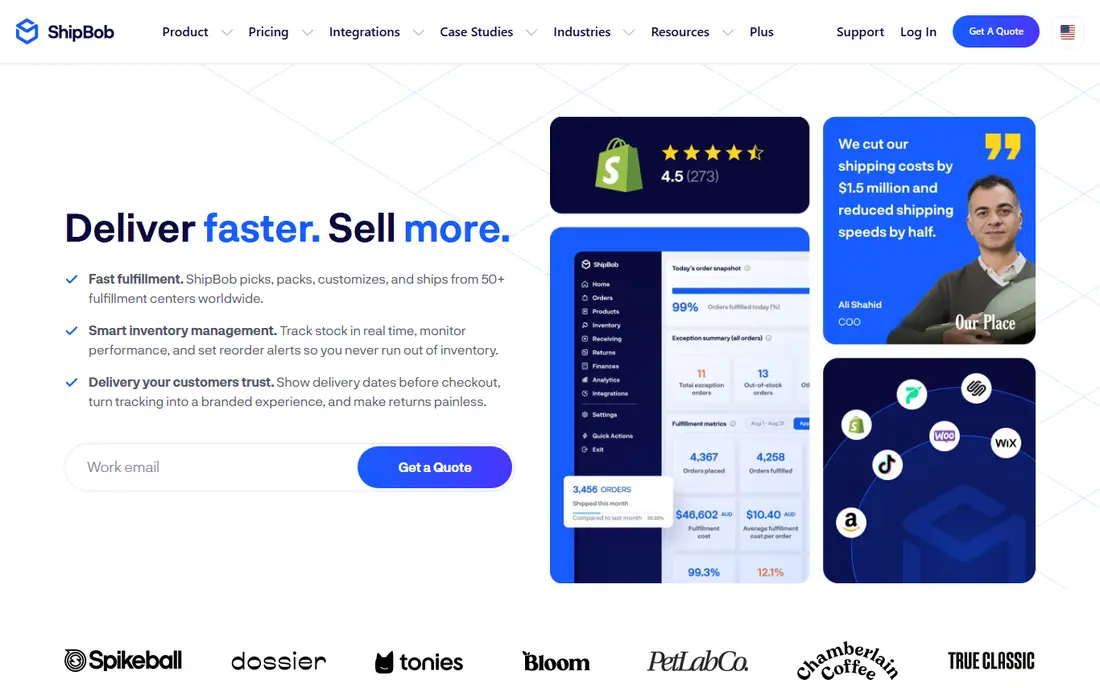
ShipBob is the default shortlist pick for growing direct-to-consumer brands. Its network of warehouses across the US and abroad lets brands place inventory closer to customers, which can shorten delivery times without running several warehouses yourself. Integrations with Shopify, WooCommerce, and major marketplaces are well established, so orders flow into fulfillment without manual work.
The main drawback is opacity. Pricing is quote-based, and published guides point to a monthly minimum in the region of $275, so very small sellers may find it expensive for their volume. Implementation also takes planning. If you ship a steady volume of lightweight products and want national coverage, ShipBob is a strong first quote to get.
- Broad US and international warehouse network
- Strong store integrations
- Two-day delivery coverage for many customers
- Quote-based pricing makes comparison slow
- Monthly minimum applies
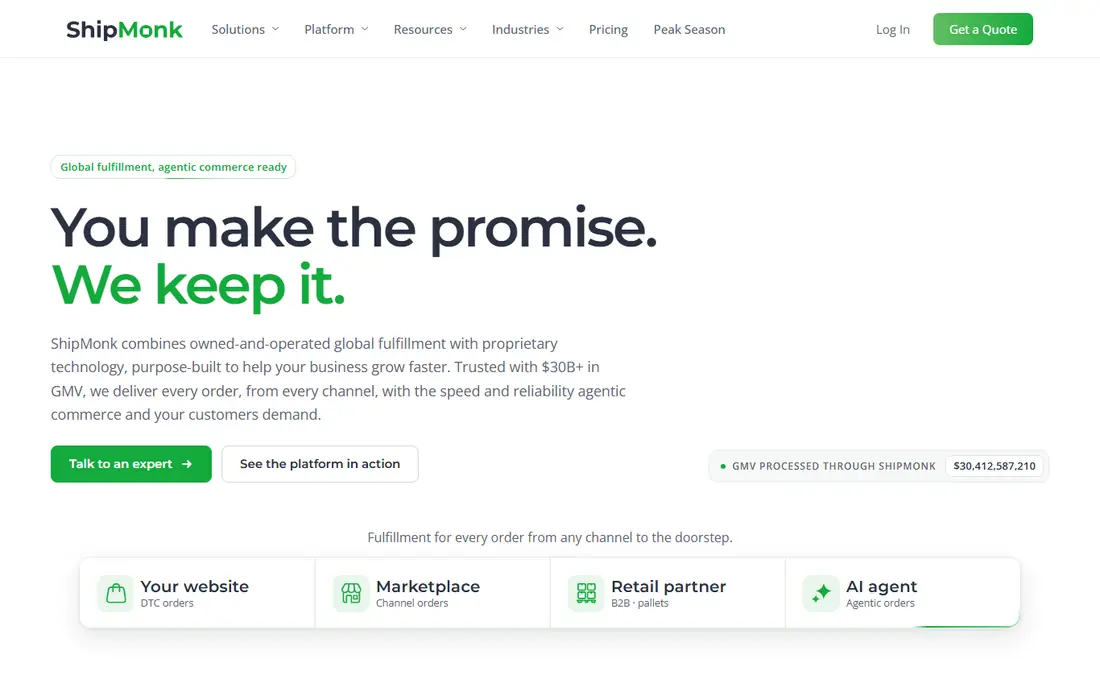
ShipMonk suits brands whose orders are not just single items in a box. Subscription boxes, bundles, and kits with several components are its home ground, and it handles batch shipments for launches and monthly box cycles well. Its monthly minimum is reported in the region of $250, which makes it reachable for startups that are past self-fulfillment but not yet at high volume.
The catch is fit. Very heavy or oversized products are less suited to its model, and pricing is still quote-based, so you need a detailed quote to compare it fairly. For a subscription or bundle-led brand, ShipMonk deserves a place on the shortlist. For a single heavy product, look at Red Stag first.
- Strong kitting and subscription support
- Lower monthly minimum than some rivals
- Multiple US locations
- Quote-based pricing
- Heavy or oversized goods are a weaker fit
Red Stag is the specialist pick when your products are heavy, bulky, fragile, or valuable. It operates from Tennessee and Utah, and its accuracy guarantee, backed by payment for errors, gives high-value sellers a clear reason to trust it with expensive stock. There is no small parcel weight limit of the kind that forces large goods elsewhere, which matters for fitness equipment, furniture, and similar products.
The limits are coverage and volume. Two locations mean delivery times vary more by customer location than with a larger network, and it generally prefers clients shipping at least a couple of hundred orders a month. Pricing is quote-based. If your goods are heavy or costly, those trade-offs are usually worth it. If they are light and small, a broader network will likely serve you better.
- Built for heavy, bulky, and high-value items
- Accuracy guarantee
- No weight cap that blocks large goods
- Only two US locations
- Prefers higher monthly volume
- Quote-based pricing
Flexport, which absorbed Deliverr, suits brands that need freight and fulfillment handled together. If your goods arrive by container and then need to reach customers across the US, having one provider manage both legs can simplify planning and reduce handoffs. Its platform covers freight, inventory, and fulfillment in one place, which appeals to larger or import-heavy brands.
The drawback for small sellers is scale. Published comparisons point to a higher monthly minimum than ShipBob or ShipMonk, and the setup leans toward enterprise operations. A small brand shipping a few hundred orders a month will likely find a simpler 3PL cheaper and faster to onboard. For import-led brands at scale, Flexport is a strong candidate.
- Combines freight forwarding with fulfillment
- Useful for imported goods
- Broad logistics platform
- Higher minimums than small-brand 3PLs
- Enterprise-leaning setup
ShipFusion targets high-volume direct-to-consumer brands that need tight accuracy and reliable throughput. It operates in the US and Canada, and its model suits brands shipping hundreds of orders a month or more, where small error rates add up to real cost. For a brand at that scale, accuracy and consistent service matter more than a low entry price.
Small sellers are not its audience. Volume expectations are higher than at eFulfillment Service or ShipMonk, and pricing is quote-based, so a small brand will struggle to get value from it early on. If your volume is already high and accuracy is your main worry, ShipFusion is worth quoting. If you are just starting out, start with a no-minimum provider instead.
- High accuracy focus
- US and Canada coverage
- Suited to larger DTC volumes
- Higher volume expectations
- Quote-based pricing
- Less suited to tiny sellers
eFulfillment Service is the low-barrier entry point. It reports no minimum order requirement and no setup fees, which makes it practical for early-stage or seasonal sellers who cannot commit to a monthly spend. The pay-as-you-go model means you pay for what you ship, and that simplicity helps when volume is uneven.
The limits are physical. It operates from a single location in Michigan, and parcels are capped at a weight that rules out very heavy goods. Delivery times will vary more by customer location than with a distributed network. For a small seller testing outsourced fulfillment for the first time, those limits are acceptable. For a brand that needs fast national delivery, they are a reason to graduate to a larger network later.
- No minimum order requirement
- No setup fees reported
- Simple pay-as-you-go model
- Single US location
- Parcel weight cap
- Smaller network than ShipBob
ShipHero is different because it sells warehouse software as well as fulfillment. Brands that want control over inventory data, or that already run their own warehouse and need better software, can use its platform without handing over fulfillment. Its fulfillment service suits mid-volume and larger brands that want that software depth behind their operations.
The catch is the floor. Published comparisons point to a fulfillment volume expectation of several hundred orders a month, and warehouse software pricing starts at a level that only makes sense once volume justifies it. Small sellers will find it expensive. For a growing brand that wants software and fulfillment from one provider, ShipHero is a credible option.
- Published fee card for its warehouse software
- Strong inventory software
- Fulfillment plus software option
- Fulfillment volume floor is high
- Software pricing is a separate cost
Fulfillment by Amazon suits sellers whose sales already center on Amazon. Products stored in Amazon warehouses gain Prime eligibility, which can lift conversion on Amazon listings, and the network is far larger than any independent 3PL. Multi-channel fulfillment also lets Amazon warehouses ship orders from your own store, though at different rates.
The drawbacks are cost structure and control. Storage, fulfillment, and referral fees stack up, and packaging carries Amazon branding by default on multi-channel orders. Sellers who care deeply about unboxing experience or who sell mostly off Amazon will often do better with an independent 3PL. For Amazon-first sellers, though, the Prime badge alone can justify the trade-offs.
- Prime eligibility for Amazon orders
- Huge warehouse network
- Multi-channel fulfillment option
- Fee stack can add up
- Amazon-centric rules and packaging
- Less control over branding
How we picked these
We compared official service pages and recent 2026 3PL guides, and kept only providers that are live and actively taking ecommerce clients. We favored a mix of broad networks, specialists, and low-minimum options, so the list covers different product types and volumes. Pricing is quote-based for most providers, so we wrote See website where no public rate could be verified, rather than inventing a per-order figure.
What to compare in every quote
Ask each provider for the total cost per order at your real volume, including receiving, storage, pick and pack, packaging, and shipping. A low pick fee can hide high storage or account fees, and surcharges for fuel, oversize items, or returns change the total fast. Get the quote in writing for your exact product dimensions and order profile, not a generic rate card.
Trial orders and service levels
Send test orders to yourself before moving inventory. Check packaging quality, delivery speed, tracking updates, and how returns are handled. Confirm cutoff times, support contacts, and what happens if an order ships wrong. A provider that answers those questions clearly before you sign is more likely to answer them well when a real problem arises.
Frequently asked questions
What is a 3PL company?
A third-party logistics company stores your inventory, picks and packs orders, and ships them to your customers. You keep selling and marketing, while the 3PL runs the warehouse work. Most also handle returns and provide software that syncs with your store.
How much does a 3PL cost?
Most 3PL pricing is quote-based, because cost depends on product size, weight, order volume, storage needs, and shipping zones. Published guides often point to a few dollars per order for standard products, plus storage and shipping, but always get a quote for your own products before budgeting.
What is the best 3PL for small businesses?
For very small sellers, eFulfillment Service is a good starting point because it reports no minimum order requirement. ShipMonk suits startups with subscription or bundle products, while ShipBob suits brands ready for a broader network and a monthly minimum. Match the provider to your volume, not only to its headline features.
Do 3PL companies work with Shopify and Amazon?
Yes, most established 3PLs integrate with Shopify, WooCommerce, Amazon, and other major channels. Confirm your exact platforms before signing, and check whether marketplace orders, wholesale orders, and subscription orders all flow through the same integration.
Should I use one warehouse or several?
One warehouse is simpler and cheaper at low volume. Several warehouses shorten delivery times for customers spread across the country, but they add inventory complexity and cost. Start with one location, then split inventory once order data shows a clear geographic pattern.
Sources
See where you really rank - block by block
ProMapRanker scans Google Maps across a grid of your service area. Simple monthly plans from $19, white-label on every plan.
Start freeKeep reading
 who has the best home internet service
Who Has the Best Home Internet Service in 2026
Who has the best home internet service in 2026? Compare fiber, cable, and 5G providers on speed, price, data caps, and availability at your address today.
Read → visio alternatives
Best Visio Alternatives in 2026
Compare 9 Visio alternatives for flowcharts, org charts, and network diagrams, with free plans, pricing, and the best pick for teams and solo users in 2026.
Read → top 10 logistics software
Top 10 Logistics Software in 2026
We compared the top 10 logistics software tools for transport, warehousing, visibility and shipping, for shippers, carriers and 3PL teams in 2026 today.
Read →