 ProMapRanker
Best 3D Web Design Services Providers in 2026


Immersive real time 3D experiences · Pricing starts at: See website
Key takeaways
- Active Theory and Dogstudio lead for immersive, real time 3D experiences built for major brands.
- Locomotive, Resn, and Studio Freight suit brands that want craft led interactive sites with strong motion design.
- Hello Monday, AREA 17, and Fantasy suit larger brand and product sites where 3D is one part of a wider design system.
- Agency pricing is project based and varies widely, so portfolios and past work matter more than a rate card.
- 3D should serve a clear purpose, such as showing a product, telling a story, or guiding a visitor, not decoration alone.
Quick comparison
| Pick | Great for | Pricing starts at | Free tier | |
|---|---|---|---|---|
| Active Theory | Immersive real time 3D experiences | See website | No | Visit |
 Locomotive | Craft led interactive brand sites | See website | No | Visit |
 Dogstudio | Playful immersive digital experiences | See website | No | Visit |
 Resn | Interactive and 3D brand campaigns | See website | No | Visit |
 Studio Freight | Motion rich interactive websites | See website | No | Visit |
 Hello Monday | Brand and product sites with 3D elements | See website | No | Visit |
 AREA 17 | Digital brand and product platforms | See website | No | Visit |
 Fantasy | Large scale product and brand experiences | See website | No | Visit |
The best 3d web design services providers
These agencies and studios design and build websites that use 3D models, real time rendering, and interactive motion. Portfolios and pricing vary by studio, and project figures are agreed per brief, so judge each provider by relevant past work rather than by a headline price.
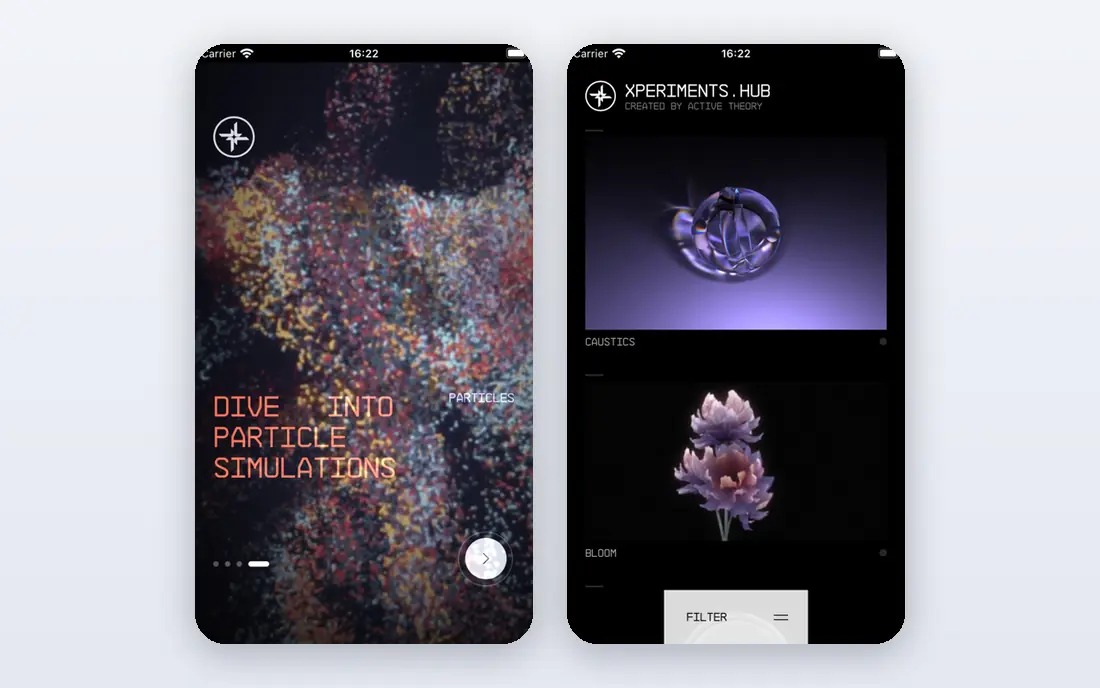
Active Theory is a creative technology company known for browser based experiences, real time virtual spaces, and interactive installations. Its work for brands such as Spotify and Google shows how 3D can carry a story rather than sit beside it, with interaction, motion, and sound working as one piece.
The honest catch is fit. Active Theory suits ambitious brand experiences with a clear creative idea and a budget to match. A small business that needs a product configurator may get a better result from a smaller studio with a tighter scope.
- Deep creative technology expertise
- Real time and browser based 3D work
- Major brand experience
- Project based pricing suits larger budgets
- Availability for small projects is limited
Locomotive is a Montreal web agency known for refined interactive sites that balance design, motion, and usability. Its work often pairs clean layouts with interactive moments, including 3D elements where they help a visitor understand a product or place. That restraint is a strength, since 3D never overwhelms the content.
The limit is that Locomotive is a full web agency, not a 3D only shop. If your brief is a pure real time 3D world, a specialist such as Active Theory may fit better. If you want a brand site where 3D supports the story, Locomotive is a strong shortlist name.
- Strong design and development craft
- Montreal based team with global clients
- Interactive strategy focus
- Project pricing is quote based
- 3D scope depends on the brief
Dogstudio, now part of DEPT, is known for immersive digital and physical experiences with a playful, character led style. Its teams in the US, Mexico, Belgium, and the Netherlands build 3D platforms, interactive stories, and campaign sites for clients including Microsoft, Adobe, and Tomorrowland.
The trade off is tone. Dogstudio work is expressive and bold, which suits entertainment, culture, and consumer brands. A conservative professional services firm may prefer a quieter studio, and should check whether Dogstudio's portfolio tone matches its brand before briefing.
- Distinctive immersive style
- 3D and real time experience expertise
- Now part of DEPT
- Style is bold and may not suit conservative brands
- Pricing is project based
Resn is an interactive studio with a long record of award winning web work that blends 3D, motion, and storytelling. Its campaign sites often use interactive scenes to draw visitors into a brand idea, then guide them toward a clear next step such as exploring a product or signing up.
The limit is brief type. Resn shines on campaign and brand moments with a strong creative idea. A straightforward corporate site with a small 3D product viewer may be better served by a studio that focuses on product visualization and ecommerce.
- Long record in interactive and 3D web work
- Campaign and brand site expertise
- Global studio presence
- Project based pricing
- Best fit for campaign led briefs
Studio Freight builds websites where motion and interaction feel precise rather than decorative. Its work pairs smooth scrolling, transitions, and 3D moments with clear typography and layout, which helps a brand site feel modern without losing readability. That balance matters, since heavy 3D can hurt performance if handled poorly.
The catch is scale. Studio Freight is a focused studio, not a global agency network, so large multi-market rollouts may need extra partners. For a single flagship site or product launch, that focus is often an advantage, since the core team stays close to the work.
- Strong motion and interaction craft
- Modern web development focus
- Portfolio of polished brand sites
- Smaller team than global agencies
- Project availability varies
Hello Monday, part of DEPT, designs brand and product sites where 3D elements support a wider digital identity. That breadth helps when a 3D site must also work as a product platform, with content, commerce, or app links sitting alongside the visual experience.
The trade off is specialization. Hello Monday can deliver 3D, but it is not a 3D only studio, so a brief that needs deep real time engineering may need a specialist partner. For most brand sites, that breadth is a plus, since the 3D work stays consistent with the rest of the brand.
- Brand and digital design strength
- Part of DEPT network
- Product and campaign experience
- 3D is one service among many
- Pricing is project based
AREA 17 is a digital agency that designs brand sites and product platforms for organizations that need consistency across markets. Its work often combines strategy, design, and engineering, with interactive and 3D elements used where they clarify a product or story.
The limit is process weight. AREA 17 suits firms that want a structured agency relationship and a site that lasts for years. A startup that needs a fast, single 3D landing page may move faster with a smaller studio and a tighter brief.
- Long standing digital agency
- Brand and product platform expertise
- Offices in several countries
- Enterprise leaning process
- Smaller 3D only briefs may not be the best fit
Fantasy designs product and brand experiences for large companies, with work that spans websites, apps, and design systems. Its 3D work usually sits inside a larger product story, such as a launch site or a platform that needs to explain a complex product clearly.
The honest weakness is budget fit. Fantasy suits large scale briefs with a dedicated team and timeline. Smaller firms should still study its portfolio for ideas, but brief a smaller studio when the scope is a single site or a single product viewer.
- Product and brand experience expertise
- Large scale project experience
- Strong design systems work
- Project pricing suits larger budgets
- Small briefs may not fit
How we picked these
We compared agency portfolios, service pages, and public industry coverage checked in October 2026. We kept only agencies and studios that offer 3D web design services today and that show relevant interactive or 3D work in their portfolios. We weighted 3D and real time expertise, portfolio relevance, and fit for different brief sizes, and we did not invent project prices or client results.
How to brief a 3D web project well
A good brief saves money and avoids a site that looks impressive but performs poorly. Start with the job the 3D must do, then choose the studio whose past work matches that job.
Define the purpose before the style
Decide whether the 3D should let visitors inspect a product, explore a place, follow a story, or play with a concept. Share examples of work you admire and work you dislike, plus your must have content and calls to action. A studio can then propose the right level of 3D, from a light product viewer to a full real time scene.
Ask about performance and maintenance
Ask how the site will perform on mobile, how large the 3D assets will be, and who updates models or content after launch. Check accessibility, loading behavior on slower connections, and whether the studio offers ongoing support. Portfolios and pricing vary, so agree scope, timeline, deliverables, and handover terms in writing before work starts.
Frequently asked questions
How much does 3D web design cost?
Agency pricing is project based and varies widely by scope, timeline, and studio. A simple product viewer costs far less than a full real time experience with custom models and interaction. Ask shortlisted studios for a scoped quote based on your brief, and compare scope, not just price.
Is 3D web design good for SEO and performance?
It can be, if handled well. Heavy 3D assets can slow a site, so ask about loading, mobile performance, and fallback content for visitors on slower devices. Keep key text in HTML, not only inside 3D scenes, so search engines and screen readers can still read your content.
Should a small business use 3D on its website?
Only when it helps visitors understand or choose something. A product viewer for furniture, vehicles, or equipment can raise confidence, while decorative 3D on a simple service site may add cost without benefit. Test a small 3D element first, and measure whether visitors engage with it.
What should I check in a studio portfolio?
Look for work in your sector, similar project sizes, and sites that still load well today. Check whether the studio handled design, 3D, and development together or only one part. Ask for a reference or a live site you can explore, and note how the 3D serves the site goal.
Do I need 3D models before briefing a studio?
Not always. Some studios create models as part of the project, while others need models or product data from you. Ask early what assets the studio needs, what it can create, and how model creation affects timeline and cost. Clear asset ownership terms matter if you plan to reuse models later.
Sources
See where you really rank - block by block
ProMapRanker scans Google Maps across a grid of your service area. Simple monthly plans from $19, white-label on every plan.
Start freeKeep reading
 worlds best local seo company
8 Worlds Best Local SEO Companies for Map Pack Growth in 2026
Compare the worlds best local seo company options for Google Business Profile work, citations, reviews, and multi-location rankings and reporting in 2026.
Read → world's best web hosting company
World's Best Web Hosting Company in 2026
Searching for the world's best web hosting company? We compared 10 hosts on price, renewal rates, speed, and support to help you choose well today in 2026.
Read → who's got the best nanny tax services
Who's Got the Best Nanny Tax Services in 2026
We answer who's got the best nanny tax services, comparing full filing, back taxes, software, and pricing so families can handle nanny taxes correctly.
Read →