 ProMapRanker
Best Base44 Alternatives in 2026

Key takeaways
- Lovable and Bolt are the closest prompt-to-app matches, with Lovable favouring a polished product feel and Bolt favouring visible code.
- Replit and v0 suit builders who want a real code workspace or a strong front end, rather than a fully managed no-code app.
- Bubble is the pick for complex logic and user roles, while Glide and Softr suit data-driven internal tools and portals.
- Credit, token, and workload pricing all run out faster than a flat plan suggests, so check what a paid plan actually includes before you build.
Quick comparison
| Pick | Great for | Pricing starts at | Free tier | |
|---|---|---|---|---|
 Lovable | Polished MVPs from prompts | $25 per month | Yes | Visit |
 Bolt | Prompt-to-app with visible code | $25 per month | Yes | Visit |
 Replit | Agent plus a real code workspace | $20 per month | Yes | Visit |
 v0 | React front ends on Vercel | $30 per month | Yes | Visit |
 Bubble | Complex apps with real logic | $29 per month | Yes | Visit |
 Glide | Spreadsheet-to-app internal tools | $25 per month | Yes | Visit |
 Softr | Portals and directories | $25 per month | Yes | Visit |
 Emergent | Prompt-to-production apps | $20 per month | Yes | Visit |
 WeWeb | Custom front ends on your backend | $25 per month | Yes | Visit |
The best Base44 alternatives
Base44 turns a short prompt into a hosted app with a managed database. These nine tools cover the same goal with different levels of code control and depth.
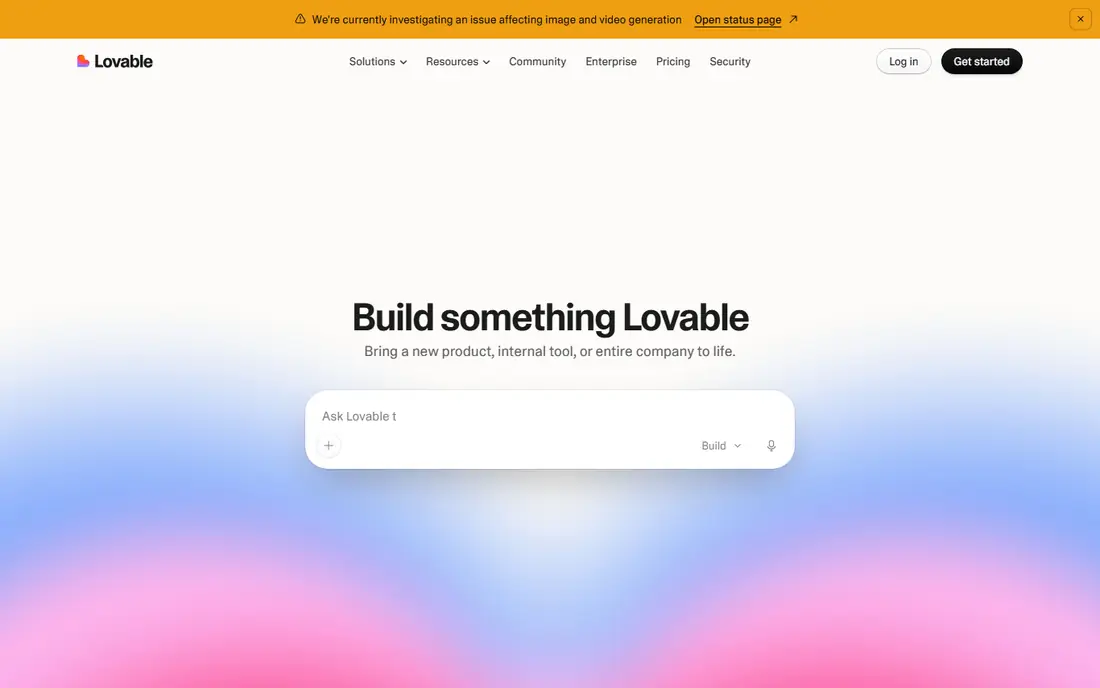
Lovable is the most direct rival for a founder who wants a working product from a prompt. You describe the app, Lovable builds screens, a database, and hosting, and you refine it by chatting with the builder. The result often looks more finished than a typical prototype, which helps when you need to show a product to early users or a partner. GitHub export also gives a route out if you later want a developer to take over the code.
The catch is credits. The free tier gives a small daily allowance, and paid plans are credit-based, so a large app with many iterations can burn through a plan faster than expected. Backend complexity also has limits compared with a hand-built system. We would pick Lovable for a founder validating an idea quickly, and we would plan the credit budget before starting a large build.
- Fast prompt-to-app flow
- Hosted with database and logins
- GitHub export for code control
- Credit limits can run out on larger builds
- Polish can hide backend limits
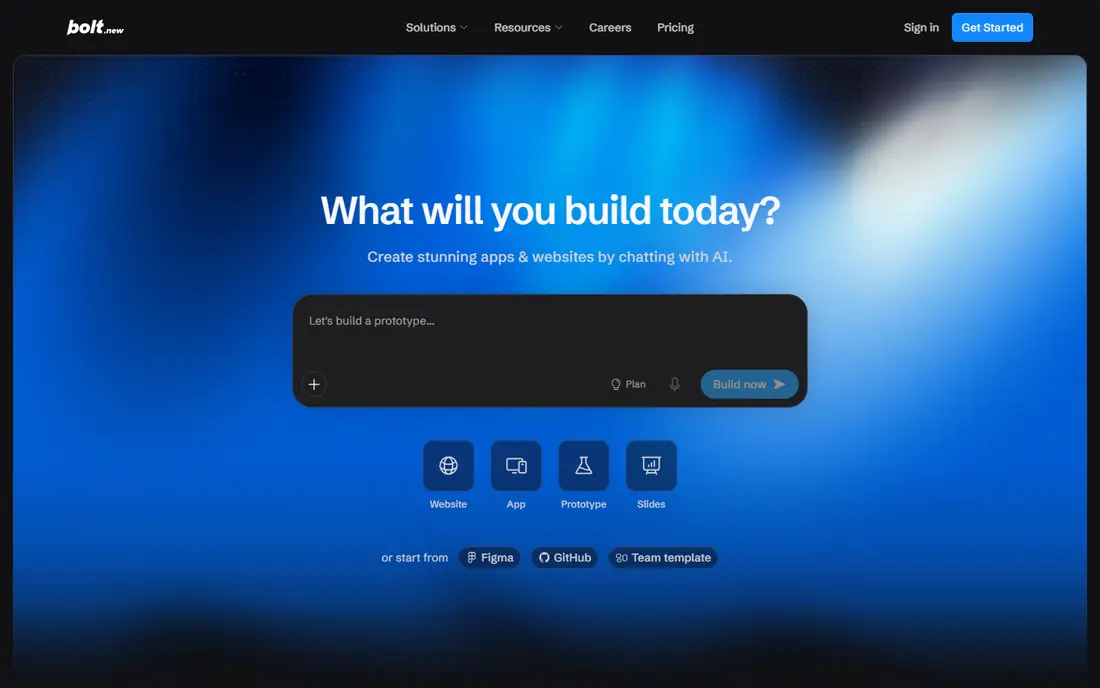
Bolt, built by StackBlitz, generates a full-stack app that runs in the browser, with a live editor so you can see and edit every line. That visibility is the main difference from a fully managed builder: you are not locked behind a chat interface when something needs a precise fix. The free tier offers a large monthly token allowance, which makes it a good place to test an idea before paying.
Token pricing is also the weakness. A big app, a long chat history, or many corrections can use tokens quickly, and the paid plan is still token-metered. A builder with no code experience may also feel stuck when the AI output needs a manual edit. We would pick Bolt for a technical founder or a small team that wants prompt speed plus real code access.
- Full-stack apps in the browser
- Live code editor
- Generous free token allowance
- Token pricing drains fast on big builds
- Some code comfort helps
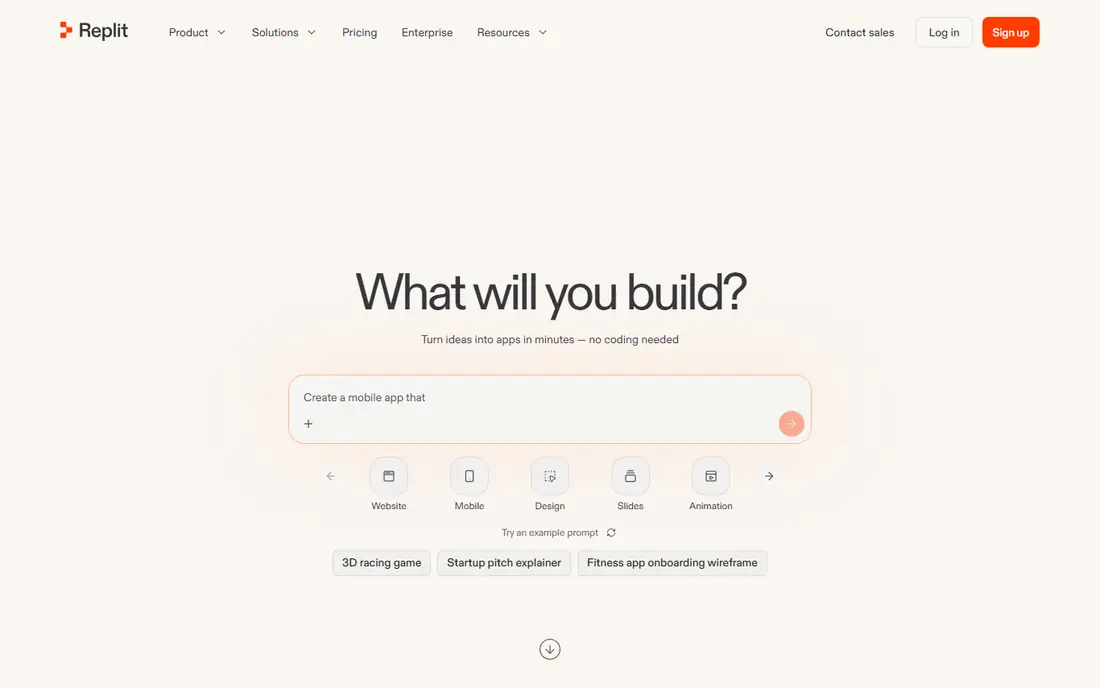
Replit pairs an AI agent with a real development workspace in the browser. You can prompt the agent, edit the code it writes, run the app, and deploy it from the same place, with a database and hosting included. That makes Replit a good bridge: a non-coder can start with prompts, while a developer can take over the same project without moving it to a new system. The free Starter plan lets a builder test that flow before paying.
The trade-off is cost clarity and simplicity. Agent use is credit-based, so a long build can cost more than the base plan suggests, and the full workspace has more panels and options than a simple app builder. We would pick Replit for a builder who wants to grow from prompts into real code, and we would skip it for a user who wants a fully managed app with no code in view.
- AI agent plus a full IDE in the browser
- Built-in deploy and database
- Large community
- Credit costs vary with agent use
- Workspace can feel busy for non-coders
v0 by Vercel is the front-end specialist on this list. It turns a prompt into a polished React interface, with components, layouts, and interactions that look like work from a design team. Deployment to Vercel is clean, and a developer can take the generated code and extend it in a normal codebase. For a landing page, a marketing site, or a product interface, that output is often stronger than a general app builder.
The limit is backend depth. v0 connects to a backend you provide, rather than giving a fully managed database and login system out of the box in the same way as a full app builder. A non-technical founder who needs users, data, and payments in one place may need extra tools. We would pick v0 for a design-led front end or a team already on Vercel, not as a one-stop app builder.
- Polished React and Next.js interfaces
- Clean deployment to Vercel
- Good design output
- Front-end focus with less built-in backend
- Needs a backend plan for full apps
Bubble is the deepest no-code platform here, and it is the right pick when an app needs real business logic. Its visual editor covers data types, workflows, user roles, and permissions in a way that a prompt builder cannot match, and its plugin ecosystem extends it further. You can build and test for free, and you pay when you want to go live. For a marketplace, a booking system, or a multi-role internal app, that depth matters.
The learning curve is real. Bubble takes weeks to learn well, and its workload pricing, which charges for app activity, needs monitoring as usage grows. A simple prototype may be faster in Lovable or Bolt. We would pick Bubble for a founder or team building a complex app they expect to run for years, and we would budget time to learn the editor properly.
- Visual editor with deep logic and user roles
- Large plugin ecosystem
- Long track record
- Workload pricing needs care
- Learning curve is steeper than a prompt builder
Glide turns a spreadsheet into a working app with surprising speed. An operations team can take a sheet of jobs, inventory, or clients and get a mobile-friendly app with forms, lists, and user access in a day. The builder is visual and guided, and the free plan lets a team test the idea with real data before paying. For internal tools, that speed beats a general app builder.
The limit is scope. Glide shines for internal and data-driven apps, but it is less suited to a complex public product with custom logic and payments. Row and user limits also vary by plan, so a growing team should check the plan that matches its data size. We would pick Glide for an operations team turning a spreadsheet into a tool staff actually use.
- Turns spreadsheets into apps fast
- Good mobile feel
- Free plan for testing
- Less suited to public consumer apps
- Data source limits vary by plan
Softr builds portals, directories, and membership apps on top of Airtable or Google Sheets data. A business can give clients a login, show only their own records, and add payments or forms without building a backend. Permissions are granular, which matters when different users should see different data. The free plan covers a small portal, so a team can test the model before paying.
The catch is dependence on the data source. If your data lives in Airtable or Sheets, Softr is a natural fit, but if you need a custom database and complex workflows, Bubble or a code builder fits better. Softr is also less about building a novel consumer app and more about presenting and gating data well. We would pick Softr for a client portal, a directory, or a membership site built on existing spreadsheet data.
- Client portals and directories on Airtable or Sheets
- Granular permissions
- Free plan
- Depends on an external data source
- Less custom logic than Bubble
Emergent positions itself as a prompt-to-production builder, with an emphasis on giving the builder ownership of the resulting code and a path to a live app. You describe the app, Emergent builds it, and you can iterate by prompt while keeping a deployable product. The entry price is competitive, and the free start lets a founder test the flow without a card. For a builder who worries about lock-in, that ownership pitch is a real draw.
The weakness is maturity. Emergent is newer than Bubble, Glide, or Replit, so its community, plugins, and public track record are smaller. Credit limits also apply, so a large build needs a plan check. We would pick Emergent for a founder who wants prompt speed with a clearer code ownership story, and we would test a small app first before committing a core product to it.
- Prompt-to-app with code ownership focus
- Free start
- Production-oriented hosting
- Newer platform with a smaller community
- Credit limits apply
WeWeb is a visual builder for the front end of an app, designed to sit on top of a backend you already have, such as Supabase, Airtable, or a custom API. That split gives a team strong design control and a real codebase, without forcing the whole app into one vendor system. Designers and developers can work on the same front end, and the result can be exported and hosted as code.
The trade-off is that WeWeb alone is not a full app. You still need a backend, logins, and data rules, which adds setup work compared with a managed builder that includes those pieces. A non-technical founder with no backend plan may find that gap frustrating. We would pick WeWeb for a team that already has a backend and wants a polished, custom front end built visually.
- Visual front-end builder with real code export
- Connects to your own backend
- Strong design control
- Needs a backend to be useful
- Steeper setup than a managed builder
How we picked these
We compared official pricing pages, feature pages, and public documentation for AI app builders that are live in October 2026, and we checked each tool against the core Base44 job: turning a prompt or data source into a working, hosted app with users and data. We favoured tools with a free start, published prices, and a clear path to a live app, and we left out tools that only generate code snippets or only design static pages. We did not build a full production app in each tool for this guide, and we did not claim hands-on testing that did not happen.
What to check before you pick an app builder
Start with the kind of app you are building. A simple internal tool, a public MVP, and a complex multi-role product need different tools, and a prompt builder that is perfect for the first case can struggle with the third. Write down the must-have features, such as logins, payments, user roles, and data rules, and check them against the plan you will buy, not just the marketing page.
Next, check the pricing meter. Lovable uses credits, Bolt uses tokens, Bubble uses workload units, and Glide and Softr use rows and users. Each meter runs out in a different way, so a cheap headline price can become expensive after a month of real use. Test with a small but real app, watch the meter, and price the next tier before you commit.
Finally, check the exit route. Can you export code, export data, or move hosting if you outgrow the tool? A builder with GitHub export or code export gives you more freedom than a fully managed system with no export. That freedom matters less for a quick prototype and much more for a product you expect to run for years.
Frequently asked questions
What are Base44 alternatives?
Base44 alternatives are AI app builders that turn a prompt or a data source into a working app, in place of Base44. Lovable, Bolt, Replit, and v0 are the closest prompt-based options, while Bubble, Glide, and Softr cover deeper no-code and data-driven apps. The best fit depends on your code comfort, your app complexity, and your budget.
Which Base44 alternative is best for non-coders?
Lovable is the easiest prompt-based start for a non-coder who wants a polished MVP, while Glide and Softr are easier for data-driven internal tools and portals. Bubble gives more depth but takes longer to learn. If you have no code experience, start with a small app in Lovable or Glide and check the credit or row limits early.
Can I export my app from these builders?
Export options vary. Lovable and Bolt offer GitHub or code access, Replit gives you a real codebase, and WeWeb offers code export for the front end. Fully managed builders may limit export, so check the export story before you build a core product. Data export is also worth checking, even if code export is available.
How much does an AI app builder cost?
Paid plans for the tools here start at $20 to $30 per month, with free plans for testing. The real cost depends on the meter: credits, tokens, workload units, rows, or users. A small prototype may stay inside a free or entry plan, while a live app with real users usually needs a higher tier.
Do I need to know how to code?
No, for a simple app. Lovable, Glide, and Softr are built for non-coders, and Replit and Bolt add code access without requiring it at the start. Code skill helps when the AI output needs a precise fix or when the app grows complex, so a team with some code comfort will get more from Bolt, Replit, and v0.
What is the best alternative to Base44 for a complex app?
Bubble is the strongest pick for a complex app with real logic, user roles, and permissions, because its visual editor goes deeper than a prompt builder. Replit is a good alternative if you want a real codebase and a developer can take over. For a complex app, budget learning time and check workload or credit costs early.
Sources
See where you really rank - block by block
ProMapRanker scans Google Maps across a grid of your service area. Simple monthly plans from $19, white-label on every plan.
Start freeKeep reading
 zscaler alternatives
Best Zscaler Alternatives in 2026
Looking for zscaler alternatives? We compare 9 SASE and zero trust platforms on architecture, data protection, pricing, and fit for your network and team.
Read → zapier alternatives free
Best Zapier Alternatives Free in 2026
Nine automation tools for zapier alternatives free in 2026, all with genuinely free tiers, plus free plan limits, starting prices and upgrade paths explained.
Read → which platform is best for online reputation
Which Platform Is Best for Online Reputation in 2026
Wondering which platform is best for online reputation? We compare 8 review, listing, and response tools for small and multi-location businesses and agencies.
Read →