 ProMapRanker
Best Azure Data Factory Alternatives in 2026

Key takeaways
- Fivetran and Airbyte are the simplest managed replacements for teams that want prebuilt connectors and less pipeline code.
- AWS Glue and Google Cloud Dataflow suit teams already committed to AWS or Google Cloud, with pay-as-you-go pricing tied to job runtime.
- Apache Airflow gives the most control for orchestration, but it needs engineering time for hosting, monitoring and upkeep.
- Talend, Informatica, Hevo and Matillion cover larger or more governed estates, with quote-based or usage-based pricing that needs a careful volume model.
Quick comparison
| Pick | Great for | Pricing starts at | Free tier | |
|---|---|---|---|---|
 Fivetran | Managed SaaS connectors | Free | Yes | Visit |
 Airbyte | Open-source ELT with cloud option | $20 per month | Yes | Visit |
 AWS Glue | AWS-native serverless ETL | See website | No | Visit |
 Google Cloud Dataflow | Google Cloud streaming and batch | See website | No | Visit |
 Talend | Enterprise data integration | See website | No | Visit |
 Informatica | Governed enterprise pipelines | See website | No | Visit |
 Apache Airflow | Custom pipeline orchestration | Free | Yes | Visit |
 Hevo | Simple event-based ELT | Free | Yes | Visit |
 Matillion | Warehouse-native ELT | See website | Free trial | Visit |
The best azure data factory alternatives
Azure Data Factory covers pipeline orchestration, data movement and transformation inside Azure. A good replacement may be a managed connector tool, a cloud-native engine or an orchestration platform, depending on where your data lives and how much code your team wants to own. We compared official pricing pages, connector coverage and deployment options current in October 2026.
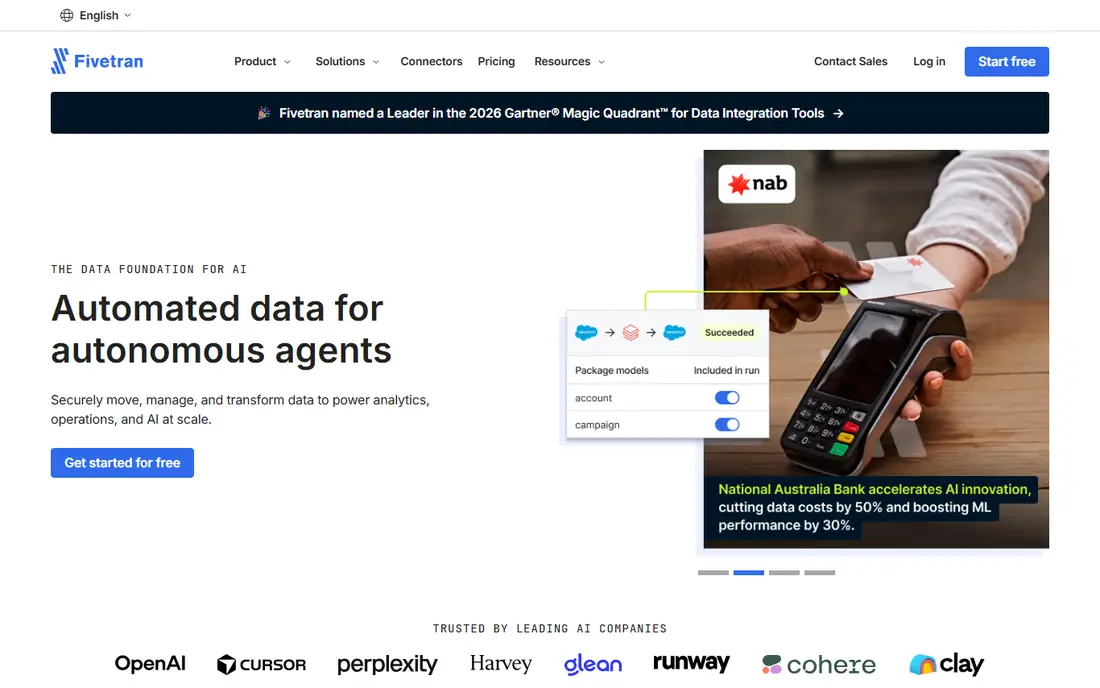
Fivetran is the low-effort route for teams that want data moved without building connectors. You pick a source and a warehouse, set a schedule, and Fivetran handles extraction, loading and schema drift for common sources. That speed matters when a small analytics team needs reliable pipelines without a dedicated data engineering group.
Pricing needs care. Fivetran bills on monthly active rows per connection, with a free tier up to 500,000 rows and paid plans that carry a monthly minimum per connection and an annual contract floor. Model your busiest tables before you commit, especially tables with frequent updates or deletes.
- Hundreds of prebuilt connectors
- Managed sync and schema handling
- Hybrid deployment on higher plans
- Per-connection monthly active row billing can rise fast
- Annual contract minimum on paid plans
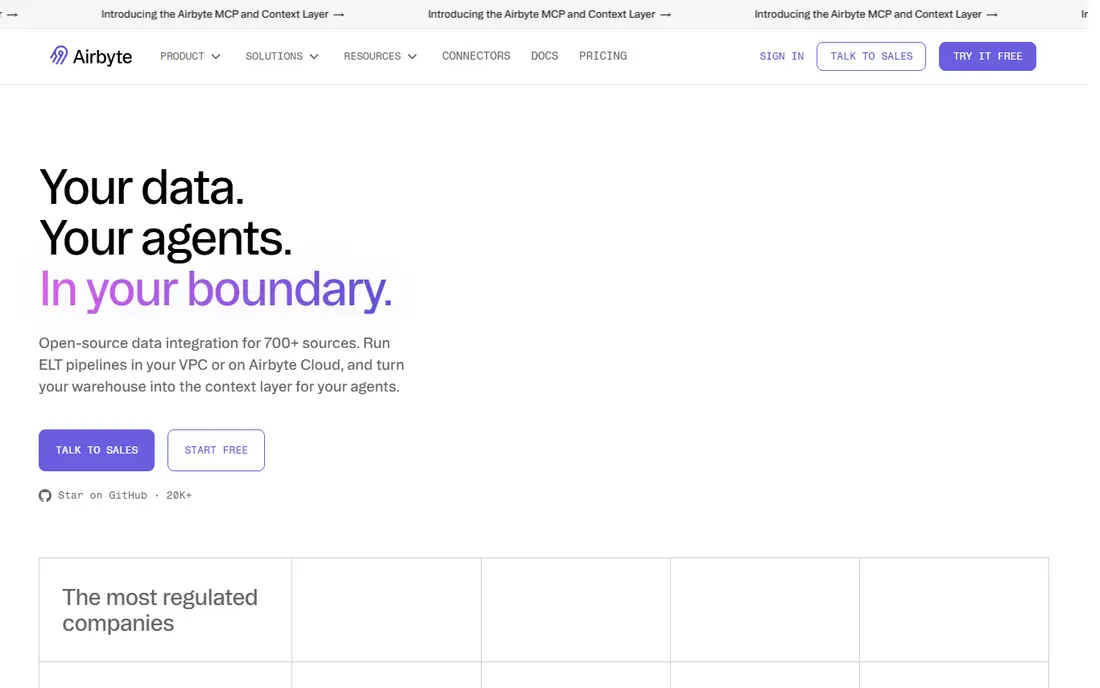
Airbyte suits teams that want openness plus a managed option. The open-source core is free to self-host, and Airbyte Cloud starts at $20 per month for a Standard tier, with higher tiers for faster syncs and more control. The connector catalogue covers databases, SaaS APIs, files and unstructured sources, and a connector builder helps with custom sources.
The catch is cost modelling. Cloud volume plans bill on usage, while Pro and Enterprise Flex use capacity-based Data Workers, so row counts alone do not tell the full story. Self-hosting removes the vendor bill but adds infrastructure and maintenance work, so count engineering time in the total.
- Open-source core you can self-host
- Large connector catalogue
- Published cloud pricing
- Cloud credits can grow with volume
- Capacity plans need a sales conversation

AWS Glue is the natural pick inside an AWS estate. It runs serverless ETL jobs, catalogues schemas for query tools, and connects well to S3, RDS, DynamoDB and Redshift. Glue Studio gives teams a visual builder, while code-based jobs suit engineers who want Spark control.
Costs follow data processing unit hours, job frequency and cluster size, so a badly sized job can cost more than expected. Glue also fits poorly if your warehouse lives elsewhere. For AWS-first teams, though, it keeps data movement close to storage and avoids a second vendor for basic pipelines.
- Serverless Spark jobs on AWS
- Visual builder in Glue Studio
- Native S3, RDS and Redshift support
- Pricing varies with job runtime and cluster size
- AWS-only focus
Google Cloud Dataflow suits teams that already run on Google Cloud and need both batch and streaming pipelines. It runs Apache Beam jobs without managing clusters, scales with load, and pairs naturally with BigQuery, Pub/Sub and Cloud Storage. That combination helps teams that need near-real-time data alongside nightly loads.
The trade is ecosystem and skill. Dataflow is not a generic multi-cloud connector library, and Beam takes time to learn well. If your sources are mostly SaaS apps rather than cloud events, a managed connector tool like Fivetran or Airbyte may get you live faster.
- Managed Apache Beam service
- Batch and streaming in one model
- Strong BigQuery integration
- Google Cloud focus
- Beam learning curve for new teams
Talend, now part of Qlik Talend Cloud, covers integration, data quality and governance in one platform. It suits large estates with hybrid sources, complex transformations and compliance needs that a simple connector tool cannot cover. Job design, scheduling and monitoring sit in a single environment.
Pricing is quote-only and metered on data moved, job executions and duration on higher tiers, so small teams should expect an enterprise conversation rather than a self-serve signup. If your estate is modest, start with a managed ELT tool and revisit Talend when governance and scale demand it.
- Broad connector and transformation coverage
- Data quality and governance tools
- Hybrid deployment
- Quote-only pricing
- Enterprise scale and cost
Informatica fits large organisations that treat data governance as a core requirement, not an add-on. Its platform covers integration, quality, cataloguing and governance across cloud and on-premises sources, which helps regulated teams keep lineage and controls visible. That breadth is the reason it still appears in enterprise shortlists.
The cost and effort are enterprise-sized. Pricing is quote-based, implementation takes planning, and small teams may find the platform heavier than they need. Choose Informatica when compliance, scale and complex estates justify that weight, not for a handful of SaaS connectors.
- Enterprise integration and governance
- Multi-cloud and on-premises support
- Strong data quality tools
- Quote-based pricing
- Setup and expertise needed
Apache Airflow is an orchestrator, not a one-click connector library. You define pipelines as code, schedule them, retry failed tasks and monitor runs through a clear interface. That control suits teams with varied jobs, custom logic, machine learning steps or strict scheduling needs that managed tools handle poorly.
Airflow does not move data by itself in the way Fivetran does. You still need connectors, warehouse loading code or provider packages, plus hosting and monitoring. For engineering-led teams, that trade is worth it. For a small analytics team, a managed ELT tool will deliver faster.
- Free and open source
- Python-defined pipelines
- Huge operator and provider ecosystem
- You host and monitor it
- Not a prebuilt connector product by itself
Hevo suits analytics teams that want a predictable monthly number and a simple setup. Its free tier covers 1 million events per month, and Starter starts from $239 per month on annual billing for a larger event allowance. The interface keeps source setup and destination mapping approachable for non-specialists.
The billing model needs a careful read. Every record write counts as an event, so a row updated hourly costs far more than a row inserted once. For insert-heavy workloads, Hevo can be good value. For change-heavy operational tables, model the event count before you choose it over a monthly active row tool.
- Free tier for small volumes
- Fixed monthly event allowances
- Straightforward setup
- Event billing punishes frequent updates
- Higher tiers needed for governance features
Matillion is built around cloud warehouses rather than generic data movement. Pipelines run close to Snowflake, BigQuery or Redshift, with visual design, orchestration and transformation tools in one product. That focus helps warehouse-first teams keep logic where the data already lives.
Pricing uses credits for orchestration, transformation and streaming work, and Matillion does not publish a single dollar price per credit, so you need a quote and a worked example. Warehouse compute is also charged separately. Get both numbers before you compare Matillion with a flat connector subscription.
- Built for Snowflake, BigQuery and Redshift
- Visual pipeline design
- Orchestration and transformation in one place
- Credit pricing is not a simple list price
- Warehouse compute costs sit on top
How we picked these
We compared official pricing pages, connector and deployment documentation, and current product status in October 2026. We kept tools that cover pipeline movement, orchestration or warehouse transformation, and we left out products that had been folded into another platform without a clear standalone route for new teams. Where pricing was quote-based or usage-based, we say so rather than inventing a list price.
What to check before you switch
Map sources, destinations and volume
List every source, destination, sync frequency and rough row or event volume before you price anything. A tool that looks cheap at low volume can become costly when a busy table updates often. Run the same volume model through two or three vendors before you sign.
Decide how much code you want to own
Managed connectors trade control for speed. Airflow and cloud-native engines trade speed for control. Be honest about engineering capacity, on-call cover and governance needs. A tool your team cannot maintain is not cheaper, even if the subscription looks small.
Test failure, schema change and backfill
Pipelines fail, sources change schemas, and backfills happen. Test how each tool alerts you, handles a schema change, retries a failed run and reloads history. Those behaviours matter more in daily use than a connector count on a marketing page.
Frequently asked questions
What is the best alternative to Azure Data Factory?
Fivetran suits teams that want managed connectors with little code, while Airbyte suits teams that want open-source control plus a cloud option. AWS Glue and Google Cloud Dataflow suit teams already committed to those clouds.
Are there free alternatives to Azure Data Factory?
Yes. Apache Airflow and Airbyte Core are free to self-host apart from infrastructure costs, and Fivetran and Hevo offer free tiers for small volumes. Cloud-native engines are pay-as-you-go rather than free.
Do these tools replace data transformation too?
Some do, and some do not. Matillion and Talend cover transformation inside the platform, while Fivetran and Airbyte focus on movement and pair with transformation tools such as dbt. Airflow orchestrates transformation jobs rather than replacing them.
Which alternative is best for small teams?
Fivetran, Airbyte Cloud and Hevo are the easiest starting points for small analytics teams. They offer prebuilt connectors, managed syncs and published entry pricing, which keeps setup time low.
Can I run these tools outside Azure?
Yes, with different limits. Fivetran, Airbyte, Talend, Informatica, Hevo and Matillion support multiple clouds and warehouses. AWS Glue and Google Cloud Dataflow are strongest inside their own clouds.
What should I budget beyond the subscription?
Budget for warehouse compute, infrastructure if you self-host, engineering time for monitoring, and any overage charges for volume spikes. Quote-based tools also need time for procurement and a worked cost model.
Sources
See where you really rank - block by block
ProMapRanker scans Google Maps across a grid of your service area. Simple monthly plans from $19, white-label on every plan.
Start freeKeep reading
 zscaler alternatives
Best Zscaler Alternatives in 2026
Looking for zscaler alternatives? We compare 9 SASE and zero trust platforms on architecture, data protection, pricing, and fit for your network and team.
Read → zapier alternatives free
Best Zapier Alternatives Free in 2026
Nine automation tools for zapier alternatives free in 2026, all with genuinely free tiers, plus free plan limits, starting prices and upgrade paths explained.
Read → which platform is best for online reputation
Which Platform Is Best for Online Reputation in 2026
Wondering which platform is best for online reputation? We compare 8 review, listing, and response tools for small and multi-location businesses and agencies.
Read →