 ProMapRanker
9 Artifactory Alternatives in 2026


Free self-hosted repositories · Pricing starts at: Free
Key takeaways
- Sonatype Nexus Repository is the strongest free self-hosted starting point for many teams.
- GitHub Packages and GitLab Package Registry make sense if you already live in those platforms.
- Cloudsmith and CloudRepo suit teams that want a fully managed cloud registry without running servers.
- Azure Artifacts and Google Artifact Registry fit teams already committed to those clouds.
- AWS CodeArtifact and JFrog's rivals differ most on format support, pricing model, and operational work.
Quick comparison
| Pick | Great for | Pricing starts at | Free tier | |
|---|---|---|---|---|
| Sonatype Nexus Repository | Free self-hosted repositories | Free | Yes | Visit |
 GitHub Packages | GitHub-based teams | Free | Yes | Visit |
 GitLab Package Registry | GitLab-based teams | Free | Yes | Visit |
 Cloudsmith | Managed cloud registries | See website | Free trial | Visit |
 CloudRepo | Managed Maven and Python registries | $199 per month | Free trial | Visit |
 Azure Artifacts | Azure DevOps teams | See website | Yes | Visit |
 Google Artifact Registry | Google Cloud teams | See website | Free trial | Visit |
 AWS CodeArtifact | AWS-based teams | See website | Free trial | Visit |
 ProGet | Windows and .NET focused teams | Free | Yes | Visit |
The best artifactory alternatives
JFrog Artifactory is a strong universal repository, but its consumption pricing and operational weight push many teams to look elsewhere. The tools below cover the same core job, storing and serving packages, containers, and build artifacts, with different trade-offs on cost, control, and cloud fit. We compared official feature pages, pricing pages, and format lists to build this list.
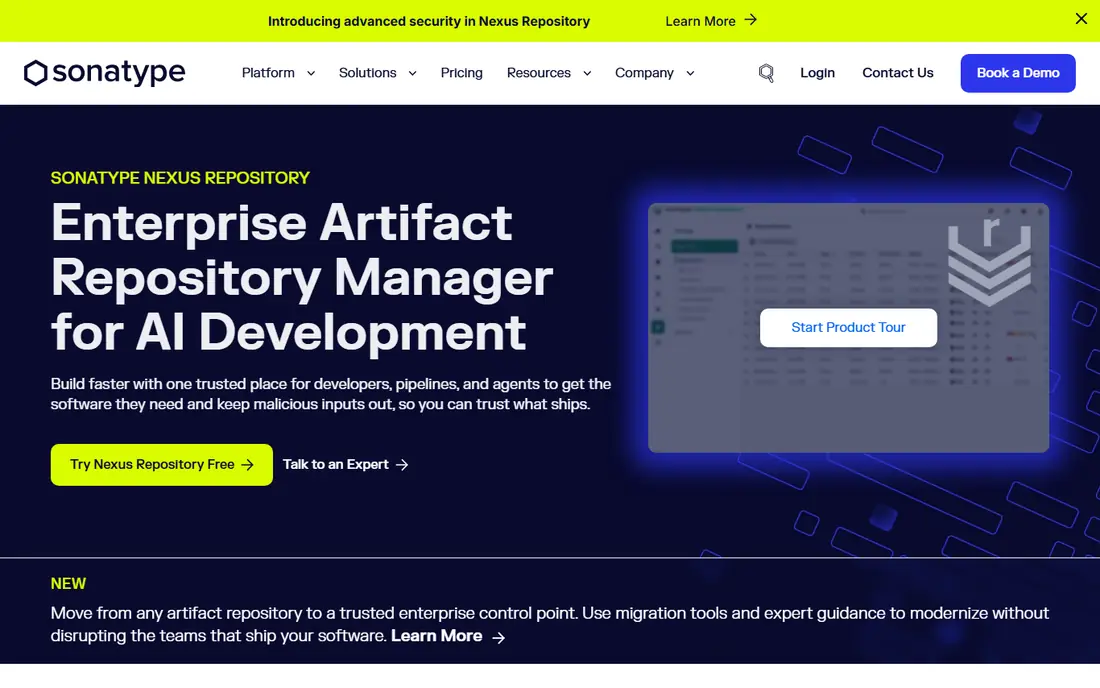
Sonatype Nexus Repository is the default answer for teams that want Artifactory-style control without a large bill. The community edition supports many formats, including Maven, npm, Docker, PyPI, and NuGet, and it can proxy public registries, host private packages, and group them into one endpoint for builds. That covers most small and mid-size teams, especially Java-focused shops that already know Nexus.
The cost is operational rather than monetary. You need to install, back up, upgrade, and secure the server, and that work grows with uptime and security requirements. Paid Nexus Repository Pro adds features such as advanced staging and support, but the free edition alone handles the core repository job well. If you have someone comfortable running infrastructure, Nexus is hard to beat on value.
- Broad format support
- Free community edition
- Mature proxy, hosted, and group repository features
- You run and update the server yourself
- Enterprise features require a paid plan
- Interface feels dated to some teams
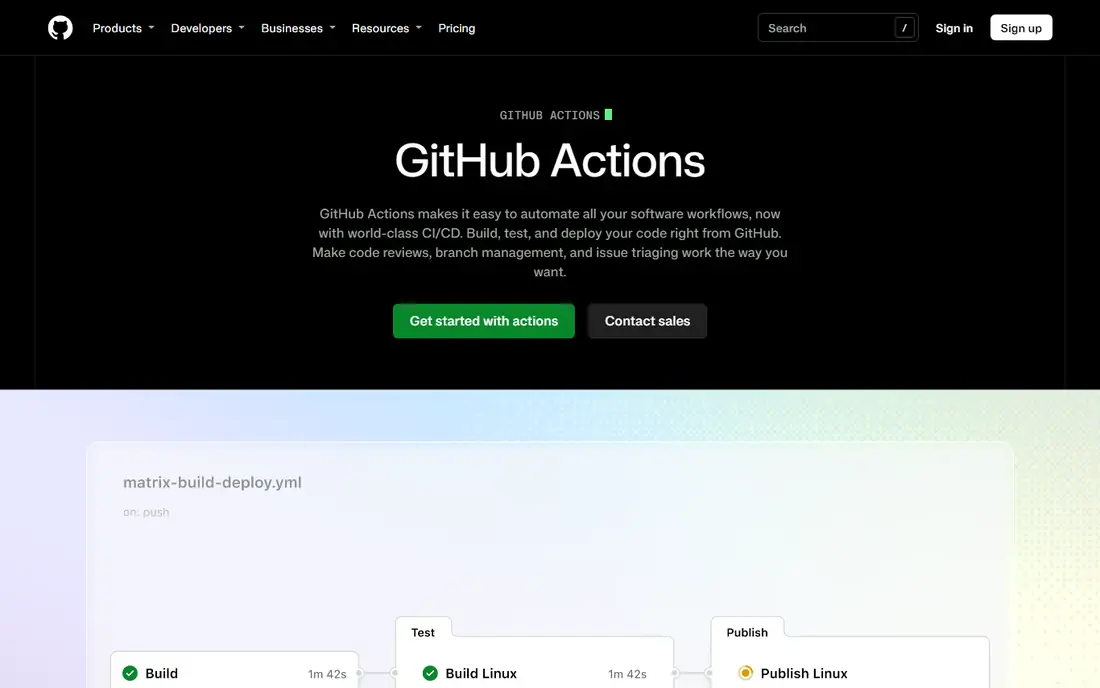
GitHub Packages is the natural choice if your code, issues, and pipelines already live on GitHub. Packages sit next to the repository that produced them, and GitHub Actions can publish and consume them with minimal setup. Permissions follow the repository model your team already knows, which reduces the access-control work that comes with a separate registry.
The limit is scope. GitHub Packages is excellent for teams centered on GitHub, but it is not designed as a neutral, standalone registry for every tool in a mixed environment. Free allowances cover many small projects, while larger teams need to watch storage and data transfer. If GitHub is already your platform, start here before buying a separate product.
- Tight fit with GitHub Actions and repositories
- Familiar permissions model
- Supports npm, Maven, Docker, and more
- Less of a standalone universal registry than Artifactory
- Storage and transfer limits apply
- Best value inside GitHub

GitLab Package Registry follows the same logic as GitHub Packages, but for GitLab users. It is built into the platform, so a pipeline can build, test, and publish a package without leaving GitLab. Teams that use GitLab for source control and CI get a coherent workflow, with packages, containers, and releases in one place.
The trade-off is that GitLab is a broad DevOps platform, not a registry specialist. Some advanced repository features depend on your GitLab tier, and teams with very large artifacts need to plan storage and cleanup policies. For a team already paying for GitLab, the registry is a practical Artifactory replacement that avoids another vendor and another login.
- Built into GitLab alongside code and CI
- Supports many package formats
- Self-managed option available
- Registry features vary by GitLab tier
- Less focused than a dedicated registry product
- Large binary storage needs planning
Cloudsmith positions itself as a cloud-native, fully managed alternative to running Artifactory yourself. It supports many package formats, offers global distribution, and includes security scanning and access controls that matter for supply chain work. Teams that want to stop patching servers and managing storage tend to like this model, because Cloudsmith handles uptime, scaling, and backups.
The main questions are price and fit. Cloudsmith pricing is tiered and should be confirmed on its site for your storage and bandwidth needs. It is also a SaaS product first, so teams with strict on-premises requirements should check deployment options carefully. For distributed teams that want a modern registry without infrastructure work, Cloudsmith is one of the strongest managed options.
- Fully managed cloud service
- Broad format support
- Built-in vulnerability scanning on many plans
- Pricing requires checking current plans
- Cloud-only model may not suit air-gapped teams
- Migration takes planning for large histories
CloudRepo takes a narrower approach than Artifactory, focusing on managed private repositories for Maven and Python packages. That focus keeps setup simple: you create a repository, point your build tool at it, and CloudRepo handles hosting and availability. Unlimited users on its plans also help larger teams that would otherwise pay per seat elsewhere.
The limit is format breadth. If your team also needs Docker, npm, NuGet, and many other formats in one place, CloudRepo may not cover everything. Its entry price is also above free self-hosted options, though it includes support and managed hosting. For Java or Python teams that want a simple, supported registry, CloudRepo is a clear and honest fit.
- Simple managed hosting for Maven and Python
- Unlimited users on plans
- Clear storage and transfer allowances
- Narrower format range than universal registries
- Entry price is higher than free self-hosted tools
- Less suited to Docker-heavy teams
Azure Artifacts is the registry inside Azure DevOps, and it makes the most sense for teams already building in that ecosystem. Pipelines can publish and restore packages as part of the same workflow, and feeds can share packages across projects with access controls. Support for common formats covers most .NET, Java, JavaScript, and Python teams.
Outside Azure DevOps, Azure Artifacts is less attractive as a standalone choice, because its strength is integration rather than universal registry depth. Storage is also a cost to watch, since large artifacts accumulate over time. If your team already uses Azure DevOps, Azure Artifacts is a low-friction Artifactory alternative that avoids a separate platform.
- Integrated with Azure DevOps pipelines
- Supports npm, Maven, NuGet, Python, and Universal Packages
- Familiar Microsoft billing
- Best value inside Azure DevOps
- Standalone use is less compelling
- Storage costs scale with artifacts
Google Artifact Registry is Google Cloud's managed repository for containers and language packages. It integrates with Cloud Build, Google Kubernetes Engine, and other Google Cloud services, which makes it a natural fit for teams deploying on Google Cloud. Regional repositories and IAM controls help teams manage access and data location.
The drawback is the same as other cloud registries: costs depend on storage and network use, and the product makes most sense inside its own cloud. Teams on AWS or Azure may prefer a neutral registry instead. For Google Cloud teams, Artifact Registry is a clean, managed replacement that removes the need to run a separate registry server.
- Integrated with Google Cloud build and deploy tools
- Supports Docker, Maven, npm, Python, and more
- Regional storage options
- Pricing is usage-based and needs monitoring
- Best fit inside Google Cloud
- Setup assumes cloud familiarity
AWS CodeArtifact is Amazon's managed artifact repository, designed for teams building on AWS. It supports common formats such as npm, PyPI, Maven, and NuGet, and it connects to AWS build tools and IAM permissions. The pay-as-you-go model means small teams can start without a large fixed fee, which suits variable build volumes.
The limits are format breadth and cloud fit. CodeArtifact does not aim to match Artifactory's full universal format list, and teams outside AWS may find a neutral registry simpler. Request and storage charges also need monitoring on busy pipelines. For AWS-centered teams, CodeArtifact is a practical, low-maintenance alternative.
- Managed service inside AWS
- Integrates with CodeBuild and other AWS tools
- Pay-as-you-go model
- Format support is narrower than universal registries
- Pricing depends on storage and requests
- Less ideal outside AWS
ProGet, from Inedo, is a self-hosted package manager that appeals to Windows and .NET teams, while also supporting npm, Docker, Maven, Python, and other feeds. The free edition covers many small-team needs, and paid editions add features such as high availability, replication, and support. Its feed-based model is easy to understand: each feed holds one kind of package, with its own retention and access rules.
As with Nexus, you are responsible for running the server, backups, and upgrades. That is a fair trade for control and low license cost, but not for teams that want zero infrastructure work. If your stack leans toward .NET and Windows, or you want a free self-hosted option beyond Nexus, ProGet deserves a trial.
- Free edition for smaller teams
- Strong NuGet and npm support
- Docker and other feeds available
- Self-hosted control
- Self-hosting requires maintenance
- Enterprise features are paid
- Less well known than Nexus or cloud registries
How we picked these
We compared official format lists, pricing pages, and deployment options for repositories that are live in October 2026. We favored tools that cover common formats, that state their pricing model clearly, and that represent different approaches: free self-hosted, platform-bundled, and fully managed cloud. We left out tools that are primarily CI platforms or log platforms, even when they appear in comparison lists, because they do not serve as a direct artifact repository replacement.
What to check before you switch
Start with formats. List every package type your builds use today, including containers, and confirm that each one is supported on your chosen tool. A registry that covers Maven but not Docker will force a second tool, which defeats the purpose of switching. Next, check proxy and caching behavior, because builds that pull from public registries need reliable caching and offline fallback.
Then model total cost, not just the headline price. Self-hosted tools look free until you count server time, backups, and maintenance. Cloud tools look simple until storage, transfer, and request charges add up. Finally, test migration on a small project first. Move one repository, run its pipeline, and confirm that versioning, access controls, and cleanup policies behave as expected before moving your main artifacts.
Frequently asked questions
What is the best free Artifactory alternative?
Sonatype Nexus Repository Community Edition is the best free self-hosted option for most teams, because it supports many formats at no license cost. GitHub Packages and GitLab Package Registry also offer free tiers, and they are better picks if you already use those platforms.
Is GitHub Packages a full Artifactory replacement?
GitHub Packages works well as a replacement for teams centered on GitHub, especially for npm, Maven, and container packages tied to repositories. Teams that need a neutral, standalone universal registry with deep enterprise controls may prefer Nexus, Cloudsmith, or a cloud registry instead.
Which Artifactory alternative is best for Docker images?
Sonatype Nexus, Cloudsmith, GitHub Packages, GitLab Package Registry, and Google Artifact Registry all support container images, but their retention, scanning, and distribution features differ. Check scanning, cleanup policies, and pull performance for your registry size before choosing.
Do I need a managed registry or a self-hosted one?
Choose managed if you want to avoid server maintenance and you accept usage-based pricing. Choose self-hosted if you need full control, air-gapped deployment, or predictable license costs and you have staff to run the service.
What is the difference between JFrog Artifactory and Azure Artifacts?
Artifactory is a standalone universal repository that works across clouds and tools, while Azure Artifacts is a registry inside Azure DevOps. Azure Artifacts is simpler for Azure DevOps teams, while Artifactory offers broader format and deployment options for mixed environments.
How hard is it to migrate from Artifactory?
Migration difficulty depends on repository size, format mix, and pipeline references. Small projects can move in days by republishing packages and updating build configuration, while large histories with many artifacts need a staged plan, cleanup rules, and testing on non-production pipelines first.
Sources
- https://www.sonatype.com/products/nexus-repository
- https://github.com/features/packages
- https://about.gitlab.com
- https://cloudsmith.com
- https://www.cloudrepo.io
- https://azure.microsoft.com/en-us/products/devops/artifacts
- https://cloud.google.com/artifact-registry
- https://aws.amazon.com/codeartifact/
- https://inedo.com/proget
See where you really rank - block by block
ProMapRanker scans Google Maps across a grid of your service area. Simple monthly plans from $19, white-label on every plan.
Start freeKeep reading
 zoro.to alternatives
Best Zoro.to Alternatives in 2026
We compare the best zoro.to alternatives in 2026, listing only legal licensed anime streaming services, from Crunchyroll to free options for fans today.
Read → zip alternatives
Best Zip Alternatives in 2026
We compare the best zip alternatives for buy now, pay later in 2026, covering pay-in-4 plans, fees, spending limits, and credit reporting options today.
Read → yesware alternatives
Best Yesware Alternatives in 2026
Compare the best yesware alternatives for sales email tracking, templates, and sequences, with current pricing and honest tradeoffs for small sales teams.
Read →