 ProMapRanker
Best Appium Alternatives in 2026

Key takeaways
- Maestro, Detox, Espresso and XCUITest replace Appium best when you want a framework, not a device cloud, with less setup and less flaky timing.
- BrowserStack, Sauce Labs and TestMu AI solve device cover, not authoring, and they pair well with a framework from this list.
- Katalon suits mixed-skill teams that want low-code recording plus scripting in one tool, while native frameworks suit single-platform teams.
- Free frameworks cost nothing in licence fees, but budget engineer time for setup, maintenance and device access.
Quick comparison
| Pick | Great for | Pricing starts at | Free tier | |
|---|---|---|---|---|
 Maestro | Simple YAML flows for both platforms | Free | Yes | Visit |
 Detox | Stable React Native end-to-end tests | Free | Yes | Visit |
 Espresso | Fast native Android tests | Free | Yes | Visit |
 XCUITest | Native iOS tests in Xcode | Free | Yes | Visit |
 Katalon Studio | Low-code plus scripted mobile tests | Free | Yes | Visit |
 BrowserStack App Automate | Real device execution at scale | $199 per month | Free trial | Visit |
 Sauce Labs | Real device cloud for enterprises | $199 per month | Free trial | Visit |
 TestMu AI | Lower cost device cloud | $15 per month | Free trial | Visit |
The best Appium alternatives
Appium is a cross-platform mobile automation framework, but its setup, locator maintenance and timing flakiness push many teams to look elsewhere. These eight options split into two groups: frameworks that replace how tests are written, and device clouds that replace where tests run.
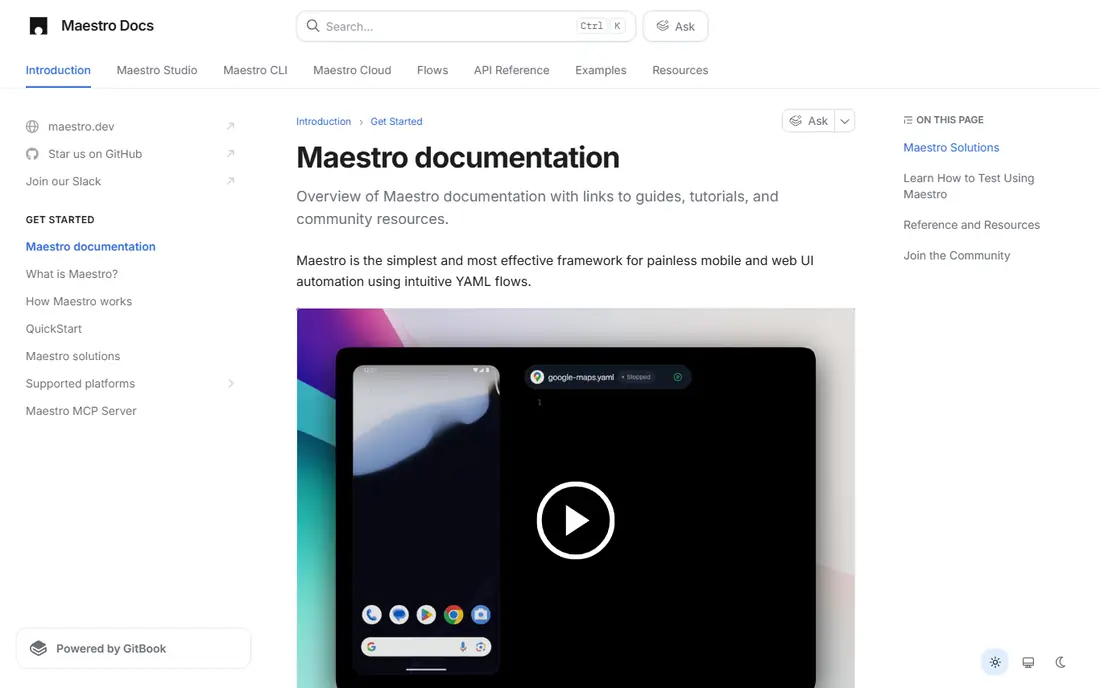
Maestro is our pick for teams that want to move fast without writing a full test framework. Tests are written in YAML flows, which manual testers and developers can read and edit, and built-in waits reduce the timing flakiness that plagues many Appium suites. Setup takes minutes for a local run, compared with the longer driver and capability setup Appium often needs.
The limit is depth: Maestro suits happy-path and smoke flows better than deep, device-specific edge cases, and real iPhone execution usually needs a device cloud. For a small team that needs both platforms covered quickly, that trade is worth it. For complex native behaviour, pair Maestro with a native framework for that platform.
- YAML authoring with little setup
- Built-in waits
- Runs on iOS and Android
- IOS real device cover needs a cloud
- Less deep control than native code
- Paid cloud for scale

Detox is built for React Native apps, and that focus is its strength. Its gray-box synchronisation waits for the app to settle before acting, which cuts the timing failures that make Appium suites flaky on React Native. Tests are written in JavaScript or TypeScript, so a React Native team can reuse language skills and tooling from app development.
It does not help a native Swift or Kotlin app, and iOS runs lean toward simulators rather than real devices. If your app is React Native, Detox is often the most stable replacement for Appium. If your app is native, Espresso or XCUITest will fit better.
- Gray-box synchronisation
- Low flakiness for React Native
- JavaScript authoring
- React Native only
- Simulator focus on iOS
- Needs app instrumentation
Espresso is Google's native framework for Android user interface testing, and it remains the fastest option for Android-only teams. Because it runs inside the app process and synchronises with the UI thread, tests are less flaky and quicker than black-box drivers that poll from outside. Integration with Android Studio also keeps setup close to normal development work.
The obvious limit is platform: Espresso covers Android only, so an iOS suite needs XCUITest or a cross-platform tool alongside it. That split suits teams with separate Android and iOS engineers. For a shared cross-platform suite, Maestro or a device cloud paired with a framework may suit better.
- Fast and stable on Android
- Tight Android Studio integration
- Synchronised UI thread
- Android only
- Java or Kotlin required
- No iOS cover
XCUITest is Apple's native UI testing framework, built into Xcode, and it is the most stable choice for iOS-only teams. It benefits from first-party support when iOS versions change, avoiding the driver rebuild delays that can follow an Appium upgrade after a new iOS release. Tests are written in Swift or Objective-C, which fits an iOS team already working in Xcode.
It covers iOS only, and test code can be verbose compared with YAML or plain-English tools. A team with both platforms will need Espresso for Android or a cross-platform layer on top. For an iOS-first product, XCUITest gives stability that is hard to match with a cross-platform driver.
- First-party iOS stability
- Included with Xcode
- Swift authoring
- IOS only
- Verbose test code
- No Android cover
Katalon Studio suits mixed-skill teams that need web, mobile and API testing in one place. Testers can record flows or write scripts in Groovy or Java, and the tool covers Android and iOS alongside web and API tests. That breadth helps a QA team that owns more than mobile alone and wants one reporting view.
Buyers should know that Katalon mobile execution can still rely on Appium underneath, so it does not fully escape Appium's driver issues. It does, however, reduce authoring effort and add management features around those runs. For a team that wants low-code entry plus scripting depth, Katalon is a practical middle path.
- Recorder plus scripting
- Web, mobile and API in one tool
- Free tier to start
- Mobile runs can still use Appium under the hood
- Paid plans for teams
- Heavier than Maestro
BrowserStack App Automate is a device cloud, not a new way to write tests. It runs Appium, Espresso, XCUITest, Maestro, Detox and Flutter tests on a large fleet of real iOS and Android devices, so a team stops maintaining its own device lab. That device cover is its value, especially for hardware features such as biometrics, camera and SIM-based flows.
It does not fix locator maintenance or flaky authoring, since the tests themselves stay the same. Pricing is per parallel, so a long suite needs enough parallels to finish inside a CI window, and that cost adds up. Use BrowserStack for execution scale, paired with a framework from this list for authoring.
- Very large real device fleet
- Many frameworks supported
- Unlimited minutes on parallels
- Does not fix test authoring
- Per-parallel pricing
- Costs rise with parallel count
Sauce Labs offers real and virtual device clouds for mobile and web testing, with support for Appium, Espresso and XCUITest. Enterprise teams value its device access, reporting and integration with CI systems, plus live testing alongside automation. For a large organisation that needs governed device access and support, Sauce Labs is a proven choice.
Like BrowserStack, it replaces hardware, not test design, so flaky Appium tests stay flaky when moved to the cloud. Pricing is per parallel for real device automation, and enterprise terms can be less transparent than a published starter price. Shortlist Sauce Labs when device governance and scale matter most, and fix authoring with a native or YAML framework.
- Real and virtual device cover
- Strong enterprise features
- Wide framework support
- Enterprise pricing can be opaque
- Per-parallel cost
- Authoring still up to you
TestMu AI, formerly LambdaTest, offers a lower cost route into real and virtual device testing. Live testing starts at a low monthly price, and automation on real devices is available at a higher tier, which still undercuts some enterprise clouds for small teams. It supports Appium, Selenium and other common frameworks, so existing suites can move without a rewrite.
The entry price covers live testing, not full automation, so budget the automation tier when comparing with BrowserStack or Sauce Labs. Device availability and advanced features also vary by plan. For a small team that needs device cover on a budget, TestMu AI is a sensible starting cloud, with room to move up as parallel needs grow.
- Lower entry price
- Large device set
- Appium and Selenium support
- Automation pricing is higher than entry live price
- Feature depth varies by plan
- Check device availability
How we picked these
We compared official documentation and public 2026 comparisons for mobile testing frameworks and device clouds that cover iOS, Android or both. We kept only tools that are live in October 2026 and that address a real Appium pain: setup time, flakiness, platform fit or device cover. Prices are starting prices from vendor summaries or recent comparisons, and we wrote Free for open-source frameworks and Free trial where a cloud offers trial minutes. We did not claim hands-on testing; our view comes from comparing public docs, pricing and platform support.
What to check before you switch
First, separate authoring pain from device pain. If tests are flaky, a new framework such as Maestro, Detox or a native tool may help more than a new cloud. If tests pass locally but fail on device variety, a cloud such as BrowserStack, Sauce Labs or TestMu AI is the right fix. Many teams need both, so plan the framework change and the cloud change as separate steps.
Run one real flow in the new tool before migrating a suite: a login, a main user journey and a failure case. That test shows setup time, wait behaviour and reporting quality. Also check CI integration, parallel pricing and iOS version support, since those three factors decide whether a promising tool survives in daily use.
Frequently asked questions
What is the best Appium alternative for beginners?
Maestro is the easiest start, with YAML flows and little setup for both iOS and Android. Katalon also suits beginners who want a recorder, though it is heavier than Maestro for a simple smoke suite.
What is the best Appium alternative for React Native?
Detox is the strongest React Native pick, with gray-box synchronisation that cuts timing flakiness. It covers iOS and Android through React Native, but it does not help native Swift or Kotlin apps.
Do BrowserStack and Sauce Labs replace Appium?
No, they are device clouds that run your existing tests on hosted devices. They replace a device lab, not test authoring, so pair them with Maestro, Detox, Espresso or XCUITest for the best result.
Is there a free Appium alternative?
Yes. Maestro, Detox, Espresso and XCUITest are free frameworks, and Katalon offers a free tier. Device clouds charge for hosted devices, though trials and low entry live plans can keep early costs down.
Should I use Espresso, XCUITest or a cross-platform tool?
Use Espresso for Android only and XCUITest for iOS only when stability matters most. Use Maestro or Detox for a shared suite when authoring speed and cross-platform cover matter more than native depth.
Sources
- https://maestro.mobile.dev
- https://wix.github.io
- https://developer.android.com
- https://developer.apple.com
- https://katalon.com
- https://www.browserstack.com
- https://saucelabs.com
- https://www.testmu.ai
- https://www.drizz.dev/post/best-appium-alternatives-mobile-testing
- https://www.drizz.dev/post/best-mobile-test-automation-tools
See where you really rank - block by block
ProMapRanker scans Google Maps across a grid of your service area. Simple monthly plans from $19, white-label on every plan.
Start freeKeep reading
 zoro.to alternatives
Best Zoro.to Alternatives in 2026
We compare the best zoro.to alternatives in 2026, listing only legal licensed anime streaming services, from Crunchyroll to free options for fans today.
Read → zip alternatives
Best Zip Alternatives in 2026
We compare the best zip alternatives for buy now, pay later in 2026, covering pay-in-4 plans, fees, spending limits, and credit reporting options today.
Read → yesware alternatives
Best Yesware Alternatives in 2026
Compare the best yesware alternatives for sales email tracking, templates, and sequences, with current pricing and honest tradeoffs for small sales teams.
Read →