 ProMapRanker
Anthropic API Alternatives in 2026

Direct answer
For enterprise search and retrieval, Cohere is where this list starts. Google Gemini API is the stronger choice for long context and multimodal work, while OpenAI API suits broadest model range. All 6 tools are compared below on price, free plan and limits.
Key takeaways
- Cohere takes the first slot, best suited to enterprise search and retrieval.
- One limit worth knowing about Groq: model catalog is narrower than Together AI or Fireworks.
- Mistral AI suits open-weight models you control.
- Pricing across the list, from Cohere to Mistral AI, is by quote only.
- Only 2 of the 6 tools have a free plan (Google Gemini API, Groq), so check the caps.
Quick comparison
| Pick | Great for | Pricing starts at | Free tier | |
|---|---|---|---|---|
 Cohere | Enterprise search and retrieval | See website | Not stated | Visit |
 Google Gemini API | Long context and multimodal work | See website | Yes | Visit |
 OpenAI API | Broadest model range | See website | No | Visit |
 Groq | Fastest inference for agents | See website | Yes | Visit |
 Together AI | Running open models at scale | See website | Not stated | Visit |
 Mistral AI | Open-weight models you control | See website | Not stated | Visit |
The full Anthropic API list
If you are comparing Anthropic API, this page covers 6 tools in one place: what each is best for, what it costs to start, whether it has a free plan, and the main limit to know about.
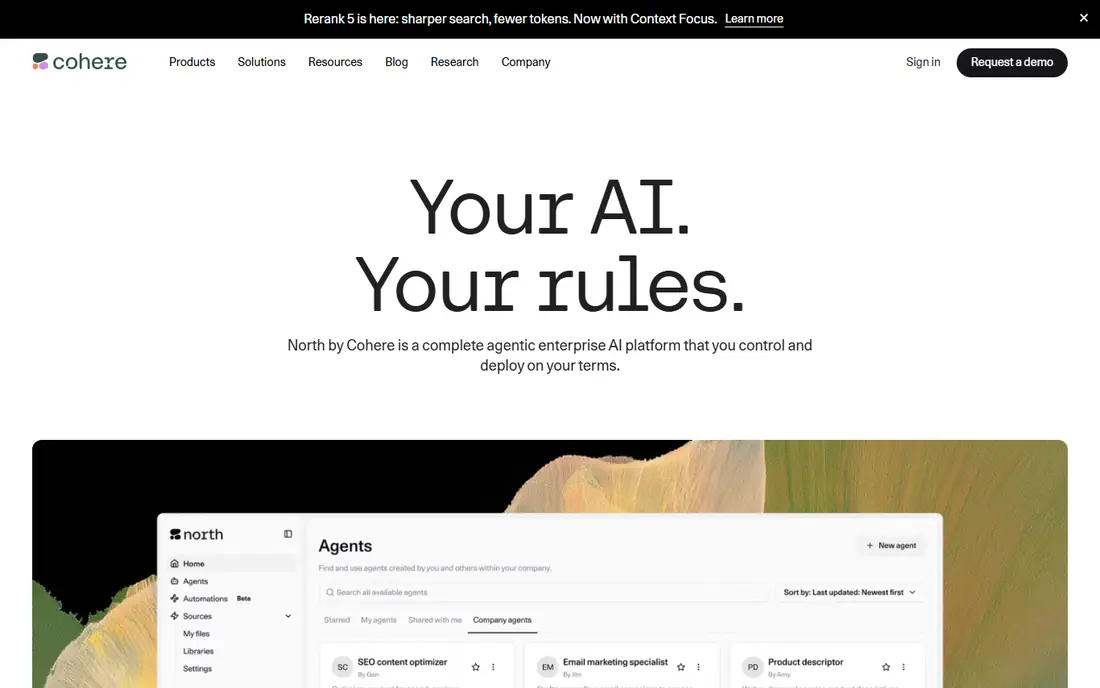
Cohere works best for enterprise search and retrieval. Cohere has shifted its homepage toward its North system, described as a complete agentic enterprise AI product you control and deploy on your terms. Beyond that, if your Claude workload is largely retrieval-augmented generation over internal knowledge, Cohere may beat a general chat API on accuracy and cost.
Where it falls short: Chat models are less famous than Claude or GPT, so fewer public benchmarks.
Beyond that, underneath that sits the capability that made Cohere known: retrieval, reranking, and embeddings tuned for enterprise documents. From a buyer's view, bigger deployments also tend to involve sales conversations instead of pure self-serve signup, which slows evaluation for small teams. For everyday use, the main limit is visibility. Cohere's chat models get less public discussion than its retrieval stack, so benchmark them on your own documents before assuming parity. Cohere does not show a starting price in this comparison, so check the vendor site for current pricing. Trial and free access: Not stated.
- Enterprise security and compliance focus
- Private deployment choices
- Pricing is sales-led for bigger deployments
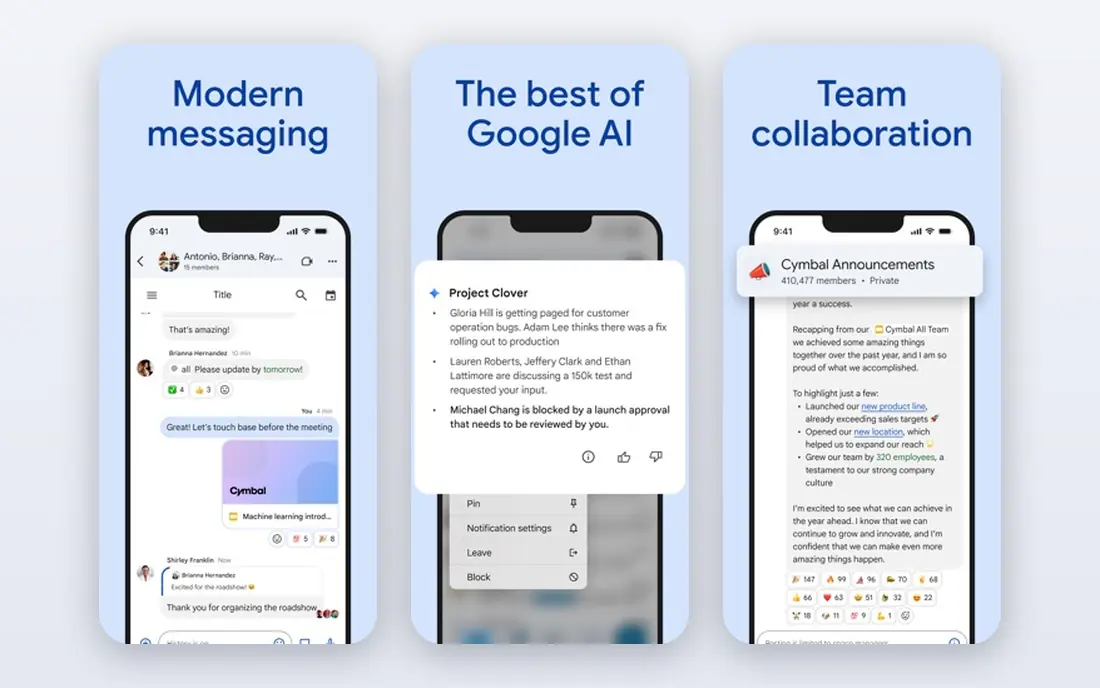
Google Gemini API is a good fit for long context and multimodal work. Google's developer site frames its offer plainly: integrate Google AI models with an API key, and build with Gemini, Imagen, and Veo from Google DeepMind. That breadth is the appeal.
In practice, watch the naming, though. Gemini model generations turn over rapidly, and the homepage already points to newer releases, so test your prompts against the exact model you plan to ship. More specifically, the free level in AI Studio makes prototyping cheap, which is a real advantage over APIs that charge from the first token. This comparison lists no price for Google Gemini API; ask the vendor. You can start on Google Gemini API without paying.
Watch-outs: Enterprise features push you toward Google Cloud, adding setup complexity. Highlights: Gemma open models for self-hosting.
- Veo models from one product
- API key access through Google AI Studio with a free level
- Model naming changes frequently, which complicates long-term code
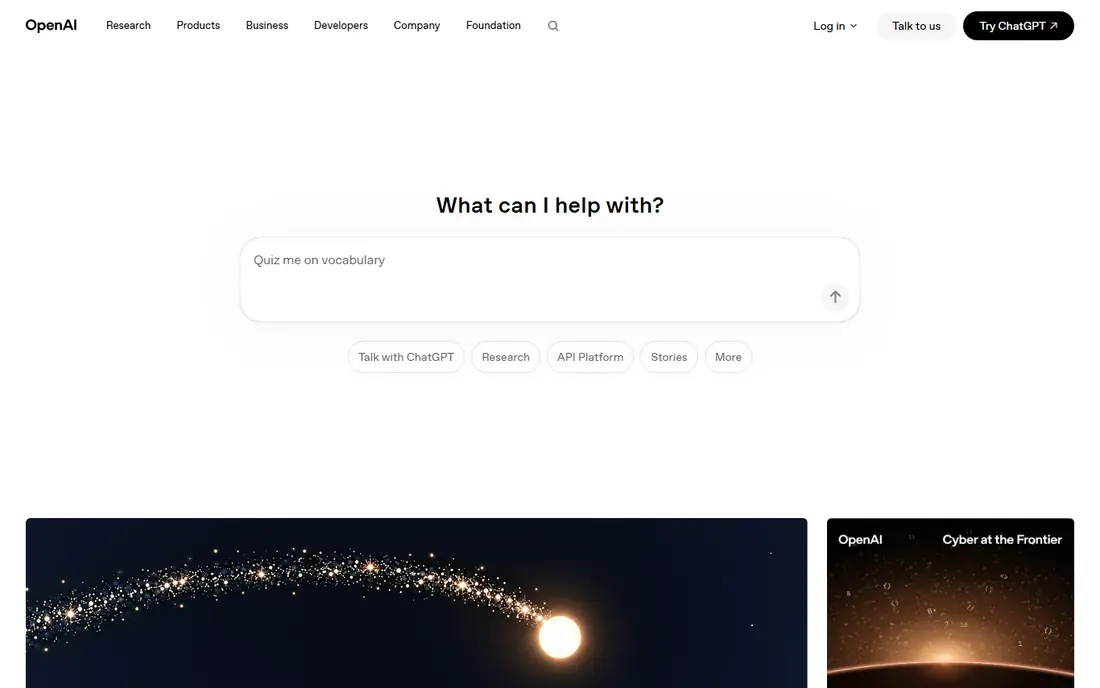
Think of OpenAI API for broadest model range. Its API spans chat, reasoning, image, audio, and embedding models, and its documentation and SDK support are the benchmark other vendors copy. From a buyer's view, OpenAI also provides you no open weights to self-host, so if independence from a single vendor matters, pair it with an open-weight provider instead of betting everything on one API.
The homepage now flags GPT-6.1 Terra, announced October 26, 2026, alongside the GPT-6 family, so model names move quick and your code should pin model versions instead of tracking marketing names. More specifically, flagship models are priced for performance, not thrift, and heavy workloads can surprise a budget. OpenAI API shows no starting price here, so confirm the cost on the vendor site. OpenAI API does not include a free plan.
Drawbacks to consider: API console page renders as an app, so plan details live behind sign-in.
- Frontier models plus capable tooling and documentation
- Huge community and external integrations
- Prices sit at the higher end for flagship models
Groq is aimed squarely at fastest inference for agents. Groq's homepage is blunt: inference is the bottleneck, and Groq was built to remove it.
Its custom LPU hardware, now joined by LPX alongside NVIDIA GPUs, provides the low-latency responses that make agents and voice apps feel instant. More specifically, the catalog is the constraint. No starting price is listed for Groq here; confirm pricing on the vendor site. Groq offers a free plan.
Points against: Model catalog is narrower than Together AI or Fireworks.
- Purpose-built inference hardware for very low latency
- Free level for experimentation
- Capacity and rate limits can bite at sudden scale
Together AI targets running open models at scale. Together AI calls itself the AI native cloud, and its homepage backs that with a long model list spanning chat, image, video, and code, including recent open releases. Its pitch is the fastest way to run open-source models on demand, with serverless inference, batch processing up to 30 billion tokens per model, and dedicated deployments for steady workloads.
What to check first: Model quality varies across the catalog, so testing is mandatory.
That catalog is both the strength and the work. With dozens of models, quality and price vary widely, and the burden of picking and testing falls on you. On top of that, for teams that want one recommended model, a frontier provider is more straightforward. Pricing for Together AI is not stated here, so ask the vendor for current figures. Trial and free access: Not stated.
- Serverless inference with no infrastructure to handle
- Batch and dedicated choices for scale
- Support depth is thinner than the hyperscale providers
Mistral AI makes the most sense for open-weight models you control. If your team can run its own deployment or accepts Mistral's hosted API, the payoff is independence and predictable data handling.
Limits to weigh: Smaller ecosystem than OpenAI or Google.
Mistral AI does not show a starting price in this comparison, so check the vendor site for current pricing. As for free access: Not stated.
- Specialist models for coding and research
- Frontier open-weight models you can run on-prem or in your own cloud
- Fewer ready-made integrations and agent frameworks
Our selection method
Selection started from tools commonly considered for Anthropic API, then narrowed to 6 that have clear pricing information or a clear quote process. Where a price is missing, the vendor does not list one publicly or ties it to a quote. Always confirm before budgeting. Tools are placed by general fit for Anthropic API, with price clarity and free access as tie-breakers. A different team can reasonably rank them differently.
Pre-purchase checklist
- Request quotes from Cohere, Mistral AI and the others; the list shows no fixed prices.
- Check what the free option really includes: Google Gemini API and Groq offer a free plan, and usage caps differ.
- Read the limits listed for Cohere first: chat models are less famous than Claude or GPT, so fewer public benchmarks.
- Look at the help docs and support options for Mistral AI before you commit.
- Check whether the features you need in Groq sit on the entry plan or only on higher tiers.
Frequently asked questions
How are the tools for Anthropic API ordered?
The order follows typical fit for Anthropic API, with Cohere first and Mistral AI last, then price clarity and free access. It is editorial judgement, not a score, so another team could rank the tools differently.
Which Anthropic API alternative is cheapest?
DeepSeek typically leads on per-token price for reasoning models, with open-model hosts for example Together AI and Fireworks close behind for high-volume work.
Can I try these tools before paying?
Often, yes. Google Gemini API and Groq have a free plan. Use your own data and a real task during the test, and check what the free tier or trial limits before you rely on it.
Is Cohere the right pick for everyone comparing Anthropic API?
No single tool suits every team. Cohere comes first because it fits enterprise search and retrieval, while Google Gemini API suits long context and multimodal work and OpenAI API suits broadest model range. Match the tool to your own size, budget and workflow before deciding.
Do these APIs offer free levels?
Google AI Studio and Groq both offer free levels for experimentation, whereas most others are pay-as-you-go from the start. Free levels usually carry rate limits, so treat them as evaluation tools instead of production plans.
Do these tools publish their prices?
No. None of the tools, from Cohere to Mistral AI, shows a fixed starting price here, so budget time for quotes.
Sources
See where you really rank - block by block
ProMapRanker scans Google Maps across a grid of your service area. Simple monthly plans from $19, white-label on every plan.
Start freeKeep reading
 zscaler alternatives
Best Zscaler Alternatives in 2026
Looking for zscaler alternatives? We compare 9 SASE and zero trust platforms on architecture, data protection, pricing, and fit for your network and team.
Read → zapier alternatives free
Best Zapier Alternatives Free in 2026
Nine automation tools for zapier alternatives free in 2026, all with genuinely free tiers, plus free plan limits, starting prices and upgrade paths explained.
Read → which platform is best for online reputation
Which Platform Is Best for Online Reputation in 2026
Wondering which platform is best for online reputation? We compare 8 review, listing, and response tools for small and multi-location businesses and agencies.
Read →