 ProMapRanker
Best Alternatives to Stripe for Online Payments in 2026

Key takeaways
- PayPal is the easiest checkout swap for stores that want buyer trust at checkout.
- Square fits shops that sell both in person and online with one system.
- Paddle suits software sellers that want tax handling passed to a merchant of record.
- Helcim fits growing firms that want clearer interchange-plus pricing without a monthly fee.
Quick comparison
| Pick | Great for | Pricing starts at | Free tier | |
|---|---|---|---|---|
 PayPal | Trusted online checkout | 2.99% + $0.49 per sale | No | Visit |
 Square | Online and in-person selling | 2.9% + $0.30 online | No | Visit |
 Adyen | High-volume global selling | See website | No | Visit |
 Braintree | Custom checkout and subscriptions | 2.59% + $0.49 per sale | No | Visit |
 Authorize.net | Standalone gateway users | $25 per month + fees | No | Visit |
 Paddle | SaaS tax handling | 5% + $0.50 per sale | No | Visit |
 Helcim | Transparent pricing for growth | See website | No | Visit |
 Checkout.com | Global online payments | See website | No | Visit |
The best alternatives to stripe for online payments
This is general information only, not financial advice, and fees shown here can change with card type, volume, and region. We compared official pricing pages and public reviews for processors that accept online card payments in the US. Check the current pricing page for each provider before you sign up, since quoted rates are not guaranteed.
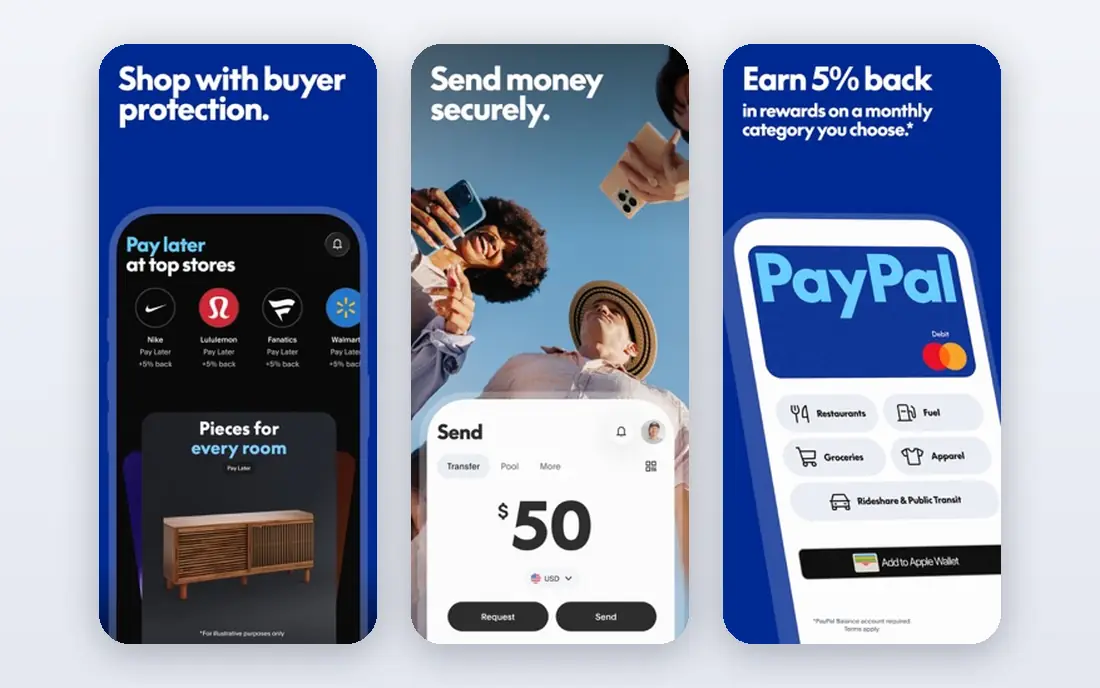
PayPal is the most familiar name at checkout for many buyers, and that familiarity can help conversion. Setup is quick, checkout buttons and hosted pages cover common store platforms, and buyers can pay with a balance, card, or Pay Later where offered. For one-time sales and global reach, it is a low-friction swap.
The catch is cost and flexibility. US online pricing is listed around 2.99% plus $0.49 per transaction, which is higher than some flat-rate rivals. Subscription and custom checkout logic can also feel less smooth than a developer-first platform. Review dispute and hold policies before you rely on it for high-ticket sales.
We like PayPal for stores where buyer trust matters most, especially smaller shops without a dev team. If subscriptions or custom billing drive your business, compare Braintree or Paddle first. For simple checkout, PayPal is hard to beat on recognition.
- Very high buyer recognition
- Fast setup
- Broad payment options including Pay Later
- Higher online fee than some rivals
- Subscription tools feel less flexible than Stripe

Square started in person, and that strength still shapes it. Shops can take cards at a counter, send invoices, and run an online store from one account, with inventory shared across channels. Online card pricing is listed around 2.9% plus $0.30, with in-person rates lower. That single-system view helps service firms and retailers a lot.
The honest catch is fit. Digital-first firms that need deep subscription logic or custom checkout may find Square's online tools simpler than they need. Global selling is also more limited than Adyen or Checkout.com. Check country coverage if you sell widely abroad.
Pick Square when you sell both offline and online and want one dashboard for both. If you only sell online, a processor built for that channel may offer more billing control. For hybrid shops, Square is our pick for most people.
- Strong point-of-sale hardware
- One system for store and web
- Next-day payouts in many cases
- Online tools suit physical shops more than digital-first firms
- Global reach is limited
Adyen serves large firms that sell across many countries and channels. It supports many local payment methods, routes payments across regions, and gives one platform for online, in-app, and in-person sales. Fraud and risk tools are built for high-volume teams with dedicated staff.
The catch is access. Adyen is sales-led, with interchange-plus style pricing that varies by market, and small stores may not meet its fit criteria. Setup also needs developer time. That makes it a poor first choice for a new shop, even though it is excellent at scale.
Pick Adyen when volume, global methods, and unified reporting justify an enterprise platform. Smaller firms should start with PayPal, Square, or Helcim and revisit Adyen after international sales grow. For large global sellers, it is a leading option.
- Broad global payment methods
- Unified online and in-person platform
- Strong fraud tools
- Enterprise focus
- Pricing needs sales talks
- Overkill for small stores
Braintree, owned by PayPal, gives developers more control than standard PayPal checkout. It supports cards, PayPal, Venmo, and digital wallets, plus subscriptions and marketplace payouts. Published US card pricing is listed around 2.59% plus $0.49 per transaction in recent comparisons, though you should confirm the current page.
The trade-off is effort. Braintree needs developer work for custom flows, and it does not handle sales tax for you. Teams without developers may prefer hosted checkout from PayPal or Square. Support responsiveness is also a common complaint in public reviews.
We like Braintree for SaaS and marketplace teams that want custom billing and already use PayPal's ecosystem. If you want tax handled for you, Paddle is a better fit. For flexible online payments with wallet options, Braintree earns a place on the shortlist.
- Flexible developer tools
- PayPal and Venmo options
- Subscription and marketplace support
- Needs developer time
- No built-in tax handling
- Support can feel slower than Stripe
Authorize.net is a veteran gateway that connects a website to a merchant account. It handles card payments, recurring billing, and fraud screening, and it works with many processors and banks. Firms that already have a merchant account often keep it because switching gateways adds work.
The catch is cost structure and feel. The gateway costs around $25 per month plus per-transaction fees in recent listings, and the dashboard feels older than newer rivals. New firms without a merchant account may find an all-in-one processor simpler and cheaper to start.
Pick Authorize.net when you already have a merchant account and want a stable, widely supported gateway. If you are starting fresh, PayPal or Square will get you selling faster. For established firms, its track record still counts.
- Long track record
- Works with many merchant accounts
- Fraud tools included
- Monthly gateway fee
- Interface feels dated
- Needs a separate merchant account in many cases
Paddle acts as merchant of record for software sellers, which means it handles sales tax, VAT, and compliance in many regions on your behalf. That removes a large admin burden for SaaS firms selling worldwide. Checkout, subscriptions, and billing sit in one system, with pricing listed around 5% plus $0.50 per sale.
The honest catch is the fee. At 5% plus $0.50, Paddle costs more per sale than a direct processor, though that fee includes tax handling that you would otherwise pay for separately. You also give up direct merchant status, which matters for some firms' reporting and customer relations.
We like Paddle for small and mid-size SaaS firms that sell globally and want tax off their plate. If you sell physical goods or only sell in the US, a direct processor may cost less. For global software, the tax trade is often worth it.
- Merchant of record handles global tax
- Subscription tools
- Checkout and billing together
- Higher per-sale fee
- You are not the direct merchant of record
Helcim uses interchange-plus pricing, which passes card network costs through plus a markup, instead of one flat rate for all cards. That can save money for firms with higher volume or many debit transactions, and there is no monthly fee on core plans. Invoicing, checkout, and customer tools are built in.
The catch is comparison. Interchange-plus bills vary by card mix, so a single headline rate does not tell the full story. Approval can also take longer than instant-setup rivals. Ask Helcim for an estimate based on your actual card mix before you switch.
Pick Helcim when you process steady volume and want pricing you can audit. Smaller shops with low volume may prefer the simplicity of flat-rate Square or PayPal. For growing firms, Helcim's transparency is a real advantage.
- Interchange-plus pricing with no monthly fee
- Built-in invoicing
- Good support reports
- Interchange-plus math is harder to compare
- Approval can take longer
Checkout.com serves online firms that need global payment methods, smart routing, and detailed performance data. It supports many currencies and local methods, and its reporting helps teams spot failed payments and routing issues. Larger online sellers use it to tune acceptance across regions.
The trade-off is access and effort. Pricing is custom, setup needs developer time, and small stores will find it more platform than they need. Public reviews also note that support quality varies by plan. That makes it a scale pick, not a starter pick.
We recommend Checkout.com for mid-size and large online firms with international sales and a dev team. Smaller US-only shops should start with PayPal, Square, or Helcim. For global online growth, Checkout.com belongs in the comparison.
- Broad global coverage
- Smart routing
- Detailed reporting
- Custom pricing
- Developer-led setup
- Overkill for small stores
How we picked these
We compared official pricing pages, feature pages, and public reviews for processors that accept online card payments in the US in October 2026. We kept only firms that are actively offered and that fit online selling, not just in-person hardware. We did not claim hands-on testing that did not happen, and we treated quoted fees as current listings, not guarantees.
How to choose the right payment processor
Start with how you sell. A store with one-time checkout needs trust and speed, while a subscription firm needs billing flexibility and dunning tools. A hybrid shop needs in-person and online in one system. Write down your average sale, refund rate, and card mix, since those shape the real fee more than any headline rate.
Next, test checkout as a buyer would. Check mobile flow, wallet options, failed payment handling, and payout timing. Ask about holds and dispute rules, since a freeze on funds hurts more than a small fee gap. Read the contract for monthly fees, early exit terms, and reserve rules before you sign.
Finally, separate tax from processing. Direct processors leave tax to you, while a merchant of record such as Paddle handles much of it for a higher fee. Pick the model that matches your sales regions and team size. If you sell software worldwide with a small team, tax handling may be worth more than a lower card rate.
Frequently asked questions
Is PayPal cheaper than Stripe?
It depends on card mix and volume, since PayPal lists around 2.99% plus $0.49 for US online sales, while Stripe lists around 2.9% plus $0.30 for domestic cards. PayPal can still win on conversion if buyers trust it more at checkout. Compare your effective rate, not just the headline fee.
Can I use Square only for online payments?
Yes, Square supports online checkout, invoices, and payment links without a physical store. Its strength is combining online and in-person sales, but online-only use is fully supported. Check its online rate and payout timing for your store type.
What is a merchant of record?
A merchant of record is the legal seller for a transaction, handling tax, compliance, and often refunds on your behalf. Paddle uses this model for software sellers. Direct processors leave you as the seller, so tax and compliance stay with your business.
Do I need a developer to switch processors?
Not always, since PayPal, Square, and Helcim offer hosted checkout and store plugins that need little code. Braintree, Adyen, and Checkout.com need more developer work for custom flows. Match the processor to your team's technical capacity.
How do I avoid account holds?
Keep clear refund and delivery policies, respond to disputes quickly, and avoid sudden spikes in high-ticket sales without warning your provider. Holds still happen, so keep a cash buffer and read the provider's risk rules before you rely on one processor alone.
Sources
See where you really rank - block by block
ProMapRanker scans Google Maps across a grid of your service area. Simple monthly plans from $19, white-label on every plan.
Start freeKeep reading
 zyte alternatives
Best Zyte Alternatives in 2026
These zyte alternatives cover managed scraping APIs, proxy networks and no code tools for lawful collection from your own or consented sources only in 2026.
Read → zerto alternatives
Best Zerto Alternatives in 2026
Compare the best zerto alternatives for disaster recovery and replication, with recovery targets, cloud options and honest trade-offs for teams in 2026.
Read → zerofox alternatives
Best ZeroFox Alternatives in 2026
We compared 9 zerofox alternatives for brand protection, phishing takedowns, dark web monitoring, and social impersonation, with clear coverage notes.
Read →