 ProMapRanker
Best Alternatives to SolidJS in 2026

Key takeaways
- React suits teams that need the largest hiring pool, library range and full stack options through Next.js.
- Vue and Svelte suit teams that want a gentler learning curve and less code for interactive pages.
- Angular suits large enterprise teams that want a complete, opinionated framework with TypeScript built in.
- Qwik and Astro suit performance focused sites where fast first load matters more than a large app framework.
- All nine frameworks here are free and open source, so the real cost is learning time, hiring and long term maintenance.
Quick comparison
| Pick | Great for | Pricing starts at | Free tier | |
|---|---|---|---|---|
 React | Largest ecosystem | Free | Yes | Visit |
 Vue | Approachable full framework | Free | Yes | Visit |
 Svelte | Lean compiled apps | Free | Yes | Visit |
 Angular | Large enterprise apps | Free | Yes | Visit |
 Qwik | Fast first load sites | Free | Yes | Visit |
 Astro | Content sites with little JavaScript | Free | Yes | Visit |
 Next.js | Full stack React apps | Free | Yes | Visit |
 Nuxt | Full stack Vue apps | Free | Yes | Visit |
 Lit | Web components | Free | Yes | Visit |
The best alternatives to SolidJS
SolidJS is known for fine grained reactivity without a virtual DOM, which gives fast updates with a small runtime. The frameworks below offer different paths to a similar goal: a larger ecosystem, a compiler based model, a full stack setup, or a content first approach. All are free and open source, and all are live in October 2026.
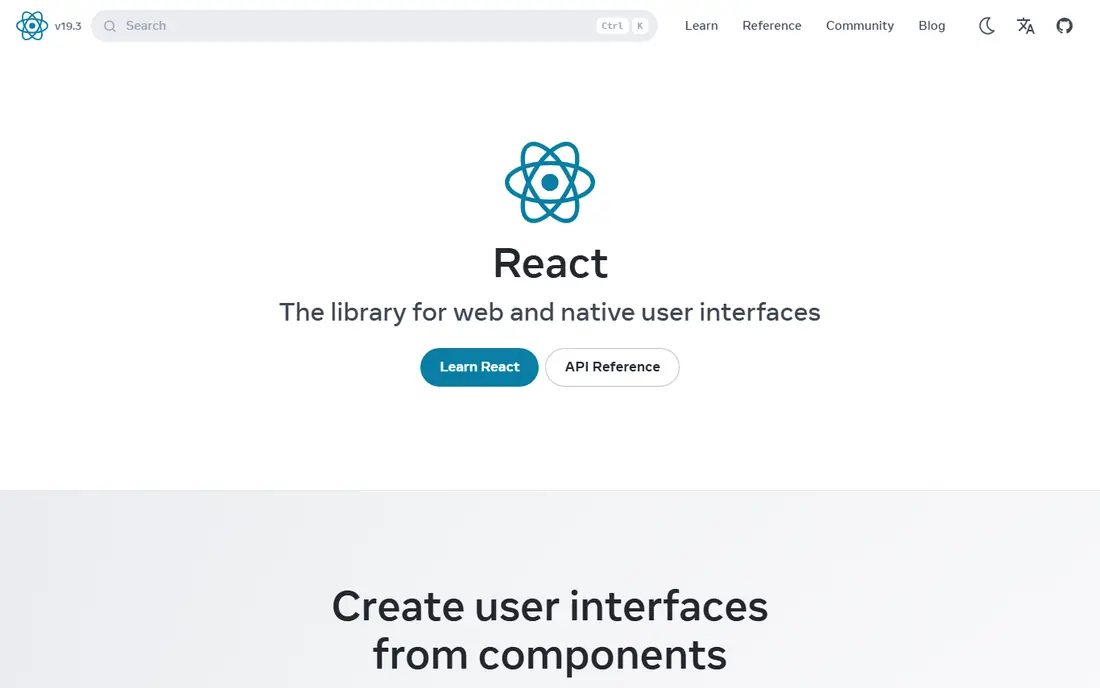
React is the default choice for many teams, and that popularity is practical, not just fashion. You can find libraries for almost any need, hire developers more easily, and reuse skills across web, mobile and desktop projects. React 19 also brings compiler help that reduces manual memo work, which closes part of the performance gap with SolidJS for many apps.
The trade-off is choice. React is a UI library, not a full framework, so you must pick routing, data fetching, forms and state tools yourself. That freedom helps large teams and slows small teams that want defaults. If hiring, ecosystem and long term support matter most, React is the safest alternative here, even if a simple page ships with more JavaScript than SolidJS would.
- Largest library and hiring pool
- Flexible for apps of many sizes
- Strong full stack path through Next.js
- More architecture choices to make
- Larger runtime than SolidJS or Svelte for simple pages
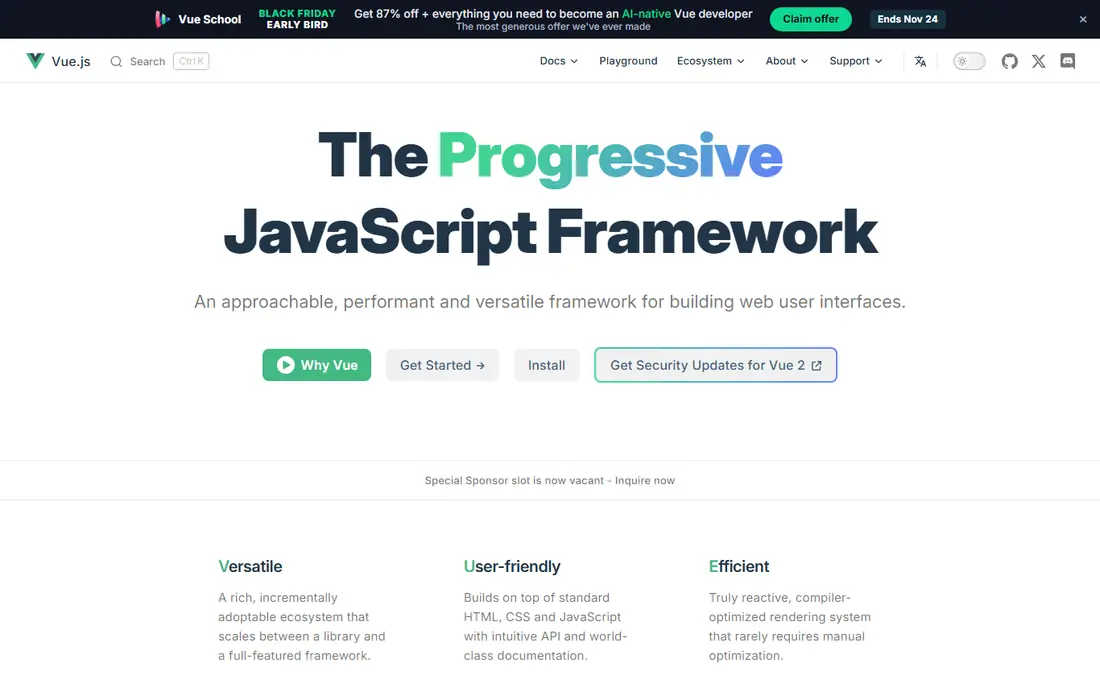
Vue sits between React and Svelte in feel. It offers templates that many developers find easy to read, a component model that scales from a small widget to a full app, and docs that are widely praised for clarity. Teams can add Vue to part of a page or build a whole product with it, which makes migration less risky than a full rewrite.
Vue does not match React for hiring depth or library count in every market, though its ecosystem is large and mature. New developers also face two styles, the Options API and the Composition API, and need to learn which one their team uses. If you want SolidJS style reactivity with a larger community and a gentler start, Vue is a strong middle path.
- Clear docs and gentle learning curve
- Flexible adoption from a widget to a full app
- Good single file component model
- Smaller ecosystem than React in some markets
- Choices between options and composition styles can confuse beginners
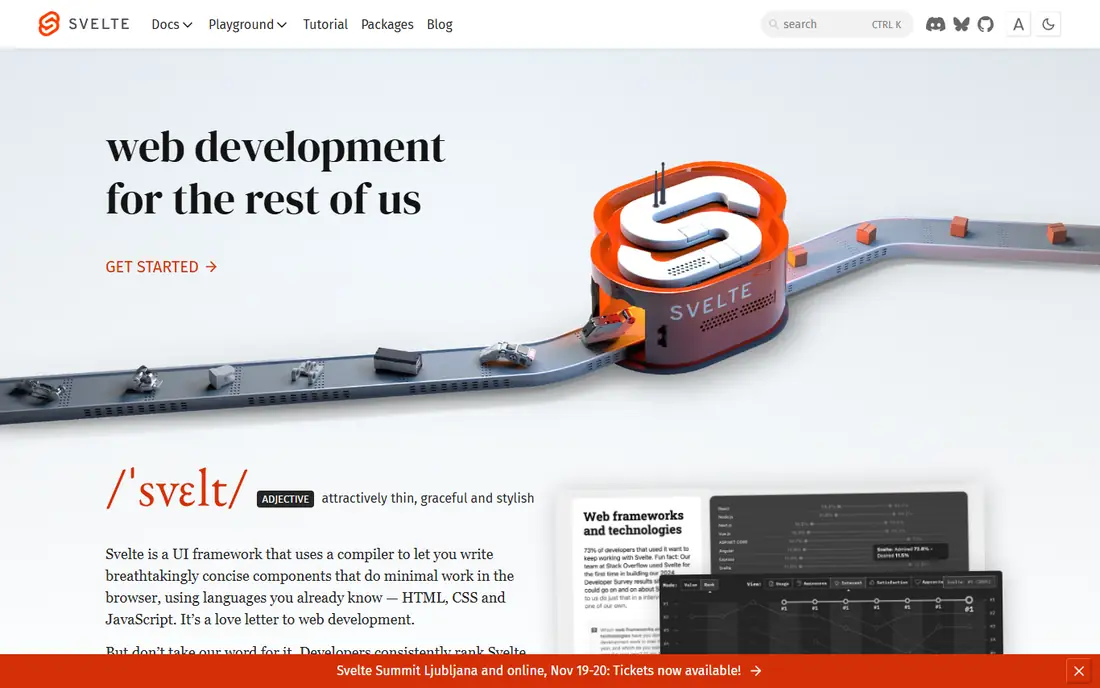
Svelte is the closest in spirit to SolidJS among the larger frameworks, since both avoid a virtual DOM and update only what changes. Svelte does this at compile time, turning components into efficient imperative code and shipping little runtime. The result is small bundles and code that reads close to plain HTML, CSS and JavaScript.
The main limit is ecosystem size. You will find fewer ready made libraries and fewer developers with Svelte experience than with React, though SvelteKit covers routing, server rendering and full stack needs well. If you liked SolidJS for performance and simplicity, and you want a larger community than SolidJS, Svelte is the most direct alternative.
- Compiler removes much runtime code
- Concise components with less boilerplate
- Svelte 5 runes give clear reactivity
- Smaller ecosystem than React or Vue
- Svelte 5 changes require learning for older Svelte developers
Angular suits large teams that want one framework to decide most architecture questions. Routing, forms, HTTP, dependency injection and testing tools are built in, and TypeScript is central rather than optional. That consistency helps when many developers work on one codebase for years, and when onboarding needs clear patterns.
For a small site or a solo project, Angular can feel heavy, and its learning curve is steeper than Vue or Svelte. It also commits you to its way of building apps more than React or SolidJS do. If your team is large, your app is complex, and you value structure over minimalism, Angular is a proven alternative.
- Complete framework with routing, forms and HTTP built in
- TypeScript first design
- Long term support for large teams
- Steeper learning curve
- More framework commitment than a library
Qwik takes a different approach to speed. Instead of hydrating a whole app on load, it ships HTML and resumes interactivity only when a user interacts with a part of the page. That can give very fast first loads for public sites, stores and marketing pages where many visitors never use every feature.
The model is newer and less familiar than React or Vue, and the ecosystem is smaller. Developers need to learn how resumability affects state, side effects and third party code. If your main problem is time to interactive on mobile or on slow connections, Qwik deserves a prototype. If you need a large library range today, React or Vue will be easier.
- Resumable model ships very little JavaScript at first
- Good for public sites judged on load speed
- JSX style will feel familiar to React developers
- Smaller ecosystem and community
- Resumability model needs learning and care with state
Astro is the best pick in this list for content heavy sites. It renders pages to HTML by default and only loads JavaScript for interactive islands you mark, so blogs, docs, portfolios and marketing sites stay fast. You can also use React, Vue, Svelte or SolidJS components inside Astro, which makes it a useful bridge rather than a full replacement.
Astro is less natural for a single page app with complex shared state across many screens, where a full app framework fits better. Teams that build dashboards or collaborative tools should look at React, Vue or Svelte first. Teams that publish content and want speed without giving up their favourite UI components will like Astro a lot.
- Ships near zero JavaScript by default
- Works with React, Vue, Svelte and other UI tools
- Strong for blogs, docs and marketing sites
- Less natural for highly interactive shared state apps
- Island model needs learning for app style work
Next.js is the standard full stack path for React teams. It adds file based routing, server components, server actions, static generation and API routes to React, so one codebase can handle pages, data and server logic. That completeness helps product teams ship search visible sites and SaaS apps without assembling many pieces.
Complexity is the cost. Caching, rendering modes and the split between server and client components need careful learning, and mistakes can cause confusing bugs. Next.js is also React only, so it does not help a Vue or Svelte team. If you are already leaning toward React, Next.js turns it into a complete product framework.
- Routing, server rendering and API routes built in
- Strong for search visible React sites
- Large deployment and hosting support
- Caching and server client rules add complexity
- Tied to React, not a general framework
Nuxt does for Vue what Next.js does for React. It adds routing, server rendering, static generation, server routes and a module system to Vue, so a team can build a full product without assembling a stack from scratch. Conventions keep projects consistent, which helps when several developers share a codebase.
The ecosystem is smaller than Next.js, and some modules need more review before use in production. Teams that already like Vue will find Nuxt a natural step up from a plain Vue app. Teams that need the largest hiring pool or the widest module range may still prefer React with Next.js.
- Vue full stack setup with routing and server features
- Good module range
- Clear conventions for teams
- Smaller ecosystem than Next.js
- Module quality varies and needs review
Lit suits teams that build reusable components, design systems or widgets that must work across frameworks. It is built on web components, so a Lit component can run inside React, Vue, Angular or plain HTML pages. The library itself is small, templates are clear, and recent signal support helps with reactive updates.
Lit is not a full app framework. You will still need routing, data and app state tools for a large product, and the community is smaller than React or Vue. If your goal is a shared component library or embeddable widgets, Lit is an excellent alternative path. If your goal is a whole app, pick a full framework above and use Lit inside it where it fits.
- Small library built on web standards
- Components work in many frameworks
- Good for design systems and widgets
- Less of a full app framework
- App level routing and state need other tools
How we picked these
We compared official docs, release notes and framework guides for each tool, and kept only frameworks that are live, maintained and usable in October 2026. We looked for a clear difference from SolidJS, such as ecosystem size, compiler model, full stack features or content first output, and we noted an honest limit for each one. We did not claim hands-on testing we did not do, and we left out SolidJS itself, since this list is for alternatives. All nine tools are free and open source, so pricing is not the main decision factor here.
What to check before you switch
Start with a small prototype, not a rewrite. Build one real screen, such as a list with filters or a form with validation, in two shortlisted frameworks and compare code size, load speed and how easy the code is to read a week later. That test tells you more than a feature table.
Check hiring, libraries and long term fit
Look at job listings and library availability for your stack in your market, and check how often the framework ships major versions. A framework that is fast today but hard to staff or maintain can cost more than a slightly slower one with a larger community.
Match the framework to the site type
Content sites suit Astro, public stores suit Qwik or Next.js, dashboards suit React, Vue or Svelte, and large enterprise apps suit Angular. A framework that fits the site type will need less custom work and fewer workarounds over time.
Frequently asked questions
What is the closest alternative to SolidJS?
Svelte is the closest in spirit, since both avoid a virtual DOM and update only changed parts of the page. Svelte uses a compiler, while SolidJS uses fine grained signals at runtime, but both aim for small, fast output with less code than React for simple pages.
Is React faster than SolidJS?
For many real apps, React 19 with its compiler is fast enough, but SolidJS and Svelte often ship smaller bundles and update the page with less work. The difference matters most for highly interactive pages and low end devices, and less for content pages where server rendering and caching matter more.
Which SolidJS alternative is easiest to learn?
Vue and Svelte are often the easiest for beginners, thanks to clear docs and concise components. React is also well documented, but it leaves more architecture choices to the developer. Angular has the steepest learning curve in this list.
Should I use Next.js or Nuxt?
Use Next.js if your team uses React, and Nuxt if your team uses Vue. Both add routing, server rendering and full stack features to their base library. The choice follows the UI library, not the meta framework alone.
Are these frameworks really free?
Yes, all nine are open source with permissive licences, and you can use them without paying a licence fee. Costs come from hosting, developer time, paid services around them, and any commercial libraries or support you choose to add.
Sources
See where you really rank - block by block
ProMapRanker scans Google Maps across a grid of your service area. Simple monthly plans from $19, white-label on every plan.
Start freeKeep reading
 zscaler alternatives
Best Zscaler Alternatives in 2026
Looking for zscaler alternatives? We compare 9 SASE and zero trust platforms on architecture, data protection, pricing, and fit for your network and team.
Read → zapier alternatives free
Best Zapier Alternatives Free in 2026
Nine automation tools for zapier alternatives free in 2026, all with genuinely free tiers, plus free plan limits, starting prices and upgrade paths explained.
Read → which platform is best for online reputation
Which Platform Is Best for Online Reputation in 2026
Wondering which platform is best for online reputation? We compare 8 review, listing, and response tools for small and multi-location businesses and agencies.
Read →