 ProMapRanker
Alternatives to Social Media Apps in 2026

Key takeaways
- This list starts with Pixelfed, which is built for decentralized photo sharing.
- The main caution on Damus: technical setup with keys.
- Hive Social is the one to check for casual chronological feeds.
- Free access is easy to find: 6 of the 6 tools have a free plan, for example Pixelfed, Farcaster, Damus and Mastodon.
Direct answer
Pixelfed leads the list, best for decentralized photo sharing. Farcaster is the stronger choice for developer and crypto communities, while Damus suits Nostr protocol posting. The full list of 6 tools follows, with prices and free plan facts.
Quick comparison
| Pick | Great for | Pricing starts at | Free tier | |
|---|---|---|---|---|
 Pixelfed | Decentralized photo sharing | $0 | Yes | Visit |
 Farcaster | Developer and crypto communities | $0 | Yes | Visit |
 Damus | Nostr protocol posting | $0 | Yes | Visit |
 Mastodon | Community-run servers | $0 | Yes | Visit |
 Bluesky | Custom feeds and open identity | $0 | Yes | Visit |
 Hive Social | Casual chronological feeds | $0 | Yes | Visit |
Our 6 Alternatives to Social Media Apps
If you are comparing Alternatives to Social Media Apps, this page covers 6 tools in one place: what each is best for, what it costs to start, whether it has a free plan, and the main limit to know about.

Choose Pixelfed for decentralized photo sharing. For visual discovery at scale, Pinterest remains a better complement than a replacement. In practice, users can post photos, follow accounts across the Fediverse, and enjoy an ad-free timeline without algorithmic ranking.
Server quality and moderation vary, so picking a well-run instance matters. The audience is far smaller than Instagram, and editing tools, discovery, and Reels-style video are thinner. Price to start with Pixelfed: $0. Free access exists with Pixelfed.
Trade-offs to know: Server quality varies.
- Photo-first federated sharing
- ActivityPub federation with Mastodon
- Fewer editing and discovery features
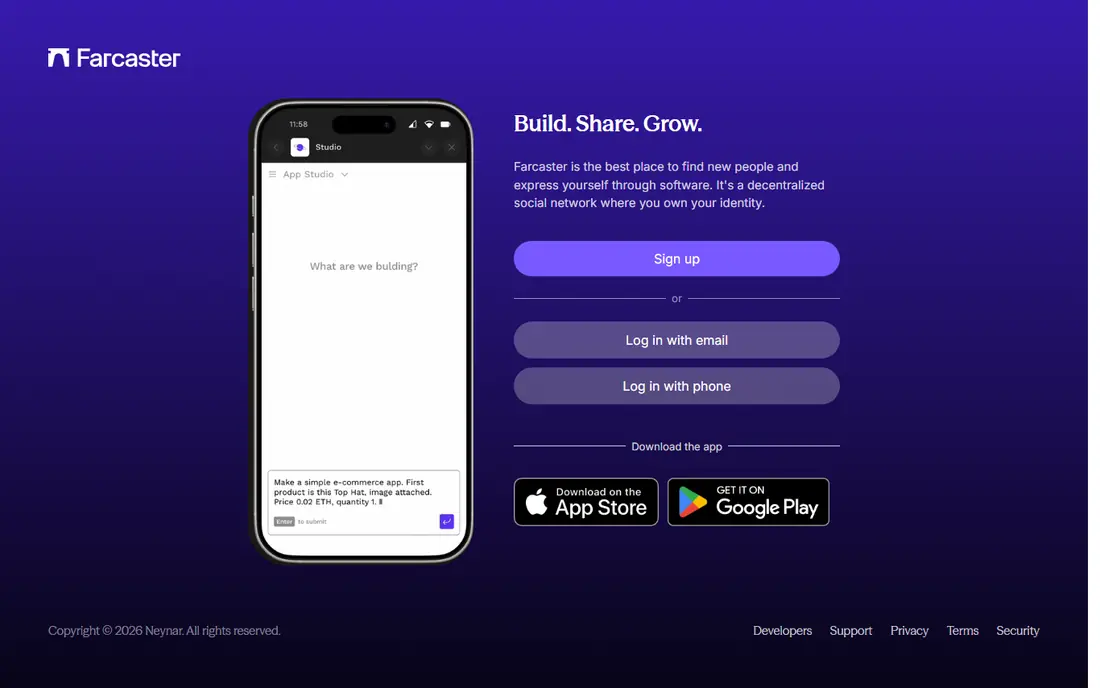
Where Farcaster fits: developer and crypto communities. Farcaster is a decentralized social protocol with solid developer and crypto-native communities. It supports interactive frames inside posts, for example polls, mints, and mini-apps, and its client apps offer a refined feed experience.
In daily use, for general social use, Bluesky or Mastodon will feel broader. For developers and builders who want a protocol-native network with interactive posts, Farcaster is a solid niche pick. In daily use, the audience is narrow. Onboarding has also involved wallets or invite mechanics at several points. Entry price for Farcaster: $0. A free plan is available with Farcaster.
Points against: Niche audience.
- Frames for interactive posts
- Developer-friendly protocol
- Onboarding needs a wallet or invite history

Damus is built with Nostr protocol posting in mind. Damus is a leading app for Nostr, a protocol where users hold their own cryptographic keys rather than accounts on a company server. In daily use, the design appeals to tech-savvy users who want protocol-level control.
Beyond that, the network is smaller and more technical in tone. More specifically, key management is the ramp-up time. What you pay to start with Damus: $0. Damus offers a free plan.
Where it falls short: Clients vary in polish.
- Protocol-first with user-held keys
- Censorship-resistant design
- Smaller network
Pick Mastodon if this describes you: community-run servers. For privacy-minded users, journalists, and open source communities, Mastodon gives you the most control of any network here, at the cost of reach and convenience. Feeds are chronological, moderation is set by each server, and users can move accounts between servers with their followers.
Trade-offs to know: Onboarding friction in picking a server.
From a buyer's view, onboarding is the price. New users must pick a server, learn federation etiquette, and rebuild their follow graph, which feels harder than signing up for a single app. Worth adding: general servers work fine to start, whereas topic servers for tech, journalism, or art provide better local timelines. The starting price for Mastodon: $0. Mastodon has a free plan.
- No ads and no central algorithm
- Chronological feeds
- Smaller and quieter network
Bluesky makes the most sense for custom feeds and open identity. The result feels close to early Twitter, with short posts, replies, and reposts in a familiar layout.
What to check first: Most users still on the central server.
Worth adding: in practice almost everyone uses the central Bluesky server, so decentralization is more promise than daily reality for most users. Bluesky has tens of millions of registered users but far fewer daily actives than the biggest platforms, and search and discovery are thinner. Entry price for Bluesky: $0. A free plan is available with Bluesky.
- Portable identity on AT Protocol
- Custom feeds you choose
- Smaller audience than Instagram or X
Hive Social targets casual chronological feeds. Setup is fast, and the interface feels familiar at once.
Where it falls short: Fewer features than leaders.
Where it shines: Straightforward and friendly feel.
From a buyer's view, the team and audience are smaller than the leaders. The app has faced scaling issues during surges of new users. Hive Social pricing: $0. Hive Social offers a free plan.
- Chronological feed
- Q
- Smaller team and audience
Selection criteria
Each tool was reviewed on what its vendor publishes: price, plan limits, core features and stated drawbacks. We did not run hands-on tests. Figures are shown as the vendors publish them. Billing terms, seat minimums and add-ons can change the real cost. Order on the page follows fit for the typical buyer first, then price transparency and free access. Your own requirements should decide the final pick.
Things to verify first
- Confirm the entry price on the vendor page for Pixelfed and the others: seat counts and billing terms change the total.
- Look at free plan limits closely: Pixelfed, Farcaster, Damus and others have one, and the caps decide whether it is usable for real work.
- Read the limits listed for Pixelfed first: much smaller audience than Instagram.
- Look at the renewal terms for Mastodon: auto-renewal, notice periods and price changes can matter more than the first-year price.
- See whether Hive Social offers onboarding or training, and whether it is included in the price.
Frequently asked questions
Do these tools publish their prices?
Yes. Every tool from Pixelfed to Hive Social shows a starting price, though seats, add-ons and billing terms still change the final cost.
Which alternative is a good match for photographers?
Start with Pixelfed if you need decentralized photo sharing. Farcaster is the better match for developer and crypto communities, and Damus for Nostr protocol posting. The best choice depends on budget, team size and workflow.
What is the best overall alternative to big social media apps?
Pixelfed is the pick this page puts first, mainly for decentralized photo sharing. If your situation differs, Farcaster suits developer and crypto communities, and Damus suits Nostr protocol posting. Compare price and limits before you decide.
Is Pixelfed the right pick for everyone comparing Alternatives to Social Media Apps?
No single tool suits every team. Pixelfed comes first because it fits decentralized photo sharing, while Farcaster suits developer and crypto communities and Damus suits Nostr protocol posting. Match the tool to your own size, budget and workflow before deciding.
Can I try these options before paying?
Often, yes. Pixelfed, Farcaster, Damus and others have a free plan. Use your own data and a real task during the test, and check what the free tier or trial limits before you rely on it.
Which Alternatives to Social Media Apps have a free plan?
6 of the 6 tools have a free plan, including Pixelfed, Farcaster, Damus and Mastodon. Free plans usually cap users, projects or features, so check the limits on the vendor page.
Sources
See where you really rank - block by block
ProMapRanker scans Google Maps across a grid of your service area. Simple monthly plans from $19, white-label on every plan.
Start freeKeep reading
 zoho inventory alternatives
6 Alternatives to Zoho Inventory, Compared on Price and Fit
Zoho Inventory alternatives: 6 tools compared on price, free plans and fit. Katana leads the list for manufacturers. Fit and flaws are laid out for each entry.
Read → zoho crm alternatives
Best Zoho CRM Alternatives (2026)
Need Zoho CRM alternatives? We compare 7 tools on cost, free access and who each suits. Every pick gets a straight assessment. Built for quick decisions.
Read → zelle alternatives
Best Zelle Alternatives in 2026
Compare the best Zelle alternatives for sending money to friends, paying sellers and moving funds abroad, with honest notes on fees, speed and safety in 2026.
Read →