 ProMapRanker
Alternatives to Septic Systems in 2026

Key takeaways
- Composting toilets suit cabins and off-grid homes best, because they need no septic tank, drainfield, or water connection for toilet waste.
- Incinerating toilets suit remote sites with power or propane, but running costs and purchase prices are high.
- Aerobic treatment units and advanced filters suit homes that must stay on a soil-based system but cannot use a conventional drainfield.
- Greywater systems only handle sinks, showers, and laundry, so they pair with a toilet solution rather than replacing one alone.
- Always check local codes and permits before buying, since many of these options are restricted or require professional design and inspection.
Quick comparison
| Pick | Great for | Pricing starts at | Free tier | |
|---|---|---|---|---|
 Nature's Head | Cabins, RVs, and boats | $1,035 | No | Visit |
 Separett Villa | Vacation homes and rentals | $989 | No | Visit |
 Sun-Mar Excel | Full-time cabins and families | See website | No | Visit |
 Incinolet | Remote homes with electric power | See website | No | Visit |
 Cinderella Freedom | Off-grid homes with propane | $4,499 | No | Visit |
 Norweco Singulair | Homes that need advanced treatment | See website | No | Visit |
 Orenco Advantex | Difficult sites that need textile filtration | See website | No | Visit |
 Aqua2use Greywater System | Reusing greywater for irrigation | See website | No | Visit |
The best alternatives to septic systems
A conventional septic system needs suitable soil, enough land for a drainfield, and a passing percolation test. When soil fails, groundwater sits high, bedrock sits shallow, or a lot is simply too small, homeowners need another path. The eight options below cover waterless toilets, advanced treatment units, and greywater reuse, each with a different fit for cabins, full-time homes, and difficult sites. Check local codes and permits before buying any of them, since rules vary by county and state, and many systems require professional design, installation, and inspection.
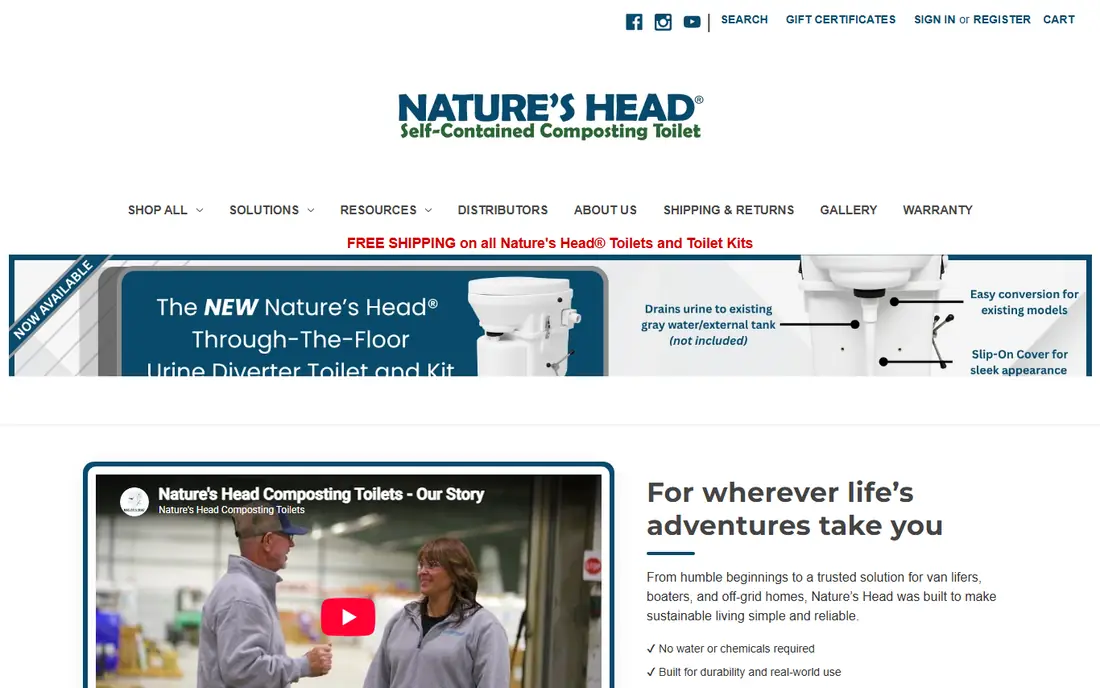
Nature's Head is the best-known self-contained composting toilet for cabins, RVs, vans, and boats. It separates liquids from solids, uses a small fan for ventilation, and turns solids into compost with coconut coir or peat moss. With no water connection and no septic tank, it fits small spaces where plumbing a conventional toilet is impractical or too costly.
The daily reality is hands-on. The liquids bottle needs emptying every few days for two full-time users, while the solids bin lasts several weeks, and owners must stay on top of composting medium and ventilation. That routine suits off-grid owners who accept maintenance in exchange for independence. It does not suit buyers who want a fit-and-forget toilet like a standard flush model.
- Self-contained urine-diverting design
- No water or septic connection
- Low running costs with composting medium
- Liquids bottle needs frequent emptying
- Solids handling puts off some buyers
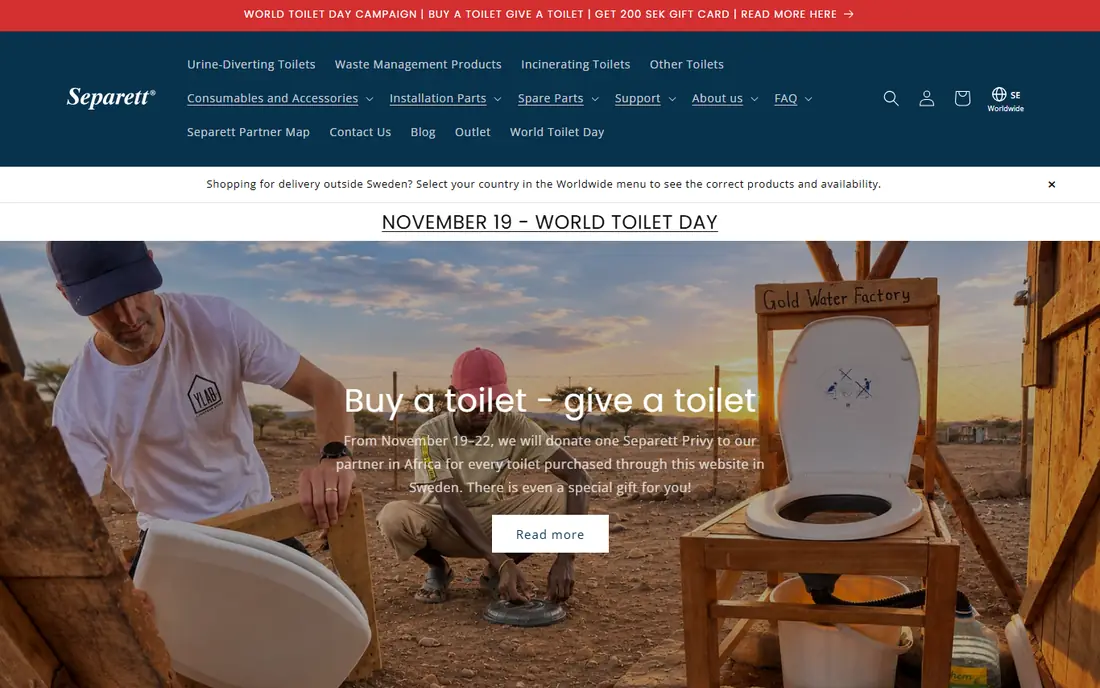
Separett Villa takes a different approach to waterless toilets: it diverts urine and collects solids in compostable bags, which are then sealed and handled as waste. A fan vents moisture and air outside, which keeps the bathroom fresh without chemicals. For vacation homes, rentals, and cabins with part-time use, the bag system is simpler than managing a composting chamber, since there is no curing time to track.
The trade-off is consumables and liquids. Bags are an ongoing cost, and urine still needs a safe drain to a container, soakaway, or approved disposal route, depending on local rules. Separett Villa also needs power for its fan, in 12-volt or mains form. It is an excellent part-time solution, but full-time households should compare its bag and emptying routine with Nature's Head before choosing.
- Bag-based solids handling is simple
- Fan ventilation controls odour
- Works in vacation homes and rentals
- Ongoing bag costs
- Liquids still need a safe drain or container

Sun-Mar Excel suits cabins and homes where a composting toilet must serve a family full-time, not just weekends. Its larger chamber and rotating Bio-drum keep composting active, and its evaporating chamber helps manage liquid, which matters when several people use the toilet daily. Sun-Mar has sold composting toilets for decades, so parts, guidance, and installer familiarity are easier to find than with newer brands.
The price and upkeep are higher than a small self-contained unit. Excel models cost well above a thousand dollars, need electric power and proper venting, and still require drum turning, medium top-ups, and eventual compost removal. Buyers should also confirm that local rules allow composting toilets for full-time homes, since some areas restrict them to seasonal or accessory use.
- Larger capacity for full-time family use
- Continuous composting with rotating drum
- Long track record in cabins
- Higher purchase price
- Needs power and venting, plus regular drum care
Incinolet is an electric incinerating toilet that burns waste and paper to a small amount of sterile ash. It needs no water, no septic tank, and no holding tank, and it can sit in an unheated building through winter, which makes it popular for remote cabins and work sites. Use is simple: line the bowl, use the toilet, press the pedal, and start the cycle.
Running costs are the catch. Each cycle uses roughly 1.5 kilowatt-hours of electricity, and bowl liners are a recurring purchase, so a busy household will see real power and consumable bills. The unit itself costs several thousand dollars, and venting must be installed correctly. Incinolet fits best where electric power is reliable but water and septic are not, and where ash disposal is simpler than compost management.
- Burns waste to sterile ash
- No water, septic, or holding tank
- Works in freezing climates
- High electricity use per cycle
- High purchase price and liner costs
Cinderella Freedom is a propane-powered incinerating toilet for off-grid homes with little or no mains electricity. It burns all waste at high temperature to sterile ash, needs only a 12-volt supply for controls and fan, a propane supply, and proper venting, and its display tells owners when the ash container needs emptying. For a remote cabin with propane already on site, it removes both water and waste handling in one unit.
The price is steep, at 4,499 dollars for the toilet alone in recent listings, before venting and installation, and propane use adds an ongoing cost per cycle. Catalyst cleaning and ash emptying are regular tasks, and the toilet must be vented to code. It is a strong choice for truly remote sites, but composting toilets cost far less where power and maintenance routines are acceptable.
- Propane incineration needs no mains power
- Burns waste to sterile ash
- Clear display and ash alerts
- High purchase price
- Propane supply and venting required
- Regular catalyst care
Norweco Singulair is an aerobic treatment unit, which works like a small sewage plant in the yard. Air is injected into the treatment tank, aerobic bacteria break down waste faster than in a passive septic tank, and the cleaner effluent can then go to a smaller dispersal field or drip system. That makes it a real option for small lots, poor soils, high water tables, and sites near sensitive water, where a conventional system cannot meet treatment or separation rules.
The commitment is ongoing. Aerobic units need electricity, regular service, and often annual inspections required by local rules, and operating costs run higher than a passive tank. Installation also needs a licensed designer and permits, and costs vary widely by site. Singulair suits owners who must stay on a soil-based system but need higher treatment, not owners looking for a low-maintenance shortcut.
- Aerobic treatment produces cleaner effluent
- Suits small lots and poor soils
- Long-established US maker
- Needs electricity and lifetime maintenance
- Professional design and permits required
Orenco Advantex is an advanced treatment system that passes effluent through textile filter sheets, where microbes on a large surface area break down contaminants. The treated effluent is cleaner than standard septic discharge, which can allow a smaller dispersal field and help on sites with poor soil or environmental sensitivity. It is often used as a pre-treatment stage before drip dispersal or a reduced drainfield.
Like other advanced systems, Advantex is not a DIY purchase. It needs site evaluation, professional design, permits, and ongoing service for pumps, filters, and controls. Costs depend on site, size, and dispersal method, so get a local quote rather than relying on a national average. For a difficult site where a conventional system fails, it is one of the most credible engineered options available.
- Textile filter treatment for high-quality effluent
- Smaller dispersal area than conventional systems
- Proven on difficult sites
- Professional design and installation required
- Pumps and controls need service
Aqua2use is a greywater system, not a full septic replacement. It filters water from showers, baths, basins, and laundry so it can be reused for subsurface garden irrigation, cutting fresh water use and reducing the load on whatever wastewater system a home uses. For a cabin or home with a composting toilet, pairing greywater reuse with a waterless toilet can cover most household wastewater without a septic tank at all.
The limit is scope and regulation. Greywater systems do not treat toilet waste, and many states and counties restrict greywater reuse, require permits, or limit it to subsurface irrigation only. Filters need regular cleaning, and kitchen water is often excluded because of grease and food waste. Check local codes first, and treat greywater as a complement to a toilet solution, not as a standalone answer.
- Reuses shower, bath, and laundry water for irrigation
- Reduces fresh water use
- Compact filter unit
- Does not handle toilet waste
- Local rules vary widely
- Filters need cleaning
How we picked these
We compared manufacturer pages, installer guidance, and independent explanations of alternative wastewater systems, focusing on products and system types available in the US in October 2026. We favoured options with a clear maker, a real installed base, and a distinct fit for cabins, difficult sites, or water reuse, rather than listing every generic system type twice. Prices are listed where recent retailer or maker listings support them, and as "See website" where installed costs vary by site.
What to check before you replace or skip a septic system
Start with your local health department, not with a product catalogue. Ask which systems are approved in your county, what permits and inspections are required, and whether composting toilets, greywater reuse, or advanced treatment units are allowed for full-time homes or only for seasonal use. A product that works in one state may be restricted in the next, and an unpermitted system can block a sale, a refinance, or an insurance claim.
Next, get a site evaluation from a licensed designer or installer. Soil type, groundwater depth, slope, setbacks from wells and water bodies, and available land all decide which options are viable. A mound system needs space, an aerobic unit needs power and service access, and a composting toilet needs venting and a legal route for liquids and finished compost. A site visit prevents an expensive purchase that cannot be installed legally.
Finally, compare lifetime costs, not just purchase prices. Add installation, permits, power or fuel, consumables such as bags and liners, service contracts, and eventual replacement parts. A cheap toilet with high running costs can cost more over ten years than a pricier treatment unit with low service needs. Ask installers for a written lifetime estimate and for references from homes with similar soil and use patterns.
Frequently asked questions
What are septic system alternatives for cabins?
Composting toilets such as Nature's Head, Separett Villa, and Sun-Mar Excel suit cabins best, because they need no septic tank or drainfield for toilet waste. Incinerating toilets suit remote cabins with power or propane. Pair any waterless toilet with a greywater plan for sinks and showers, and check local codes before buying.
What are alternatives to septic systems for a full-time home?
Aerobic treatment units such as Norweco Singulair and textile filter systems such as Orenco Advantex suit full-time homes on difficult sites, since they treat wastewater to a higher standard before soil dispersal. Mound and drip dispersal systems also help where soil is shallow or groundwater is high. All of these need professional design and permits.
Are composting toilets legal everywhere?
No, rules vary by state and county. Some areas allow composting toilets for full-time homes, others allow them only for seasonal cabins or accessory buildings, and some require a greywater system alongside them. Always check with your local health department and get approval in writing before installation.
How much do alternatives to septic systems cost?
Costs range widely. A self-contained composting toilet costs around 989 to 1,035 dollars, an incinerating toilet costs several thousand dollars, and an installed aerobic or advanced treatment system can cost ten thousand dollars or more depending on site. Add permits, installation, power, consumables, and service to get a true lifetime figure.
Can a greywater system replace a septic system?
No, not on its own. Greywater systems handle water from showers, baths, basins, and laundry, but they do not treat toilet waste. A home without a septic system needs a separate, approved toilet solution, such as a composting or incinerating toilet, plus a legal greywater plan for the remaining water.
Sources
- https://www.natureshead.net
- https://www.separett.com
- https://www.sun-mar.com
- https://www.incinolet.com
- https://www.cinderellaeco.com
- https://www.norweco.com
- https://www.orenco.com
- https://www.aqua2use.com
- https://engineerfix.com/what-is-an-alternative-septic-system/
- https://wildoaktrail.com/collections/composting-toilets
See where you really rank - block by block
ProMapRanker scans Google Maps across a grid of your service area. Simple monthly plans from $19, white-label on every plan.
Start freeKeep reading
 zscaler alternatives
Best Zscaler Alternatives in 2026
Looking for zscaler alternatives? We compare 9 SASE and zero trust platforms on architecture, data protection, pricing, and fit for your network and team.
Read → zapier alternatives free
Best Zapier Alternatives Free in 2026
Nine automation tools for zapier alternatives free in 2026, all with genuinely free tiers, plus free plan limits, starting prices and upgrade paths explained.
Read → which platform is best for online reputation
Which Platform Is Best for Online Reputation in 2026
Wondering which platform is best for online reputation? We compare 8 review, listing, and response tools for small and multi-location businesses and agencies.
Read →