 ProMapRanker
Best Alternatives to Perplexity Pro Features in 2026


All-round research and follow-up work · Pricing starts at: $8 per month
Key takeaways
- ChatGPT Plus is the closest all-round replacement for Perplexity Pro, adding deep research, file analysis and image tools to cited web search.
- Google Gemini wins on freshness and Google Workspace integration, while Claude suits careful research from long documents with cautious citations.
- Kagi and Brave Search are the best picks if you mainly want better search itself, without a full chatbot subscription.
- Most paid plans cluster around $20 per month, so the choice comes down to which ecosystem and research style fits your work.
- Free tiers are worth testing first: several tools answer everyday research questions well without paying, and paid plans mainly raise limits.
Quick comparison
| Pick | Great for | Pricing starts at | Free tier | |
|---|---|---|---|---|
| ChatGPT | All-round research and follow-up work | $8 per month | Yes | Visit |
 Google Gemini | Fresh answers and Google Workspace | $4.99 per month | Yes | Visit |
 Claude | Careful research from long documents | $20 per month | Yes | Visit |
 Microsoft Copilot | Microsoft 365 users | $19.99 per month | Yes | Visit |
 You.com | Model choice per question | $15 per month | Yes | Visit |
 Kagi | Ad-free tunable search | $5 per month | No | Visit |
 Brave Search | Independent index with re-ranking | Free | Yes | Visit |
 DeepSeek | Free heavy chat and reasoning | Free | Yes | Visit |
 Mistral Le Chat | Fast European alternative | $14.99 per month | Yes | Visit |
The best alternatives to Perplexity Pro features
Perplexity Pro is built around one idea: answers with visible sources, plus deeper research runs when a quick answer is not enough. The tools below replace different parts of that idea, from cited search to document research, so we judged each one on sources, research depth, limits and price.
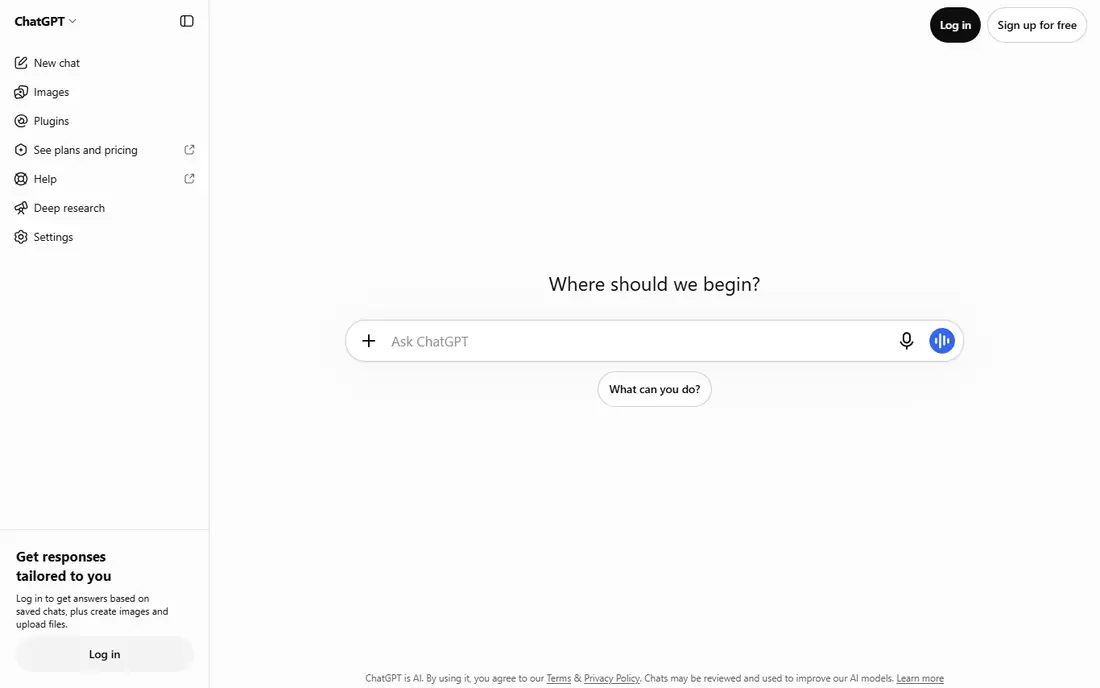
ChatGPT is our pick for most people leaving Perplexity Pro, because it covers the whole workflow rather than just the search step. You can ask a question with web search, check the cited sources, then turn the answer into a draft, a spreadsheet or a summary without switching tools. Plus at $20 per month adds higher limits and deep research runs, while the cheaper Go plan at $8 per month suits lighter users.
The weakness is that Plus is not truly unlimited at the top level: heavy use can be slowed or routed to a smaller model, and image and file limits still apply. For pure fact-checking, a dedicated search tool such as Kagi may give cleaner sources. For research that turns into real work, though, ChatGPT completes the loop better than any single rival here.
- Web search with citations plus deep research runs
- File, spreadsheet and image analysis in the same chat
- Custom GPTs and model switching
- Usage caps still apply on paid plans for heavy research
- Citation quality varies by question type
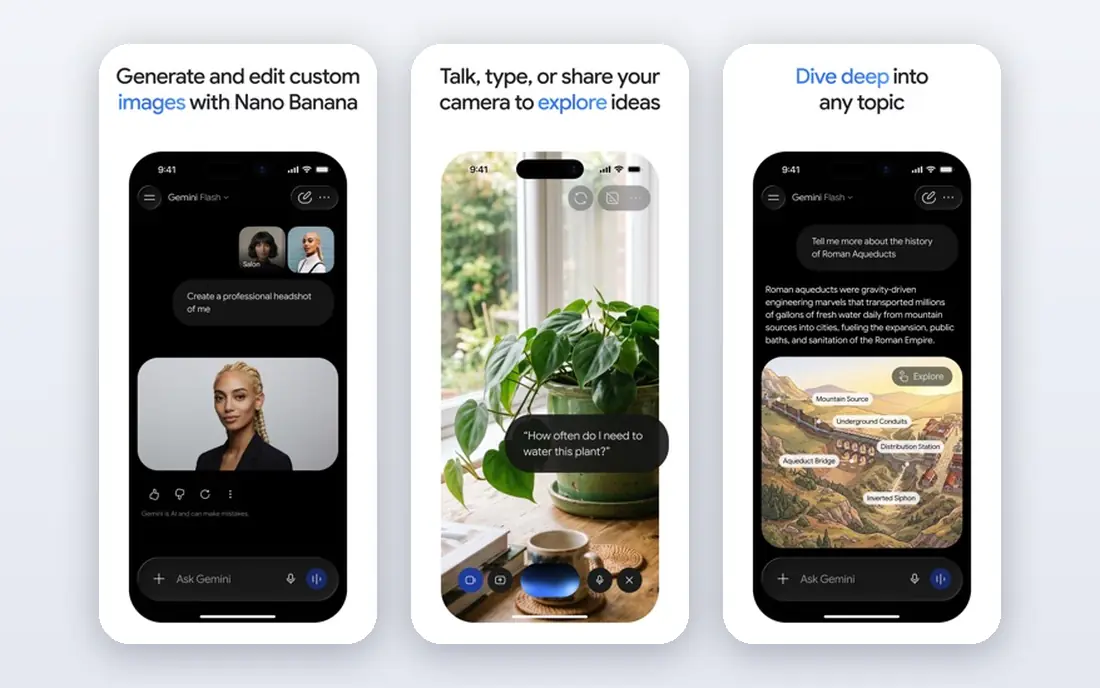
Gemini is the natural replacement if you live in Gmail, Docs and Drive. Its answers draw on Google's index, which helps with breaking news and recent pages, and paid plans add deep research plus a sidebar inside Docs, Sheets and Gmail so you can research without leaving a document. The free tier is among the most generous in this list, which makes it easy to test before paying.
The catch is depth on hard questions. Gemini can give a smooth, confident answer that skims over nuance, so for contested or technical topics you should still open the cited sources yourself. Paid pricing starts from $4.99 per month for a lighter plan, with the full AI Pro plan at $19.99 per month, so check which plan carries the research features you actually need.
- Google index freshness for recent news
- Deep research across the web and Workspace
- Generous free tier for everyday questions
- Answers can feel generic on complex or niche questions
- Best value is tied to Google apps
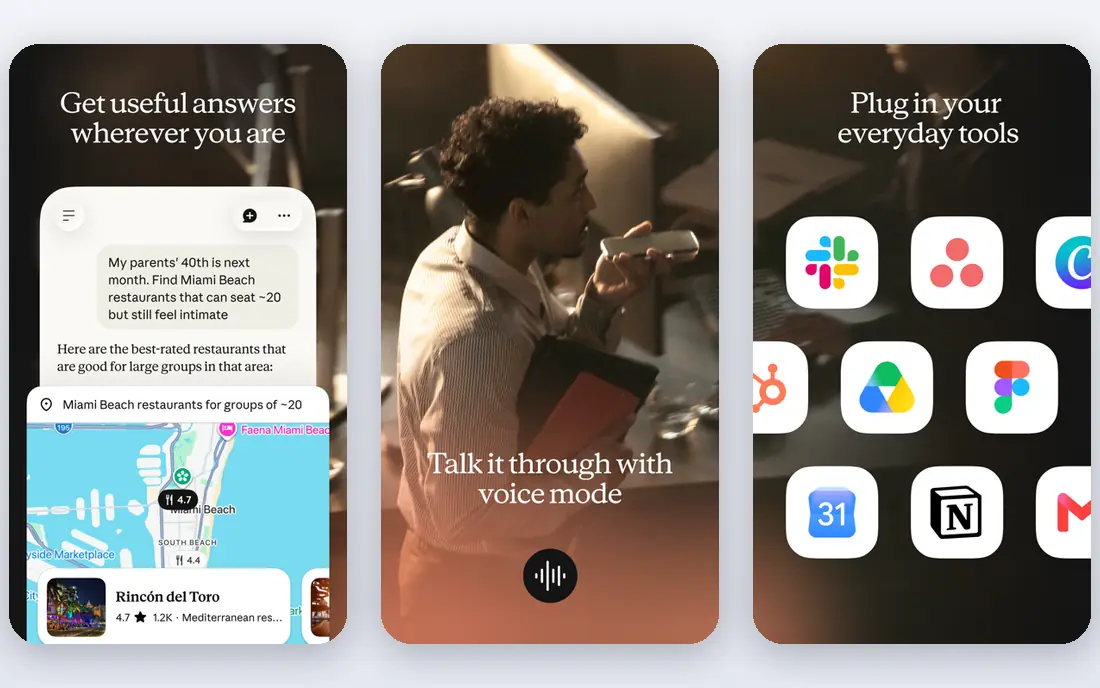
Claude is the pick for researchers who value caution over speed. It handles long documents well, summarises with care, and tends to stay close to what its sources actually say rather than filling gaps with confident guesses. Pro at $20 per month raises message limits and adds features for heavy users, while the free tier covers occasional research.
The trade-off is freshness. Claude's web search is real but not its main strength, and for breaking news it can lag behind Gemini or Perplexity itself. If your work is mostly "what happened in the last hour," pair Claude with a search-first tool. If your work is "read these fifty pages and tell me what matters," Claude is the strongest tool in this list.
- Strong long-document analysis and careful citation behaviour
- Clear, well-structured writing
- Good for reasoning through complex sources
- Web search freshness can lag on hour-old news
- Free tier limits daily messages
Copilot makes sense only if you already live in Microsoft apps, and within that world it is genuinely useful. Free Copilot chat answers web questions in Edge and Windows, while paid Microsoft 365 plans bring AI into Word drafting, Excel analysis, PowerPoint decks and Outlook triage, plus research agents on business tiers. For an office team, that integration can matter more than any single search feature.
Outside Microsoft apps, the case weakens fast. The standalone Copilot Pro plan was discontinued, and paid Copilot now comes bundled with Microsoft 365 plans from $19.99 per month, which is poor value if you do not need Office itself. If you use Google Workspace instead, Gemini is the equivalent pick, and if you use neither, ChatGPT is the better standalone choice.
- Free chat in Windows and Edge
- Deep integration with Word, Excel, Outlook and Teams on paid plans
- Research agents on business plans
- Standalone Copilot Pro was discontinued, so paid value now comes bundled with Microsoft 365
- Weakest outside the Microsoft ecosystem
You.com is the interesting outsider in this list, because it lets you choose which model answers each question rather than locking you into one lab. That matters when one model writes better, another codes better, and a third searches better: you can route each question to the strength you need. Cited web search is core to the product, and privacy controls are a stated selling point.
The risk is duplication. At around $15 per month for Pro, You.com costs nearly as much as ChatGPT Plus or Claude Pro, and its headline features overlap with both. It earns its place if model choice matters to you or if you want a search-first tool with chat built in. If you only need one good assistant, a single-lab subscription is simpler.
- Lets you pick the model behind each answer
- Cited web search with privacy controls
- Free tier for everyday questions
- Smaller brand and support footprint than the big labs
- Paid features overlap heavily with ChatGPT Plus
Kagi is the best pick if what you actually miss from Perplexity is better search, not a chatbot. It shows no ads, lets you raise, lower or block individual sites, and offers lenses that narrow results to forums, academic sources, programming or news. Starter at $5 per month covers 300 searches, while Professional at $10 per month gives unlimited searches, and Ultimate at $25 per month adds premium AI models.
The limits are honest ones. There is no free tier beyond a 100-search trial, and Kagi can be weaker than Google for local businesses, shopping and very obscure queries, since it blends its own indexes with third-party sources. If you search all day and hate ads and tracking, Kagi is worth the subscription. If you search casually, a free tool will do.
- No ads and no tracking-based profiling, funded by subscriptions
- Per-site ranking controls and topic lenses
- Assistant included in paid plans
- No permanent free plan, only a trial
- Weaker for local, shopping and hyperlocal queries than Google
Brave Search suits readers who want an independent index and control over ranking without paying. It builds its own index rather than reselling another company's results, and its Goggles feature lets you create rules that boost or demote sources, which is a lighter version of Kagi's tuning. Search itself is free, and Premium at $3 per month or $29.99 per year removes ads.
The gap is research depth. Brave Search answers questions with AI summaries, but it does not run the long, multi-source research reports that Perplexity Pro and ChatGPT Plus offer. Think of it as a better search engine, not a research assistant. For daily searching with privacy in mind, it is the best free option in this list.
- Own independent search index, not a Google or Bing copy
- Goggles let you write custom re-ranking rules
- Free tier with optional ad-free Premium
- AI answers are lighter than a full research tool
- Premium is only available inside the Brave browser
DeepSeek is the pick for heavy free use. Its web chat has no paid tier and no published message cap, which makes it the closest thing to unlimited among major assistants, and its reasoning and coding ability are strong for a free tool. Developers can also self-host its open-weight models, which removes vendor limits entirely for teams with the skills to run them.
There are two honest caveats. The service can slow or show "server busy" at peak times, and its provider is based in China, so organisations with strict data rules should check its privacy policy before pasting sensitive material. For personal research, homework help and coding questions, though, DeepSeek is hard to beat at zero cost.
- Free chat with no paid tier and no message cap on the web app
- Strong reasoning, maths and coding
- Open-weight models for self-hosting
- Servers can be busy at peak times
- Data is handled by a China-based provider, so check your privacy policy needs
Le Chat is the best European alternative to the big US assistants, and speed is its calling card. Answers arrive quickly, the free tier is generous for everyday text chat, and Pro at around $14.99 per month adds higher limits and extra features. For users who prefer a European provider or who simply want a fast second assistant, it is a solid choice.
The ecosystem is thinner. Le Chat has fewer integrations, fewer third-party tools and less research depth than ChatGPT Plus or Claude Pro, so it works best as a fast daily assistant rather than a deep research platform. If speed and a European data posture matter to you, it earns a place. If you need one tool to do everything, start with ChatGPT or Gemini.
- Very fast responses
- European provider with a clear data posture
- Web search and image tools included
- Smaller ecosystem of integrations than ChatGPT or Gemini
- Research depth is thinner than dedicated research tools
How we picked these
We compared official pricing pages, free tier limits, search and research features, and public comparisons current in October 2026. We favoured tools that are actively maintained, that publish their pricing, and that replace at least one core Perplexity Pro feature: cited web answers, deep research runs, document research or tunable search. We left out tools that are discontinued, tools that only repackage another company's model with no search of their own, and tools with no free or trial route to test them.
How to replace Perplexity Pro without losing good research habits
Switching tools is easy. Keeping good research habits is the harder part, and it matters more than which subscription you pick. A cited answer is only as good as the sources behind it, whichever tool produced it.
Separate searching from writing
Use a search-first tool such as Kagi or Brave Search when you need to find and compare sources, and use a chat assistant such as ChatGPT or Claude when you need to summarise, draft or analyse what you found. Mixing the two jobs in one prompt often produces a smooth answer with thin sourcing. When a claim matters, open at least two primary sources yourself and check that they say what the summary claims.
Match the plan to your real usage
Paid plans cluster around $20 per month, but lighter plans exist: ChatGPT Go at $8, Gemini from $4.99, Kagi Starter at $5 and Brave Premium at $3 per month. Count how many deep research runs and long-document analyses you actually do each month before paying for the top tier. Many readers find the free tier covers daily questions and only a lighter paid plan is needed for heavier weeks.
Check limits before you commit
Free tiers differ sharply: some cap daily messages, some cap research runs, and some slow heavy users to a smaller model. Run your hardest typical task, such as a deep research question or a long document summary, on the free tier first. If it completes cleanly, you may not need to pay. If it stalls or truncates, the paid plan's higher limits are the feature you are actually buying.
Frequently asked questions
What is the best alternative to Perplexity Pro?
ChatGPT Plus is the best all-round alternative, because it combines cited web search with deep research, file analysis and drafting in one subscription. Gemini is better if you live in Google Workspace, Claude is better for long documents, and Kagi is better if you mainly want ad-free search. Pick by the job you do most, not by the brand with the longest feature list.
Is there a free alternative to Perplexity Pro features?
Yes. DeepSeek offers free chat with no paid tier, Gemini has a generous free tier, Brave Search is free for independent search, and ChatGPT and Claude both have free tiers for everyday questions. Free tiers mainly limit research runs, message counts or model choice, so they suit casual use well. Heavy researchers will still benefit from a paid plan.
Which alternative has the best citations?
Kagi and Brave Search give the cleanest search-first citations, because their results are built around sources you can tune and re-rank. Among chat assistants, Claude tends to stay closest to its sources, while ChatGPT and Gemini cite well for straightforward questions. Whichever tool you use, open the key sources yourself for any claim that affects a decision or a publication.
Does ChatGPT replace Perplexity Pro for research?
For most readers, yes. ChatGPT Plus offers web search with citations, deep research runs, file and spreadsheet analysis, and drafting in one place. Perplexity still has an edge for pure search-first research, where every answer is built around sources by default. If your work ends in a document, a report or a decision, ChatGPT covers more of the workflow.
What is the cheapest good alternative to Perplexity Pro?
Brave Search is free for search, DeepSeek is free for chat, and Kagi Starter at $5 per month is the cheapest paid search upgrade. Among full assistants, ChatGPT Go at $8 per month and Gemini from $4.99 per month are the cheapest paid entry points. Start free, then pay only for the limit you actually hit.
Should I keep Perplexity free and pay for something else?
That combination works well for many readers. Perplexity's free tier covers basic cited searches, while a paid ChatGPT, Claude or Gemini plan covers drafting, analysis and deep research. Paying for two full research subscriptions rarely makes sense, so keep the free search tool and spend on the assistant that does the rest of your work.
Sources
- https://dev.to/stimlau/7-best-perplexity-alternatives-in-2026-tested-with-pricing-3hmg
- https://aipricecompare.org/best/best-ai-subscription.html
- https://clickup.com/blog/perplexity-ai-alternatives/
- https://bushe.co/blog/duckduckgo-vs-kagi-vs-brave-search-alternative-search-engine-comparison/
- https://europe-west2.kagi.com/pricing?plan=individual&period=annual
See where you really rank - block by block
ProMapRanker scans Google Maps across a grid of your service area. Simple monthly plans from $19, white-label on every plan.
Start freeKeep reading
 zendesk alternatives
Best Zendesk Alternatives in 2026
Compare the best Zendesk alternatives in 2026, from budget help desks to AI-first support tools, with current pricing, free plans, and honest trade-offs.
Read → wordpress alternatives
Best WordPress Alternatives in 2026
Looking for the best WordPress alternatives? We compare 8 free and paid options for blogs, business sites, stores, and developer-led projects in 2026.
Read → which real estate company has the best training
Best Real Estate Company Training in 2026
Compare which real estate company has the best training, from Keller Williams and eXp to Compass and Coldwell Banker, by program, mentor, and fit in 2026.
Read →