 ProMapRanker
Alternatives to Patreon in 2026

Key takeaways
- Ko-fi is our pick for most creators starting out because tips carry no platform fee on the free plan and setup takes minutes.
- Substack suits writers and podcasters who want paid subscriptions tied to email and a built-in discovery network.
- Buy Me a Coffee offers a simple path to tips and light memberships with a flat platform fee and no monthly charge.
- Gumroad fits creators who sell digital products and memberships one item at a time, with tax handling on many sales.
- Mighty Networks, Memberful, Podia and Ghost suit creators who want a community, their own site or full control over branding and data.
Quick comparison
| Pick | Great for | Pricing starts at | Free tier | |
|---|---|---|---|---|
 Ko-fi | Tips and simple memberships | Free | Yes | Visit |
 Substack | Paid newsletters and podcasts | Free | Yes | Visit |
 Buy Me a Coffee | Simple supporter payments | Free | Yes | Visit |
 Gumroad | Digital product sales | Free | Yes | Visit |
 Mighty Networks | Community plus courses | $79 per month | Free trial | Visit |
 Memberful | Memberships on your own site | $49 per month | Free trial | Visit |
 Podia | Courses and memberships together | $42 per month | Free trial | Visit |
 Ghost | Owning your publication | See website | Free trial | Visit |
The best alternatives to Patreon
We compared official pricing pages, feature pages and public reviews for the platforms below, and we focused on fees, membership tools, discovery and how much control each creator keeps. These are the best patreon alternatives we found for different kinds of creative work. Note that we list alternatives only, never the platform itself.

Ko-fi is the easiest place to start if you already have followers elsewhere. A supporter can leave a tip, buy from your shop or join a membership tier, and the page setup is short enough to finish in one sitting. For artists, that mix of tips and commissions covers a lot of everyday income without a monthly bill.
The limit is growth inside the platform. Ko-fi does not offer the kind of discovery feed that brings new supporters on its own, so your social posts, videos or newsletter still do the finding. Gold, at $12 per month in recent listings, removes the platform fee on memberships and shop sales, which can pay for itself once fee-bearing income grows. For a creator testing paid support, Ko-fi is a low-risk first step among patreon alternatives for artists.
- No platform fee on one-off tips on the free plan
- Tips, shop sales and commissions in one place
- Quick setup with no monthly charge to start
- Membership fees apply on some plans
- Discovery is limited, so you bring your own audience
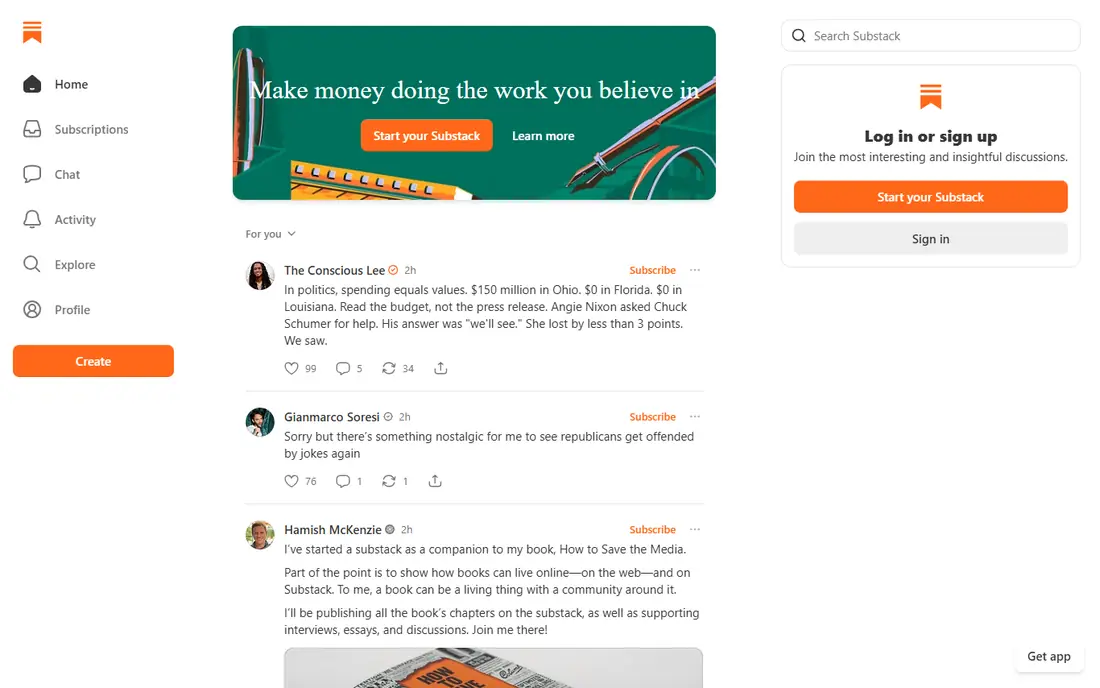
Substack suits writers first, and podcasters second, because the product is built around publishing. You write or record, email goes out to subscribers, and paid tiers sit on the same page as free posts. Readers can find you through recommendations and the wider Substack network, which is a real advantage over a standalone membership page.
The cost is the fee. Substack takes 10 percent of paid subscription revenue, plus payment processing charges, so a writer keeping a close eye on margins should compare that with a flat-fee host. Substack also does less as a storefront for single products or courses. If your main work is regular writing or audio, it is one of the best alternatives to patreon in this list.
- Publishing, email and payments in one place
- Discovery network can bring new readers
- No upfront charge until you charge readers
- Platform fee of 10 percent on paid subscriptions plus payment charges
- Limited shop and course tools
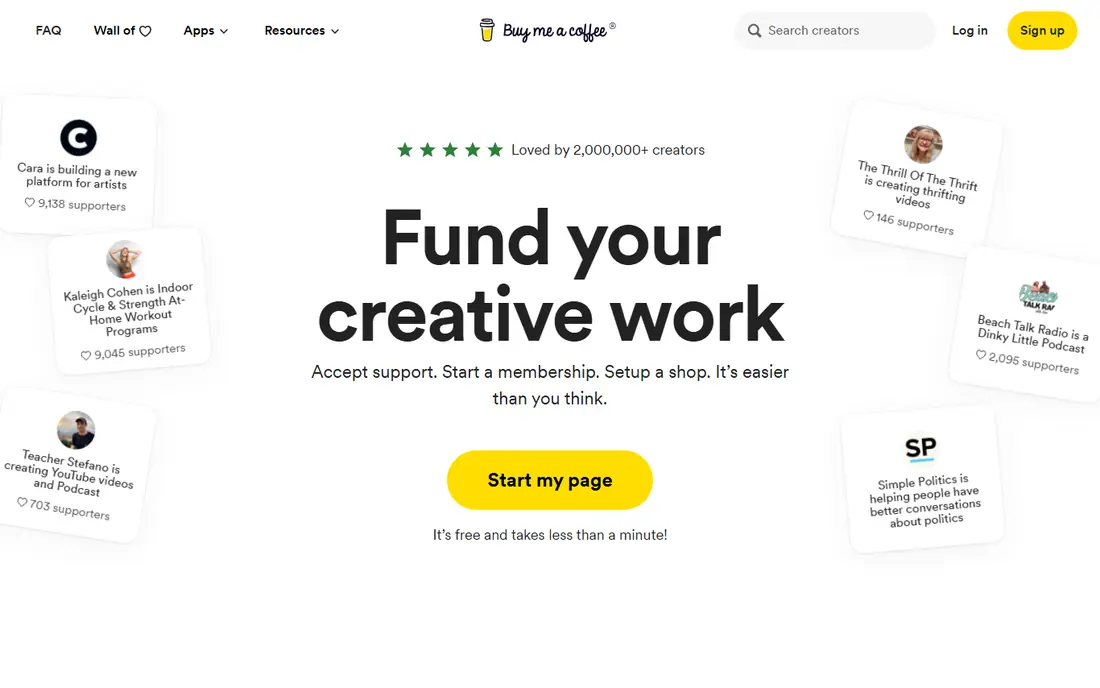
Buy Me a Coffee does one job well: it lets supporters pay you with little friction. A creator can add a page, share the link and start receiving tips, then add membership tiers for recurring support. That simplicity is why many artists and writers use it as a first step before building a larger membership site.
The trade-off is depth. Membership tools, community features and analytics are lighter than on Mighty Networks or Memberful, and the 5 percent platform fee applies on payments, with processing charges on top. For a creator who wants simple support rather than a full community business, that balance is fair. It is a strong free alternative to patreon for testing whether an audience will pay at all.
- Very quick setup
- Tips, memberships and small extras in one page
- No monthly fee to start
- Platform fee of 5 percent on payments
- Membership features are lighter than dedicated platforms
Gumroad fits creators who sell things, not just access. Ebooks, presets, templates, music, video and software can all sit on one product page, and memberships can sit beside them. Gumroad also acts as merchant of record on many sales, which helps with tax handling for international buyers.
Fees need a careful read. Direct sales carry a 10 percent fee plus $0.50 per sale, plus payment processing, and sales through Gumroad Discover carry a higher cut. That makes Gumroad less attractive for very low-priced items sold in high volume. For a creator with a clear product catalogue, though, it remains one of the best patreon alternatives for selling work directly.
- Free to start
- Sells downloads, memberships and licences
- Handles tax on many sales
- Fee of 10 percent plus $0.50 per direct sale, plus processing
- Discovery cut is higher
Mighty Networks is built for creators whose membership is really a community. Members can post, join groups, take courses, attend live events and use a mobile app, all under your brand. That structure suits coaches, teachers and creators who run programmes, not just a feed of posts.
The cost is the barrier. A starting plan around $79 per month, with a transaction fee on top, only makes sense once you have paying members to cover it. A free trial helps you test the setup, but you should have a launch list ready before paying. If community is the product, Mighty Networks is stronger than a tip page or a newsletter alone.
- Community, courses and events in one app
- Native mobile experience
- Transaction fees fall on higher plans
- Monthly cost is high for a new creator
- Transaction fees apply on lower plans
Memberful takes a different path from most alternatives on patreon lists. Instead of hosting your membership on someone else's domain, it adds paid memberships to a site you already own. That keeps your branding, your email list and your member data closer to you, and it works well with WordPress and Ghost.
You pay for that control. Plans start around $49 per month plus a transaction percentage and payment charges, and you need a site to attach it to. For a creator who already runs a website and wants memberships without moving house, Memberful is a clean fit. For a creator starting from zero, Ko-fi or Substack will be simpler.
- Runs on your own WordPress or Ghost site
- You keep your audience list and branding
- Flexible membership tiers
- Monthly fee plus a transaction percentage
- Needs an existing site and some setup skill
Podia suits creators who sell learning and membership together. You can host a course, offer a membership, sell a download and send email from one dashboard, without stitching several tools together. That single-dashboard feel is why many solo creators pick it over a patchwork of apps.
Community features are present but lighter than a dedicated community platform, so a creator whose main offer is daily group discussion may prefer Mighty Networks or Circle-style tools. Podia also charges a transaction fee on its lower plan, falling to zero on higher plans. If courses and memberships are your core income, Podia is one of the best alternatives for patreon users who want to sell teaching, not just posts.
- Courses, memberships, downloads and email in one place
- No transaction fee on higher plans
- Simple builder
- Community tools are lighter than Mighty Networks
- Starting plan still carries a transaction fee
Ghost is the pick for creators who want to own the whole setup. It is a publishing platform with memberships and paid subscriptions built in, and Ghost itself takes no transaction fee on subscription revenue. You still pay payment processing and, on hosted plans, a hosting fee, but the revenue share model is different from percentage-based rivals.
That freedom comes with work. Self-hosting needs technical setup, and hosted plans cost more as your member list grows. Ghost also offers less as a course or community platform than Mighty Networks or Podia. For writers and publishers who value control, clean publishing and a direct relationship with readers, Ghost is a strong long-term alternative.
- No Ghost transaction fee on subscriptions
- Full control over branding and data
- Strong publishing and newsletter tools
- Hosting cost and setup sit with you on self-hosted plans
- Fewer built-in community and course tools
How we picked these
We compared official pricing and feature pages and public reviews for each platform, and we checked that each one is live and actively sold in October 2026. We favoured platforms that cover a clear creator need, from tips and newsletters to communities, courses and full site ownership, and we avoided listing the platform itself. Fees shown are platform fees from recent listings, and payment processing charges usually sit on top, so check the pricing page for the full picture before you move.
What to check before you switch membership platforms
Start with your income mix, not the feature list. A creator earning mostly from tips needs a low-fee tip tool, while a creator earning from courses needs a course host, and a writer needs a newsletter engine. Pick the platform that matches how you already earn, because a switch that changes your offer will cost you supporters.
Next, work out the true fee on your real income. Add the platform percentage, any per-sale charge, payment processing and any monthly plan, then test it on a typical month of revenue. A flat monthly plan can beat a percentage fee once income grows, while a percentage fee can be cheaper at the start. Run both maths on your own numbers before you commit.
Finally, plan the move for your supporters. Tell them what changes, what stays the same, and what they need to do, if anything, to keep their membership. Keep your email list separate from any platform, so a future move does not mean starting from zero. A short, clear migration note will save more supporters than any new feature.
Frequently asked questions
What are the best free alternatives to patreon?
Ko-fi, Substack, Buy Me a Coffee and Gumroad all let you start free, with platform fees or processing charges applying when money moves. Ko-fi stands out for tips with no platform fee on the free plan, while Substack stands out for paid newsletters. Free to start does not mean free to earn, so check the fee on each payment type.
What are the best patreon alternatives for artists?
Ko-fi and Buy Me a Coffee suit artists who take tips and commissions, because setup is quick and supporters can pay for single pieces of work. Gumroad suits artists who sell downloads, presets or prints. If you run a teaching community, Mighty Networks or Podia may fit better than a tip page alone.
Can I move my members from one platform to another?
In most cases you can export a member or email list, but payment details do not move with it, so supporters usually need to re-subscribe on the new platform. That is why keeping your own email list matters, and why a clear migration message helps. Check the export tools on both platforms before you announce a move.
What fees should I expect on alternatives on patreon lists?
Expect three layers: a platform fee or monthly plan, a payment processing charge, and sometimes a per-sale fee. Platform fees in this list range from zero on some Ko-fi tips and Ghost subscriptions to 10 percent on Substack and Gumroad direct sales. Always add processing charges to get the true cost.
Is Substack a good alternative if I do not write a newsletter?
Substack works best for writers and podcasters, because publishing and email are its core. If your main offer is a shop, a course or a community, Gumroad, Podia or Mighty Networks will likely fit better. Substack can still host a simple paid tier, but it is not a general storefront.
Do these platforms let me keep my audience data?
That depends on the model. Memberful and Ghost give you more control, because memberships sit on your own site or publication. Tip and newsletter platforms host more of the relationship for you, though you can usually export emails. If data ownership matters to you, choose a platform that lets you export members and keep your own list.
Sources
See where you really rank - block by block
ProMapRanker scans Google Maps across a grid of your service area. Simple monthly plans from $19, white-label on every plan.
Start freeKeep reading
 vercel alternatives
Vercel Alternatives in 2026
Compare the best Vercel alternatives for static sites, full-stack apps and backends, with free tiers, current pricing and honest trade-offs for developers.
Read → best veterinary software
Best Veterinary Software in 2026
We compared the best veterinary software for clinics of every size, from cloud practice tools to desktop systems, with detailed pricing and trade-offs.
Read → best truck gps app
Best Truck GPS App in 2026: 8 Apps Compared
Best truck GPS app picks for truckers, with truck routing, low bridge warnings, parking and fuel tools, plus current prices and free options for US drivers.
Read →