 ProMapRanker
Best Alternatives to Nuxt in 2026

Key takeaways
- Next.js is the closest full-stack match for React teams, while Astro is the lightest choice for content-led sites.
- SvelteKit and SolidStart suit teams that want small bundles and fine-grained reactivity without a large runtime.
- React Router, Angular, and Gatsby cover form-heavy apps, large enterprise projects, and data-driven static sites in different ways.
- Qwik and TanStack Start are newer options worth a trial, but they have smaller ecosystems than the leaders on this list.
Quick comparison
| Pick | Great for | Pricing starts at | Free tier | |
|---|---|---|---|---|
 Next.js | Full-stack React apps | Free | Yes | Visit |
 Astro | Content-led sites | Free | Yes | Visit |
 SvelteKit | Lean, fast interfaces | Free | Yes | Visit |
 React Router | Form-heavy React apps | Free | Yes | Visit |
 Angular | Large structured projects | Free | Yes | Visit |
 Gatsby | Data-driven static sites | Free | Yes | Visit |
 SolidStart | Reactive apps with small output | Free | Yes | Visit |
 Qwik | Instant-loading public pages | Free | Yes | Visit |
 TanStack Start | Type-safe React routing | Free | Yes | Visit |
The best alternatives to Nuxt
These nine frameworks cover the main reasons teams move away from Nuxt, from a change of UI library to a need for faster pages or stricter structure.
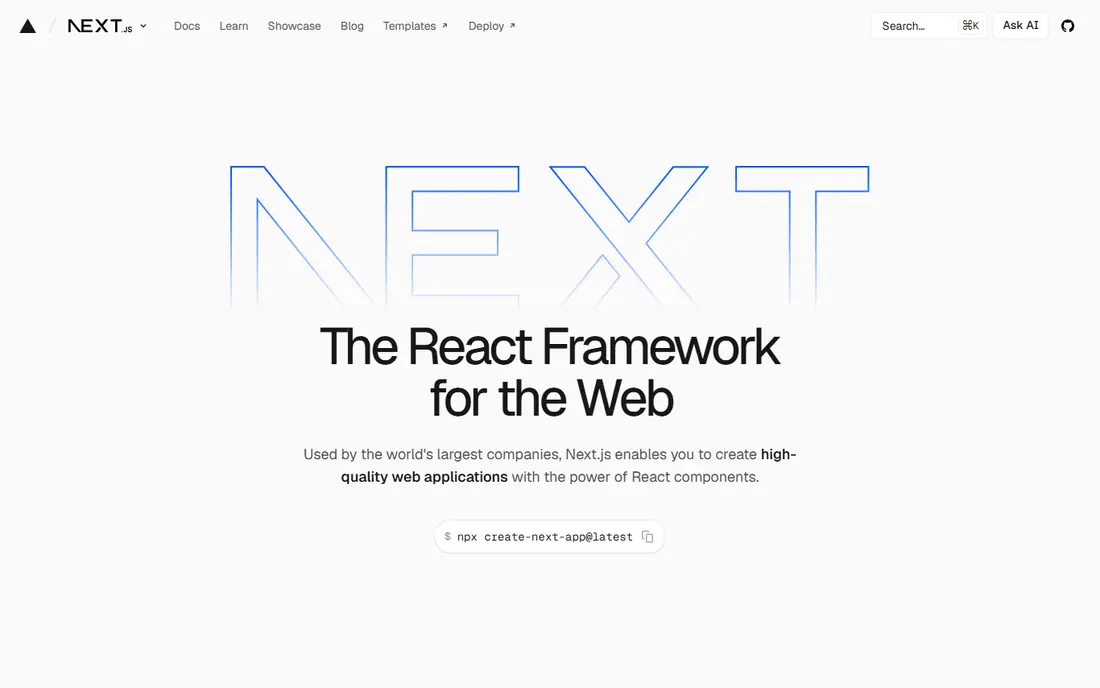
Next.js is the natural first stop for a team that is willing to leave Vue behind. It pairs React with file-based routing, server components, and static generation, so one project can hold marketing pages, dashboards, and API routes. The hiring pool is large, and most React libraries are tested against it first.
The catch is complexity. Server components, caching rules, and routing choices need real study before a large app feels predictable. For a small content site, that weight may be more than the project needs, and a lighter tool on this list will ship faster.
- Very large ecosystem
- Server rendering and static generation in one tool
- Strong hosting and deployment support
- App Router concepts take time to learn
- Defaults can feel heavy for a simple marketing site
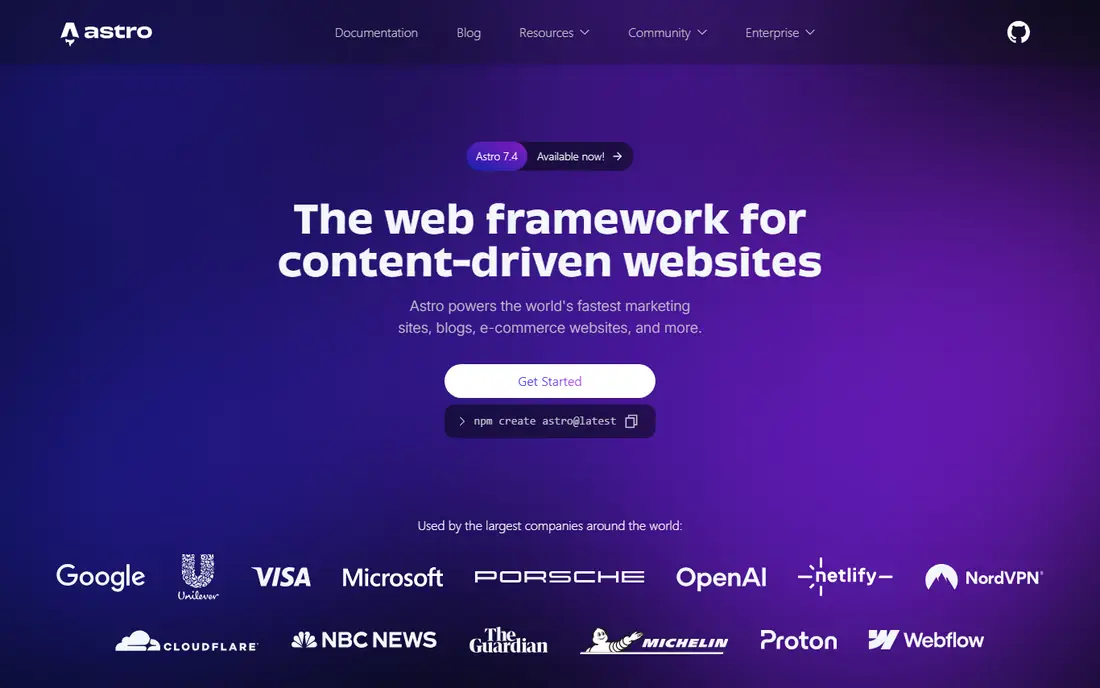
Astro starts from a different question than Nuxt. Instead of asking how to hydrate a whole app, it asks how little JavaScript a page truly needs. Most pages render to static HTML, and only the interactive parts load client code. That makes it a strong fit for docs, blogs, marketing sites, and product pages.
Teams that already use Vue can even keep Vue components inside Astro islands, which softens a move away from Nuxt. The trade-off appears when an app becomes mostly interactive. Dashboards with constant state changes are possible, but they are not where Astro shines brightest.
- Ships very little JavaScript by default
- Works with React, Vue, Svelte, and Solid components
- Strong content collections
- Interactive apps need extra wiring
- State shared across islands takes planning
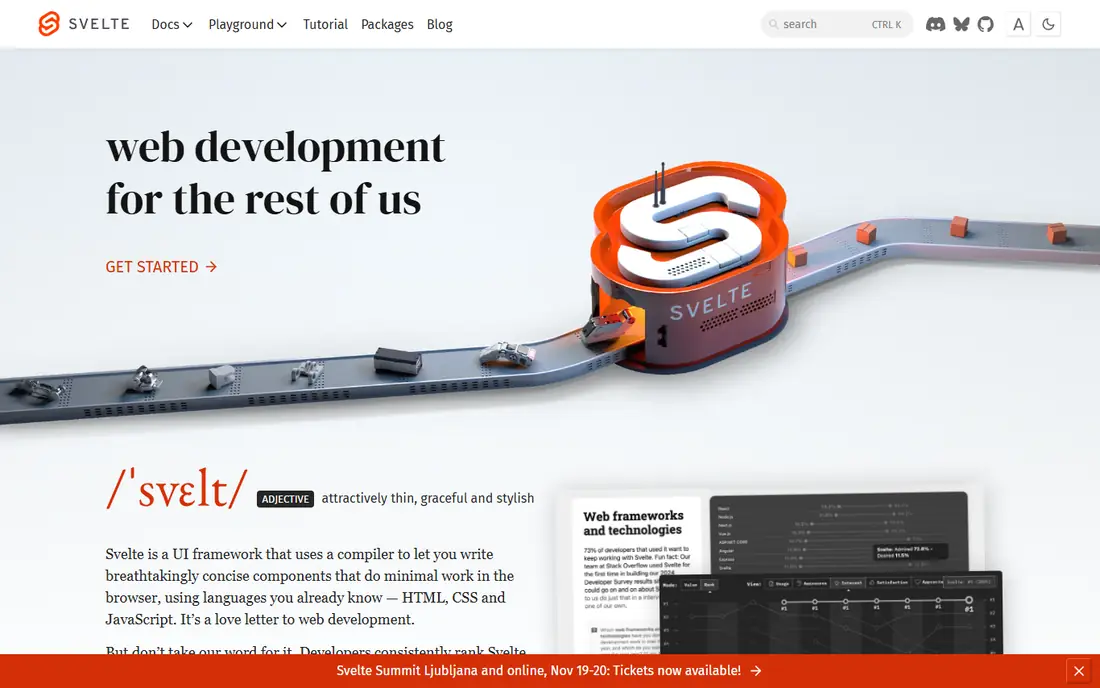
SvelteKit appeals to developers who liked Nuxt conventions but want less code in the browser. Svelte compiles components away at build time, so the shipped JavaScript stays small. Routing, layouts, data loading, and form actions feel close to the Nuxt model, which shortens the learning curve.
Hiring and library choice are the honest limits. React has more ready-made components, and a niche integration may need custom work in Svelte. For a small senior team that values speed and simple code, that trade is often worth it.
- Small compiled output
- Clear file-based routing
- Server rendering, static output, and adapters for many hosts
- Smaller ecosystem than React
- Svelte 5 runes are still new to many developers
React Router in framework mode is the successor to much of what Remix offered. It gives React teams server rendering, nested routes, and a loader and action model that maps closely to how HTTP works. Forms, redirects, and progressive enhancement feel natural here, even with JavaScript disabled for part of a flow.
It is less of a complete platform than Next.js. Image handling, caching helpers, and similar conveniences often come from other tools or custom code. Teams that prefer explicit control over magic defaults tend to like that bargain.
- Built on web standards
- Nested routing with loaders and actions
- Deployable on many Node hosts
- Fewer built-in conveniences than Next.js
- Framework mode is newer than the classic library
Angular is the pick when a project needs rules more than freedom. It ships routing, forms, dependency injection, and a test setup as part of one coherent system. Large organisations with many developers often value that consistency, since new joiners meet the same patterns across teams.
That structure has a cost for small projects. A landing page or a simple blog does not need Angular's full toolkit, and setup can feel slow compared with Astro or SvelteKit. Choose it for a long-lived app with a growing team, not for a quick marketing site.
- Opinionated structure for big teams
- TypeScript by default
- Built-in routing, forms, and testing tools
- Steeper learning curve
- More boilerplate for a small site
Gatsby still earns a place for content sites fed by a headless CMS, a shop catalogue, or several APIs. Its data layer lets a team query content from different sources in one place, and its plugin collection covers common CMS and commerce integrations. Pages are prebuilt, so visitors get fast static HTML.
The framework is no longer the fast-moving default it once was, and some teams have moved to Astro for simpler content builds. Check plugin maintenance for your exact CMS before committing, and test build time with a realistic content set.
- GraphQL data layer pulls from many sources
- Large plugin collection
- Good fit for CMS-driven sites
- Slower momentum than newer frameworks
- Build times can grow on very large sites
SolidStart is built on SolidJS, which updates the real DOM directly when a signal changes. The result is fast, predictable reactivity with little runtime overhead. Developers who know React will recognise much of the component syntax, while the reactivity model itself feels closer to Svelte.
Ecosystem size is the main risk. A team may need to build a component that React or Vue users can install in minutes. For a performance-sensitive app with a capable team, SolidStart is a strong and genuinely different choice.
- Fine-grained reactivity without a virtual DOM
- File-based routing
- Server rendering and streaming support
- Smaller community and fewer ready-made components
- Documentation is thinner than for Next.js
Qwik takes a distinct approach to page speed. Instead of downloading and replaying app logic in the browser, it serialises state on the server and resumes execution when a user interacts. A page with many components can therefore feel fast even before much JavaScript has loaded.
That idea is powerful for large public sites, especially commerce and media pages where first load affects search and conversion. The community is still growing, so teams should expect to solve some problems without a ready-made guide. A pilot page is the right way to test whether the model fits your app.
- Resumable design avoids large hydration downloads
- Fast time to interactive on large pages
- Server rendering support
- Newer ecosystem
- Fewer examples and integrations than established frameworks
TanStack Start suits React teams that already rely on TanStack Router or TanStack Query. Routing, data loading, and server functions share a type-safe model, which catches mismatched parameters and stale data shapes early. Development on Vite feels fast, and the tooling rewards teams that like explicit types.
Maturity is the honest caveat. It does not yet have the breadth of examples, hosting guides, and third-party integrations that Next.js offers. Teams comfortable tracking a fast-moving project will enjoy it, while teams that need settled docs may prefer a more established pick.
- Type-safe routing and loaders
- Vite-native development
- Pairs well with TanStack Query
- Ecosystem is still maturing
- Some APIs and guides may change
How we picked these
We compared official framework docs, routing and rendering models, and current release information for each option, focusing on how each one replaces the core Nuxt jobs of routing, server rendering, and static generation. We favoured frameworks that are maintained, documented, and deployable on common hosts, and we kept the list varied by UI library and project size. We did not claim hands-on testing, and we treated ecosystem size and learning curve as real costs alongside speed.
What to check before you switch frameworks
Start with the team you have, not the framework you admire. A React team will move faster on Next.js or React Router, a Vue team may keep more of its skills with Astro islands or a gradual rewrite, and a small team chasing page speed may prefer SvelteKit or Astro. List the features your current Nuxt app actually uses, including modules, server middleware, image handling, and auth, then check each candidate for a maintained equivalent.
Next, prototype the hardest page, not the easiest one. A marketing page tells you little about a dashboard with live data, complex forms, or strict caching rules. Build one realistic route with data loading, error handling, and deployment, and measure build time and page weight. That single test usually settles the choice faster than a long feature table.
Finally, plan the migration in stages. Keep the old site running, move one section at a time, and keep URLs and redirects stable so search rankings do not drop. A framework switch is also a good moment to remove dead routes and unused modules, but do that cleanup after the new pages are live and measured.
Frequently asked questions
Is Nuxt itself a good framework?
Nuxt is a capable Vue framework with routing, server rendering, and a large module collection. The options here matter when a team changes UI library, needs a lighter content build, or wants a different hosting or structure model.
Which alternative is closest to Nuxt for Vue developers?
Astro can host Vue components, and SvelteKit feels closest in conventions, with file routing and server data loading. Neither is a drop-in replacement, so expect to rewrite routing, data loading, and module-specific code.
Which alternative is best for SEO?
Astro, Next.js, SvelteKit, and Nuxt all support server rendering and static output, which help search engines read pages. The best result comes from fast pages, stable URLs, and correct metadata, not from the framework name alone.
Are these frameworks free to use?
Yes, all nine are open source and free to use, with costs coming from hosting, domains, and any paid services you add. Check each project's licence and hosting docs before a commercial launch.
Should a small team pick Next.js or Astro?
Pick Astro for a mostly static marketing or docs site, and Next.js when the product is a full interactive app with accounts, dashboards, and server logic. A short prototype of your hardest page will usually make the answer clear.
Sources
See where you really rank - block by block
ProMapRanker scans Google Maps across a grid of your service area. Simple monthly plans from $19, white-label on every plan.
Start freeKeep reading
 zoho inventory alternatives
6 Alternatives to Zoho Inventory, Compared on Price and Fit
Zoho Inventory alternatives: 6 tools compared on price, free plans and fit. Katana leads the list for manufacturers. Fit and flaws are laid out for each entry.
Read → zoho crm alternatives
Best Zoho CRM Alternatives (2026)
Need Zoho CRM alternatives? We compare 7 tools on cost, free access and who each suits. Every pick gets a straight assessment. Built for quick decisions.
Read → zelle alternatives
Best Zelle Alternatives in 2026
Compare the best Zelle alternatives for sending money to friends, paying sellers and moving funds abroad, with honest notes on fees, speed and safety in 2026.
Read →