 ProMapRanker
Alternatives to MyFitnessPal in 2026

Key takeaways
- Cronometer and MyNetDiary have the strongest free tiers for people who want detailed nutrition data without paying.
- MacroFactor is the pick for lifters who want targets that adjust each week, but it has no free tier.
- Carb Manager is the clearest choice for low carb and keto tracking, while YAZIO pairs tracking with fasting tools.
- Free plans differ a lot, so check whether barcode scanning, macros by gram, and photo logging are free or paid before you commit.
Quick comparison
| Pick | Great for | Pricing starts at | Free tier | |
|---|---|---|---|---|
 Cronometer | Detailed micronutrient tracking | Free | Yes | Visit |
 MyNetDiary | Best overall free tracker | Free | Yes | Visit |
 Lose It | Simple daily calorie budgets | Free | Yes | Visit |
 MacroFactor | Adaptive macro coaching | $11.99 per month | Free trial | Visit |
 YAZIO | Fasting plus calorie tracking | Free | Yes | Visit |
 FatSecret | Budget tracking with community | Free | Yes | Visit |
 Lifesum | Meal plans and a polished design | Free | Yes | Visit |
 Carb Manager | Keto and low carb tracking | Free | Yes | Visit |
 Noom | Behavior change and coaching | See website | Free trial | Visit |
The best alternatives to MyFitnessPal
These are all working alternatives to MyFitnessPal, and none of them is MyFitnessPal itself. We compared official pricing pages, app store listings, and feature pages to see what is free, what is paid, and where each app is strongest.
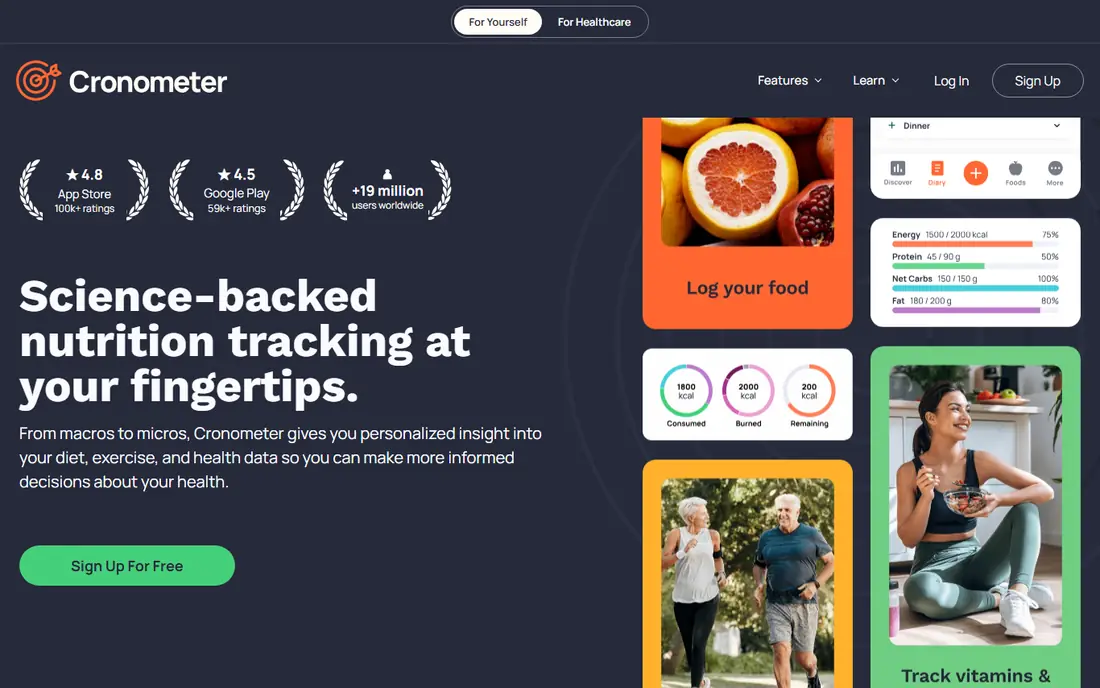
Cronometer suits people who care about more than calories. The free plan tracks up to 84 nutrients, which covers vitamins, minerals, and amino acids that simpler trackers leave out. That depth matters if you follow a restricted diet, track iron or vitamin D, or want to spot gaps in your eating pattern.
The trade off is presentation. Cronometer shows a lot of numbers on one screen, and new users can feel crowded out by detail they do not need yet. Gold, at $10.99 per month or $59.99 per year, removes ads, adds photo and voice logging, and extends reports. If you want depth first and a clean look second, this is our pick for most people.
- Tracks many vitamins and minerals
- Free barcode scanning
- Verified food sources
- Free plan shows ads
- Interface can feel dense for beginners
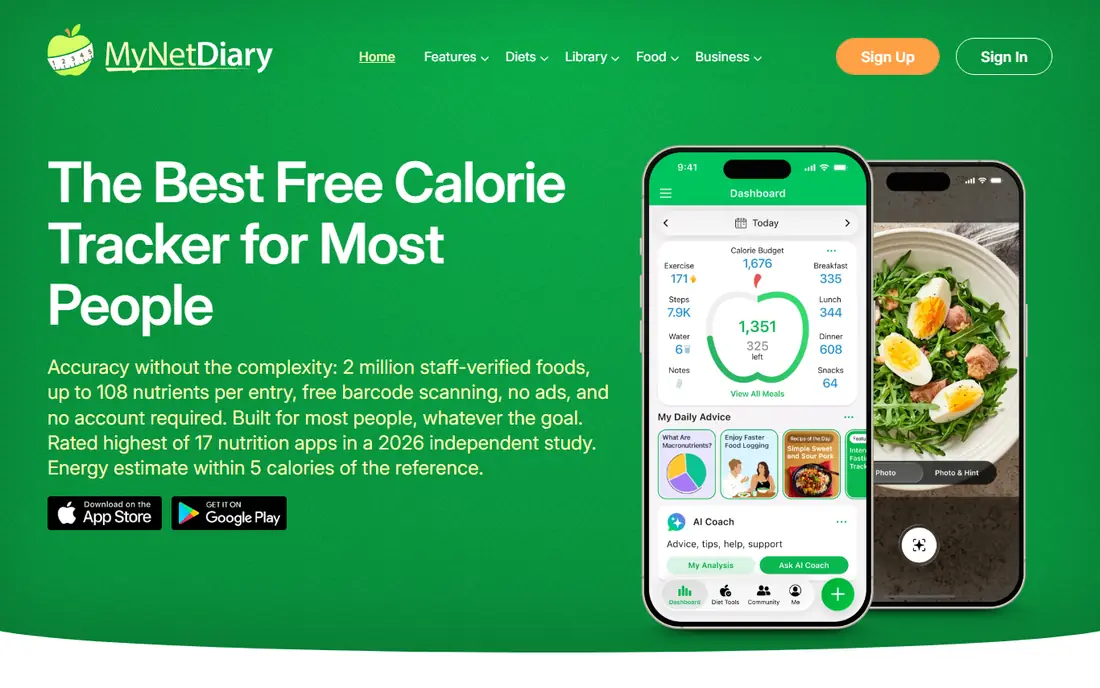
MyNetDiary stands out because its free tier does not feel like a demo. You get barcode scanning, custom macro targets, voice logging, and a wide nutrient view without ads and without being forced to create an account first. That combination is rare, and it makes switching low risk.
Premium, at $8.99 per month or $59.99 per year, adds meal scanning, advanced autopilot targets, fasting tools, and meal planning. Premium Plus, at $99.99 per year, adds AI coaching and menu scanning. For most readers, the free plan alone will answer the main question, which is whether you can log consistently for a week.
- Free barcode scanning with no ads
- Up to 108 nutrients
- No account needed to start
- Design feels less modern than some rivals
- Top AI tools need Premium Plus
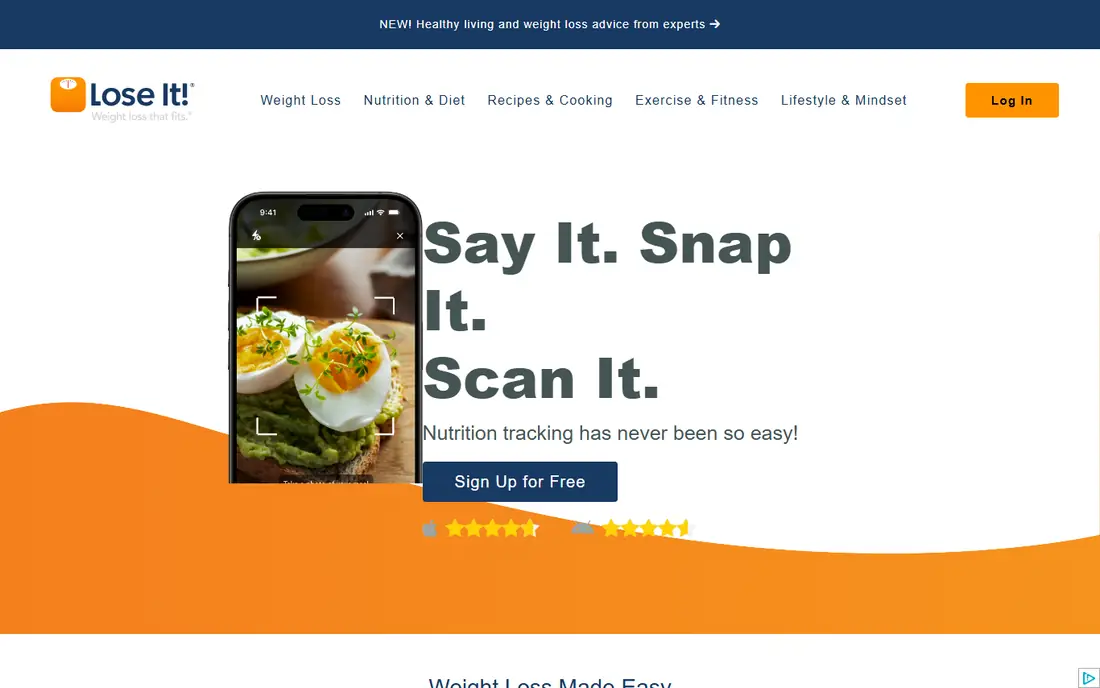
Lose It keeps the daily view simple. You see a calorie budget, what you have logged, and what remains, without a wall of nutrient tables. That clarity helps beginners who have bounced off busier apps, and the meal and recipe tools make repeat meals faster to log.
The catch is the paywall placement. Recent listings put Premium at $79.99 per year, and that tier holds barcode scanning, photo logging, and deeper macro tools. If you scan packaged food every day, check that cost before you build a habit around the free plan. For people who log mostly home cooked meals by search, the free plan works well.
- Clear calorie budget view
- Photo logging in Premium
- Friendly setup for beginners
- Barcode scanning and gram level macros are paid
- Free plan shows ads
MacroFactor is built for people with a training goal and a plan that lasts months. Instead of a fixed target set once, it estimates your expenditure from logged food and weight changes, then resets calories and macros each week. That feedback loop is the whole point, and it suits lifters who want structure without hiring a coach.
The price is $11.99 per month, $47.99 for six months, or $71.99 per year, after a 7 day trial. There is no free tier, so this only makes sense if you will log most days. If you want a casual tracker or deep vitamin detail, Cronometer or MyNetDiary will serve you better for less money.
- Targets adjust from your weight trend
- No ads
- Strong coaching for cuts and bulks
- No permanent free tier
- Micronutrient depth is thinner than Cronometer
YAZIO pairs calorie tracking with intermittent fasting in one app, which saves you from running two tools side by side. The free plan covers basic calorie and macro tracking, water, and weight, while Pro adds the barcode scanner, photo logging, fasting tools, and a large recipe library.
Pro is listed at $47.90 per year in the US, with promotions sometimes lower, so it is one of the cheaper paid tiers here. The main weakness is database coverage for some US packaged foods, where you may need to create a custom entry. If fasting is part of your routine, that trade off is easy to accept.
- Built in fasting timer in Pro
- Meal plans and recipes
- Low annual Pro price
- Barcode scanning is paid
- Food database can be thinner for US brands
FatSecret is the quiet, low cost option. The free tier covers a food diary, exercise diary, weight tracking, barcode scanning, and community journals, which is enough for many people to track for months without paying. Premium, listed at $59.99 per year, adds photo scanning, voice logging, water tracking, and dietitian meal plans.
What you give up is depth. FatSecret tracks far fewer nutrients than Cronometer or MyNetDiary, and its database mixes verified and user submitted entries, so you should still check labels on packaged foods. If cost matters most and you want a simple diary plus a community, this is a solid pick.
- Core tracking and barcode scanning are free
- Long running community
- Low cost Premium
- Free plan shows ads
- Nutrient depth is limited
- Photo logging is paid
Lifesum is the design led choice. The app looks calm, the meal plan templates are easy to follow, and the diet options cover common patterns such as high protein, Mediterranean style eating, and keto leaning plans. For people who want guidance on what to eat, not just a blank diary, that structure helps.
The free tier is the weak point. Basic logging works, but meal plans, detailed macros, and many coaching features sit behind Premium, so check the price shown in your app store before you subscribe, as offers vary. If you already know you want a plan led app and you like a polished interface, Lifesum is worth a trial.
- Clean design
- Diet templates and meal plans
- Fasting and water tracking in Premium
- Free tier is limited
- Pricing varies by store and offer
Carb Manager is the specialist in this list, and that focus is its strength. Net carbs are calculated for you, foods carry keto scores, and you can log ketones alongside meals, which general trackers do not handle well. Premium, at $39.99 per year, adds advanced meal planning, custom targets, and deeper analysis.
For a general eater, Carb Manager will feel narrow. Its database is keto focused, and some everyday foods may take more effort to find than in a general tracker. For anyone following keto or a low carb plan, though, the built in net carb math alone saves daily work and reduces errors.
- Net carb tracking is built in
- Keto food scoring
- Ketone logging
- Less useful if you do not follow low carb eating
- Advanced tools are paid
Noom is different from the rest of this list. It is a program, not just a diary. Daily lessons cover habit triggers, emotional eating, and portion awareness, and coaching support is part of the package. That structure suits people who have tracked before and still struggled to stick with it.
The cost reflects that program model, with annual pricing often listed around $209 per year, though offers and plan lengths vary, so check the checkout price carefully. If you want a cheap, precise food log, pick another app here. If you want lessons and accountability wrapped around tracking, Noom is the one to trial first.
- Daily lessons on habits and psychology
- Coaching support
- Structured program
- Priciest option here
- Less of a pure food database tool
- Pricing varies by plan length
How we picked these
We compared official pricing pages, app store listings, and feature pages for each app, and we kept only apps that are live in the US in October 2026 and truly fit food and nutrition tracking. We favored a mix of free tiers, paid coaching tools, and specialist options, so readers with different budgets and goals can find a fit. We did not claim hands on testing, and prices shown are US list prices that can vary by store, region, and promotion.
What to check before you switch
Start with the free tier, and log for a full week before you pay for anything. That week will tell you more than any feature list, because the best tracker is the one you actually open after dinner. Check three things in that week: whether barcode scanning is free, whether you can set macros by gram rather than by percentage, and whether your usual foods appear with correct labels.
Next, think about your goal. A general weight goal needs a simple budget and a large database. A training goal needs adaptive targets or at least stable gram targets. A keto goal needs net carbs built in. A health reason, such as tracking iron or sodium closely, needs nutrient depth. Match the app to that one goal first, and treat extra features as a bonus.
Finally, check exports and device links. If you use a watch, a scale, or another health app, confirm the tracker syncs with it before you move months of history. Also check how to export your data, so you are not locked in if you switch again later. A short trial, a label check, and an export check will prevent most switching regret.
This is general information only, not medical advice. If you have a health condition, an eating disorder history, or a medical nutrition need, talk with a clinician or registered dietitian before changing your diet or targets.
Frequently asked questions
Is there a completely free alternative to MyFitnessPal?
Yes. Cronometer, MyNetDiary, FatSecret, and Carb Manager all offer free tiers that cover core food logging, and MyNetDiary and FatSecret include barcode scanning free. The limits differ, so check ads, nutrient depth, and photo logging before you settle.
What is the best free alternative to MyFitnessPal?
For most people, MyNetDiary is the strongest free pick because it combines free barcode scanning, no ads, and deep nutrient tracking. Cronometer is close if micronutrients matter more to you than a simple layout.
Which alternative is best for macros?
MacroFactor is best for adaptive macro coaching, since it resets targets from your weight trend each week. MyNetDiary and Cronometer are strong free or low cost choices if you want to set fixed gram targets yourself.
Can I move my food history from MyFitnessPal?
Some apps offer import tools or accept exported files, but the process varies and history does not always transfer cleanly. Export your data first, then check the new app's import help page before you cancel anything.
Is Noom a good MyFitnessPal alternative?
Noom works if you want a structured behavior program with lessons and coaching, rather than a pure calorie diary. It costs more than the trackers here, and its food database is not its main strength.
Which alternative is best for keto?
Carb Manager is the best keto pick here, with built in net carb tracking, keto food scores, and ketone logging. YAZIO and Lifesum also offer low carb templates, but neither is as keto focused.
Sources
See where you really rank - block by block
ProMapRanker scans Google Maps across a grid of your service area. Simple monthly plans from $19, white-label on every plan.
Start freeKeep reading
 zscaler alternatives
Best Zscaler Alternatives in 2026
Looking for zscaler alternatives? We compare 9 SASE and zero trust platforms on architecture, data protection, pricing, and fit for your network and team.
Read → zapier alternatives free
Best Zapier Alternatives Free in 2026
Nine automation tools for zapier alternatives free in 2026, all with genuinely free tiers, plus free plan limits, starting prices and upgrade paths explained.
Read → which platform is best for online reputation
Which Platform Is Best for Online Reputation in 2026
Wondering which platform is best for online reputation? We compare 8 review, listing, and response tools for small and multi-location businesses and agencies.
Read →