 ProMapRanker
Alternatives to Meetup: 9 Platforms Compared

Key takeaways
- No single app replaces Meetup, since Meetup combined group hosting, discovery, and recurring events in one place.
- Eventbrite suits public ticketed events, Luma and Heylo suit hosting, and Bumble For Friends suits one-to-one friend finding.
- Timeleft suits people who want a structured dinner with strangers, without running a group themselves.
- Facebook Groups and Nextdoor suit local reach, but they depend on audiences that are already on those platforms.
- Safety matters for in-person meetups, so meet in public places first, tell someone where you are going, and trust your instincts about a group.
Quick comparison
| Pick | Great for | Pricing starts at | Free tier | |
|---|---|---|---|---|
 Eventbrite | Public ticketed events | Free | Yes | Visit |
 Luma | Polished event pages and RSVPs | Free | Yes | Visit |
 Heylo | Moving a Meetup style group | Free | Yes | Visit |
 Partiful | Casual personal invites | Free | Yes | Visit |
 Facebook Groups | Local groups already on Facebook | Free | Yes | Visit |
 Nextdoor | Neighborhood events | Free | Yes | Visit |
 Bumble For Friends | Finding friends one to one | Free | Yes | Visit |
 Timeleft | Curated dinners with strangers | See website | No | Visit |
 Discord | Ongoing group chat and events | Free | Yes | Visit |
The best alternatives to Meetup
This list covers alternatives only, and it does not include Meetup itself. The right replacement depends on what you used Meetup for. If you hosted a group, you need hosting and member tools. If you attended events, you need discovery. If you wanted friends, you need matching or a regular group, not just a ticket page. The platforms below cover those different jobs.

Eventbrite is our pick when your main need is public discovery plus ticketing. You can list free events at no charge, sell paid tickets with built-in payment handling, and reach people who browse the marketplace for things to do. Workshops, classes, talks, and community festivals all fit well here.
The limit is continuity. Eventbrite is an event marketplace, not a club home, so repeat attendance does not automatically build a community. Paid ticket fees also add up, with service and processing fees per ticket in the US. We would use Eventbrite for public events that need an audience, and pair it with a group chat tool for members who want to stay in touch.
- Large public event marketplace
- Free listing for free events
- Ticketing and promotion tools
- Fees apply to paid tickets
- No built-in ongoing group chat
- Better for one-off events than clubs

Luma, at lu.ma, is a modern event hosting tool with clean pages, RSVPs, and calendars. It is free for unlimited events and guests on the free plan, with a paid Plus plan that removes fees on paid tickets. For organizers who want a professional invite page without a clunky setup, Luma is hard to beat.
The audience skew matters. Luma is popular with tech, startup, and creator communities, so a hiking club or a local craft group may find a smaller local audience than on a general platform. It also lacks a strong ongoing group chat, so regular members may drift without a separate chat space. We would pick Luma for recurring events with an existing audience, and for polished public events.
- Clean event pages
- Free for unlimited events and guests on the free plan
- Public discovery page
- Skews toward tech and creator crowds
- Not built as an ongoing chat space
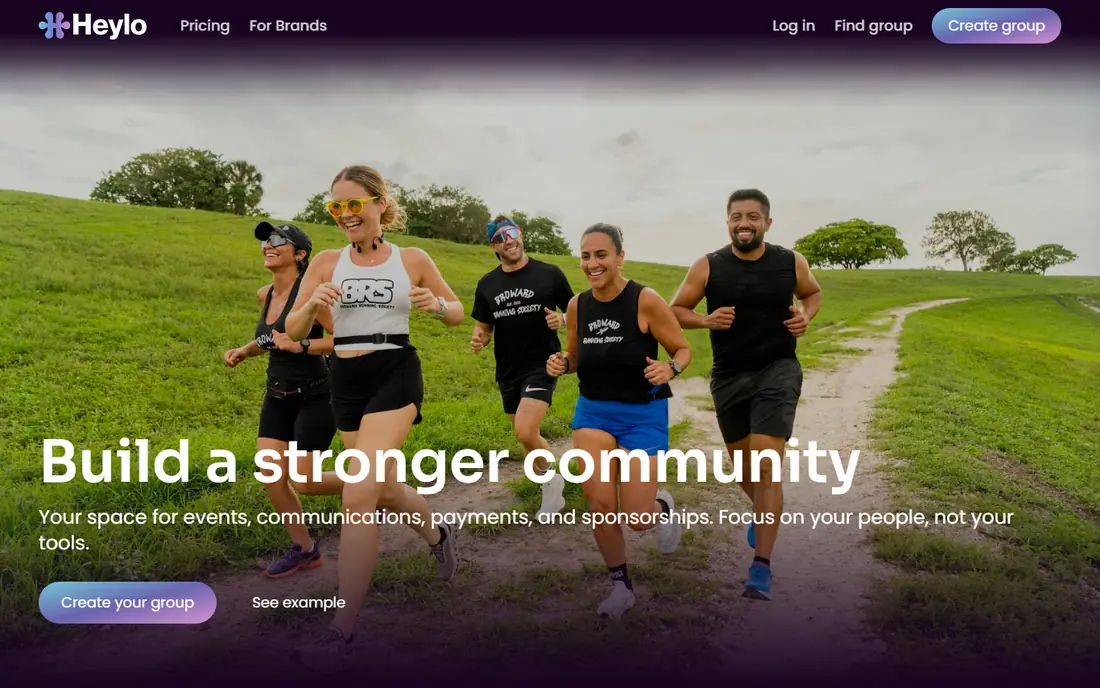
Heylo is the closest group-home replacement here for organizers who want to move a whole group. The free Base plan covers unlimited members, events, and RSVPs, with paid plans adding more features. Events, chat, and member lists sit together, which mirrors the way many people used Meetup for a standing club.
The catch is audience. Heylo does not carry Meetup's existing member base, so you must bring your members with you and promote the group yourself. We would pick Heylo when you already have a group and need a free home for it, rather than when you need strangers to discover you from scratch.
- Free base plan for groups
- Events, RSVPs, and chat in one place
- Built for group organizers
- Newer platform with a smaller member base
- Discovery depends on your own promotion
Partiful is built for casual invites: birthdays, house parties, small gatherings, and informal meetups. Hosting and RSVPing are free, and the mobile-first design makes it easy to send a good-looking invite in minutes. For a friend group or a small social circle, it feels lighter than a full event platform.
It is not a discovery tool. Strangers are unlikely to find your Partiful event unless you share it, and large standing groups need more member tools. We would pick Partiful for personal and casual events, and use Eventbrite or Luma when you need public reach.
- Free to host and RSVP
- Fast mobile invites
- Good for casual and personal events
- Not built for public discovery
- Weaker for large standing groups
Facebook Groups remain a practical replacement for local communities, because many people already check Facebook daily. You can run a public or private group, post events, share photos, and keep discussion going between meetups, all for free. For a neighborhood club or a hobby group with an existing Facebook audience, the reach is hard to match.
The feed is the problem. Algorithm sorting can bury event posts, and members who do not check often may miss updates. You also need a Facebook account, which excludes some people. We would pick Facebook Groups when your members are already there, and use email or a chat tool as a backup for important event notices.
- Free
- Huge existing audience
- Groups plus events in one place
- Requires a Facebook account
- Feed algorithm can bury posts
- Event tools are basic
Nextdoor suits hyperlocal organizing: block parties, neighborhood cleanups, local classes, and community meetups. Membership is tied to a verified neighborhood, so you reach people who actually live nearby, which is useful for events that depend on location. Posting events is free.
It is weaker for interest-based groups that span a whole city, such as a board game club or a language exchange, since Nextdoor organizes by place, not by hobby. The feed also mixes events with local news and complaints, so event posts can get lost. We would pick Nextdoor for neighborhood events, and pair it with an interest platform for city-wide groups.
- Free
- Address verified local audience
- Good for block and neighborhood events
- Interest-based discovery is weak
- Feed skews toward local news and complaints
Bumble For Friends, often called Bumble BFF, is the friend-finding mode inside Bumble. You build a profile, match with nearby people who are also looking for friends, and chat one to one. For newcomers to a city, or for people who want a few close friends rather than a large group, that matching model works well.
The style is the trade-off. It is profile and photo based, and it can feel like dating app mechanics, which some people want to avoid. There is also no built-in group event system, so you must organize meetups yourself after matching. We would pick Bumble For Friends for one-to-one friend finding, and use a group platform alongside it for regular events.
- Free to use
- Local matching for friendship
- Familiar profile and matching flow
- Profile and photo based
- Can feel like dating app mechanics
- No built-in group events
Timeleft takes a different approach: you take a short quiz, pick a date and neighborhood, and Timeleft matches you with a small dinner group and books the venue. Groups are usually four to six people, and the format removes the work of organizing, promoting, and hosting. For people who find large open events tiring, that structure is a real benefit.
The cost is the limit. Timeleft charges a subscription or a per-dinner ticket, and you pay for your meal separately, so it is not a free replacement for Meetup. Continuity is also limited, since each dinner is a new group. We would pick Timeleft when you want a low-effort night out with new people, and when you are willing to pay for that structure.
- Structured dinners with matched strangers
- Venue and group handled for you
- No group to run
- Paid subscription or ticket
- Meal paid separately
- No free tier for regular use
Discord works best as a community home for groups that talk daily, not just around events. Servers offer text channels, voice rooms, and scheduled events, all for free, with an optional paid Nitro subscription for cosmetic extras. Hobby groups, gaming clubs, study groups, and creator communities often thrive here.
Newcomers can find a busy server confusing, and there is no built-in ticketing for paid events. Organizers should set clear channels, rules, and a welcome guide. We would pick Discord when ongoing conversation matters as much as events, and when your members are comfortable with chat apps.
- Free
- Strong group chat and voice
- Scheduled events inside servers
- Chat-first design can feel chaotic
- No ticketing
- Newcomers may need guidance
How we picked these
We compared official feature pages, pricing pages, and current Meetup alternative roundups for platforms that are live in October 2026, and we kept only platforms that help people meet in person, host groups, or find local events and friends. We excluded Meetup itself, since this article is about alternatives, and we favored platforms with a current product, a clear free or paid model, and a distinct job, from ticketing to dinners to chat.
How to replace a Meetup group without losing members
Start by telling members where you are moving, and give them a clear date for the switch. Export or copy your member list, event history, and key contacts before you close anything, since some platforms limit exports. Then pick two tools if you need to: one for events and one for chat, since few replacements do both well.
For safety, keep first meetups in public places, share the venue and time with the group in advance, and let a friend know where you are going. Organizers should set basic rules for behavior, moderation, and reporting, and remove members who make others feel unsafe. A small, well-run group beats a large, chaotic one.
Frequently asked questions
What is the best alternative to Meetup for hosting a group?
Heylo is a strong free home for a standing group, with events, RSVPs, and chat in one place. Luma is a strong choice for polished event pages, and Facebook Groups work well when members are already on Facebook. Pick by whether you need discovery, hosting, or chat most.
Can I find free events without Meetup?
Yes. Eventbrite lists many free public events, Luma and Partiful offer free hosting and RSVPs, and Facebook Groups and Nextdoor list free local events. Timeleft is the main paid exception here, since it charges for curated dinners.
Is Eventbrite a good Meetup replacement?
Eventbrite is good for public ticketed and free events that need discovery, but it is weaker for ongoing clubs, since it lacks group chat and member tools. Use it for events, and add a group chat tool for members who want to stay connected between events.
How do I meet people in a new city without Meetup?
Combine tools: Bumble For Friends for one-to-one matches, Timeleft for a structured dinner, and Eventbrite or Luma for public events in your interests. Joining a regular class, club, or volunteer group often builds friendships faster than one-off events alone.
Is it safe to meet strangers from these apps?
Meet in public places for the first few times, tell someone where you are going, and leave if a situation feels wrong. Check the platform's moderation and reporting tools, and avoid sharing your home address or financial details with new contacts. Organizers should set clear conduct rules for their groups.
Can I move my Meetup group to another platform?
Yes, in most cases, but you must bring your members with you, since no platform transfers a Meetup audience automatically. Announce the move early, share the new link in several places, and run one event on both platforms if you can, so members do not get lost in the switch.
Sources
See where you really rank - block by block
ProMapRanker scans Google Maps across a grid of your service area. Simple monthly plans from $19, white-label on every plan.
Start freeKeep reading
 zscaler alternatives
Best Zscaler Alternatives in 2026
Looking for zscaler alternatives? We compare 9 SASE and zero trust platforms on architecture, data protection, pricing, and fit for your network and team.
Read → zapier alternatives free
Best Zapier Alternatives Free in 2026
Nine automation tools for zapier alternatives free in 2026, all with genuinely free tiers, plus free plan limits, starting prices and upgrade paths explained.
Read → which platform is best for online reputation
Which Platform Is Best for Online Reputation in 2026
Wondering which platform is best for online reputation? We compare 8 review, listing, and response tools for small and multi-location businesses and agencies.
Read →