 ProMapRanker
Alternatives to Launch Darkly in 2026

Key takeaways
- GrowthBook, Unleash, and Flagsmith are the strongest open source routes off a proprietary flag platform.
- ConfigCat and DevCycle suit teams that want simple, reliable flags without running their own servers.
- PostHog and Statsig suit teams that want flags plus product analytics and experimentation in one place.
- Stale flag cleanup, targeting rules, and SDK coverage matter more than a low entry price when you scale.
Quick comparison
| Pick | Great for | Pricing starts at | Free tier | |
|---|---|---|---|---|
 GrowthBook | Flags plus experimentation | Free | Yes | Visit |
 Unleash | Enterprise feature management | See website | Free trial | Visit |
 Flagsmith | Flags and remote config | Free | Yes | Visit |
 ConfigCat | Simple reliable flags | Free | Yes | Visit |
 DevCycle | Small teams wanting value | See website | Yes | Visit |
 PostHog | Flags plus analytics | Free | Yes | Visit |
 Statsig | Experimentation at scale | See website | Yes | Visit |
 Harness FME | Enterprise delivery and flags | See website | No | Visit |
 Optimizely | Experimentation and web testing | See website | Free trial | Visit |
The best alternatives to Launch Darkly
Feature flags let teams deploy code without releasing it, roll out slowly, and roll back fast. The nine tools below are alternatives only, and they cover open source self hosting, simple cloud flags, and full experimentation platforms. Pick by how much control, analytics, and governance your team actually needs.
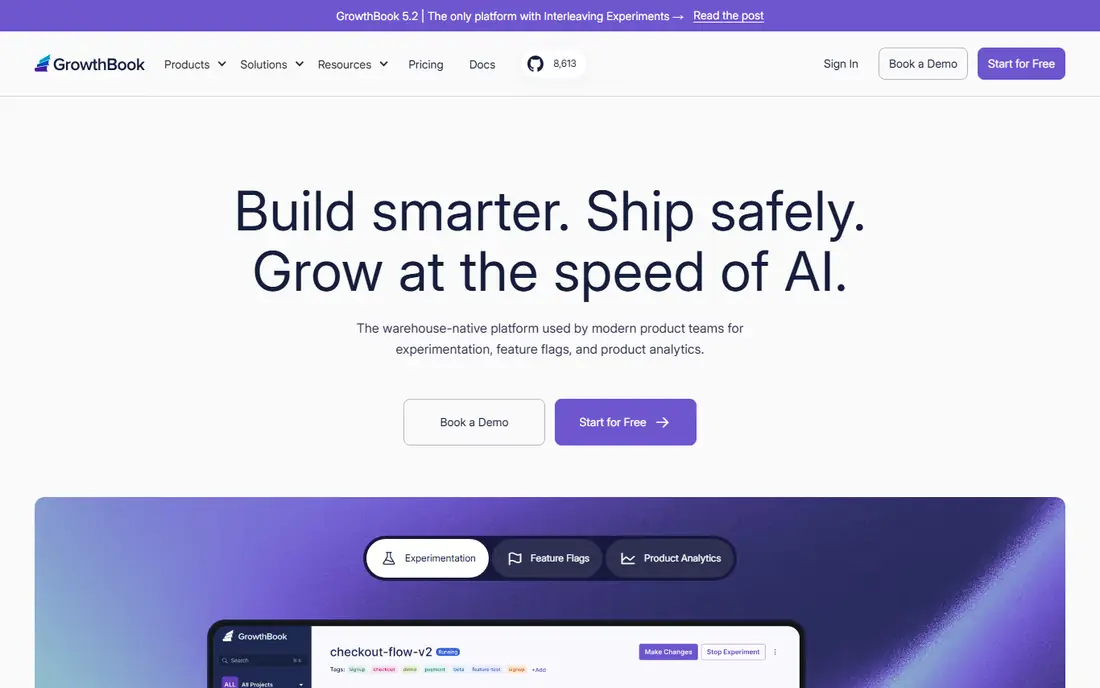
GrowthBook is the most complete open source alternative for teams that want flags and controlled experiments together. You can self host it or use its cloud, run feature flags with targeting rules, and measure whether a release improved the product with built in experimentation. That link between flag and result is why many teams pick it over a bare toggle tool.
The experimentation side needs real setup: metrics, data sources, and experiment design all matter, and a small team may use only the flag part at first. That is fine, because the flag tools stand on their own. If you plan to run experiments regularly, GrowthBook gives you a path without buying a second platform.
- Open source with self hosting
- Flags plus A and B testing in one place
- Transparent pricing for paid plans
- Experimentation setup takes time
- Smaller enterprise sales footprint than large rivals
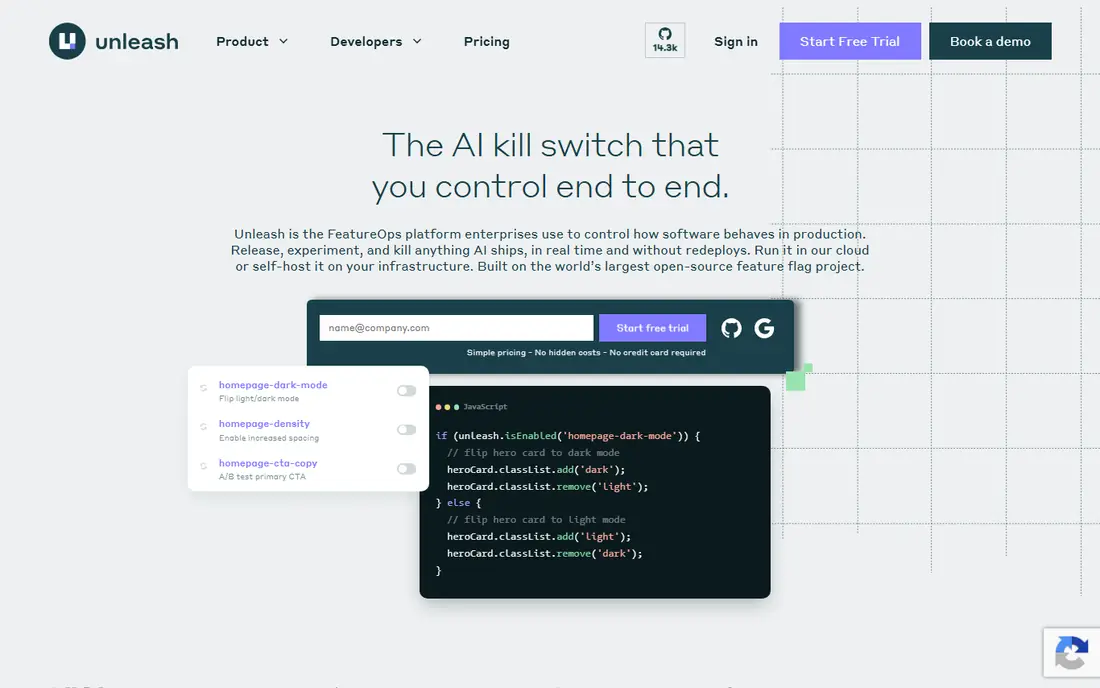
Unleash suits mid size to large teams that need governance around flags. It supports progressive delivery, targeting, and lifecycle management, with a dashboard that flags stale toggles past their expected lifetime. That governance matters when hundreds of flags accumulate across teams.
Pricing for cloud plans is per user, so large teams should model total cost before committing, and self hosting needs maintenance effort. If your main need is disciplined flag management at scale, Unleash is a strong, proven choice. If you need experimentation depth, pair it with an analytics tool or pick GrowthBook.
- Open source with self hosting
- Strong progressive delivery and governance
- Technical debt dashboard for stale flags
- Cloud pricing is per user and can climb
- Breadth needs onboarding time
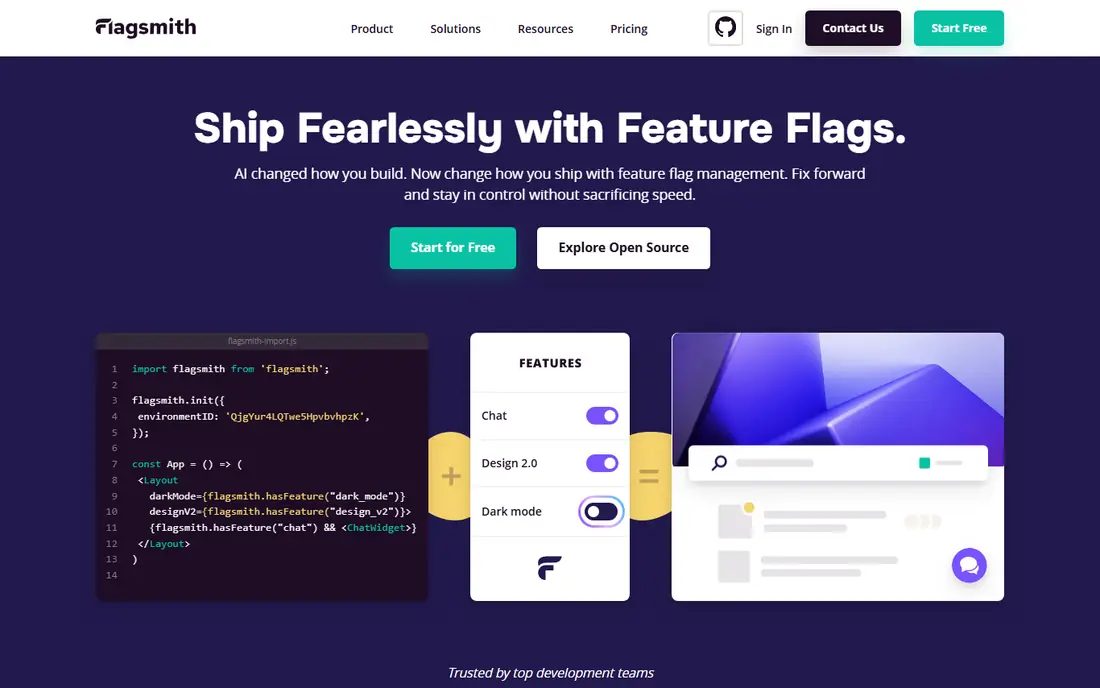
Flagsmith is a good middle ground for teams that want flags and remote configuration without a heavy experimentation platform. It offers SaaS, private cloud, and self hosted options, with open source core code and paid enterprise features. That flexibility suits banks, insurers, and health firms with data rules.
Teams that run constant A and B tests may find its experimentation depth lighter than GrowthBook or Statsig. For most flag use cases, though, Flagsmith covers targeting, environments, and remote config well. Start free, test SDK coverage for your languages, and check stale flag tagging in a real project.
- Open source with flexible hosting
- Flags and remote config in one tool
- Security focused, with private cloud options
- Experimentation is less deep than GrowthBook or Statsig
- Enterprise features are paid
ConfigCat is the simple, reliable pick. Setup is fast, flags deliver over a global CDN, and SDK coverage is broad, so most stacks can integrate in an afternoon. A dashboard for zombie flags helps teams clean up toggles that have not changed in a set time, which keeps flag debt from growing silently.
The paid entry price is higher than some competitors, and teams wanting deep experimentation will need another tool. If your goal is dependable flags with little operational overhead, ConfigCat is hard to fault. It does one job well, and it does not pretend to be an analytics platform.
- Simple setup and global CDN delivery
- Good SDK coverage
- Zombie flag dashboard for cleanup
- Paid entry is higher than some rivals
- Analytics and experimentation are limited
DevCycle is often cited by teams moving from larger flag platforms for better value and a simpler interface. It handles targeting, gradual rollouts, and feature management in a way small teams can learn fast, without the enterprise weight of a larger suite. The free tier lets a small team trial it properly.
The jump to advanced plans can feel steep, so check which features your team actually needs before budgeting. The ecosystem is also smaller than PostHog or GitLab. For a small to mid size team that wants flags without a large bill, DevCycle is a practical, friendly choice.
- Intuitive interface
- Fair value for small teams
- Good targeting and rollout controls
- Price gap between basic and advanced plans is steep
- Ecosystem is smaller than large rivals
PostHog suits teams that want to consolidate tools. Feature flags sit next to product analytics, session recordings, and surveys, so you can see how a flag change affects real user behavior without exporting data between tools. The free tier is generous for small products, and the open source core appeals to teams that value transparency.
The breadth is also a risk. A team that only needs flags may find the analytics side distracting, and self hosting at scale is real work. If you already use PostHog for analytics, adding flags is an easy win. If you only need flags, a focused tool may be simpler.
- Flags plus product analytics, session replay, and surveys in one platform
- Generous free tier
- Open source core
- Breadth can distract from pure flag work
- Self hosting needs effort at scale
Statsig is the experimentation first alternative for teams that run tests constantly. It combines feature management with advanced analytics, warehouse native options, and automated reminders for flags with no checks in 30 days. That cleanup signal helps teams avoid the flag debt that slows large codebases.
Pricing for larger use is quoted, and the setup rewards teams with analytics skills. Small teams that rarely experiment may find it more than they need. For mid size and larger product teams where experiments decide roadmaps, Statsig is a top tier contender.
- Advanced experimentation and analytics
- Automated stale flag reminders
- Strong for data driven teams
- Pricing is quoted for larger use
- Setup needs analytics skills
Harness Feature Management and Experimentation, formerly Split, targets enterprises that want flags inside a wider delivery platform. It supports targeting, rollouts, and experimentation, with pipelines that can scan for cleanup candidates and raise a pull request per run. That automation helps large teams keep flag debt under control.
It is an enterprise platform, with quoted pricing and a breadth that small teams will find heavy. If your firm already uses Harness for delivery, adding its flag tools is logical. If you only need flags, a smaller tool will be faster to adopt and cheaper to run.
- Enterprise feature management with pipelines
- Automated cleanup PRs for stale flags
- Strong governance
- Pricing is quoted
- Platform breadth can be more than small teams need
Optimizely suits teams where experimentation spans web, marketing, and product, not just backend flags. Its web experimentation tools include visual editing with little code, while its feature management supports rules and rollouts for product teams. That mix helps non technical teams run tests without waiting on engineering for every change.
Developer heavy teams may prefer a code first flag tool with open source hosting, and pricing is quoted rather than published. If your experiments involve web pages, landing pages, and product features together, Optimizely is a strong pick. If you only need developer flags, start with an open source option.
- Strong web experimentation and visual editing
- Feature management with rules
- Suited to marketing and product teams
- Pricing is quoted
- Less focused on pure developer flag workflows than open source rivals
How we picked these
We compared official feature pages, pricing pages, and recent flag platform guides, and we kept only tools live in October 2026 that offer feature flags, targeting, or experimentation. We mixed open source, simple cloud, and enterprise options so readers can match tool to team size and governance needs, and we marked prices as See website where vendors quote per project or per user tier.
We did not claim hands-on testing on a production release, and we did not invent user counts or ratings. SDK coverage, targeting rules, stale flag cleanup, and the honest cost of self hosting mattered more than a long feature list. A flag system your team actually cleans up beats a powerful system that accumulates dead toggles.
What to check before you switch
Audit your current flags first
List every flag, its owner, its rollout state, and its last evaluation. Archive dead flags before migration, and do not copy flag debt into a new tool. A clean audit makes migration faster and gives the new tool a fair start.
Check SDKs and evaluation speed
Confirm SDKs for every language and platform you ship, and test evaluation latency in your real app. Flags that slow startup or fail open in the wrong way can cause outages. Also check offline and edge behavior, because mobile and edge apps need different handling from web servers.
Test targeting and rollout rules
Trial a gradual rollout, a targeted segment, and an instant rollback on a real flag. Check how rules combine, who can change them, and whether changes are audited. A tool that makes rollbacks slow or unclear will fail on the day you need it most.
Plan stale flag cleanup from day one
Set an expected lifetime for each flag, assign an owner, and use the tool's stale flag signals. Schedule a monthly cleanup review, and automate a pull request where the tool supports it. Flags are temporary by design, and a tool without cleanup discipline will become a liability.
Frequently asked questions
What are the best alternatives to Launch Darkly?
GrowthBook, Unleash, and Flagsmith are strong open source alternatives, while ConfigCat and DevCycle suit teams wanting simple cloud flags. PostHog and Statsig suit teams wanting flags plus analytics and experimentation. The best pick depends on self hosting, experimentation, and governance needs.
What is the best open source alternative to Launch Darkly?
GrowthBook is the most complete open source alternative for flags plus experimentation, Unleash is strong for feature management depth, and Flagsmith is strong for flags and remote config across hosting models. Trial one with a representative flag and your main SDKs before migrating a full estate.
Are there free Launch Darkly alternatives?
Yes, GrowthBook, Flagsmith, ConfigCat, PostHog, and Statsig all offer free tiers, and open source tools can be self hosted at no license cost. Free tiers have limits on users, flags, or evaluations, so check those caps against your traffic. Self hosting saves license cost but adds maintenance time.
How do I migrate from Launch Darkly?
Audit and archive dead flags first, then migrate one representative flag with its targeting rules and SDK code. Test rollouts and rollbacks in a staging environment, move teams in waves, and keep the old system read only until the new system passes a real release. A staged move beats a big bang cutover.
What is a feature flag?
A feature flag is a switch in code that lets you deploy a feature without releasing it to all users. You can roll it out to a small segment, test it, and roll it back instantly if something goes wrong. Flags separate deployment from release, which makes shipping safer and faster when used with cleanup discipline.
Sources
- https://www.growthbook.io
- https://getunleash.io
- https://flagsmith.com
- https://configcat.com
- https://devcycle.com
- https://posthog.com
- https://www.statsig.com
- https://www.harness.io
- https://www.optimizely.com
- https://www.growthbook.io/insights/open-source-alternatives-to-launchdarkly
- https://www.flagsmith.com/blog/top-7-feature-flag-tools
See where you really rank - block by block
ProMapRanker scans Google Maps across a grid of your service area. Simple monthly plans from $19, white-label on every plan.
Start freeKeep reading
 zscaler alternatives
Best Zscaler Alternatives in 2026
Looking for zscaler alternatives? We compare 9 SASE and zero trust platforms on architecture, data protection, pricing, and fit for your network and team.
Read → zapier alternatives free
Best Zapier Alternatives Free in 2026
Nine automation tools for zapier alternatives free in 2026, all with genuinely free tiers, plus free plan limits, starting prices and upgrade paths explained.
Read → which platform is best for online reputation
Which Platform Is Best for Online Reputation in 2026
Wondering which platform is best for online reputation? We compare 8 review, listing, and response tools for small and multi-location businesses and agencies.
Read →