 ProMapRanker
Best Alternatives to KDP in 2026

Bookstores, libraries and print · Pricing starts at: Free
Key takeaways
- IngramSpark is the strongest alternative for print and bookstore reach, while Draft2Digital is the easiest wide ebook route from one dashboard.
- Direct stores such as Kobo, Barnes and Noble Press and Google Play Books often pay more per sale, but each one adds another dashboard to manage.
- PublishDrive suits authors who prefer a subscription over a per-sale cut, while Lulu and BookBaby suit print-first and service-led projects.
- Most authors do best with a hybrid: direct where sales are highest, plus one aggregator for the long tail of stores.
Quick comparison
| Pick | Great for | Pricing starts at | Free tier | |
|---|---|---|---|---|
| IngramSpark | Bookstores, libraries and print | Free | Yes | Visit |
 Draft2Digital | Easy wide ebook distribution | $20 one-time activation | Yes | Visit |
 Smashwords | Direct ebook sales and coupons | Free | Yes | Visit |
 PublishDrive | Subscription wide distribution | $13.99 per month | Free trial | Visit |
 Lulu | Print variety and direct sales | Free | Yes | Visit |
 BookBaby | Done-for-you publishing services | $299 | No | Visit |
 Kobo Writing Life | Kobo and library readers | Free | Yes | Visit |
 Barnes and Noble Press | NOOK readers in the US | Free | Yes | Visit |
 Google Play Books | Android and Google readers | Free | Yes | Visit |
The best alternatives to KDP
Kindle Direct Publishing is free and reaches Amazon readers, but it does not put a book in every store, and its print reach is tied to Amazon. The platforms below are genuine alternatives to KDP in the sense that each one publishes, distributes or sells a book outside Amazon, and none of them is KDP itself. We compared them on distribution, royalties, upfront cost and how much admin each one saves.

IngramSpark is the first alternative most serious indie authors consider, and for good reason. It connects a book to the Ingram wholesale network, which is how independent bookstores and libraries order titles, and it offers print-on-demand alongside ebook distribution. That reach is something Amazon-only publishing cannot match, and it makes a book orderable in places where readers actually browse shelves.
The trade-off is complexity and margin. Files need to meet Ingram standards, and print costs plus retailer discounts mean the per-copy profit is often lower than a direct sale. Title setup is now free in many cases, but optional services such as ISBN handling and file help can add cost, so read the current pricing page before uploading. If bookstore and library presence matters to your plan, IngramSpark is close to essential.
- Reaches bookstores, libraries and many retailers through Ingram
- Offers print and ebook distribution in one account
- Authors can set wholesale discounts
- Print setup and file standards are stricter than KDP
- Retailer discounts reduce the net authors keep per sale

Draft2Digital is our pick for authors who want wide ebook distribution without managing five store dashboards. You upload once, set metadata and pricing, and Draft2Digital sends the book to stores such as Apple Books, Kobo, Barnes and Noble and libraries. Its formatting tools turn a Word document into a clean ebook, which removes one of the most common stumbling blocks for new authors.
The cost is a share of each sale, roughly 10 percent of the retail price, on top of the retailer share, so direct publishing pays more per copy on high-volume titles. Draft2Digital also charges a one-time activation fee for new accounts, and its published terms describe an annual maintenance fee for low-earning accounts, so check the current FAQ before you open an account. For most wide authors, the time saved outweighs the cut.
- One upload reaches many ebook stores
- Automatic formatting tools save time
- No exclusivity required
- Takes about 10 percent of the retail price on sales
- Recent account fees apply in some cases
- No print distribution
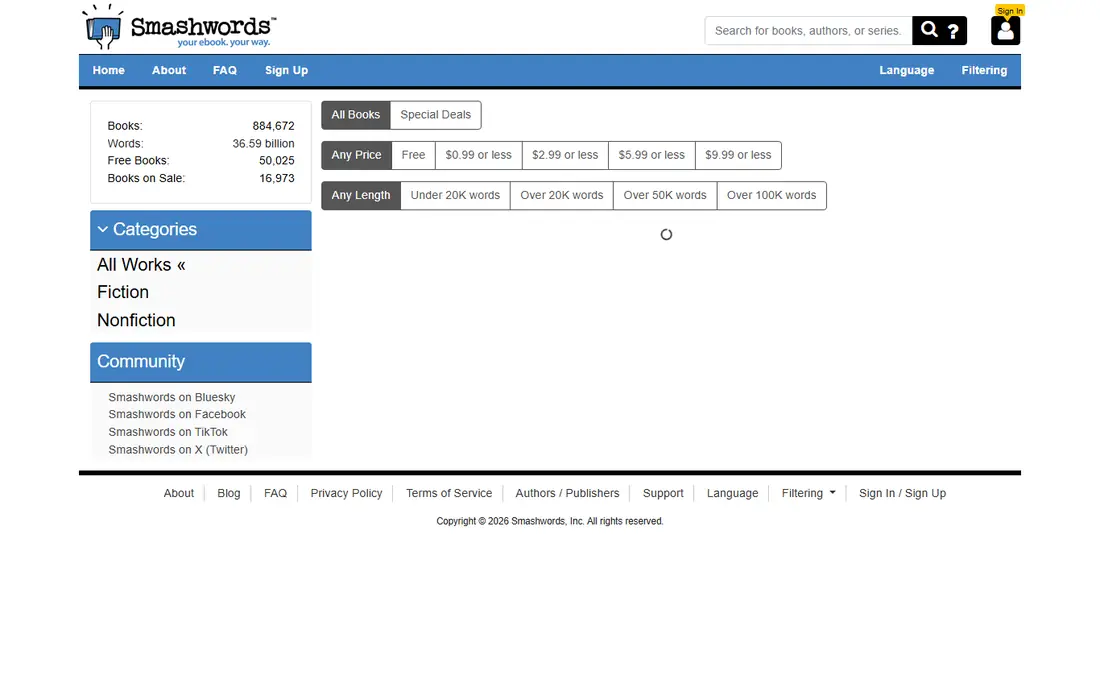
Smashwords has long been a home for independent ebook authors, and it still offers a useful mix of a direct store and wide distribution. Authors can sell from Smashwords itself, run coupon promotions for readers and reviewers, and reach retailers and libraries through distribution. That direct channel is handy for newsletter launches, since you can offer a discount without waiting on a retailer promotion window.
The honest catch is overlap. Smashwords is now part of Draft2Digital, so authors who use both may duplicate distribution to the same stores if they are not careful. It also remains ebook-only, so print authors need a second platform, and the site design feels dated next to newer dashboards. If you want a free, author-friendly ebook store with coupon control, Smashwords still earns a place.
- Free to publish
- Direct store with coupon tools for promotions
- Wide retail and library distribution through its network
- Now operates under Draft2Digital, so some features overlap
- No print option
- Interface feels older than newer rivals
PublishDrive takes a different approach to pricing. Instead of taking a percentage of each sale, its paid plans charge a monthly subscription and let authors keep the retailer royalty, which can work out better for authors with steady sales across many stores. It distributes ebooks to a wide network including major retailers and library channels, and it offers a free tier for one book on a limited set of channels, so new authors can test the dashboard before paying.
The subscription only makes sense if you publish regularly or sell enough to cover it. A single book with slow sales may cost more on PublishDrive than on a commission-based aggregator, and authors who need strong print distribution will still need IngramSpark or Lulu alongside it. Check the current plan limits on books and stores, since tiers differ.
- Subscription model with no per-sale commission on paid plans
- Reaches many stores and libraries
- Free tier covers a first book on a few channels
- Monthly cost suits active catalogues more than a single book
- Print options are limited next to IngramSpark
Lulu is a strong pick for authors whose book is physical first. It offers a broad range of print sizes, bindings and specialty formats, from standard paperbacks to photo books and calendars, which suits illustrated books, cookbooks and gifts as well as novels. Publishing is free, and you pay print costs per book, so there is no large upfront print run.
Retail reach is the limit. Lulu distributes to some retailers, but it does not match IngramSpark for bookstore and library ordering, so authors who want shelf presence should use both or choose IngramSpark for that job. Print prices also depend on page count, size and colour, so cost a sample copy before you set a retail price.
- Wide print formats including hardcover, photo books and calendars
- Free publishing with print costs per book
- Direct store for author sales
- Retail distribution is narrower than IngramSpark
- Per-book print costs vary by format and size
BookBaby suits authors who want help rather than only a dashboard. Its ebook distribution package is priced from about $299 and takes no commission after that, which appeals to authors who prefer a one-time cost over a per-sale cut. Beyond distribution, BookBaby sells editing, cover design, formatting and print services, so an author can buy the parts they cannot do themselves without hiring separate freelancers.
The upfront price is the barrier. Free platforms beat BookBaby on entry cost, and authors who can format and design their own books may not need the extra services. Package details also change, so compare exactly what is included in the current ebook and print bundles before paying. If you want a guided route with human support and no ongoing commission, BookBaby is a solid alternative.
- Ebook distribution packages with no ongoing commission
- Optional editing, cover and print services in one place
- Direct author support
- Upfront package cost is higher than free aggregators
- Service quality depends on the package chosen
Kobo Writing Life is the direct route to Kobo readers, and it is free to use. Authors who publish direct can earn 70 percent royalties at or above the qualifying price threshold, with a lower rate below it, and they keep control of pricing and promotions on the Kobo store. Kobo also has strength outside the US, notably in Canada, and its connection to library lending gives a book another path to readers who borrow rather than buy.
The audience is the honest limit. In the US, Kobo sales will usually trail Amazon, so direct Kobo publishing pays best as part of a wide plan rather than a sole channel. Managing another dashboard also takes time, which is why some authors let an aggregator handle Kobo instead. If Kobo readers matter to your genre, or if you sell well in Canada, direct publishing is worth the extra login.
- Free direct publishing to Kobo
- Royalty of 70 percent at qualifying prices
- Reach includes library lending through OverDrive links
- Kobo audience is smaller than Amazon in the US
- Dashboard adds work if you already use an aggregator
Barnes and Noble Press is the direct path to NOOK readers and Barnes and Noble shoppers in the US, and it is free to publish ebooks and paperbacks. Ebook royalties are 70 percent of the retail price at qualifying levels, which compares well with other direct stores, and print titles can be sold through Barnes and Noble channels.
The reach is narrower than a wide aggregator, and the dashboard is another place to update prices, covers and metadata. Authors who already distribute wide through Draft2Digital may find Barnes and Noble covered there, though direct publishing can pay more per sale. The choice comes down to volume. If Barnes and Noble is a meaningful share of your sales, go direct.
- Free direct publishing to Barnes and Noble
- 70 percent royalty on qualifying ebook prices
- Print option for paperbacks sold through Barnes and Noble
- Audience is mainly US NOOK and Barnes and Noble shoppers
- Another dashboard to maintain
Google Play Books, through its Partner Center, lets authors sell ebooks to Android users and readers on the web, and publishing is free. Royalties are 70 percent in many supported countries, with terms that vary by market, and the store reaches readers who may never open a Kindle or Kobo app.
The process can be slower than other direct stores. Partner accounts need approval, and Google applies its own content and pricing rules, so allow extra time for a first book. Sales also vary a lot by genre and country, so Google Play Books works best as one channel in a wide plan rather than a sole bet.
- Free publishing through the Partner Center
- Reaches Android users and web readers
- 70 percent royalty in many countries
- Account approval and store rules can be slow
- Sales vary widely by genre and region
How we picked these
We compared official pricing, royalty and distribution pages, store coverage and author terms, and we kept only platforms that publish or distribute a book outside Amazon. We favoured a mix of wide aggregators, direct stores and print specialists, so readers can match a platform to a book type rather than forcing every book through one route. Royalty figures are the published headline rates, and actual earnings depend on price, retailer share, delivery costs and market, so check the current terms for your price band before publishing.
How to choose the right mix
Start with where your readers buy. If most of your sales come from one store, publish direct there and use an aggregator for the rest. If your sales are spread thinly across many stores, one aggregator may save more time than the extra royalty from direct publishing is worth. Either way, keep one master file for manuscript, cover and metadata, so updates do not drift across dashboards.
Print, ebook or both
Print-first books need a print partner first, and IngramSpark or Lulu should lead the plan. Ebook-only books can start with Draft2Digital or PublishDrive and add direct stores as sales grow. Illustrated and large-format books need sample copies, since colour and trim size change print cost and quality more than any royalty figure suggests.
Watch the fees that are not royalties
Compare activation fees, monthly subscriptions, print costs, ISBN costs and any low-sales maintenance fee, not only the royalty percentage. A platform with a higher royalty can still earn you less if its print cost or subscription eats the margin. Run the maths on a realistic price and a realistic monthly sales figure before you commit to a paid plan.
Keep rights and pricing in your hands
Avoid exclusivity unless a promotion or programme clearly pays for it. Wide publishing works best when you can change prices, update covers and run promotions across stores without asking permission. Keep a simple sheet of where each book is live, what price it carries, and when each promotion ends.
Frequently asked questions
What is the best alternative to KDP for wide distribution?
Draft2Digital is the easiest wide ebook alternative, since one upload reaches many stores without exclusivity. IngramSpark is the stronger choice when print, bookstores and libraries matter as well. Many authors use both, with Draft2Digital for ebooks and IngramSpark for print.
Are KDP alternatives free?
Several are free to publish, including IngramSpark title setup in many cases, Smashwords, Kobo Writing Life, Barnes and Noble Press and Google Play Books. Draft2Digital charges a one-time activation fee, PublishDrive charges a subscription on paid plans, and BookBaby charges for its packages. Free publishing still involves a share of sales or print costs.
Do KDP alternatives pay better than KDP?
It depends on the store and price. Direct stores often pay 70 percent at qualifying prices, similar to KDP, while aggregators take a share on top of the retailer share, so they pay less per copy. Wide distribution can still earn more in total by reaching readers who never shop on Amazon, especially outside the US.
Can I use KDP and an alternative at the same time?
Yes, in most cases, as long as you do not enrol the same book in an exclusive programme such as KDP Select. Many authors keep Amazon through KDP and use an aggregator or direct stores for everywhere else. Check each platform terms for exclusivity before you upload the same edition twice to the same store.
What is the difference between an aggregator and a direct store?
An aggregator sends your book to many stores from one dashboard and takes a fee or subscription for that work. A direct store, such as Kobo Writing Life, publishes only to its own store and usually pays a higher royalty per sale. Aggregators save time, direct stores save margin, and a mix of both is common.
Sources
- https://myaccount.ingramspark.com/Portal/Terms
- https://www.draft2digital.com/faq/
- https://www.smashwords.com/about
- https://www.publishdrive.com/pricing/
- https://www.lulu.com/pricing/
- https://www.bookbaby.com/pricing/
- https://www.kobo.com/writinglife
- https://press.barnesandnoble.com/faq/
- https://play.google.com/books/publish/
See where you really rank - block by block
ProMapRanker scans Google Maps across a grid of your service area. Simple monthly plans from $19, white-label on every plan.
Start freeKeep reading
 zscaler alternatives
Best Zscaler Alternatives in 2026
Looking for zscaler alternatives? We compare 9 SASE and zero trust platforms on architecture, data protection, pricing, and fit for your network and team.
Read → zapier alternatives free
Best Zapier Alternatives Free in 2026
Nine automation tools for zapier alternatives free in 2026, all with genuinely free tiers, plus free plan limits, starting prices and upgrade paths explained.
Read → which platform is best for online reputation
Which Platform Is Best for Online Reputation in 2026
Wondering which platform is best for online reputation? We compare 8 review, listing, and response tools for small and multi-location businesses and agencies.
Read →