 ProMapRanker
Best Alternatives to Intercom Systems in 2026

Key takeaways
- This guide covers building and home intercom hardware, not customer messaging software.
- ButterflyMX and Swiftlane suit multifamily and office buildings that want mobile-first access.
- Aiphone and 2N suit buildings that need durable wired hardware and long service life.
- DoorBird and Comelit suit homes and smaller buildings that want strong video door stations.
- Verkada suits multi-site operators that already use Verkada cameras and access control.
Quick comparison
| Pick | Great for | Pricing starts at | Free tier | |
|---|---|---|---|---|
 ButterflyMX | Multifamily mobile access | See website | No | Visit |
 Aiphone IX Series | Durable wired video intercom | See website | No | Visit |
 2N IP Intercoms | Enterprise SIP intercom | See website | No | Visit |
 DoorBird | Premium home video door stations | See website | No | Visit |
 Comelit | European style multi-unit intercom | See website | No | Visit |
 Verkada Intercom | Multi-site cloud security | See website | No | Visit |
 Swiftlane | Touchless office and residential access | See website | No | Visit |
 Mircom | Intercom plus life safety | See website | No | Visit |
 DoorKing | Gate and telephone entry | See website | No | Visit |
The best alternatives to intercom systems
A building intercom system is hardware at the door, plus software for residents, staff, and visitors. A visitor presses a call button, a resident answers on a phone or wall station, and the door opens. Some systems are wired and built to last decades, while others are cloud based and managed from an app. Prices vary by model, wiring, installation, and subscription, so most vendors quote by project, and you should request a quote for your door count and building type.

ButterflyMX is a cloud video intercom platform built for apartment buildings and commercial properties in the US. Residents answer calls on a phone, open doors from the app, and manage guest access without a wall station in every unit. Property managers can use a web dashboard, integrate with property management tools, and manage many buildings from one place. That mobile-first design is why it is common in newer multifamily buildings.
The trade is dependence on the cloud service and a quote based price. You pay for panels and for a per-unit subscription, so total cost depends on building size and term. If internet service fails, or if you want a fully local system, a wired option such as Aiphone or 2N may fit better. For large residential buildings that want a polished resident experience, ButterflyMX is a strong shortlist pick.
- Strong resident mobile app
- Video panels for large buildings
- Property management integrations
- Cloud dependent
- Quote based pricing
- Hardware and subscription costs both apply
Aiphone is a Japanese maker with a long history in wired intercom hardware, and the IX Series is its IP video range. It suits schools, hospitals, offices, and large residential buildings that need reliable audio and video, door release, and integration with access control. Systems can scale to many stations, and the hardware is built for heavy daily use and vandal-prone entrances.
The mobile experience is less polished than cloud-first rivals, and installation usually needs a trained dealer, which adds cost. Pricing is quote based and varies by station count and wiring. If your priority is hardware that lasts, works without a cloud subscription for core calls, and passes strict procurement review, Aiphone deserves a close look.
- Long track record in schools and commercial buildings
- Scales to many stations
- SIP and access control options
- Mobile app is secondary to hardware
- Installation needs a trained dealer
- Pricing is quote based
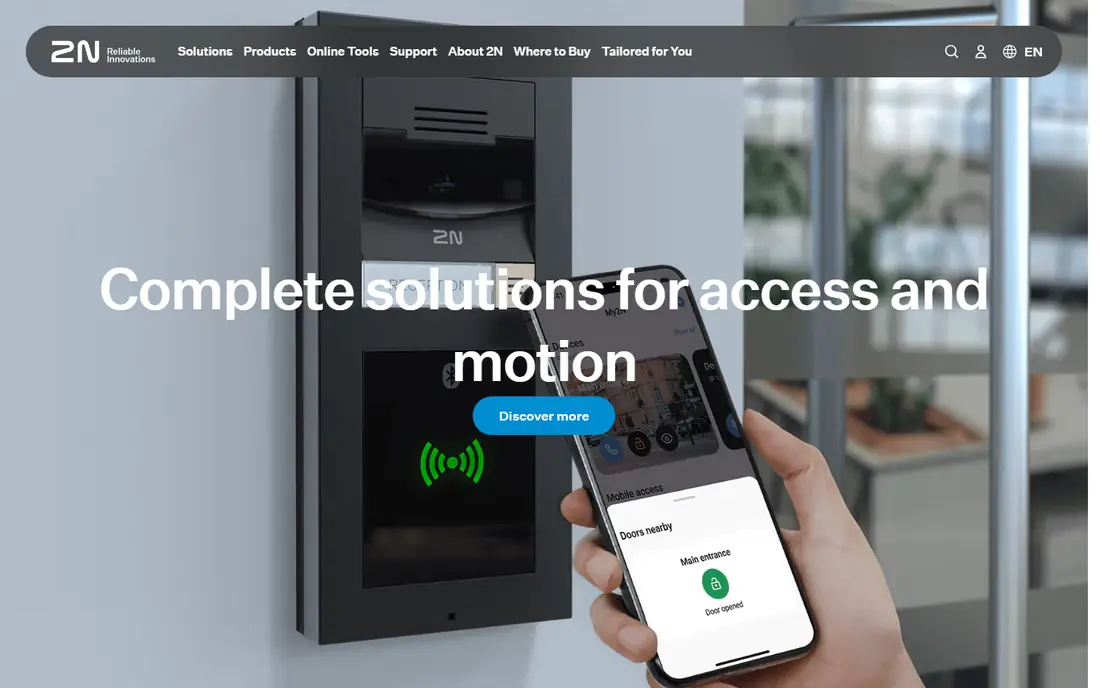
2N, now part of Axis, makes IP intercom door stations for offices, hotels, and multifamily buildings. Its strength is openness: SIP support lets a door station work with many phone systems, access platforms, and video systems, rather than locking you into one vendor app. Models range from compact single-button stations to large multi-tenant panels with displays, cameras, and card readers.
Hardware prices sit at the premium end, and the mobile app experience can feel less polished than ButterflyMX or Swiftlane. You will also need an integrator who knows SIP and access control to get the most from the system. For enterprises and integrators that value open standards and long hardware life, 2N is a reliable core choice.
- Open SIP standard
- Wide model range
- Axis backing and integration options
- Premium hardware prices
- App experience varies by model
- Needs integrator expertise
DoorBird makes IP video door stations for single homes and smaller buildings, with a focus on build quality and design. A visitor call reaches a phone app, video is clear, and the open API lets integrators link DoorBird to smart home systems, access control, and home automation. Modular models allow a keypad, display, or card reader to be added to a station.
DoorBird is less suited to very large multifamily buildings that need a full resident management platform. Hardware prices are premium, and a larger site may need several stations plus a separate management layer. For a home, a small office, or a boutique residential building, DoorBird offers a durable, well made door station.
- Strong build quality
- Open API and smart home options
- Good video and audio
- Costly at larger scale
- No large multifamily SaaS platform
- Installation needs care for wiring
Comelit is an Italian maker with a long history in residential intercom systems, from simple audio kits to IP video systems for multi-unit buildings. Its panels are design led, which matters for residential projects where the entrance hardware is visible every day. Ranges cover single homes, small apartment blocks, and larger residential sites, with indoor monitors and mobile app options on newer systems.
The US footprint is smaller than Aiphone or ButterflyMX, so dealer availability can vary by region. Cloud features and third-party integrations also vary by product range, so confirm the exact model and app features before you buy. For residential projects in Europe, and for design-sensitive buildings elsewhere, Comelit is a credible, well established option.
- Long European residential history
- Wide range from audio to IP video
- Design led panels
- Smaller US dealer footprint
- Third-party API depth varies
- Cloud features vary by range
Verkada Intercom suits operators that already use Verkada cameras and access control. The intercom panel, cameras, and door controllers sit in one cloud dashboard, so security teams can review video, manage access, and answer calls from the same place. That single view helps multi-site schools, offices, and retail operators that need consistent policy across locations.
The cost is premium, and the system works best inside the Verkada platform. A standalone building that does not need cameras and access control may find a simpler intercom cheaper. For multi-site operators that value central management, audit logs, and a single vendor for physical security, Verkada Intercom is a strong, if costly, pick.
- Cloud managed with cameras and access in one platform
- Strong audit and remote management
- Modern panels
- Premium pricing
- Tied to the Verkada platform
- Subscription required for full features
Swiftlane is a cloud access and intercom platform for offices and residential buildings, with a focus on touchless entry. Residents and staff can use a mobile credential or face recognition at the door, answer video calls on a phone, and manage guest access from an app. That flow suits office lobbies and mid-market residential buildings that want a modern, phone-first experience.
The installer network is smaller than Aiphone or ButterflyMX, so availability can vary. Face recognition also needs a privacy review: check local biometric laws, data retention, and opt-out options before you enable it. Pricing is quote based. For offices that want touchless access with video intercom in one system, Swiftlane is worth a quote.
- Modern mobile app
- Face and mobile credentials
- Good for office lobbies
- Smaller installer network than larger rivals
- Biometric features need privacy review
- Quote based pricing
Mircom, a Canadian maker, suits large multifamily and commercial buildings where intercom sits alongside fire alarm and life safety systems. Its intercom ranges integrate with building safety and access systems, which helps projects where one vendor must cover entry, communication, and emergency functions. That integration is valuable for high-rise residential and institutional buildings.
The install model is heavier than a cloud-first platform, and the resident app experience is less central than ButterflyMX or Swiftlane. Pricing is quote based and depends on building size and system scope. For large buildings where life safety integration matters, Mircom is a serious, established option. For a small building that only needs a video door station, a simpler system will cost less.
- Intercom plus fire and life safety integration
- Suited to large multifamily buildings
- Canadian maker with long history
- Heavyweight install model
- Less mobile-first than cloud rivals
- Pricing is quote based
DoorKing suits gated lots, parking areas, and perimeter entrances where telephone entry matters more than video. A visitor can call a resident or office from a keypad panel, the resident can open a gate by phone, and managers can program codes and access rules. Outdoor hardware is built for weather and heavy use, which matters at a gate that sees traffic all day.
Many DoorKing models do not include built-in video, so add a separate camera system if video verification is required. The interface style is functional rather than modern, and setup needs care for wiring and gate hardware. For gate and lot entry, DoorKing remains a practical, durable choice, and it pairs well with a video system where needed.
- Strong gate and perimeter entry range
- Programmable telephone entry
- Durable outdoor hardware
- No built-in video on many models
- Older interface style
- Needs separate video if video is required
How we picked these
We compared official product pages, installer guides, and public reviews for building and home intercom hardware live in October 2026. We kept systems with real door stations, call handling, and door release that fit residential, office, school, or gate use. We left out customer messaging software with a similar name, since that is a different product type, and we left out low cost camera-only doorbells that do not provide a full building intercom system. Where pricing is project based, we marked it as See website rather than guessing a figure.
What to check before you buy
Start with the building, not the app. Count doors, units, and entry points, then decide whether you need wired hardware, cloud management, or both. Wired systems such as Aiphone and 2N suit long-life commercial installs, while cloud systems such as ButterflyMX and Swiftlane suit residential buildings that want mobile management. Gate sites should shortlist DoorKing and check video needs separately.
Next, check wiring, power, and network. IP video stations need network cabling, power, and a reliable internet link for mobile calls. Ask your installer about failover if the internet drops, backup power for door release, and fire safety rules for locks on fire-rated doors. Electric strikes and magnetic locks have different safety rules, so confirm them with your installer and local code.
Finally, check privacy and management. Ask how video and call logs are stored, how long they are kept, and who can view them. For face recognition, check biometric law and opt-out options. For resident data, check how accounts are removed when a tenant moves out. A good intercom system should make daily entry easy and make those controls clear.
Frequently asked questions
What is the difference between a building intercom and a video doorbell?
A building intercom serves many units from shared entrance panels, with indoor stations or mobile apps, door release, and management tools for staff. A video doorbell usually serves one home and one door. For apartment buildings, offices, and schools, a full intercom system is the right category.
Do I need an installer for a building intercom system?
Most building systems need a trained installer for wiring, door hardware, network setup, and safety checks. Single-home door stations can be simpler, but gate hardware and multi-unit panels should be installed by a dealer. Get at least two quotes and ask about ongoing support and subscription costs.
Can residents answer intercom calls on a phone?
Yes, on most modern systems. ButterflyMX, Swiftlane, Verkada, DoorBird, and newer Aiphone and 2N systems offer mobile apps for video calls and door release. Check whether the app needs a subscription, whether calls work away from home, and whether a wall station is still available for residents without a smartphone.
Are cloud intercom systems secure?
Cloud systems can be secure when they use encrypted calls, strong account controls, and regular updates, but they depend on the vendor cloud and your network. Ask about encryption, two-factor sign-in, data retention, and how access is removed when staff or tenants leave. Wired local systems reduce cloud dependence but still need network security.
How much does a building intercom system cost?
Costs vary widely by door count, hardware, wiring, and subscription. Simple single-door stations cost far less than a multi-entrance system for a large building, and installation often costs as much as hardware. Request a project quote that separates hardware, installation, and yearly subscription, so you can compare like with like.
Sources
See where you really rank - block by block
ProMapRanker scans Google Maps across a grid of your service area. Simple monthly plans from $19, white-label on every plan.
Start freeKeep reading
 zscaler alternatives
Best Zscaler Alternatives in 2026
Looking for zscaler alternatives? We compare 9 SASE and zero trust platforms on architecture, data protection, pricing, and fit for your network and team.
Read → zapier alternatives free
Best Zapier Alternatives Free in 2026
Nine automation tools for zapier alternatives free in 2026, all with genuinely free tiers, plus free plan limits, starting prices and upgrade paths explained.
Read → which platform is best for online reputation
Which Platform Is Best for Online Reputation in 2026
Wondering which platform is best for online reputation? We compare 8 review, listing, and response tools for small and multi-location businesses and agencies.
Read →