 ProMapRanker
Alternatives to Heroku for Hobby Projects in 2026

Key takeaways
- Render is the closest Heroku-style pick for hobby backends, with a free web tier that sleeps when idle and a low paid tier for always-on apps.
- Railway is the fastest path from code to a running app with a database, but its ongoing free allowance is small, so budget a few dollars a month.
- Vercel and Netlify are best for front-end and static hobby projects, not for a traditional always-on server.
- Fly.io and Koyeb suit hobbyists who are comfortable with containers and want apps close to users, while Cloudflare Workers suits serverless APIs.
Quick comparison
| Pick | Great for | Pricing starts at | Free tier | |
|---|---|---|---|---|
 Render | Heroku-style hobby backends | See website | Yes | Visit |
 Railway | Fast full-stack hobby apps | See website | Free trial | Visit |
 Fly.io | Container apps worldwide | See website | Free trial | Visit |
 Vercel | Front-end hobby projects | See website | Yes | Visit |
 Netlify | Static and full-stack front ends | See website | Yes | Visit |
 DigitalOcean App Platform | Predictable hobby hosting | See website | Yes | Visit |
 Koyeb | Low-cost container hobby apps | See website | Yes | Visit |
 Cloudflare Workers | Serverless hobby APIs | See website | Yes | Visit |
 Replit | Browser-based hobby coding | See website | Yes | Visit |
The best alternatives to Heroku for hobby projects
Heroku removed its free tier years ago, and hobby projects now need a platform where a small app can cost little or nothing when traffic is low. We compared official pricing pages, documentation, and public comparisons for the platforms below, focusing on hobby use: a web app, a small database, and occasional traffic. Paid production platforms that need a sales call are left out, since they do not fit a hobby budget.
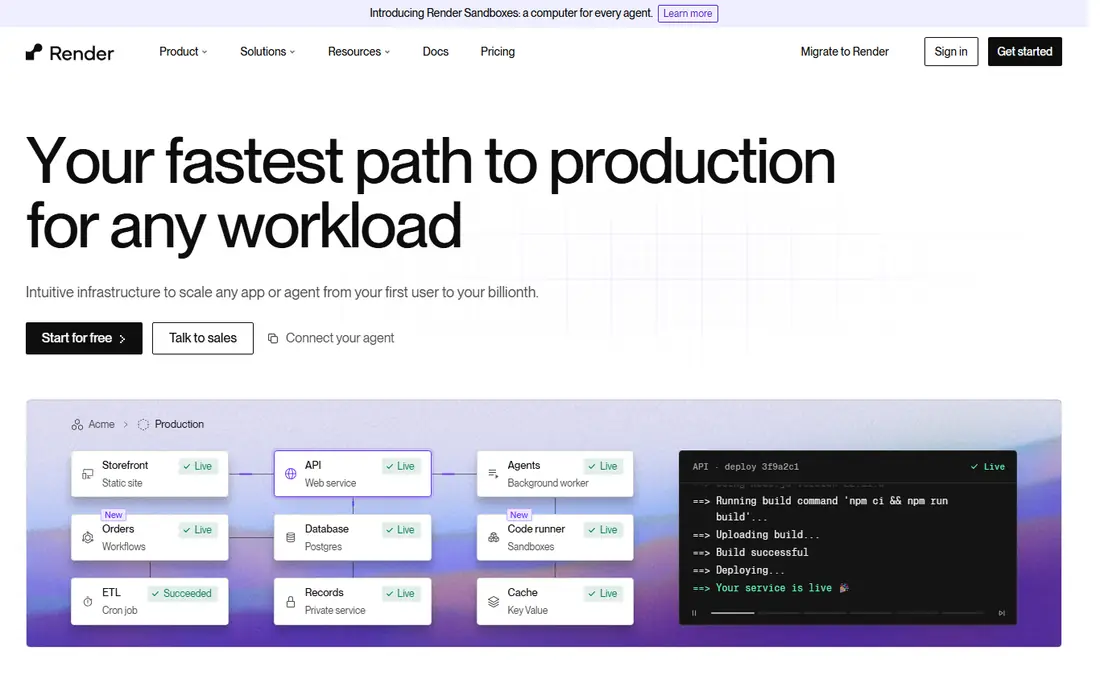
Render feels most familiar to former Heroku users, with deploys from Git, environment variables, and managed PostgreSQL and Redis in the same dashboard. A hobby project can start on the free web tier, then move to a paid instance when it needs to stay awake. That upgrade path matters, because many hobby apps start small and only later need always-on hosting.
The limits are honest ones. Free web services spin down after idle time and take time to wake, so a first visit can be slow. The free database tier is also time-limited, so check the current expiry terms and plan for a paid database if the project needs to live for months.
- Git-based deploys like Heroku
- Managed databases
- Free web tier for low-traffic apps
- Free web services sleep after idle time
- Free database has a limited lifespan
Railway wins on speed for hobby builders. Connect a repo, and it often detects the framework, provisions a database, and deploys with little manual config. PostgreSQL, MySQL, Redis, and MongoDB can run as services inside the same project, which keeps a full-stack hobby app in one place. For weekend projects and prototypes, that lack of friction is a real advantage over platforms that need more setup.
The catch is cost control. New accounts get a trial credit, and the ongoing free allowance is small, so a hobby app with a database can use up its credit quickly. Treat Railway as a low-cost hobby platform, budget a few dollars a month, and set usage alerts so a runaway process does not surprise you.
- Very fast setup
- Databases as one-click services
- Good framework detection
- Ongoing free allowance is small
- Usage billing needs watching
Fly.io runs apps as small virtual machines close to users around the world, which suits APIs, bots, and real-time hobby projects that benefit from low latency. The Dockerfile-first workflow gives full control over the runtime, and the command-line tool makes it easy to scale machines up or down. Developers who already know Docker will feel at home here.
Hobbyists should note two things. Setup is more manual than Render or Railway, since you write a config file and manage machines yourself. New organizations also get a short trial rather than an ongoing free tier, so Fly.io is best for hobbyists willing to pay a small usage bill for global deployment.
- Global edge deployment
- Docker-first workflow
- Good for APIs and workers
- More manual setup than Render or Railway
- New accounts get a short trial, not an ongoing free tier
Vercel is the natural home for front-end hobby projects, especially Next.js apps, with Git-based deploys and preview links for every change. The hobby plan is free for personal, non-commercial use, which covers portfolios, demos, and learning projects well. Serverless functions can handle light backend work, such as form handling or small APIs.
It is not a drop-in Heroku replacement for a traditional server. Long-running processes, persistent connections, and heavy background jobs fit poorly on a serverless front-end platform. Use Vercel when the project is front-end led, and pair it with a backend platform from this list when a real server is needed.
- Excellent Next.js and front-end deploys
- Free hobby plan for personal projects
- Fast global delivery
- Hobby plan is for personal, non-commercial use
- Not a traditional always-on server
Netlify has long been a hobby favorite for static sites, portfolios, and documentation, with deploys straight from Git and instant preview links. The free plan covers personal projects with a monthly usage credit allowance, and serverless functions can add small backend features such as contact forms. Its dashboard is friendly for beginners who do not want to manage servers.
Like Vercel, Netlify is not built for an always-on backend server. A hobby project that needs a persistent process, a large database, or background workers should run that part on Render, Railway, or Fly.io, and keep the front end on Netlify if that split suits the project.
- Free plan for personal sites
- Simple Git deploys
- Serverless functions for light backends
- Free plan uses usage credits
- Traditional servers need another platform
DigitalOcean App Platform gives hobbyists a middle ground between a pure platform and a raw virtual server, with apps deployed from Git and priced by container size. Static sites can run free, while containers start at a low monthly figure, which makes budgeting simple. Managed databases are available when a hobby project outgrows a containerized database.
The main limit for hobby use is that free hosting covers static sites, not containers, so a backend app costs money from day one. The console also feels more infrastructure-focused than Render or Railway, which may slow down absolute beginners. It suits hobbyists who want predictable pricing and may later move to a full virtual server.
- Predictable container pricing
- Static sites free
- Managed databases available
- No free container tier
- Console can feel more infrastructure-focused
Koyeb is a smaller platform that deserves attention from hobbyists because it offers a free tier for a small web service and a limited free database option. Deploys work from Git or Docker, and the platform handles TLS and scaling basics, so a side project can go live without much ops work. For a single small app, Koyeb can be cheaper than larger platforms.
The trade-offs are scale and wake time. The free instance scales to zero after idle time, so the first request after a quiet period can be slow, and the free database allowance is limited. Hobbyists should treat Koyeb as a good home for one small project, and check paid pricing before adding several services.
- Free tier for a small service
- Git and Docker deploys
- Managed database option
- Free instance scales to zero when idle
- Smaller ecosystem than larger platforms
Cloudflare Workers suits hobby APIs, webhooks, and edge middleware, with a free tier that covers a large number of daily requests. Code runs on a global edge network, so latency stays low without managing servers, regions, or scaling rules. Pairing Workers with Cloudflare storage and database products can cover many small hobby backends.
The model has limits that hobbyists should respect. Workers are short-lived and stateless by design, so long-running processes, large in-memory state, and traditional server frameworks do not fit well. Use Workers when the project is API-shaped, and choose a container platform when it needs a persistent server.
- Generous free request allowance
- Global edge network
- No server to manage
- Serverless model with limits
- Not suited to traditional long-running servers
Replit is the easiest starting point for a hobbyist who wants to code, run, and share an app without setting up a local environment. The browser editor, templates, and one-click deploys make it ideal for learning, prototypes, and small demos. Sharing a project link is simple, which helps when showing work to friends or a class.
For a hobby app that strangers will use, Replit has limits. Free apps sleep after idle time, and its hosting is aimed at development and demos rather than production traffic. Treat Replit as a great place to build and test, then move a serious hobby project to Render, Railway, or Fly.io when it needs reliable uptime.
- Code and run apps in the browser
- Good for learning and prototypes
- Easy sharing
- Free apps sleep when idle
- Hobby hosting is not the same as production hosting
How we picked these
We compared official pricing pages and documentation, and we favored platforms a hobbyist can start without a sales call, with a free tier, trial, or low paid entry point. We excluded pure virtual server hosts that need manual server setup, since the comparison is about Heroku-style platforms, and we excluded platforms whose free tier had ended with no low-cost hobby path. Where pricing varied by usage or region, we wrote "See website" rather than guessing a figure.
What to check before you pick
First, decide what kind of app you are building. A static site, a front-end app with small APIs, a traditional server with a database, and a global real-time app each point to a different platform on this list. Matching the app shape to the platform saves more money and frustration than chasing the cheapest headline price.
Second, read the free tier terms carefully. Check whether free services sleep, whether free databases expire, and what happens when usage credits run out. Finally, test the wake-up experience yourself: deploy a small app, leave it idle, then visit it fresh and see how long the first load takes, since that is the experience your visitors will get.
Frequently asked questions
What is the best free Heroku alternative for hobby projects?
Render is the strongest free option for a traditional hobby backend, with a free web tier that sleeps when idle. Vercel and Netlify are stronger free options for front-end projects, while Koyeb offers a useful free container tier.
Does Railway still have a free tier?
Railway offers a trial credit for new accounts and a small ongoing free allowance, but it is not a full free tier. Hobbyists should budget a few dollars a month for a Railway app with a database.
Why do free hobby apps load slowly sometimes?
Free tiers often sleep after idle time to save resources, and the first visit wakes the service, which can take time. Paid instances stay awake, so upgrade to a low paid tier if first-load speed matters.
Can I host a hobby database for free?
Some platforms offer a limited free database, but terms vary and free databases may expire or carry small storage limits. For a long-lived hobby project, budget for a low-cost paid database or an external free-tier database with clear limits.
Is Fly.io still good for hobby projects?
Yes, for Docker-comfortable hobbyists who want global deployment and are willing to pay small usage costs. New accounts get a short trial rather than an ongoing free tier, so it is not the cheapest free-only choice.
Should I use Vercel for a Python or Ruby backend?
Vercel can run serverless functions, but it is not a traditional server host. A Python or Ruby backend with persistent processes fits better on Render, Railway, Fly.io, or Koyeb.
Sources
See where you really rank - block by block
ProMapRanker scans Google Maps across a grid of your service area. Simple monthly plans from $19, white-label on every plan.
Start freeKeep reading
 zyte alternatives
Best Zyte Alternatives in 2026
These zyte alternatives cover managed scraping APIs, proxy networks and no code tools for lawful collection from your own or consented sources only in 2026.
Read → zerto alternatives
Best Zerto Alternatives in 2026
Compare the best zerto alternatives for disaster recovery and replication, with recovery targets, cloud options and honest trade-offs for teams in 2026.
Read → zerofox alternatives
Best ZeroFox Alternatives in 2026
We compared 9 zerofox alternatives for brand protection, phishing takedowns, dark web monitoring, and social impersonation, with clear coverage notes.
Read →