 ProMapRanker
Alternatives to Fujifilm in 2026

Key takeaways
- Canon and Nikon offer the widest full-frame lens ranges for photographers who want long-term system depth.
- Sony suits hybrid photo and video work, with strong autofocus and a large third-party lens range.
- Panasonic Lumix suits video-first buyers, while OM System suits travel and wildlife photographers who want light gear.
- Sensor size, lens cost, and video needs matter more than a single body feature.
Quick comparison
| Pick | Great for | Pricing starts at | Free tier | |
|---|---|---|---|---|
 Canon | full-frame system depth | See website | No | Visit |
 Nikon | ergonomics and full-frame stills | See website | No | Visit |
 Sony | hybrid photo and video | See website | No | Visit |
 Panasonic Lumix | video-first hybrid cameras | See website | No | Visit |
 OM System | light travel and wildlife kits | See website | No | Visit |
 Leica | premium rangefinder and compact cameras | See website | No | Visit |
 Pentax | DSLR shooting and weather sealing | See website | No | Visit |
 Hasselblad | medium format stills | See website | No | Visit |
 Sigma | lenses and compact full-frame cameras | See website | No | Visit |
The best alternatives to Fujifilm
Fujifilm is known for film-like colour and compact cameras, but other brands offer larger sensors, stronger video, or wider lens ranges. We compared alternative camera brands that sell current interchangeable-lens systems, not Fujifilm itself.

If full-frame system depth is the main job, Canon stands out for a wide RF lens range and strong autofocus, with bodies from entry level to professional. In our comparison of official feature pages and pricing, that combination stood out because it answers the core job without forcing a separate tool for every step.
That strength shows up in daily use, not only on a feature page. The plan limits and the way the tool handles real work matter, so check trial terms, user limits, and what happens when you outgrow the entry tier. A tool that fits the first month but blocks the sixth month is a poor buy.
The catch is that RF lenses can be costly, and older EF lenses need an adapter on mirrorless bodies. Before you commit, run a real task in the trial or free tier, check the plan limits, and confirm the tool fits the team that will use it every day. That short test usually reveals more than a feature list.
- Wide RF lens range
- Strong autofocus
- Broad body range from entry to professional
- RF lenses can be costly
- Older EF lenses need an adapter on mirrorless bodies
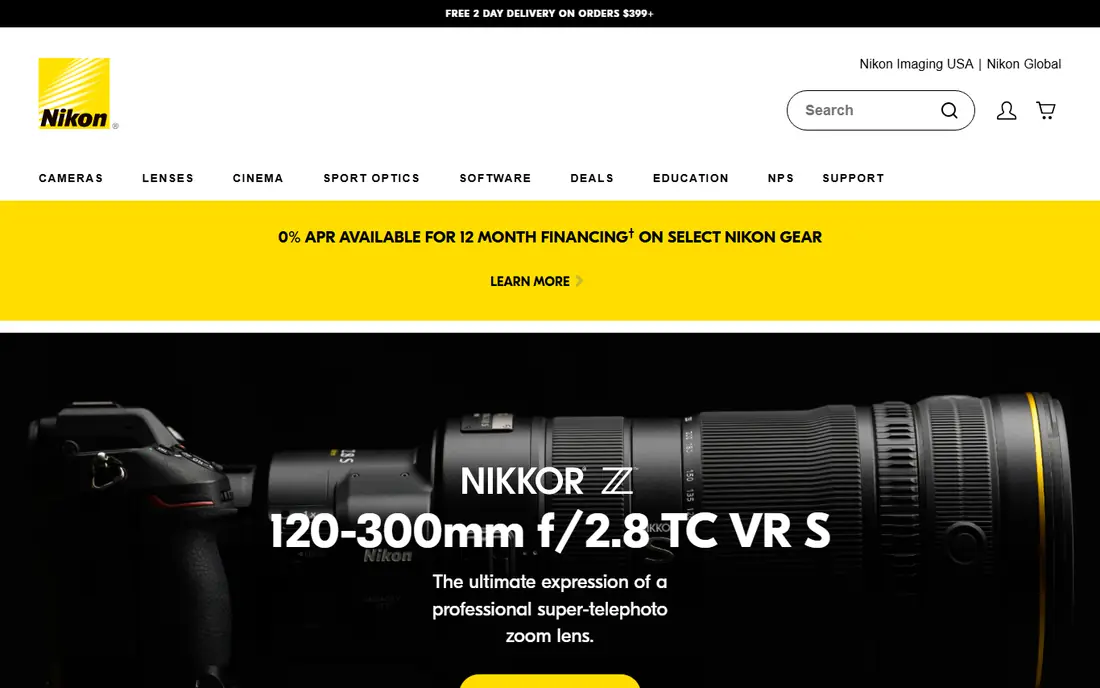
For teams focused on ergonomics and full-frame stills, Nikon stands out for strong Z lenses, good ergonomics, and weather sealing, with strong stills bodies. In our comparison of official feature pages and pricing, that combination stood out because it answers the core job without forcing a separate tool for every step.
Pricing and limits shape the real cost. Check what the entry plan includes, what sits on higher tiers, and whether extra users, volume, or add-ons change the bill. A clear plan page is a good sign, while vague pricing usually means a sales call and a custom quote.
The catch is that Z lens prices can be high, and video features vary by body. Before you commit, run a real task in the trial or free tier, check the plan limits, and confirm the tool fits the team that will use it every day. That short test usually reveals more than a feature list.
- Strong Z lens range
- Good ergonomics and weather sealing
- Strong stills bodies
- Z lens prices can be high
- Video features vary by body

When hybrid photo and video matters most, Sony stands out for a large E-mount lens range with strong autofocus and video, which suits hybrid work. In our comparison of official feature pages and pricing, that combination stood out because it answers the core job without forcing a separate tool for every step.
Daily workflow is where a tool earns its place. Look at how quickly a new user can complete the core job, how clear errors and reports are, and how well the tool connects to the rest of your stack. A strong feature that is hard to find rarely gets used.
The catch is that menus can feel complex, and smaller bodies can feel cramped with large lenses. Before you commit, run a real task in the trial or free tier, check the plan limits, and confirm the tool fits the team that will use it every day. That short test usually reveals more than a feature list.
- Large E-mount lens range including third-party lenses
- Strong autofocus and video
- Menus can feel complex
- Smaller bodies can feel cramped with large lenses
If your priority is video-first hybrid cameras, Panasonic Lumix stands out for strong video features and stabilisation, with L-mount and Micro Four Thirds options. In our comparison of official feature pages and pricing, that combination stood out because it answers the core job without forcing a separate tool for every step.
Support and docs matter when work stalls. Check the help centre, community, and update history before you commit. A tool with clear docs and recent updates is easier to trust than one with a polished landing page and thin guidance.
The catch is that autofocus history is weaker than some rivals on some bodies, and lens range varies by mount. Before you commit, run a real task in the trial or free tier, check the plan limits, and confirm the tool fits the team that will use it every day. That short test usually reveals more than a feature list.
- Strong video features and stabilisation
- L-mount and Micro Four Thirds options
- Autofocus history is weaker than some rivals on some bodies
- Lens range varies by mount
For buyers who need light travel and wildlife kits, OM System stands out for compact Micro Four Thirds bodies and lenses, with strong stabilisation. In our comparison of official feature pages and pricing, that combination stood out because it answers the core job without forcing a separate tool for every step.
That strength shows up in daily use, not only on a feature page. The plan limits and the way the tool handles real work matter, so check trial terms, user limits, and what happens when you outgrow the entry tier. A tool that fits the first month but blocks the sixth month is a poor buy.
The catch is that a smaller sensor limits low-light results versus full-frame, and the lens range is narrower. Before you commit, run a real task in the trial or free tier, check the plan limits, and confirm the tool fits the team that will use it every day. That short test usually reveals more than a feature list.
- Compact Micro Four Thirds bodies and lenses
- Strong stabilisation and weather sealing
- Smaller sensor limits low-light results versus full-frame
- Lens range is narrower
When the brief is premium rangefinder and compact cameras, Leica stands out for distinctive optics and build, with compact Q models for street and travel. In our comparison of official feature pages and pricing, that combination stood out because it answers the core job without forcing a separate tool for every step.
Pricing and limits shape the real cost. Check what the entry plan includes, what sits on higher tiers, and whether extra users, volume, or add-ons change the bill. A clear plan page is a good sign, while vague pricing usually means a sales call and a custom quote.
The catch is that prices are very high, and system depth is narrower than mainstream brands. Before you commit, run a real task in the trial or free tier, check the plan limits, and confirm the tool fits the team that will use it every day. That short test usually reveals more than a feature list.
- Distinctive optics and build
- Compact Q models for street and travel
- Very high prices
- System depth is narrower than mainstream brands
If dSLR shooting and weather sealing tops your list, Pentax stands out for optical viewfinder DSLR bodies with strong weather sealing. In our comparison of official feature pages and pricing, that combination stood out because it answers the core job without forcing a separate tool for every step.
Daily workflow is where a tool earns its place. Look at how quickly a new user can complete the core job, how clear errors and reports are, and how well the tool connects to the rest of your stack. A strong feature that is hard to find rarely gets used.
The catch is that the mirrorless range is absent, so future system growth is limited, and video is more basic. Before you commit, run a real task in the trial or free tier, check the plan limits, and confirm the tool fits the team that will use it every day. That short test usually reveals more than a feature list.
- Optical viewfinder DSLR bodies
- Strong weather sealing
- Loyal lens heritage
- Mirrorless range is absent, so future system growth is limited
- Video is more basic
For work centred on medium format stills, Hasselblad stands out for large medium format sensors for detailed stills, with premium build. In our comparison of official feature pages and pricing, that combination stood out because it answers the core job without forcing a separate tool for every step.
Support and docs matter when work stalls. Check the help centre, community, and update history before you commit. A tool with clear docs and recent updates is easier to trust than one with a polished landing page and thin guidance.
The catch is that prices are very high, and video and autofocus are not the focus. Before you commit, run a real task in the trial or free tier, check the plan limits, and confirm the tool fits the team that will use it every day. That short test usually reveals more than a feature list.
- Large medium format sensors for detailed stills
- Premium build and lenses
- Very high prices and large files
- Video and autofocus are not the focus
When you need lenses and compact full-frame cameras most, Sigma stands out for strong Art lenses for many mounts, plus compact fp cameras. In our comparison of official feature pages and pricing, that combination stood out because it answers the core job without forcing a separate tool for every step.
That strength shows up in daily use, not only on a feature page. The plan limits and the way the tool handles real work matter, so check trial terms, user limits, and what happens when you outgrow the entry tier. A tool that fits the first month but blocks the sixth month is a poor buy.
The catch is that the camera system is small versus mainstream brands, and lens prices vary widely. Before you commit, run a real task in the trial or free tier, check the plan limits, and confirm the tool fits the team that will use it every day. That short test usually reveals more than a feature list.
- Strong Art lenses for many mounts
- Compact fp cameras for stills and video
- Camera system is small versus mainstream brands
- Lens prices vary widely
How we picked these
We compared official brand pages and current camera lineups for brands that sell interchangeable-lens cameras in October 2026. We kept brands with a live system and current bodies, and we left Fujifilm out, because this list covers alternatives only. We left out brands with no current interchangeable-lens system. We compared official feature pages, pricing, and app store listings where relevant, plus public reviews. We did not claim hands-on testing that did not happen, and we kept only products that exist and work today.
What to check before you buy
Pick the lens system, not only the body
Bodies change every few years, while lenses last longer. Check the lenses you will actually buy, their prices, and whether third-party lenses are available for the mount.
Match sensor size to your work
Full-frame suits low light and shallow depth of field. APS-C suits a balance of size and quality. Micro Four Thirds suits light travel kits and long telephoto reach.
Test handling before you buy
Hold the camera, check the menu, and test autofocus on a moving subject if possible. A camera that feels awkward will stay at home, even if its specs look strong.
Frequently asked questions
What are the best Fujifilm alternatives?
Canon, Nikon, and Sony are the closest full system alternatives, with wide lens ranges and current mirrorless bodies. Panasonic Lumix suits video work, and OM System suits light travel kits. The best choice depends on sensor size and lens needs.
Which camera brand is closest to Fujifilm colour?
No brand copies Fujifilm film simulations exactly. Canon colour is often praised for skin tones, while Nikon and Sony offer strong profiles and raw files for editing. If colour straight from the camera matters most, test sample files before switching.
Is Sony better than Fujifilm?
Sony offers larger sensor options, strong autofocus, and a huge lens range, which suits hybrid and professional work. Fujifilm offers compact bodies and distinctive colour. Neither is better for every photographer, so match the system to your work.
What is a good alternative for street photography?
Ricoh GR cameras and Leica Q models suit street work, while OM System and Sony offer compact mirrorless options. A small body, quiet shutter, and a fast prime lens matter more than sensor size alone.
Should I switch from Fujifilm to full-frame?
Switch if you need better low-light results, shallower depth of field, or a wider professional lens range, and if you accept larger bodies and higher lens costs. Stay if size, colour, and your current lenses already serve your work.
Sources
See where you really rank - block by block
ProMapRanker scans Google Maps across a grid of your service area. Simple monthly plans from $19, white-label on every plan.
Start freeKeep reading
 zoho inventory alternatives
6 Alternatives to Zoho Inventory, Compared on Price and Fit
Zoho Inventory alternatives: 6 tools compared on price, free plans and fit. Katana leads the list for manufacturers. Fit and flaws are laid out for each entry.
Read → zoho crm alternatives
Best Zoho CRM Alternatives (2026)
Need Zoho CRM alternatives? We compare 7 tools on cost, free access and who each suits. Every pick gets a straight assessment. Built for quick decisions.
Read → zelle alternatives
Best Zelle Alternatives in 2026
Compare the best Zelle alternatives for sending money to friends, paying sellers and moving funds abroad, with honest notes on fees, speed and safety in 2026.
Read →