 ProMapRanker
Alternatives to Elixir in 2026

Key takeaways
- Erlang is the closest alternative, since it shares the same virtual machine and fault-tolerance model as Elixir.
- Gleam is the best fit for teams that want BEAM concurrency with static typing and clearer compile-time checks.
- Rust and Go suit teams that need fast, compiled services and a larger hiring pool, with different trade-offs on safety and simplicity.
- Python is the practical pick when ecosystem size and hiring matter more than BEAM-style fault tolerance.
Quick comparison
| Pick | Great for | Pricing starts at | Free tier | |
|---|---|---|---|---|
 Erlang | BEAM fault tolerance without Elixir syntax | Free | Yes | Visit |
 Gleam | Typed BEAM development | Free | Yes | Visit |
 Rust | Fast, memory-safe systems services | Free | Yes | Visit |
 Go | Simple, fast backend services | Free | Yes | Visit |
 Scala | JVM functional programming at scale | Free | Yes | Visit |
 Haskell | Pure functional programming | Free | Yes | Visit |
 Clojure | Pragmatic functional work on the JVM | Free | Yes | Visit |
 Python | Largest ecosystem and fastest hiring | Free | Yes | Visit |
The best alternatives to Elixir
Elixir is known for concurrency, fault tolerance, and productive web development on the Erlang virtual machine, known as BEAM. The alternatives below are not copies of Elixir. Each one trades some of that BEAM model for a different strength, such as static typing, raw speed, or a much larger library ecosystem.
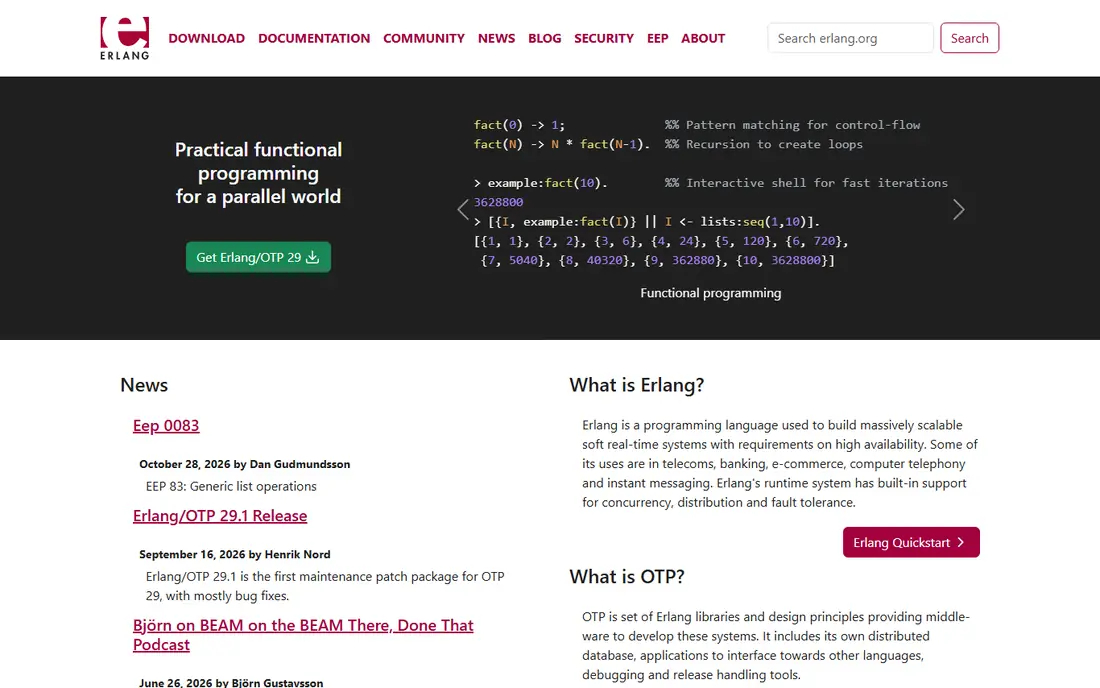
Erlang is the most direct alternative because Elixir runs on its virtual machine. A team that moves to Erlang keeps lightweight processes, message passing, and supervision trees that restart failed parts of a system without bringing the whole service down. That model is why Erlang has lasted in telecom, messaging, and other systems that must stay up under load.
The downside is familiarity. Erlang syntax is terse and quite different from Ruby-style code, and its web tooling is less polished than the Elixir ecosystem around Phoenix. We would pick Erlang when the team already values the BEAM model above all else and wants the original language, not a friendlier layer on top of it.
- Same BEAM runtime and supervision model
- Long history in telecom and messaging systems
- Lightweight processes for massive concurrency
- Syntax feels unfamiliar to many developers
- Smaller web framework ecosystem than Elixir
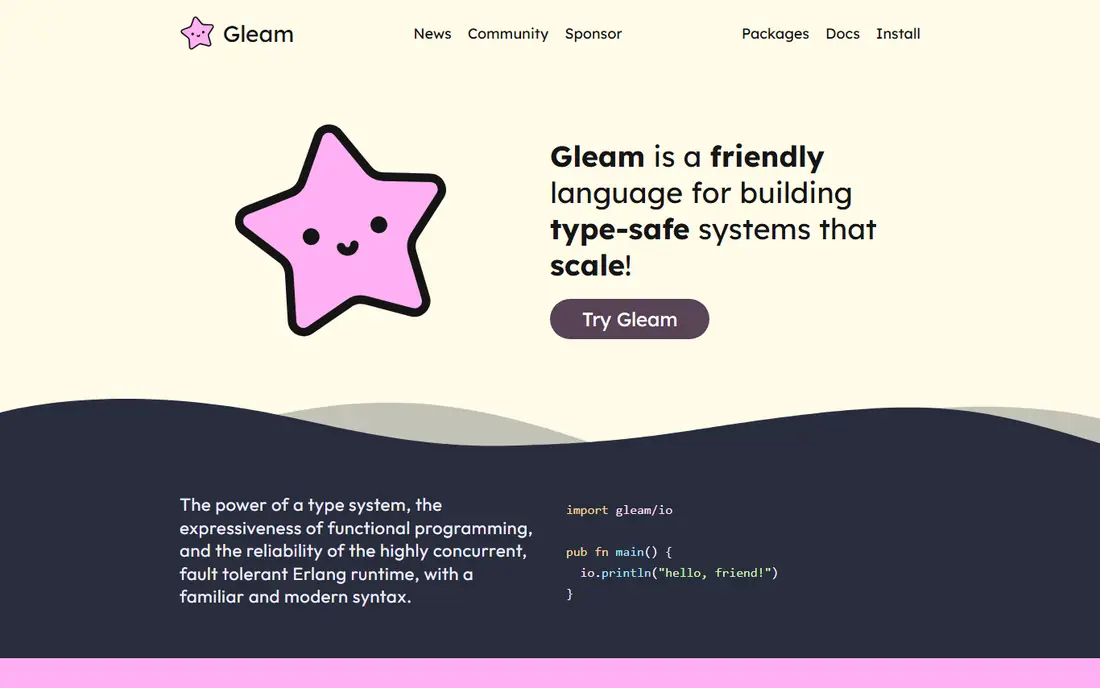
Gleam gives a team BEAM concurrency with a type system that catches many errors before code runs. That combination appeals to developers who like Elixir but want stronger compile-time guarantees. It also compiles to JavaScript, which opens a path to sharing code between server and browser in some projects.
Ecosystem size is the honest limit. Gleam does not copy Phoenix, Ecto, or LiveView, so a team building a full web app will write more plumbing or wait for libraries to mature. We see Gleam as a strong weekend project and a serious option for services where correctness matters more than a ready-made web stack.
- Static typing with friendly compiler errors
- Runs on BEAM and compiles to JavaScript
- Clear, simple syntax for functional code
- Smaller ecosystem than Elixir
- Fewer mature web frameworks and libraries
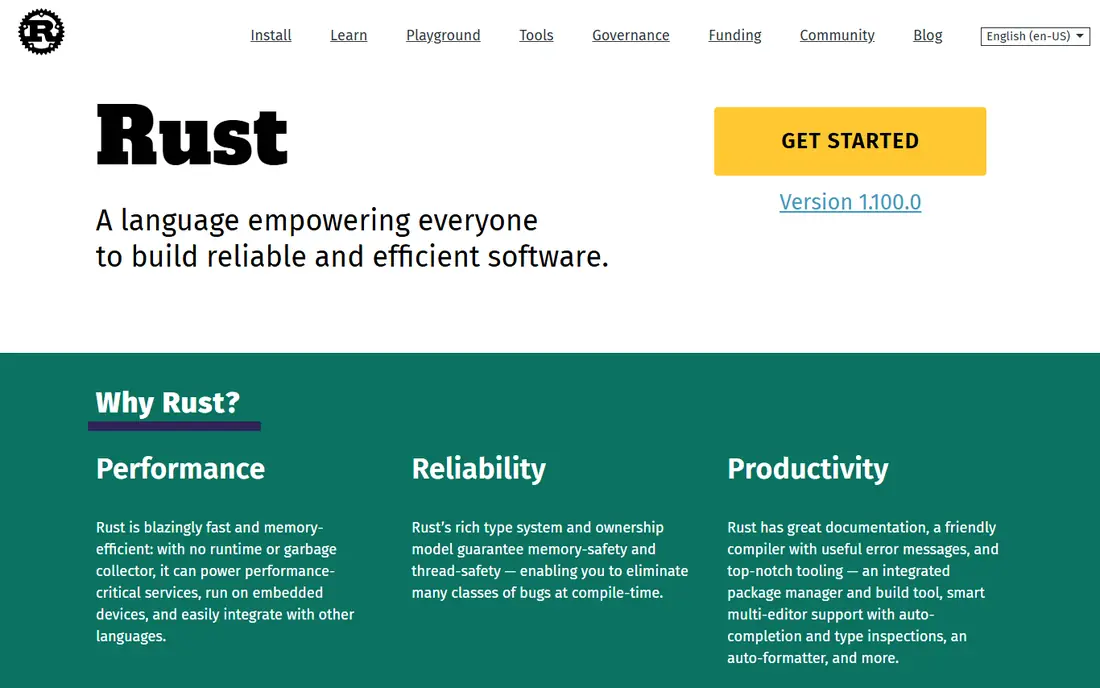
Rust suits a team that needs speed and safety in the same service. Its compiler checks memory use and data races at build time, which helps for network services, parsers, and infrastructure tools. Performance is a clear strength, and the crate ecosystem covers many server and async needs.
The trade-off is effort. Ownership and borrowing take time to learn, and a simple CRUD web service may take longer to build than in Elixir. We would choose Rust when performance, safety, and long-running services matter more than rapid web prototyping, and when the team is willing to invest in learning the language properly.
- Strong memory safety without a garbage collector
- High performance for systems and network services
- Active ecosystem for servers and tooling
- Steeper learning curve, especially around ownership
- Development can be slower for simple web apps
Go is the pragmatic alternative for backend services. Its concurrency model with goroutines is easy to explain, compilation is fast, and a single binary is simple to deploy. For APIs, workers, and cloud services, Go teams often ship quickly and maintain code with less debate about style.
Go does not offer the same functional style or supervision model as Elixir. Error handling is explicit and repetitive, and some developers miss pattern matching and immutable data habits. We would pick Go when hiring, deployment simplicity, and steady backend work matter more than BEAM-style fault tolerance.
- Fast compilation and simple deployment
- Goroutines make concurrency easy to read
- Large standard library for servers and APIs
- Less expressive functional style than Elixir
- Error handling can feel verbose
Scala appeals to teams already on the Java virtual machine that want functional programming without leaving that ecosystem. It mixes object-oriented and functional styles, and it is used for data pipelines, streaming, and large backend systems. Access to Java libraries is a major practical benefit.
Complexity is the catch. Scala offers many ways to solve the same problem, and large codebases can become hard for newcomers to read. Compile times and build setup also need care. We would shortlist Scala for JVM teams with data or scale needs, not for a team that simply wants a lighter Elixir.
- Functional and object-oriented features on the JVM
- Strong fit for data and large backend systems
- Access to the full Java ecosystem
- Language complexity can grow quickly
- Build tooling and compile times can frustrate new teams
Haskell is the purest functional option on this list. Pure functions, immutability, and a strong type system help a team reason about code and catch errors early. For research, compilers, and services where correctness is prized, Haskell has a loyal and skilled community.
The practical limits are hiring and ecosystem breadth. Fewer developers know Haskell commercially, and lazy evaluation can surprise newcomers when they tune performance. We would recommend Haskell for teams that already value functional design and can support a smaller, expert group, rather than as a drop-in replacement for a busy web team.
- Pure functions and strong static typing
- Powerful abstraction for correct code
- Excellent for learning functional design deeply
- Smaller commercial hiring pool
- Lazy evaluation can make performance harder to predict
Clojure takes a pragmatic path to functional programming. It favors immutable data, simple functions, and a REPL-driven workflow that makes exploration fast. Running on the JVM gives it access to a huge library base, and ClojureScript extends the same ideas to JavaScript.
Dynamic typing is both a freedom and a limit. A team gets flexibility, but it gives up the compile-time checks that Gleam, Rust, and Haskell provide. Startup time also matters for tiny command-line tools. We would pick Clojure when a JVM team wants functional habits and interactive development without the strictness of Haskell or Scala.
- Simple, pragmatic functional style
- Full access to Java libraries
- Interactive REPL development speeds up exploration
- Dynamic typing means fewer compile-time checks
- JVM startup time can matter for small tools
Python is the most practical alternative for many teams, even though it is not a BEAM language. Its ecosystem covers web frameworks, data science, automation, and AI, and hiring is far easier than for niche functional languages. A team can prototype quickly and find libraries for almost any common task.
Performance and concurrency are the trade-offs. Python is slower for heavy compute unless it uses compiled extensions, and its concurrency model does not match the fault-tolerance story of Elixir processes. We would pick Python when ecosystem, hiring, and speed of development matter most, and when the service can scale with workers, queues, or compiled helpers.
- Huge library ecosystem for web, data, and AI
- Easy to learn and easy to hire for
- Strong frameworks for APIs and data work
- Slower than compiled languages for heavy compute
- Concurrency model differs from BEAM processes
How we picked these
We compared official language sites, documentation, and public ecosystem information for each option, and we included only languages that are live and actively maintained in October 2026. We favored languages that cover the main reasons a team might leave Elixir: a different concurrency model, static typing, performance, JVM or Python ecosystem access, or easier hiring.
We did not claim hands-on testing that did not happen. We compared what each language is designed for, its runtime model, and its practical limits, rather than inventing benchmarks or user counts. That approach keeps the advice useful for a team choosing a language for a real project, not just for a syntax comparison.
How to choose an Elixir alternative
Start with the job, not the language fashion. A chat system that must stay up under failure has different needs from a data pipeline or a simple API. List the must-haves first, then match them to a runtime model.
Match the concurrency model to the risk
If fault tolerance and long-lived processes are central, stay on BEAM with Erlang or Gleam. If the service is a set of stateless APIs behind a load balancer, Go, Rust, or Python can work well with queues and retries. Do not assume a language alone gives resilience; deployment, supervision, and monitoring matter too.
Weigh ecosystem against control
Python and Go offer the widest hiring pools and library coverage. Rust offers control and speed at the cost of learning time. Haskell and Clojure offer functional depth with smaller commercial pools. A small team should favor the ecosystem it can actually staff and maintain, even if another language looks more elegant on paper.
Try a small service first
Build one real service, with tests, deployment, and monitoring, before committing a whole product. That trial reveals build times, library gaps, and hiring friction faster than reading docs. Keep the old Elixir service running during the trial so the comparison is fair.
Frequently asked questions
What is the closest alternative to Elixir?
Erlang is the closest alternative because Elixir runs on the Erlang virtual machine. It keeps the same process, message passing, and supervision ideas, with different syntax. Gleam is the next closest for teams that want BEAM concurrency with static typing.
Is Gleam a good replacement for Elixir?
Gleam can be a good replacement for services where static typing matters most, but its ecosystem is smaller than Elixir. It lacks a direct copy of Phoenix and its full web stack, so web-heavy teams should test library coverage first. For focused services, Gleam is a serious and growing option.
Should I choose Rust or Go instead of Elixir?
Choose Rust when performance and memory safety are top priorities and the team can handle a steeper learning curve. Choose Go when simplicity, fast builds, and easy deployment matter more. Both are strong for backend services, but neither copies BEAM fault tolerance.
Is Python a good alternative to Elixir?
Python is a good alternative when ecosystem size, hiring, and development speed matter most. It is widely used for web APIs, data work, and AI, with frameworks for most common tasks. It is slower for heavy compute and uses a different concurrency model, so plan scaling with workers or compiled extensions where needed.
Can I mix Elixir with another language?
Yes, many teams keep Elixir for real-time or fault-tolerant parts and use another language for data, AI, or specialized services. Services can talk over HTTP, queues, or message protocols. That hybrid approach often beats a full rewrite, especially when only part of the system needs a different strength.
What should a beginner learn instead of Elixir?
A beginner who wants jobs and a gentle start should consider Python or Go, since both have large communities and clear learning paths. A beginner drawn to functional programming and types may enjoy Gleam or Haskell, with the understanding that hiring pools are smaller. Pick based on the kind of work you want, not only on syntax.
Sources
See where you really rank - block by block
ProMapRanker scans Google Maps across a grid of your service area. Simple monthly plans from $19, white-label on every plan.
Start freeKeep reading
 zoho inventory alternatives
6 Alternatives to Zoho Inventory, Compared on Price and Fit
Zoho Inventory alternatives: 6 tools compared on price, free plans and fit. Katana leads the list for manufacturers. Fit and flaws are laid out for each entry.
Read → zoho crm alternatives
Best Zoho CRM Alternatives (2026)
Need Zoho CRM alternatives? We compare 7 tools on cost, free access and who each suits. Every pick gets a straight assessment. Built for quick decisions.
Read → zelle alternatives
Best Zelle Alternatives in 2026
Compare the best Zelle alternatives for sending money to friends, paying sellers and moving funds abroad, with honest notes on fees, speed and safety in 2026.
Read →