 ProMapRanker
Best Alternatives MessageBird in 2026

Key takeaways
- MessageBird is now Bird, so this list covers replacements for Bird messaging rather than listing Bird itself.
- Twilio is the broadest replacement, with SMS, voice, WhatsApp, email, and verification in one platform.
- Telnyx and Plivo suit cost-focused teams, with lower published per-message rates and developer-friendly APIs.
- Vonage, Sinch, and Infobip suit global and enterprise messaging, with wider channel coverage and managed support.
- Bandwidth, ClickSend, and Textmagic suit teams that want carrier control, prepaid simplicity, or no-code campaign tools.
Quick comparison
| Pick | Great for | Pricing starts at | Free tier | |
|---|---|---|---|---|
 Twilio | Broadest messaging platform | Pay as you go | Free trial | Visit |
 Vonage | Voice, video, and messaging APIs | Pay as you go | Free trial | Visit |
 Plivo | Lower-cost Twilio-style API | Pay as you go | Free trial | Visit |
 Sinch | Global omnichannel messaging | Pay as you go | Free trial | Visit |
 Telnyx | Low per-message carrier pricing | Pay as you go | Free trial | Visit |
 Bandwidth | US carrier-grade messaging | Pay as you go | Free trial | Visit |
 Infobip | Enterprise omnichannel platform | See website | Free trial | Visit |
 ClickSend | Prepaid campaign messaging | Pay as you go | No | Visit |
 Textmagic | No-code SMS campaigns | Pay as you go | Free trial | Visit |
The best alternatives messagebird
MessageBird, now known as Bird, built its name on SMS, WhatsApp, voice, and email through one API and dashboard. Teams move away for lower per-message cost, simpler pricing, better delivery in a specific region, or a platform that fits their developer stack. The tools below are all messaging platforms, not marketing-only apps, and they differ mainly on price structure, channels, and support.
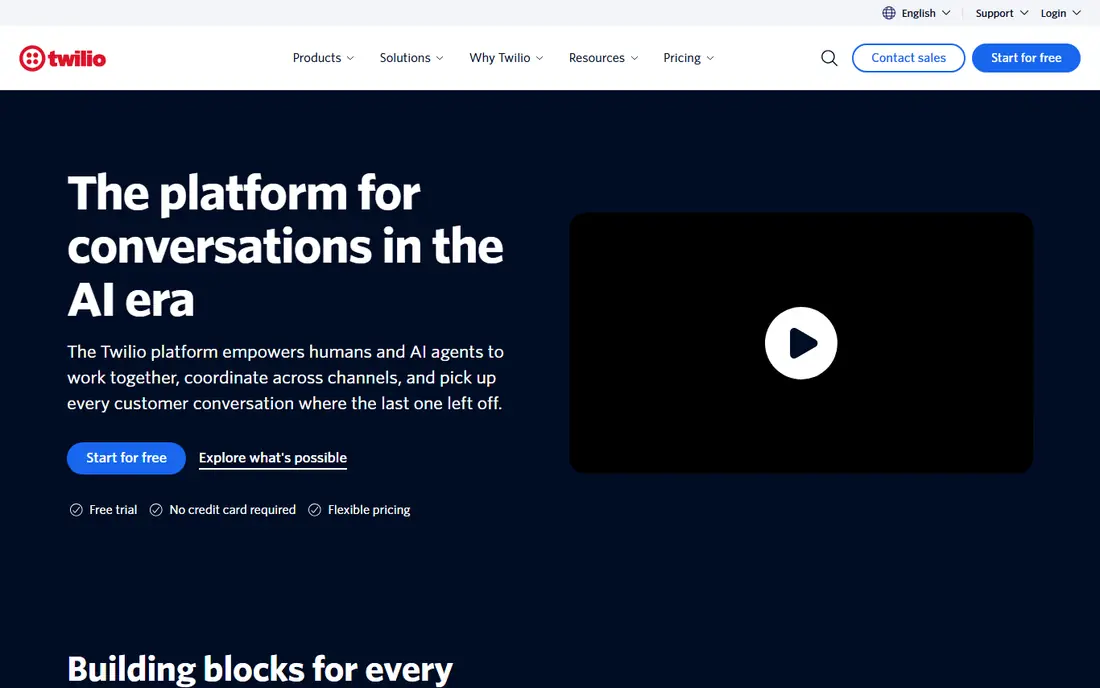
Twilio is the safest general replacement for Bird, because it covers the most channels in one account. Teams can send SMS, run voice calls, verify users, send WhatsApp messages, and add email, with APIs and SDKs for common languages. That breadth matters when a product grows from simple alerts into two-factor checks, support calls, and marketing messages.
The cost needs a full calculation. Current listings put US SMS at about $0.0083 per segment before carrier fees, plus number rental and 10DLC registration fees in the US. That is higher than some rivals, and paid support starts at a separate monthly rate in listings. Twilio fits best when breadth, documentation, and ecosystem matter more than the lowest possible per-message price.
- Wide SMS, voice, WhatsApp, email, and verification coverage
- Large documentation and SDK range
- Global number options
- Per-message cost is higher than Telnyx or Plivo in current listings
- Carrier and registration fees add to the headline rate
- Support with guarantees costs extra
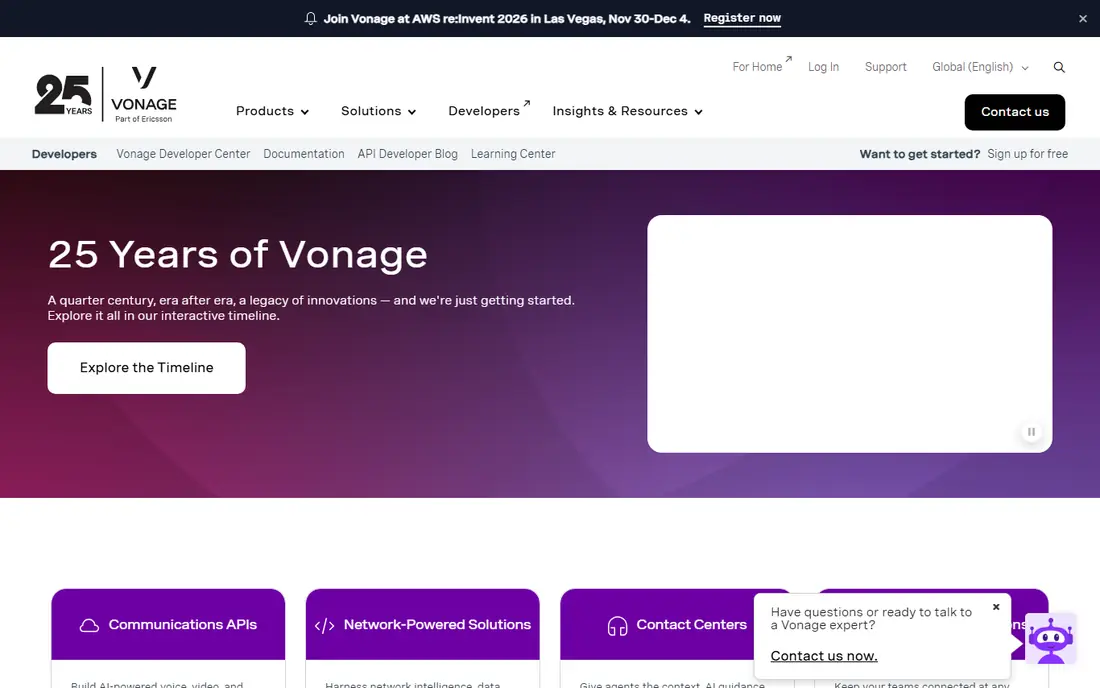
Vonage, formerly Nexmo, suits teams that need messaging alongside voice and video. Its APIs cover SMS, voice calls, verification, and video, and its AI Studio tools help teams build voice agents without a full code rebuild. That mix is useful for support, telephony, and verification products that outgrow SMS alone.
Pricing is pay-as-you-go, with US SMS listed near $0.008 per segment before carrier fees in current comparisons, plus number rental. That puts Vonage in the same cost band as Twilio, rather than the budget band. Pick Vonage when voice and video matter as much as SMS, or when your team already uses Vonage telephony.
- SMS, voice, video, and verification APIs
- Low-code AI agent tools
- Global coverage for telephony-heavy apps
- US SMS rate is close to Twilio in listings
- Enterprise support is tiered
- Setup varies by product line
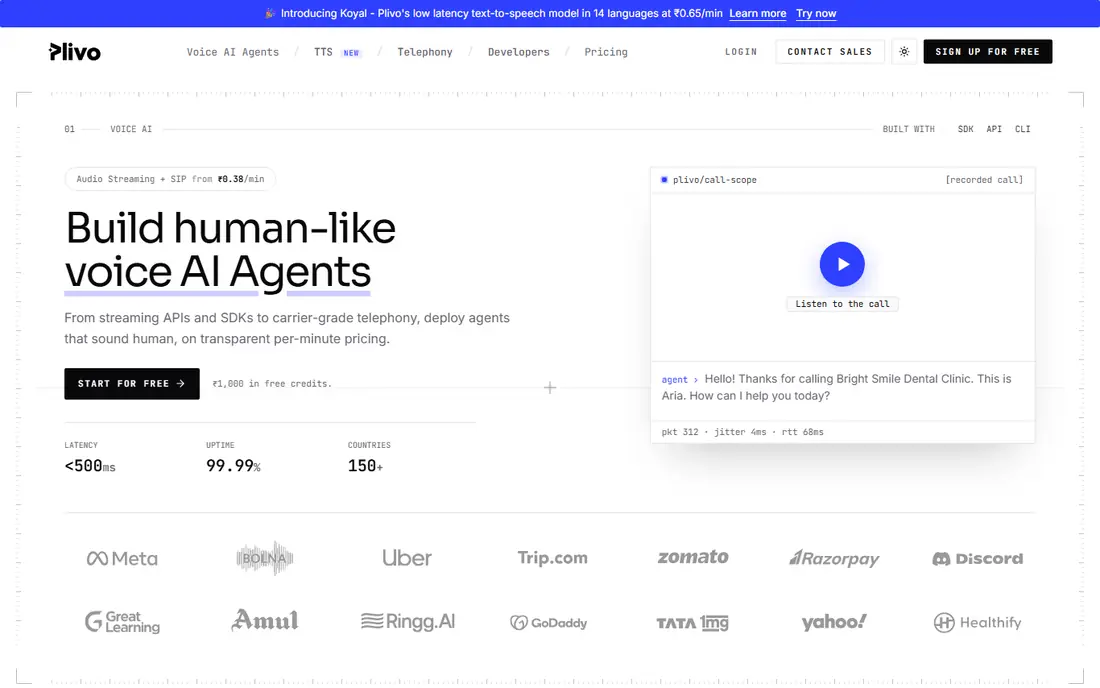
Plivo is a popular migration target for teams that like Twilio-style APIs but want a lower bill. Its US SMS rate is listed at $0.0077 per segment before carrier fees, with number rental lower than Twilio in current comparisons. Voice APIs, verification, and WhatsApp options sit alongside SMS, so most Twilio use cases can move with modest code changes.
The limits are scope and support. Plivo does not match Twilio for breadth of add-on products, and support levels vary by account. Carrier fees and 10DLC registration still apply in the US, so the saving is real but not as large as the headline rate alone suggests. For a developer team focused on SMS and voice cost, Plivo is a strong shortlist pick.
- Twilio-like API that eases migration
- Lower US SMS rate than Twilio in listings
- Voice and SMS in one platform
- Carrier fees still apply
- Support tiers vary
- Smaller product range than Twilio
Sinch suits companies that send messages across many countries and need more than US SMS. It covers SMS, voice, WhatsApp, RCS, and verification, with routing and compliance help for global senders. That breadth helps marketing, support, and verification teams that operate in Europe, Asia, and the Americas from one vendor.
The trade is transparency and setup. Sinch pricing is often shaped by volume and region, so a small team may need a quote to get a firm number. Current listings put US SMS near $0.0078 per segment before carrier fees, plus number costs. Sinch fits best when global reach and enterprise support matter more than a simple self-serve price list.
- Global SMS, voice, WhatsApp, and RCS coverage
- Enterprise messaging and verification tools
- Managed support at scale
- Pricing is often volume-based and less transparent
- Setup can be enterprise-heavy
- Number setup fees apply in some cases
Telnyx is the cost leader in current US SMS comparisons, with a published rate of $0.004 per segment before carrier pass-through fees, plus low number rental. It runs its own carrier network, which appeals to technical teams that want control over routing and voice AI. SMS, voice, fax, and verification sit on the same platform, with APIs for developers.
The catch is that Telnyx is built for technical teams. Carrier fees, 10DLC registration, and number setup still add to the bill, and advanced voice AI features need telecom understanding to use well. For a developer-led team that can handle that setup, Telnyx offers the lowest published per-message rate in this list. For a non-technical team, a simpler campaign tool may be easier.
- Low published US SMS rate
- Private carrier network
- Voice AI and number options in one platform
- Carrier pass-through fees still apply
- Advanced features need telecom knowledge
- Support depth varies by plan
Bandwidth is a carrier-grade option for US-focused teams that want to own more of the messaging path. It operates its own network, which suits contact centers, enterprises, and platforms that send high volumes in the US and Canada. Voice, messaging, and emergency services tools sit alongside number management, which helps teams that need compliance and control.
Bandwidth is less of a quick self-serve pick for a tiny startup. Pricing is often shaped by volume and contract, and current listings put its US SMS rate in a lower band only for registered 10DLC traffic on enterprise terms. If your volume is large and US delivery quality is the priority, Bandwidth is worth a quote. If you send a few hundred messages a month, a pay-as-you-go API will be simpler.
- Own US carrier network
- Strong fit for contact centers and enterprises
- Voice and messaging APIs in one platform
- Often quote-based for larger deployments
- Less suited to tiny self-serve sends
- Support and setup vary by plan
Infobip is an enterprise omnichannel platform with coverage across SMS, WhatsApp, RCS, voice, email, and chat apps in many countries. It suits large companies that need managed onboarding, compliance help, and a single vendor for global campaigns and transactional messages. Its platform also includes customer engagement tools beyond raw APIs.
The barrier is cost structure. Pricing is often quoted, and minimum commitments can apply in some regions, so small teams should not assume a simple pay-as-you-go bill. Infobip fits best when global scale, managed support, and channel breadth matter more than a low self-serve rate. For a single-country SMS app, a smaller API will be faster and cheaper.
- Very broad global channel coverage
- Managed enterprise messaging and support
- Strong WhatsApp and RCS options
- Quote-based pricing in many regions
- Minimum commitments can apply
- Setup is enterprise-heavy for small teams
ClickSend suits teams that prefer prepaid credit to a monthly subscription. You buy credit, send SMS, email, or voice messages, and top up when needed, with inbound messages free in current listings. Its dashboard also helps non-developers run campaigns without writing code, which is useful for small businesses and local teams.
Rates depend on the top-up tier and destination, so a small top-up can cost more per message than a large one. ClickSend also has a narrower developer surface than Twilio or Telnyx, so complex voice or verification builds may need another tool. For straightforward campaigns and alerts with prepaid control, ClickSend is a practical pick.
- Prepaid credit with no monthly plan in listings
- SMS, email, and voice options
- Dashboard for non-developers
- Per-message rates vary by top-up tier
- No free plan in listings
- API depth is narrower than Twilio or Telnyx
Textmagic is the most approachable tool in this list for a team that does not want to write code. Its dashboard supports lists, templates, scheduled campaigns, and two-way replies, with pay-as-you-go credit. That suits clinics, schools, local services, and small businesses that send reminders and alerts.
The price reflects that simplicity. Current listings show higher per-message rates at low volume, with rates falling at larger volumes, plus number rental. Textmagic is not the best base for a high-volume API product, where Telnyx or Plivo will cost less. For a small team that wants to send campaigns this week without a developer, it is an easy recommendation.
- Easy campaign builder for non-developers
- Two-way messaging and lists
- No monthly commitment in listings
- Per-message cost is higher at low volume
- Number rental adds cost
- Less suited to high-volume API builds
How we picked these
We compared official pricing pages and current messaging API comparisons for tools that send SMS and related channels in October 2026. We kept platforms that offer APIs or campaign tools for business messaging, and we noted where pricing is pay-as-you-go, quoted, or prepaid. We used See website where pricing is quoted or varies by region and volume, and we did not list MessageBird or Bird itself as an alternative to itself.
We also separated API-first platforms from campaign tools. A developer building verification needs different controls than a clinic sending appointment reminders, even when both send SMS. That split should help you match the tool to the job, rather than buying the broadest platform by default.
What to check before you switch
Start with registration and delivery rules in your main markets. In the US, 10DLC brand and campaign registration, carrier fees, and number setup all affect cost and delivery, and those rules differ by provider. In other countries, sender ID rules and WhatsApp templates can matter just as much. Confirm those steps before you port numbers or change APIs.
Next, test delivery with real messages, not just API responses. Send to major carriers, check delivery times, and test opt-out handling and replies. A provider with a low headline rate but slow delivery in your main market can cost more in missed alerts and support tickets.
Finally, compare the full bill at your monthly volume. Headline per-message rates exclude carrier fees, number rental, registration fees, and support plans on most platforms. Model 1,000, 5,000, and 25,000 messages to see which provider stays cheapest at your real volume.
Frequently asked questions
What are the best MessageBird alternatives for SMS APIs?
Twilio is the broadest API pick, Plivo suits lower-cost Twilio-style migration, and Telnyx offers the lowest published US SMS rate in current listings. Vonage, Sinch, and Infobip suit global and enterprise messaging. The best choice depends on volume, channels, and how much developer setup your team can handle.
Is MessageBird now called Bird?
Yes. MessageBird rebranded as Bird, and its platform now covers messaging, marketing, sales, payments, and service tools beyond its original SMS API. That is why many buyers compare Bird with other messaging APIs rather than treating MessageBird as a separate current brand. If you already use Bird, check its current plan structure before switching.
Which MessageBird alternative is cheapest for US SMS?
Telnyx shows the lowest published US SMS rate in current comparisons, at $0.004 per segment before carrier pass-through fees. Plivo and Bandwidth also show lower rates than Twilio in some listings, but carrier fees and number costs narrow the gap. Always compare the full bill at your volume, not the headline rate alone.
Do I need 10DLC registration to send SMS in the US?
For most business SMS to US carriers, yes, you need 10DLC brand and campaign registration, plus carrier fees. Providers differ in how much of that process they guide, and timelines vary. Confirm registration steps, fees, and timelines with your chosen provider before you launch a campaign.
Which alternative is best for non-developers?
Textmagic and ClickSend suit non-developers best, with dashboards for lists, templates, and scheduled campaigns. Twilio, Plivo, and Telnyx suit developer teams that build messaging into an app. If you only need reminders and campaigns, start with a dashboard tool and avoid API setup.
Sources
- https://www.twilio.com/en-us/messaging/pricing
- https://www.vonage.com/communications-apis/pricing/
- https://www.plivo.com/pricing/
- https://www.sinch.com/pricing/
- https://telnyx.com/pricing/
- https://www.bandwidth.com/pricing/
- https://www.infobip.com/pricing/
- https://www.clicksend.com/pricing/
- https://www.textmagic.com/pricing/
See where you really rank - block by block
ProMapRanker scans Google Maps across a grid of your service area. Simple monthly plans from $19, white-label on every plan.
Start freeKeep reading
 zscaler alternatives
Best Zscaler Alternatives in 2026
Looking for zscaler alternatives? We compare 9 SASE and zero trust platforms on architecture, data protection, pricing, and fit for your network and team.
Read → zapier alternatives free
Best Zapier Alternatives Free in 2026
Nine automation tools for zapier alternatives free in 2026, all with genuinely free tiers, plus free plan limits, starting prices and upgrade paths explained.
Read → which platform is best for online reputation
Which Platform Is Best for Online Reputation in 2026
Wondering which platform is best for online reputation? We compare 8 review, listing, and response tools for small and multi-location businesses and agencies.
Read →