 ProMapRanker
Best Alternatives Asset Management in 2026

Key takeaways
- This article is not financial advice, and investing carries risk, including possible loss of money.
- Betterment, Wealthfront, Schwab Intelligent Portfolios and Fidelity Go offer automated portfolios at lower cost than many traditional advisers.
- Empower suits investors who want a full view of accounts plus human advice on larger balances.
- iCapital, CAIS, Fundrise and Arrived open different asset types, but they carry different liquidity and risk rules.
Quick comparison
| Pick | Great for | Pricing starts at | Free tier | |
|---|---|---|---|---|
 Betterment | Automated investing | $4 per month | No | Visit |
 Wealthfront | Automated investing with tax tools | See website | No | Visit |
 Schwab Intelligent Portfolios | Low-fee automated portfolios | See website | No | Visit |
 Fidelity Go | Beginner automated investing | Free | Yes | Visit |
 Empower | Account view plus advice | See website | Yes | Visit |
 iCapital | Private market access | See website | No | Visit |
 CAIS | Alternative investment access | See website | No | Visit |
 Fundrise | Real estate investing | See website | No | Visit |
 Arrived | Fractional rental investing | See website | No | Visit |
The best alternatives asset management
These nine platforms offer a different route from a traditional adviser-led model, through automation, self-directed tools or access to asset types that were once hard to reach. This is not financial advice, and you should check fees, liquidity and risk before investing.

Betterment is a robo-adviser that builds and manages a diversified portfolio based on your goals and risk level, then rebalances it over time. That automation suits investors who want professional-style portfolio management without regular meetings or high minimums. Goal tools help you plan for retirement, a home deposit or other targets, with projections that update as you save.
The cost model needs attention. Small balances may pay 4 dollars per month in recent listings, while larger balances pay a percentage advisory fee, so check which model applies to your balance. Human advice is available on higher tiers, not on the basic automated plan. For hands-off investors, Betterment is a clear and well-established alternative to a traditional adviser.
- Automated portfolios and rebalancing
- Tax-coordinated portfolios on some plans
- Goal-based planning tools
- Advisory fee applies on larger balances
- Human advice needs a higher tier
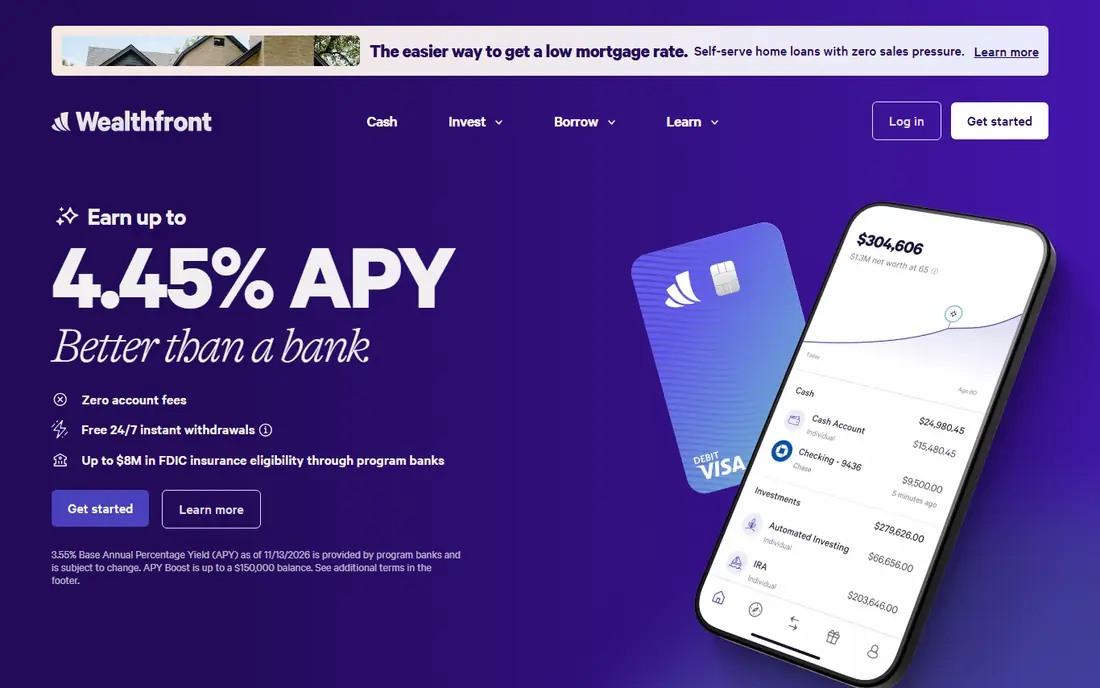
Wealthfront is another automated investing platform, with a focus on tax management alongside portfolio construction. It offers daily tax-loss harvesting for taxable accounts in recent listings, and direct indexing for accounts over 100,000 dollars, which can help manage tax exposure for larger investors. The core portfolio service is automated, so you do not need to pick individual stocks.
The main limit is the lack of a human adviser on the basic plan, which may matter if you want personal guidance on complex decisions. An advisory fee applies, so compare it with the fee you would pay a traditional adviser for the same balance. For tax-aware automated investing, Wealthfront is a strong option.
- Automated portfolios
- Daily tax-loss harvesting in recent listings
- Direct indexing on larger accounts
- Advisory fee applies
- No human adviser on the basic automated plan
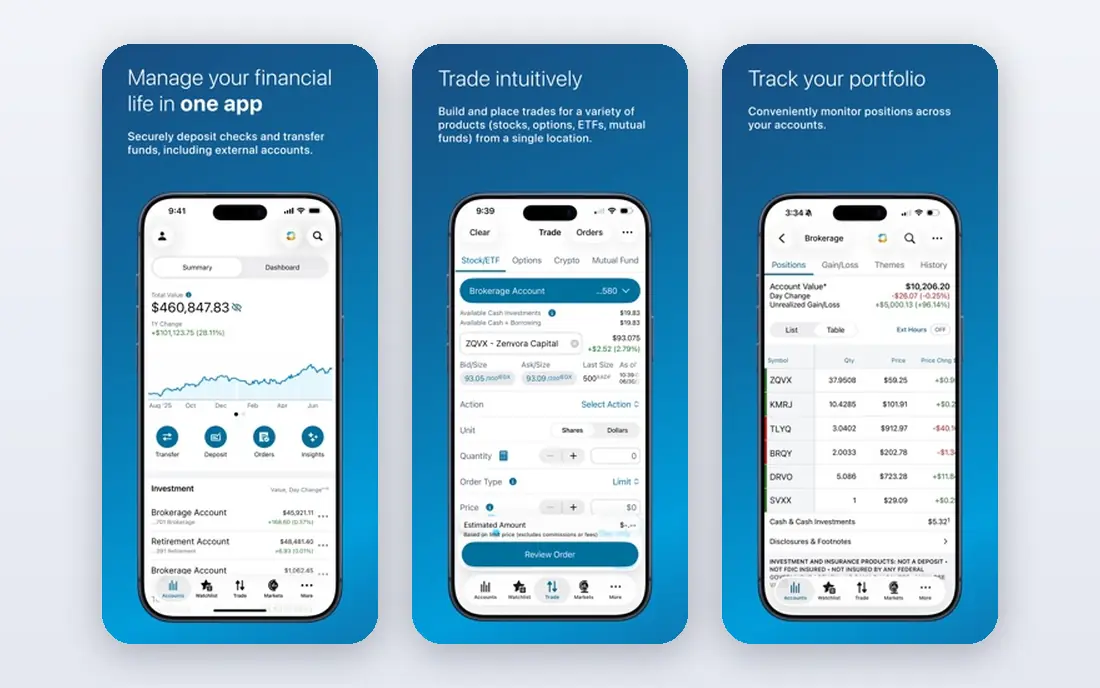
Schwab Intelligent Portfolios offers automated investing with no advisory fee in recent listings, which makes it attractive for cost-conscious investors. Portfolios use diversified exchange-traded funds, and the service rebalances automatically. The backing of Charles Schwab also gives access to a large brokerage, banking and research ecosystem.
The catch is the mandatory cash allocation, which means part of your portfolio sits in cash and may earn less than invested assets over time. That cash drag can offset the fee saving, depending on market conditions. Human advice is available on a premium tier at extra cost. If low fees matter most, Schwab is worth a close look, with the cash allocation in mind.
- No advisory fee in recent listings
- Diversified ETF portfolios
- Backing of a large brokerage
- Mandatory cash allocation can drag returns
- Human advice needs a premium tier
Fidelity Go is a simple robo-adviser for beginners, with no advisory fee for balances under 25,000 dollars in recent listings and no expense ratios on the underlying funds at that level. Setup is quick, portfolios are diversified, and the service suits investors who want to start small without a large minimum or complex choices. Access to Fidelity accounts, research and customer support adds practical value.
Customisation is limited compared with a human adviser or a self-directed brokerage account, so investors who want to pick individual holdings will feel constrained. Fees apply above the free threshold, so check the current schedule as your balance grows. For a first automated account, Fidelity Go is one of the lowest-cost starting points.
- No advisory fee for balances under 25,000 dollars in recent listings
- Simple setup
- Fidelity account ecosystem
- Limited customisation
- Human advice is not part of the basic service
Empower, formerly Personal Capital, offers a free dashboard that aggregates bank, brokerage and retirement accounts into one view, with planning tools for retirement and cash flow. That visibility helps investors who hold accounts in several places and want to see their full picture before deciding. For larger balances, Empower also offers managed advice with human advisers.
The free dashboard does not invest money, so it is a tracking and planning tool rather than a portfolio manager on its own. Managed advice carries fees, which you should compare with robo-advisers and traditional advisers. If you want clarity first and advice second, Empower is a useful alternative route.
- Free dashboard for viewing all accounts
- Planning tools
- Human advice available on larger balances
- Managed advice fees apply on advised accounts
- Free tools do not invest money for you
iCapital provides infrastructure that lets wealth managers and advisers offer clients access to private market funds, including private equity and private credit, without negotiating with each fund manager directly. That access was once limited to very large investors, and iCapital has helped lower the barrier through feeder structures and reporting tools. For eligible investors, it opens asset types beyond public stocks and bonds.
Private investments are not the same as public market funds. They can be illiquid, meaning you cannot sell quickly, and they carry higher risk and complexity, so eligibility and suitability checks apply. Access is usually through an adviser rather than a direct consumer signup. If you are considering private markets, iCapital is a key platform to discuss with a qualified adviser, not a do-it-yourself shortcut.
- Access to private equity, private credit and other private funds through advisers
- Fund research and reporting tools
- Often adviser-led and subject to eligibility rules
- Private investments can be illiquid and higher risk
CAIS operates a marketplace for alternative investments, including private funds and structured products, aimed at financial advisers and their clients. It provides fund information, due diligence material and transaction tools, which help advisers compare options that would be hard to source alone. That structure suits investors who already work with an adviser and want broader asset exposure.
Access is adviser-led, so you cannot simply open a direct account in the same way as a robo-adviser, and eligibility rules apply to many funds. Alternative investments can be illiquid and complex, with fees and lock-up periods that differ sharply from public funds. For adviser-led alternative access, CAIS is a well-established platform, provided you review liquidity and risk with your adviser first.
- Marketplace for alternative funds and structured products
- Adviser tools and education
- Due diligence support
- Adviser-led access
- Alternatives carry liquidity and risk limits that need careful review
Fundrise offers online real estate investing through diversified funds that hold residential and commercial property projects. That gives investors exposure to real estate without buying and managing a property directly, and minimums are lower than a direct purchase. The online platform makes it easier to track holdings and distributions than a traditional private real estate fund.
Real estate investing carries its own risks. Funds can be illiquid, with redemption windows and limits, and returns depend on property markets, rents and development outcomes. Fundrise is not a savings account and past performance does not guarantee future results. For investors who want real estate exposure without landlord duties, Fundrise is a clear alternative, with liquidity limits to understand first.
- Access to diversified real estate portfolios
- Lower minimums than direct property purchase
- Online account management
- Real estate funds can be illiquid
- Returns vary with property markets and are not guaranteed
Arrived lets investors buy fractional shares of single-family rental homes, with the aim of earning rental income and potential property value growth without owning a whole house. That model lowers the entry cost for rental property exposure and removes landlord tasks such as tenant screening and maintenance, which Arrived handles. It suits investors who want property exposure in smaller amounts.
The risks are property-specific. A single home can face vacancies, repairs and local market changes, and shares are not as liquid as public stocks, so selling may take time or be limited. Diversification across several properties helps, but does not remove risk. For fractional rental exposure, Arrived is a distinct alternative to a traditional property purchase, provided you accept the liquidity limits.
- Fractional shares of single-family rental homes
- Rental income focus
- No landlord duties for investors
- Property-specific risk
- Shares can be illiquid and redemption options are limited
How we picked these
We compared official product pages, pricing pages and public reviews for automated investing, wealth tracking and alternative investment platforms live in October 2026. We kept only platforms that are currently available to US investors, directly or through advisers, and we avoided any promise of returns, since investment outcomes vary. This is not financial advice, and trading and investing carry risk.
How to compare fees and liquidity
Compare the total cost, not just the headline fee. Robo-advisers charge a percentage or monthly fee, traditional advisers may charge more, and alternative funds add fund fees, lock-ups and redemption limits. Check how quickly you can access your money, since a public ETF portfolio is far more liquid than a private fund or fractional property share.
Questions to ask before you invest
Ask what the fund or portfolio holds, what fees apply at each level, and how often you can redeem. Check whether you meet eligibility rules for private funds, and whether the investment fits your time horizon and risk tolerance. If you are unsure, speak to a licensed financial adviser about your own situation before committing money.
Frequently asked questions
What are asset management alternatives for everyday investors?
Automated platforms such as Betterment, Wealthfront, Schwab Intelligent Portfolios and Fidelity Go offer a lower-cost alternative to a traditional adviser, with diversified portfolios and automatic rebalancing. Empower adds account aggregation and planning tools for investors who want a full view first.
Are these platforms a replacement for a financial adviser?
They can replace some adviser tasks, such as portfolio construction and rebalancing, but they do not replace personal advice on tax, estate or complex financial decisions. Human advice is available on some premium tiers, and a licensed adviser is still the right choice for complex situations.
What is the risk with alternative investments?
Alternative investments such as private equity, private credit and fractional real estate can be illiquid, complex and higher risk than public market funds. You may not be able to sell quickly, and returns are not guaranteed, so review fees, lock-ups and eligibility before investing.
Do robo-advisers charge fees?
Yes, in most cases, though the model varies. Fidelity Go charges no advisory fee under 25,000 dollars in recent listings, Schwab Intelligent Portfolios charges no advisory fee but holds a cash allocation, and Betterment and Wealthfront charge advisory fees that vary by balance and tier.
Can I access private markets as a smaller investor?
Some platforms have lowered minimums through feeder funds and fractional shares, but many private funds still have eligibility rules and minimums. iCapital and CAIS work mainly through advisers, while Fundrise and Arrived offer lower entry points for real estate, with liquidity limits.
Sources
See where you really rank - block by block
ProMapRanker scans Google Maps across a grid of your service area. Simple monthly plans from $19, white-label on every plan.
Start freeKeep reading
 zscaler alternatives
Best Zscaler Alternatives in 2026
Looking for zscaler alternatives? We compare 9 SASE and zero trust platforms on architecture, data protection, pricing, and fit for your network and team.
Read → zapier alternatives free
Best Zapier Alternatives Free in 2026
Nine automation tools for zapier alternatives free in 2026, all with genuinely free tiers, plus free plan limits, starting prices and upgrade paths explained.
Read → which platform is best for online reputation
Which Platform Is Best for Online Reputation in 2026
Wondering which platform is best for online reputation? We compare 8 review, listing, and response tools for small and multi-location businesses and agencies.
Read →