 ProMapRanker
Best Aha Alternatives in 2026


Feedback-driven roadmaps · Pricing starts at: $20 per maker per month
Key takeaways
- Productboard is the closest direct replacement, with feedback linked straight to roadmap items.
- Roadmunk is the best pick when presentation-ready timeline roadmaps are the main job.
- ProdPad suits teams that plan in Now, Next, and Later terms instead of fixed dates.
- Small teams can start free in Notion, ClickUp, or Jira Product Discovery and upgrade only when scoring and feedback workflows matter.
Quick comparison
| Pick | Great for | Pricing starts at | Free tier | |
|---|---|---|---|---|
| Productboard | Feedback-driven roadmaps | $20 per maker per month | Yes | Visit |
 Roadmunk | Timeline roadmaps | $19 per user per month | Free trial | Visit |
 ProdPad | Outcome-led planning | See website | Free trial | Visit |
 Craft.io | Full product management | $39 per user per month | No | Visit |
 ProductPlan | Simple shareable roadmaps | $39 per user per month | No | Visit |
 Airfocus | Prioritization and scoring | See website | No | Visit |
 Jira Product Discovery | Jira-native idea work | $8 per user per month | Yes | Visit |
 ClickUp | Flexible work hub | $7 per user per month | Yes | Visit |
 Notion | DIY roadmaps and docs | $10 per user per month | Yes | Visit |
The best aha alternatives
Aha covers strategy, ideas, roadmaps, and releases in one suite, so replacements tend to specialize. Some tools lead with customer feedback, others lead with timeline visuals, and a few are flexible workspaces that can hold a roadmap with the right setup. Pick by the part of Aha you miss most, not by the longest feature list.
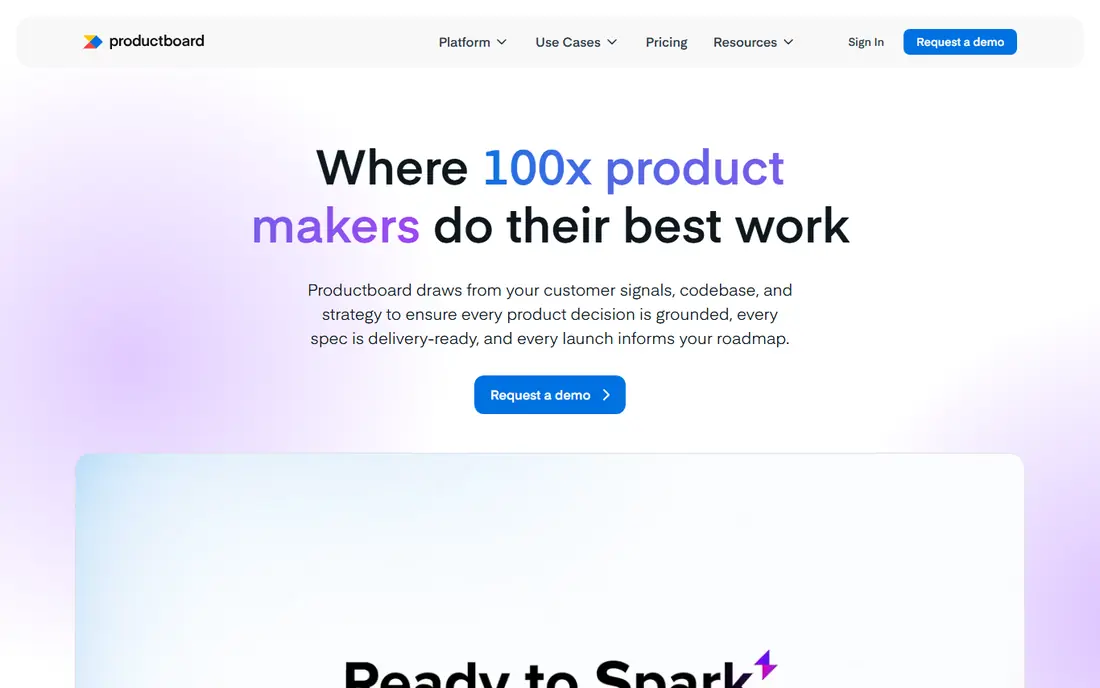
Productboard is our pick for teams whose main problem is deciding what to build based on customer evidence. Feedback from support, sales, and direct submissions lands in one insights hub, where you can link each note to a feature and see which requests drive a roadmap item. That link between evidence and plan is the core strength.
Roadmap views cover timelines, columns, and releases, though they are less flexible than Aha for complex portfolio rollups. Teams that need deep strategy mapping may still miss Aha, but teams that want a clear, evidence-led roadmap will find Productboard faster to run day to day.
- Feedback from many channels linked to features
- Prioritization views for impact and effort
- Clean roadmap sharing for stakeholders
- Best features sit on higher tiers
- Less roadmap customization than Aha for very large portfolios
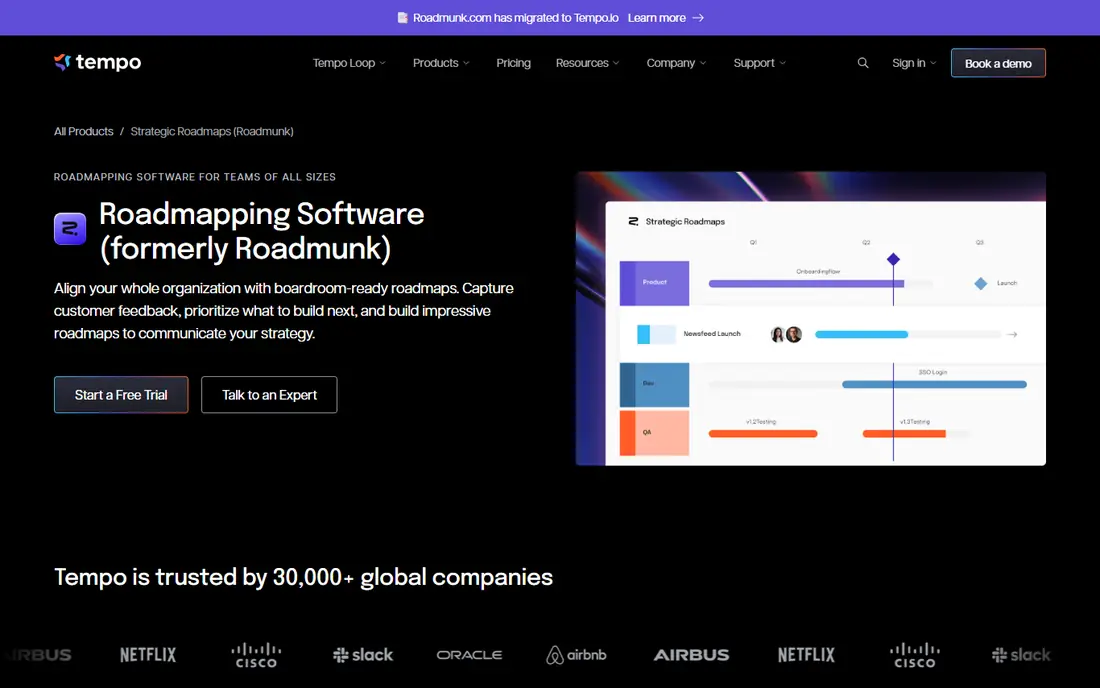
Roadmunk focuses on one job and does it well: making a roadmap that looks good in a board meeting. You build timelines, swimlanes, and milestones, apply filters for audience views, and publish a link that stakeholders can open without a login. That publishing step is useful for teams that share roadmaps widely.
It is not a full product suite. Feedback collection, idea voting, and deep prioritization scoring are thinner here than in Productboard or Craft.io. Choose Roadmunk when the roadmap visual is the deliverable, and pair it with a simple feedback form if you also need idea intake.
- Presentation-ready timeline views
- Master roadmaps across teams
- Easy publishing to a shareable link
- No built-in feedback portal like Productboard
- Two-way Jira sync costs extra on some plans
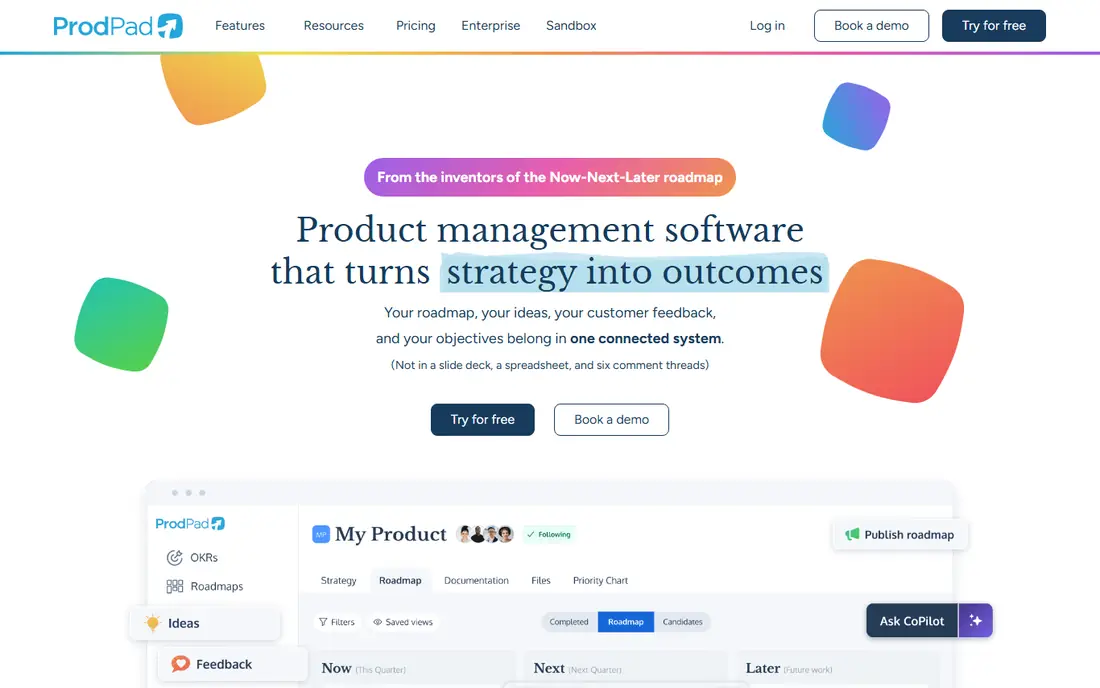
ProdPad takes a lean approach to planning. Instead of promising fixed dates for every item, you sort work into Now, Next, and Later, which fits teams that learn as they build and do not want to defend a date that may change. Ideas, feedback, and objectives sit beside the roadmap, so the reasoning behind a priority stays visible.
That style is not for every org. Teams that must commit to dated releases for enterprise customers may prefer Roadmunk or Productboard timelines. For product teams that value outcomes over dates, ProdPad keeps planning honest and easy to update.
- Now, Next, and Later roadmaps
- Ideas and feedback in one place
- OKR links for goal-led teams
- Pricing is less transparent on the public page
- Timeline views are less detailed than Roadmunk
Craft.io is the closest suite-style replacement for Aha after Productboard. It covers product strategy, discovery, feedback, prioritization, and roadmapping, with capacity planning to check whether a plan fits the team. That breadth helps mid-sized product orgs that want one system from idea to release.
Small teams may find it heavy at first. The price starts higher than a workspace tool, and the setup rewards a team that will actually use scoring and capacity features. If you only need a shared roadmap, ProductPlan or Notion will cost less and start faster.
- Strategy, feedback, roadmaps, and capacity in one tool
- Multiple roadmap views
- Strong prioritization frameworks
- Higher entry price than simpler tools
- Setup takes time for small teams
ProductPlan suits teams that want a roadmap tool, not a full product platform. You build a timeline, add bars for initiatives, color them by team or goal, and share a clean view with leadership. The learning curve is short, which matters when many stakeholders only open the roadmap to check a date.
Teams that need deep feedback workflows will find it thin. There is no strong idea portal here, and scoring is simpler than in Craft.io or airfocus. Use ProductPlan when communication is the job, and keep feedback in a separate tool if you need that depth.
- Easy timeline and board roadmaps
- Simple sharing for executives
- Integrations with common delivery tools
- Feedback and prioritization are lighter than Productboard
- No permanent free plan
Airfocus stands out for prioritization. You can build scoring models with your own criteria, weigh factors such as reach, impact, and effort, and see how a change in weights moves items up or down the list. That transparency helps when product, sales, and engineering disagree on what comes first.
It is less of an end-to-end suite than Aha or Craft.io. Delivery tracking and detailed release planning sit elsewhere, so many teams pair airfocus with Jira or another delivery tool. Choose it when the scoring debate is your bottleneck, not when you need one tool for everything.
- Flexible scoring frameworks
- Multiple roadmap views
- Good for teams that debate priorities often
- Pricing requires a quote or plan check
- Less of a full delivery suite than Aha
Jira Product Discovery is the natural pick for a team that already lives in Jira. Ideas, insights, and prioritization live beside delivery work, and a chosen idea can become a Jira issue without export or copy work. That link removes the gap where roadmaps and engineering plans drift apart.
Outside Jira, the value drops. Stakeholder sharing and presentation polish are simpler than Roadmunk, and feedback portals are less rich than Productboard. For Jira teams on a budget, though, it is a strong, low-cost way to replace the idea and discovery parts of Aha.
- Native link from ideas to Jira issues
- Free for up to ten users in its core offer
- Familiar for teams already on Atlassian
- Roadmap views are simpler than Roadmunk
- Less useful outside the Atlassian world
ClickUp is a workspace that can hold a roadmap, a backlog, docs, and goals together. You can build timeline views, custom fields for priority, and dashboards for progress, all at a price well below dedicated product tools. Teams that already use ClickUp for project work can add product planning without a new vendor.
The cost is setup and discipline. There is no built-in feedback portal or scoring engine like Productboard, so you must build those views yourself. Teams that want a ready-made product system should pick a dedicated tool, while teams that want one flexible hub will like ClickUp.
- Low entry price
- Timelines, boards, docs, and goals in one workspace
- Free plan for personal use and small teams
- Roadmap features need manual setup
- Can feel busy without strict workspace rules
Notion works for a small product team that wants its roadmap beside its specs, meeting notes, and docs. Timeline and board views can show a plan, filters can split it by team or status, and anyone can edit without learning a new product tool. The price and familiarity make it an easy start.
It breaks down at scale. Without scoring, feedback linking, or permissions as strong as dedicated tools, a growing team will spend more time maintaining databases than planning. Use Notion while you are small, and move to Productboard or Craft.io when prioritization becomes a weekly debate.
- Very flexible databases and timeline views
- Docs and roadmaps in one place
- Free plan for individuals
- No built-in prioritization scoring
- Needs templates and upkeep to stay useful
How we picked these
We compared official pricing and feature pages, plus public reviews on roadmap quality, feedback handling, and Jira integration. We kept tools that are live in October 2026, that cover roadmapping or product planning as a core job, and that offer a realistic Aha replacement for at least one common use case. We left out tools that only collect feedback without a roadmap, and tools with no clear current pricing or product page.
What to check before you switch
Name the Aha features you use most. If you live in strategy views and portfolio rollups, Craft.io or Productboard will feel closer than a workspace tool. If you mainly share timelines, Roadmunk or ProductPlan will do the job for less money. If you mainly collect ideas, Jira Product Discovery or Productboard will matter more than timeline polish. Test the top two on a real roadmap, not a demo, before you move your full plan.
Keep feedback linked to the plan
A roadmap without evidence behind it is hard to defend. When you trial a tool, add ten real customer notes, link them to features, and check whether you can still see that link a month later. Tools that keep the link visible make prioritization meetings shorter, because the team can see why an item rose or fell.
Plan the migration in stages
Move one product line first, keep Aha read-only during the trial, and check that dates, owners, and statuses survive the move. Share the new roadmap link with stakeholders early, gather their questions, and fix view filters before you migrate the rest. A staged move avoids a week where no one trusts either roadmap.
Frequently asked questions
What is the best direct replacement for Aha?
Productboard is the best direct replacement for most product teams, because it links customer feedback to roadmap items and offers prioritization and sharing in one tool. Craft.io is closer for teams that also need strategy and capacity planning in the same suite.
Is there a free Aha alternative?
Yes. Notion, ClickUp, and Jira Product Discovery all offer free plans that can hold a simple roadmap, though none matches Aha scoring and feedback depth for free. Start free to test your workflow, then pay for a dedicated tool when you need scoring, portals, or portfolio views.
Which alternative is best for timeline roadmaps?
Roadmunk is best for timeline roadmaps, because its views are built for presentation and sharing, with master roadmaps across teams. ProductPlan is a simpler, cheaper option for the same job, while Productboard adds feedback depth beside its timeline views.
Does Jira Product Discovery replace all of Aha?
No, it replaces the idea, discovery, and prioritization parts best, especially for Jira teams. It is thinner on presentation roadmaps and strategy mapping, so teams that need those parts often pair it with Roadmunk or use Productboard instead.
How do I choose between Productboard and Craft.io?
Choose Productboard when customer feedback drives your roadmap and you want the clearest feedback-to-feature link. Choose Craft.io when you need strategy, capacity, and delivery planning in one suite and your team will use scoring and capacity features each week.
Sources
- https://www.productboard.com/pricing
- https://www.roadmunk.com/pricing
- https://www.prodpad.com/pricing
- https://www.craft.io/pricing
- https://www.productplan.com/pricing
- https://www.airfocus.com/pricing
- https://www.atlassian.com/software/jira/product-discovery/pricing
- https://www.clickup.com/pricing
- https://www.notion.com/pricing
See where you really rank - block by block
ProMapRanker scans Google Maps across a grid of your service area. Simple monthly plans from $19, white-label on every plan.
Start freeKeep reading
 zoro.to alternatives
Best Zoro.to Alternatives in 2026
We compare the best zoro.to alternatives in 2026, listing only legal licensed anime streaming services, from Crunchyroll to free options for fans today.
Read → zip alternatives
Best Zip Alternatives in 2026
We compare the best zip alternatives for buy now, pay later in 2026, covering pay-in-4 plans, fees, spending limits, and credit reporting options today.
Read → yesware alternatives
Best Yesware Alternatives in 2026
Compare the best yesware alternatives for sales email tracking, templates, and sequences, with current pricing and honest tradeoffs for small sales teams.
Read →