 ProMapRanker
Best Acumatica Alternatives in 2026

Key takeaways
- Acumatica is a cloud ERP for mid-market distribution, manufacturing and construction, so replacements differ by industry and company size.
- Odoo and ERPNext are the most flexible low-cost options, while NetSuite and SAP suit larger or global businesses.
- Microsoft Dynamics 365 Business Central fits organisations already on Microsoft 365 and Azure.
- Sage Intacct is finance-first, so it suits teams that need deep accounting more than factory or warehouse tools.
- Implementation cost and time often exceed licence cost, so budget for both before you choose.
Quick comparison
| Pick | Great for | Pricing starts at | Free tier | |
|---|---|---|---|---|
 NetSuite | Mid-market to enterprise ERP | See website | No | Visit |
 Microsoft Dynamics 365 Business Central | Microsoft-based businesses | $70 per user per month | Free trial | Visit |
 Odoo | Modular ERP for growing businesses | $24.90 per user per month | Yes | Visit |
 Sage Intacct | Finance-first teams | See website | No | Visit |
 SAP Business One | Small business ERP | See website | No | Visit |
 SAP S/4HANA Cloud | Enterprise ERP | See website | No | Visit |
 Infor CloudSuite | Industry-specific ERP | See website | No | Visit |
 Oracle Fusion Cloud ERP | Large enterprise ERP | See website | No | Visit |
 ERPNext | Open-source ERP | See website | Yes | Visit |
The best acumatica alternatives
Acumatica gives mid-market businesses a cloud ERP with finance, distribution, manufacturing and construction tools, priced by resources rather than by named user in its own model. The systems below cover the same core job, from modular low-cost ERP to enterprise platforms. We compared official product pages and public ERP comparisons, and we kept only systems that are live in October 2026.
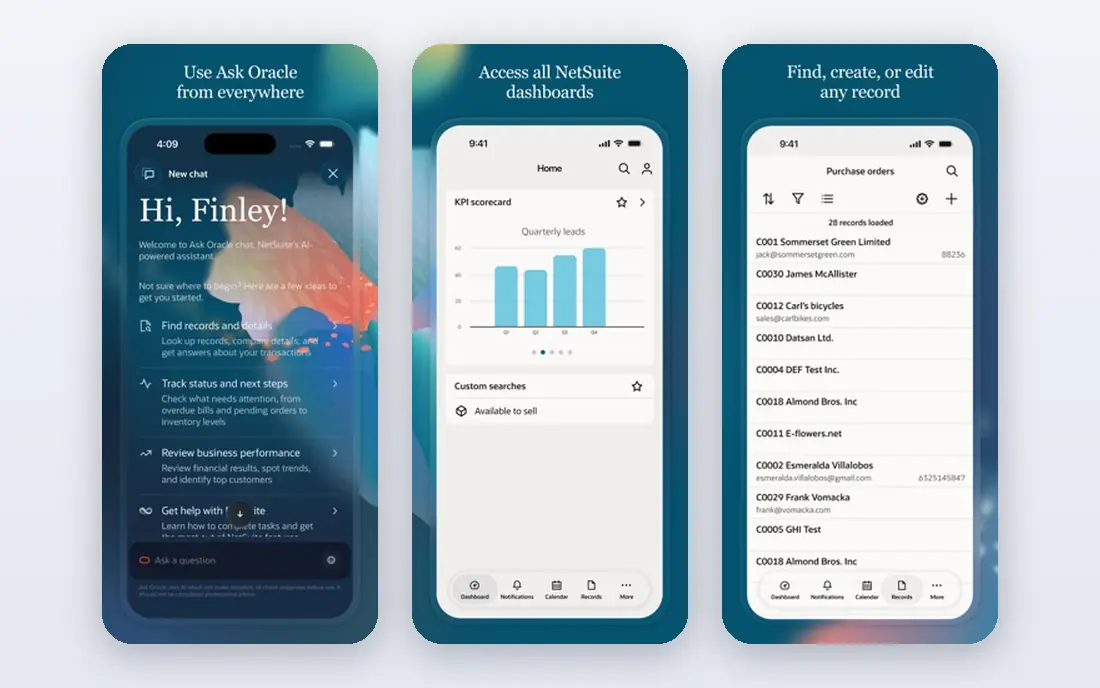
NetSuite is the most common enterprise-grade replacement for Acumatica for growing businesses. It combines finance, inventory, order management, CRM and ecommerce in one cloud system, with support for multiple entities and currencies. That breadth suits businesses that outgrow a single-country, single-entity setup.
Pricing is quote-based, with a base licence plus per-user fees, so a firm quote needs a scoping conversation. Implementation also takes longer than a modular tool such as Odoo, because the system covers so many processes. Businesses should budget for partner implementation time as well as licences.
NetSuite fits mid-market to enterprise businesses with global or multi-entity needs. Smaller businesses should compare Odoo or ERPNext first, because NetSuite may be more system than they need.
- Broad finance, inventory and CRM coverage
- Multi-entity and multi-currency support
- Large partner network
- Quote-based pricing
- Implementation can be long and costly
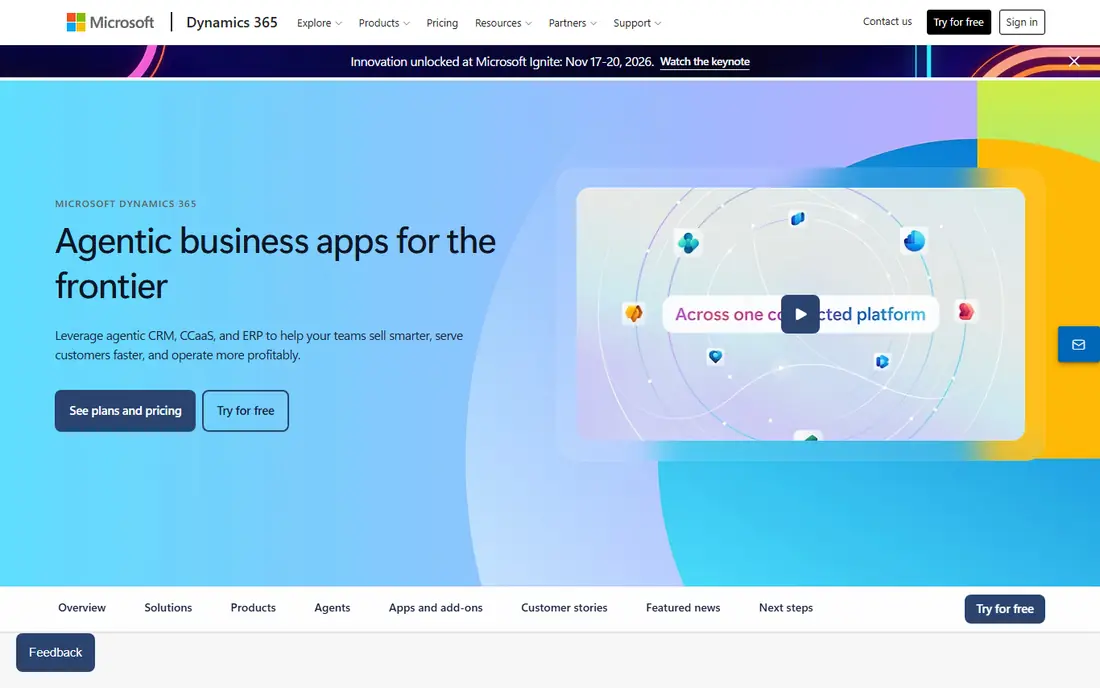
Business Central is the natural Acumatica alternative for organisations already on Microsoft 365. Finance, supply chain, sales and project tools connect with Outlook, Teams and Excel, and the Power Platform extends the system without a separate integration project. Essentials pricing starts at $70 per user per month in the sources we checked.
Per-user pricing is the main drawback for large teams, because every user who needs full access adds cost. Complex customisation also needs a Microsoft partner, so implementation cost depends on how far the standard processes need to change. That partner dependence is common in ERP, but it still needs budgeting.
Business Central fits Microsoft-heavy businesses that want ERP inside the same ecosystem as their office tools. Teams outside the Microsoft world may find NetSuite or Odoo a cleaner fit.
- Deep Microsoft 365 and Teams integration
- Modular finance and supply chain apps
- AI copilot features
- Per-user pricing adds up for large teams
- Customisation needs partner help
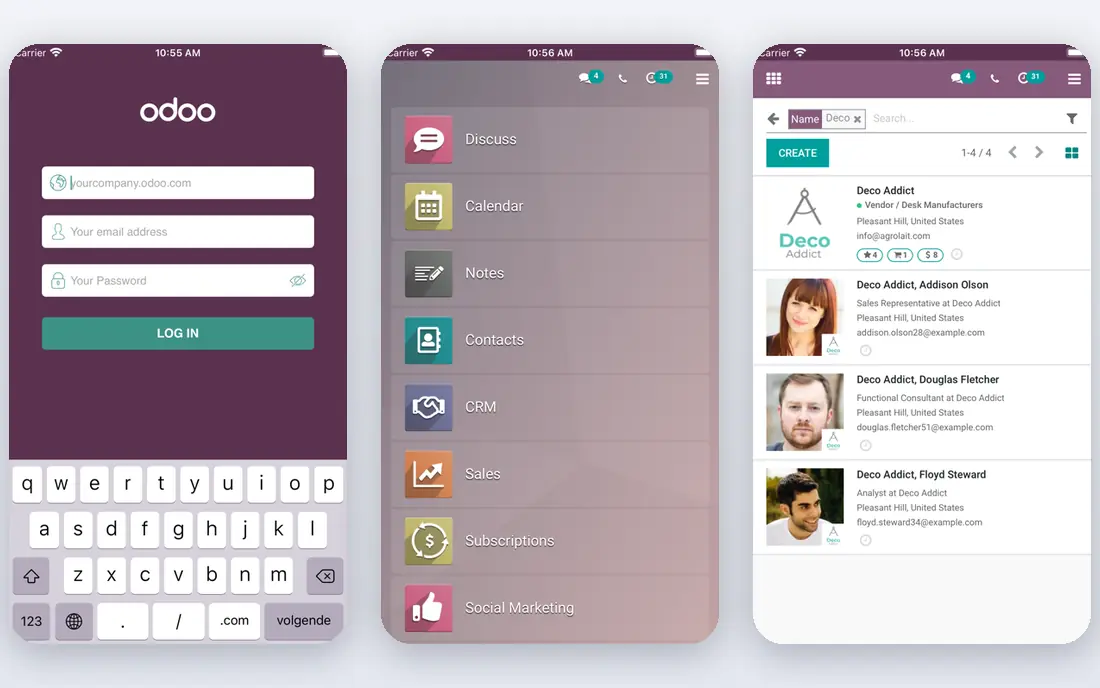
Odoo is the flexible low-cost option in this list. Businesses can start with one app, such as accounting or CRM, and add inventory, manufacturing, ecommerce and project tools as they grow. Pricing starts at $24.90 per user per month billed annually in the sources we checked, and a free Community edition exists for self-hosted use.
The modular model has a catch. Community apps vary in quality and support, and a business that needs many modules should use the paid Enterprise edition or a partner for a stable setup. Even so, Odoo usually costs less than NetSuite or SAP for a similar scope, and it scales from small to mid-market use.
Odoo fits growing businesses that want to start small and add modules over time. Large enterprises with complex global needs should compare NetSuite or SAP S/4HANA Cloud.
- Modular apps for CRM, accounting, inventory and more
- Open-source Community edition
- Low entry price
- Quality varies across community apps
- Larger implementations still need partner help
Sage Intacct is a finance-first cloud system, and it suits teams whose main ERP need is accounting depth rather than factory or warehouse control. Multi-entity consolidation, dimensional reporting and AP automation are its strengths, and it integrates with payroll, CRM and other business tools.
The limit is scope. Sage Intacct does not cover manufacturing or distribution as deeply as Acumatica, NetSuite or Infor, so a business that needs those modules will need additional systems. Pricing is quote-based, with a base fee that can exceed $12,000 per year in public comparisons, so a firm quote is needed for budgeting.
Sage Intacct fits finance-led businesses, professional services and multi-entity groups. Manufacturing and distribution businesses should look at NetSuite, Infor or Business Central first.
- Deep accounting and multi-entity consolidation
- Dimensional reporting
- Strong AP automation
- Limited beyond core finance
- Quote-based pricing
SAP Business One is SAP's ERP for small and growing businesses. It covers finance, sales, purchasing, inventory and production in one system, with reporting and analytics built in. Businesses that plan to grow into larger SAP systems later can benefit from staying in the SAP family from the start.
Pricing is quote-based, and implementation needs a certified partner, so the total cost depends on scope and customisation. Business One is also less flexible for very small teams than Odoo, because it assumes a more formal ERP setup from day one.
SAP Business One fits small businesses that want an SAP system with room to grow. Very small teams should compare Odoo or ERPNext for a lower entry cost.
- Integrated finance, sales, inventory and production
- SAP ecosystem
- Strong reporting
- Quote-based pricing
- Implementation needs a partner and takes time
SAP S/4HANA Cloud is the enterprise SAP option, built for large and global businesses. It covers finance, supply chain, manufacturing, procurement and human resources at scale, with compliance and reporting for many countries. That depth makes it a strong Acumatica replacement for businesses that have outgrown mid-market ERP.
The trade-off is scale and cost. Pricing is custom, implementation is a major project, and the system needs dedicated internal or partner resources to run well. A mid-market business that does not need global complexity will find S/4HANA Cloud heavy and expensive.
S/4HANA Cloud fits large enterprises with global operations and complex supply chains. Mid-market businesses should stay with NetSuite, Business Central or Infor.
- Enterprise-scale finance, supply chain and manufacturing
- Global compliance
- Large partner network
- Custom pricing
- Long and complex implementation
Infor CloudSuite offers industry-specific ERP editions, which can shorten implementation for businesses in manufacturing, distribution, food and beverage, healthcare and other sectors. Pre-built industry processes reduce the customisation needed compared with a generic ERP, and supply chain tools are a strength across many editions.
Pricing is quote-based, and the depth of each industry edition varies, so a business should check the edition that matches its sector rather than assuming all editions are equal. Implementation still needs a partner for complex cases, and total cost depends on modules and users.
Infor fits businesses that want industry-specific processes out of the box. Generic mid-market businesses may find NetSuite or Business Central simpler to evaluate.
- Industry-specific editions for manufacturing, distribution and healthcare
- Cloud deployment
- Strong supply chain tools
- Quote-based pricing
- Industry editions vary in depth
Oracle Fusion Cloud ERP is a large-enterprise cloud ERP covering finance, procurement, project management and supply chain. It suits global businesses with complex reporting, compliance and multi-entity needs, and it integrates with other Oracle cloud applications for human resources and supply chain planning.
As with other enterprise ERP systems, pricing is custom and implementation is a major project. Oracle Fusion is not a low-cost Acumatica replacement for a small business, and it needs internal and partner resources to run well. The value shows up at enterprise scale, where its breadth and global tools matter most.
Oracle Fusion fits large enterprises, especially those already on Oracle systems. Mid-market businesses should compare NetSuite, Business Central or Odoo first.
- Enterprise finance, procurement and project tools
- Global scale
- Strong analytics and AI features
- Custom pricing
- Implementation is a large project
ERPNext is the open-source option in this list. It covers accounting, inventory, manufacturing, CRM, projects and HR in one system, and self-hosted use carries no licence cost. That makes it attractive to small businesses and technical teams that want full control over their ERP data and code.
Self-hosting is also the main drawback. A business needs technical skill to install, update and secure ERPNext, or it must pay for hosted ERPNext through a provider. Support and implementation help come from partners and the community rather than a single vendor, so service quality can vary.
ERPNext fits technical small businesses and teams that value open source and low licence cost. Businesses that need vendor support and a guided implementation should compare Odoo Enterprise or Business Central.
- Open-source with finance, inventory, manufacturing and CRM
- No licence cost for self-hosted use
- Active community
- Self-hosted setup needs technical skill
- Hosted pricing and support vary
How we picked these
We compared official product pages, pricing pages and public ERP comparisons, and we kept only systems that are live in October 2026. We covered low-cost modular ERP, mid-market cloud ERP and enterprise ERP, because Acumatica buyers range from small growing businesses to larger groups. Where pricing was quote-based, we wrote See website rather than publishing a figure that could mislead.
What to check before you switch
Start by listing the processes you cannot lose: finance close, inventory accuracy, order fulfilment, manufacturing planning or project costing. An ERP that is strong in finance but weak in manufacturing will fail a factory, even if the price looks good. Map those processes to each vendor's modules before you shortlist.
Next, budget for implementation, data migration and training, not just licences. ERP projects often cost more in partner time and internal effort than in first-year licences, and a rushed migration can disrupt orders and stock counts. Ask each vendor for a realistic timeline and a reference customer in your industry.
Finally, check the pricing model. Acumatica prices by resources, while many alternatives price per user, so a direct licence comparison can mislead. Model total cost for your actual user count, entities and modules over three years, not just the first year.
Frequently asked questions
What is the best Acumatica alternative for a small business?
Odoo is the best starting point for most small businesses, because it offers modular apps at a low entry price and can grow with the business. ERPNext suits technical teams that want open source, while SAP Business One suits small businesses that want an SAP system. The right pick depends on industry and in-house technical skill.
Is there a free Acumatica alternative?
ERPNext offers a free self-hosted open-source version, although hosting and support still cost time or money. Odoo also offers a free Community edition for self-hosted use. A free ERP is rarely free in total, because implementation, hosting and training still need budget.
Which Acumatica alternative is best for manufacturing?
NetSuite, Infor CloudSuite and SAP S/4HANA Cloud are strong for manufacturing, depending on company size. Infor suits industry-specific manufacturing, NetSuite suits mid-market to enterprise manufacturing, and S/4HANA Cloud suits large global manufacturers. Check the manufacturing modules for your production type before you choose.
How long does it take to switch ERP systems?
Switching ERP usually takes months, not weeks, because data migration, process mapping and training all take time. Small modular implementations can move faster, while enterprise projects can take a year or more. Ask each vendor for a timeline based on a business like yours, and plan for a parallel run if orders cannot stop.
Should I choose a per-user or a resource-based ERP price?
It depends on your team shape. Per-user pricing suits businesses with a clear, stable user count, while resource-based pricing can suit businesses with many occasional users. Model total cost for your actual users, entities and modules over three years, and check what happens when you add users or entities later.
Sources
See where you really rank - block by block
ProMapRanker scans Google Maps across a grid of your service area. Simple monthly plans from $19, white-label on every plan.
Start freeKeep reading
 zscaler alternatives
Best Zscaler Alternatives in 2026
Looking for zscaler alternatives? We compare 9 SASE and zero trust platforms on architecture, data protection, pricing, and fit for your network and team.
Read → zapier alternatives free
Best Zapier Alternatives Free in 2026
Nine automation tools for zapier alternatives free in 2026, all with genuinely free tiers, plus free plan limits, starting prices and upgrade paths explained.
Read → which platform is best for online reputation
Which Platform Is Best for Online Reputation in 2026
Wondering which platform is best for online reputation? We compare 8 review, listing, and response tools for small and multi-location businesses and agencies.
Read →